Mass Ratio
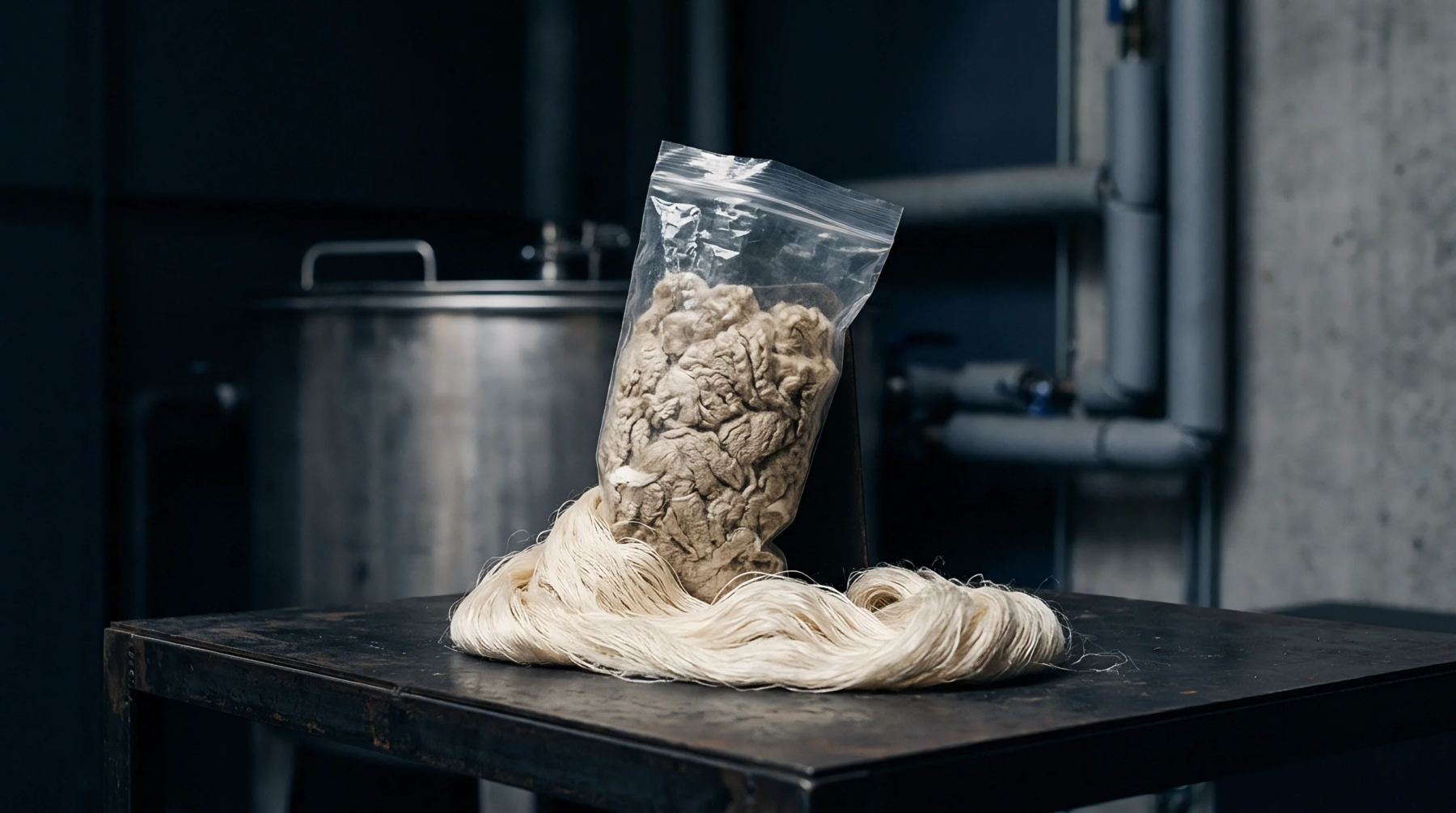
Quantitative moisture metrics express the mass of water present in textile fibers relative to their bone-dry solid polymer weight. Laboratory procedures determine water content by drying samples to constant mass and measuring weight loss. Within commercial specifications, regain percentage calculates absorbed water mass divided by dry fiber mass multiplied by one hundred.
Moisture Calculation
Moisture metrics differ significantly depending on whether total sample weight or dry polymer weight forms the mathematical denominator. Calculating water content uses wet sample mass as its baseline, whereas regain percentage compares absorbed water directly to oven-dry mass. A specimen weighing one hundred ten grams wet and one hundred grams oven-dry yields a ten percent value under this dry-baseline formula.
Standard testing standards mandate this calculation method to keep commercial fiber adjustments independent of varying environmental moisture levels.
Commercial Specification
International trade contracts define statutory moisture allowances for buying and selling raw fibers, yarns, and fabrics. Billed weights combine clean dry mass with officially recognized statutory regain rates, such as eight point five percent for cotton, eleven percent for flax, and thirteen percent for viscose. Applying an agreed regain percentage protects trading partners from financial losses caused by atmospheric humidity changes during transit.
Hysteresis Boundary
Atmospheric exposure history dictates actual moisture uptake levels in natural and synthetic fibers. Samples reaching equilibrium from a wet state hold higher moisture levels than samples drying from an absolute dry state at identical ambient humidity. The equilibrium regain percentage cannot be predicted from environmental relative humidity alone without controlling sample pre-conditioning history.