Hardness Deviation
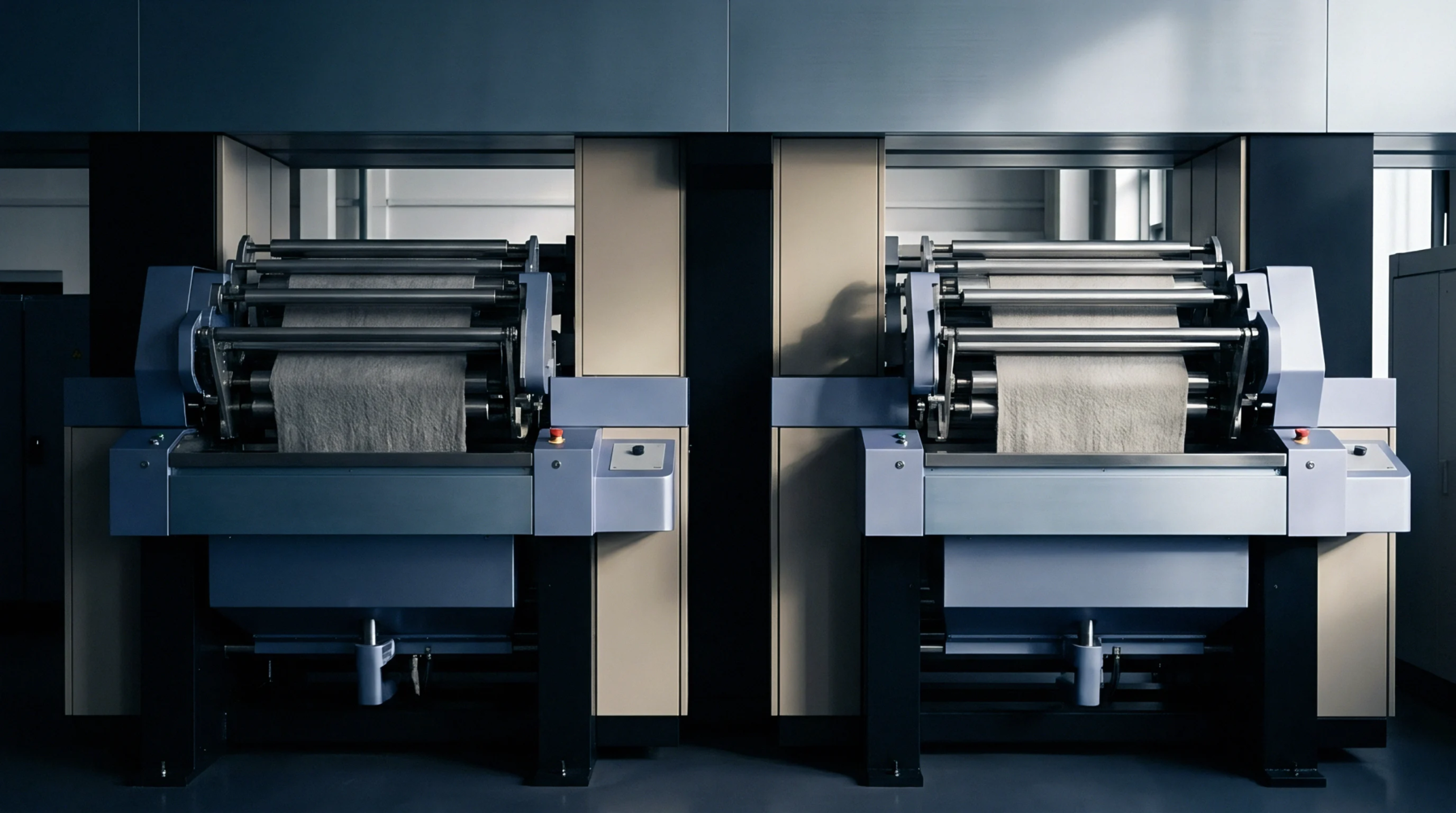
The change in measured surface hardness of rubber-covered squeeze rollers as their temperature rises during high-speed operation affects nip uniformity. This rubber durometer thermal drift can lead to uneven chemical application across the fabric width during padding processes. It is a critical variable in continuous ranges.
Drift Mechanism
Continuous rotation and mechanical stress generate internal friction within the rubber roll, causing its temperature to rise during long production runs. This heat causes the rubber durometer thermal drift, where the elastomer softens and yields a lower hardness reading than measured when cold. This softening changes the nip pressure and width, which in turn increases the chemical pick-up of the fabric.
Padder operators must monitor roll temperature and make corresponding pressure adjustments to maintain finish consistency.
Temperature Influence
Cooling jackets or water circulation systems are often integrated into roll cores to stabilize the temperature and minimize this hardness drift. Hardness measurements are taken before and after runs to track the drift. This tracking helps predict finish variations.
Calibration Protocol
Technicians use a handheld durometer to check the rubber hardness at five points along the roller face during scheduled downtime. Steady temperature ensures stable hardness. Automated controls compensate for the rubber durometer thermal drift during long runs.