Feed Consumption Quotient
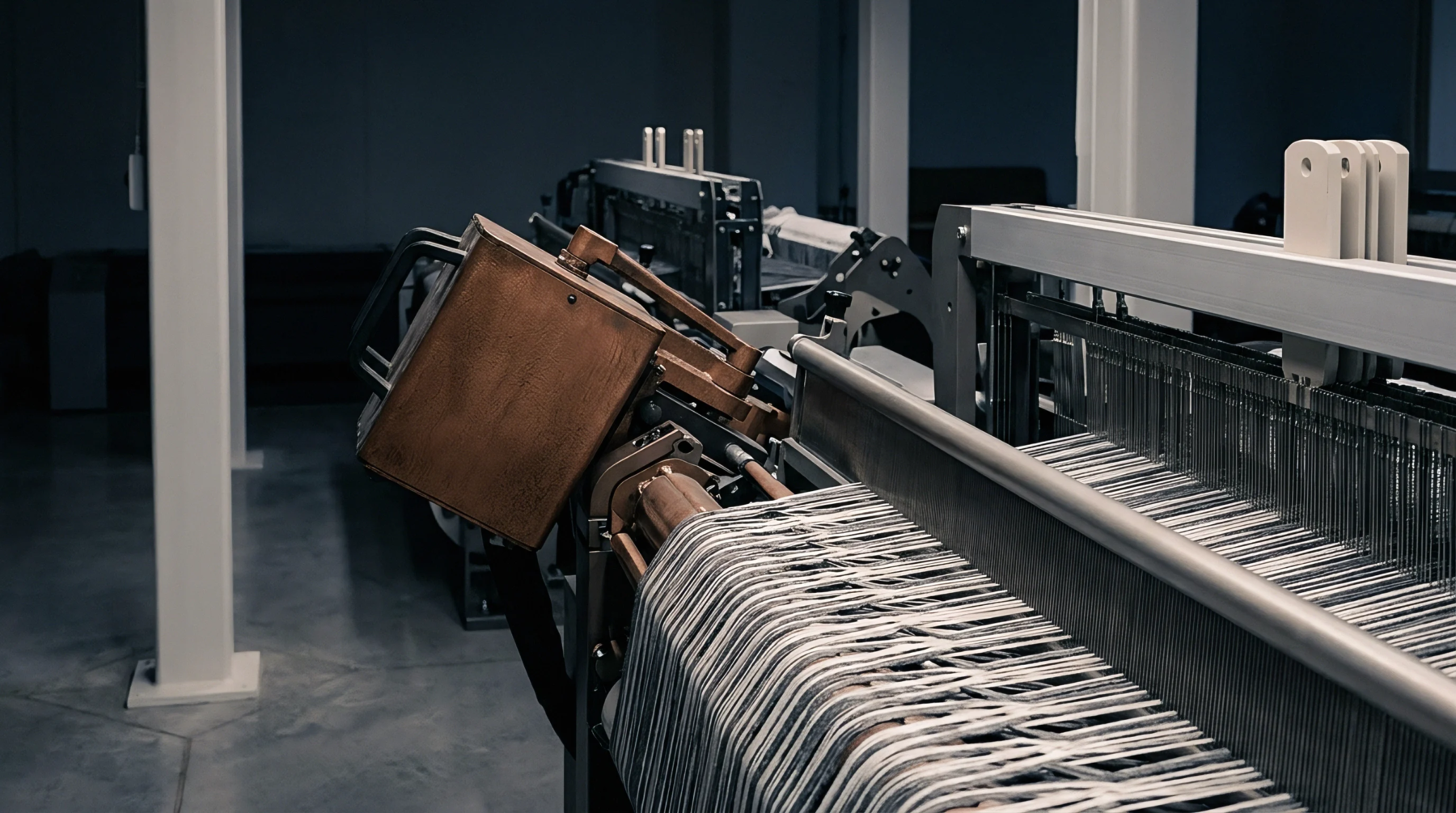
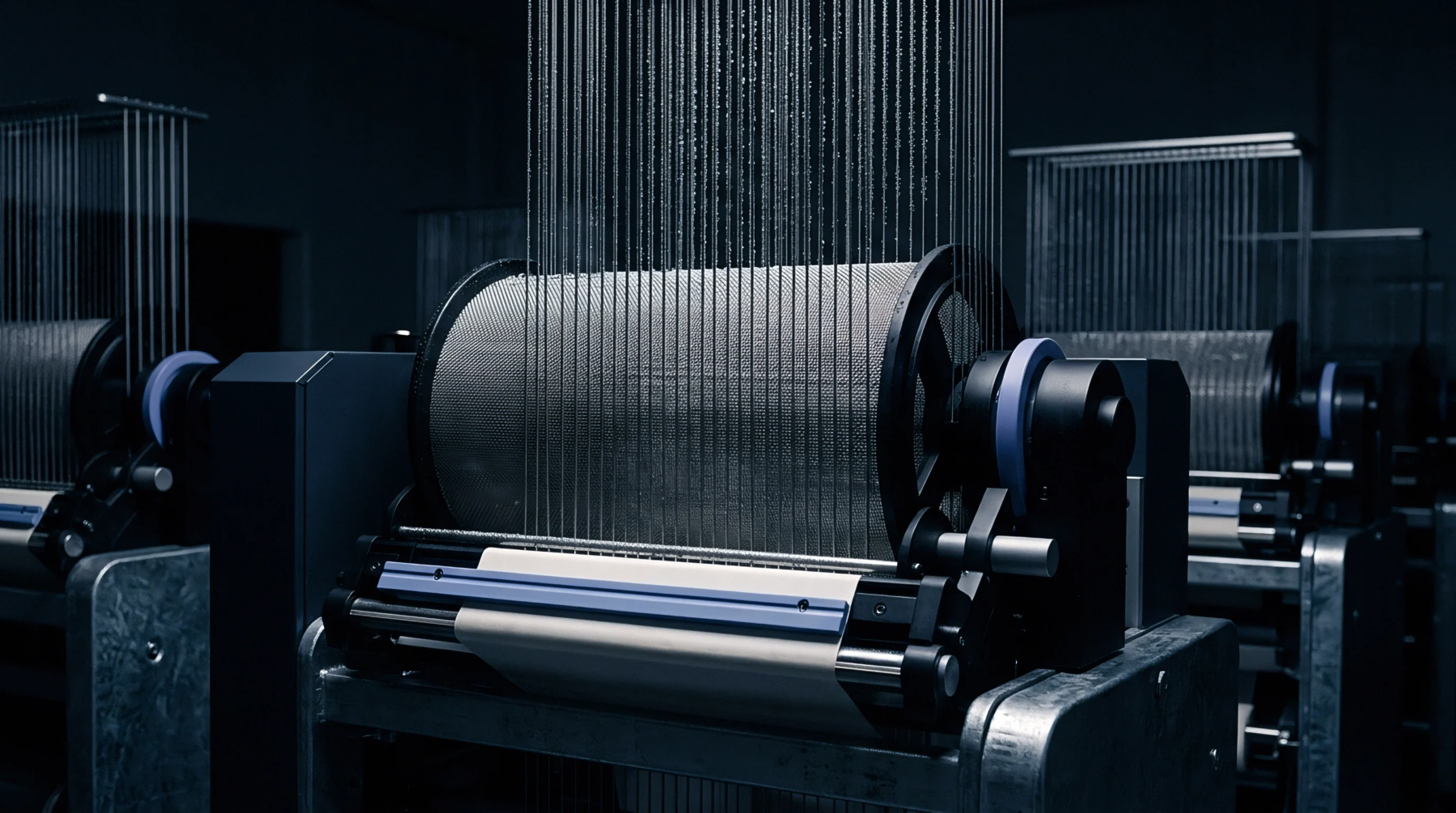
The mathematical proportion between the individual yarn feed lengths pulled from separate warp beams over an identical knitting cycle determines structural balance in multi-guide-bar warp knits. Expressed as a direct comparison of millimetres of yarn consumed per rack of 480 courses, the runner ratio establishes the structural geometry, loop interaction, and mechanical recovery of composite stitches. Designers and technicians adjust this proportional relationship between front, middle, and back guide bars to achieve target fabric weights, surface textures, and recovery characteristics.
This proportion governs the interaction between separate yarn systems and does not measure individual yarn tension or downstream finishing relaxation.
Kinematic Interplay
Each guide bar in a warp knitting machine moves through independent underlap and overlap cycles, requiring divergent lengths of yarn per stitch. Servomotors or multi-speed gearboxes deliver specific linear runner lengths from each beam to accommodate these individual loop formations. The runner ratio balances these discrete feeding velocities, dictating whether the front or back bar yarn dominates the face or reverse of the textile structure.
A standard two-bar tricot structure might operate on an established proportion such as four to three or three to one, matching the required traverse distances of the pattern bars. Maintaining this linear delivery balance prevents the faster-consuming bar from robbing yarn from the slower system during collective loop formation.
Fabric Defect Prevention
Imbalanced consumption rates distort stitch loops, causing edge curling, poor yield consistency, and unpredictable directional shrinkage. If the operational runner ratio drifts from the specified production recipe, fabric dimensions deviate from structural standards, producing wide or narrow rolls that fail garment cutting plans. Disproportionate delivery forces the tighter warp sheet to absorb excessive loop-forming stress, increasing single-end filaments snaps and machine stop rates.
Perch inspections identify ratio shifts through tracking bands, reduced elasticity, or uneven surface opacity in finished piece goods. Laboratory technicians verify this metric by measuring the unraveled lengths of front-bar and back-bar yarns extracted from marked fabric sections.
Process Bounds
Yarn linear density and elastic recovery must align with target feed proportions to ensure dimensional stability. An identical ratio applied across yarns of disparate tensile modulus produces distinct fabric physical properties, because high-modulus filaments resist loop compression while elastomeric ends compress under stitch tension. Changing the ratio intentionally modifies surface properties from smooth, low-friction fabrics to raised, open-mesh structures.
The metric relies on constant beam unwinding and will show apparent shifts if beam flanges run eccentric or dynamic yarn tension wanders. Fine-gauge warp frames require strict calibration of electronic letoff motors to maintain this feed relationship across varied ambient temperature ranges.