Calculating Loom Reed Width from Warp Crimp and Fabric Sett
Calculating correct loom reed width requires combining off-loom grey contraction, finished warp sett, and weft crimp percentage into one unified formula.
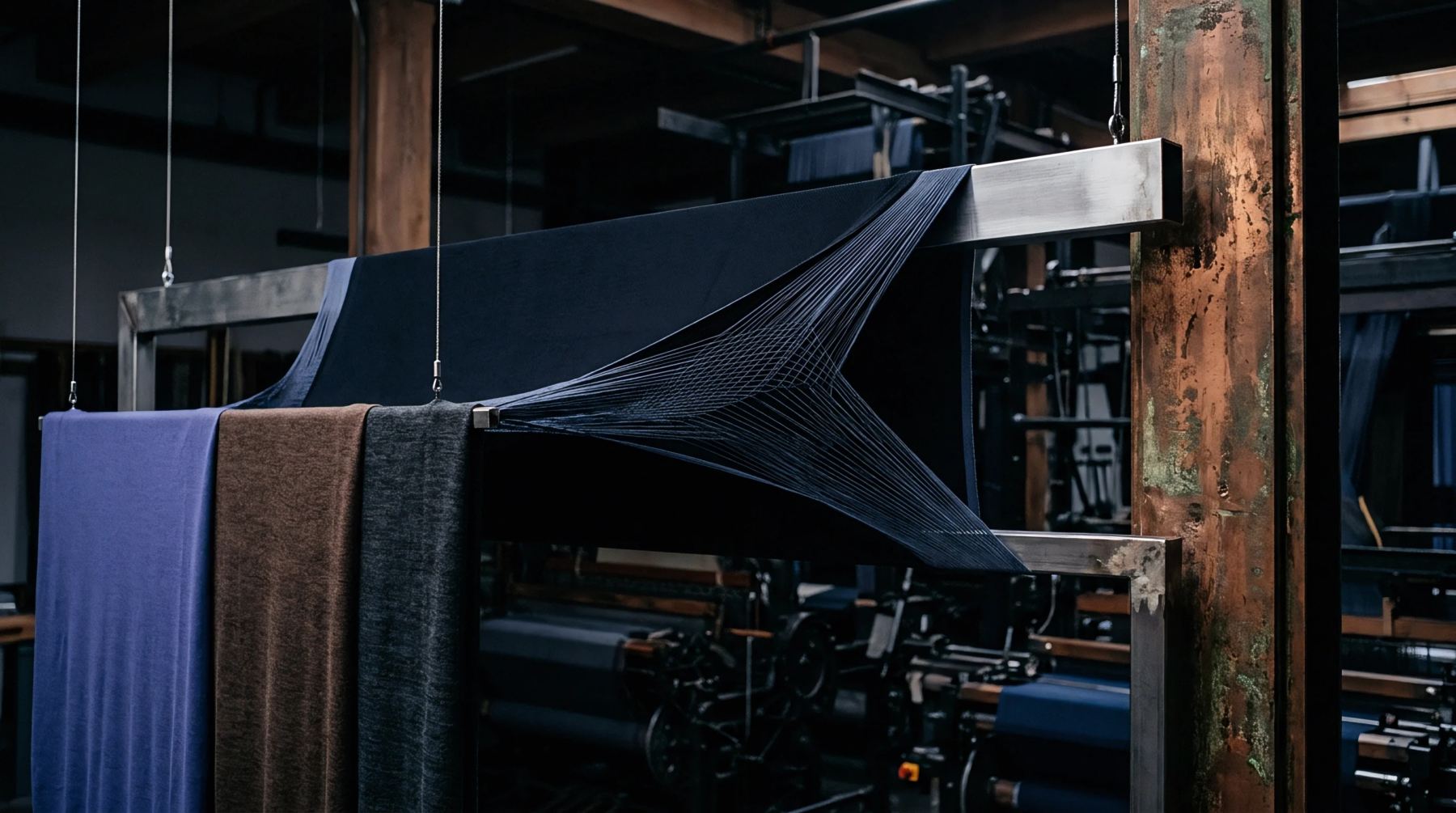
Lateral displacement of the outer edges of a fabric toward the center during weaving caused by the tension of the filling yarn as it turns at the boundary of the cloth. Selvage draw-in is a common occurrence in the weaving process and must be carefully managed to prevent width loss and edge defects. As the weft yarn is pulled across the shed and then reverses direction, it exerts a force on the outermost warp threads.
This force pulls the edges inward, creating a fabric that is slightly narrower at the selvage than in the body. The amount of displacement depends on the tension of the filling yarn and the strength of the selvage construction. To counteract this, weavers often use a different weave structure or heavier yarns for the edges.
Total width of the fabric is affected by the inward movement of the edges, which can lead to problems during the subsequent finishing and cutting stages. Selvage draw-in is a major factor in the difference between the width of the warp in the reed and the actual width of the cloth on the take-up roll. If the draw-in is excessive, the fabric may become distorted and the selvages may become tight or wavy.
This can make it difficult to maintain a straight grain and can lead to waste in the garment factory. Technicians monitor the fabric width constantly and adjust the tension of the filling yarn or the settings of the temple rollers to control the draw-in. Temples are small spiked rollers that hold the fabric at its full width as it is being woven.
Strength and appearance of the fabric edges are critical for the durability and usability of the final product. Selvage draw-in can cause the outer yarns to become crowded and abraded, leading to fraying or breakage. A well-controlled selvage is flat, straight and has the same tension as the rest of the fabric.
This is achieved by carefully selecting the selvage yarns and the weave pattern. For example, a plain weave selvage on a twill fabric can provide extra stability and reduce the amount of inward pull. High-quality textiles are inspected for the consistency of the selvage and the absence of any puckering or curling.
Use of specialized equipment on the loom allows weavers to minimize the effects of the inward force exerted by the filling yarn. Selvage draw-in is managed through the use of temples, edge cutters and tensioning devices. Modern looms use electronic sensors to monitor the width of the fabric and adjust the temple pressure in real-time.
This level of control is necessary for high-speed weaving and for producing fabrics with very tight dimensional tolerances. If the draw-in is not properly managed, it can lead to mechanical problems such as the fabric pulling out of the temples or catching on the reed. Maintaining the correct settings for the selvage control devices is a standard part of the loom maintenance schedule.
Proper edge management ensures that the fabric is easy to process and meets the customer’s expectations for quality.
Calculating correct loom reed width requires combining off-loom grey contraction, finished warp sett, and weft crimp percentage into one unified formula.
Expertise is a utility, not a secret. sentiention™ publishes its working knowledge as open reference: intelligence layer covering the materials it sources, the markets it enters, and the reference that serves both.