Color Variance
Transverse shade variation across the width of a finished fabric roll represents a critical defect that can lead to visible color mismatches in assembled garments. The phenomenon known as side-center-side shade variation occurs when there is a difference in dye absorption or finishing chemical concentration between the edges and the middle of the fabric. This gradient is highly problematic because parts of the same garment cut from different sections of the roll will not match when sewn together.
Measurement Practice
Technicians evaluate this variation by taking spectrophotometer readings at three points across the width of the fabric, specifically near both selvages and in the center. These colorimetric measurements are compared against each other to calculate the delta-E values, which represent the total color difference. Analyzing these three distinct points across the fabric web ensures that any lateral shade variation is detected before the roll is released to the cutting room.
Operational Cause
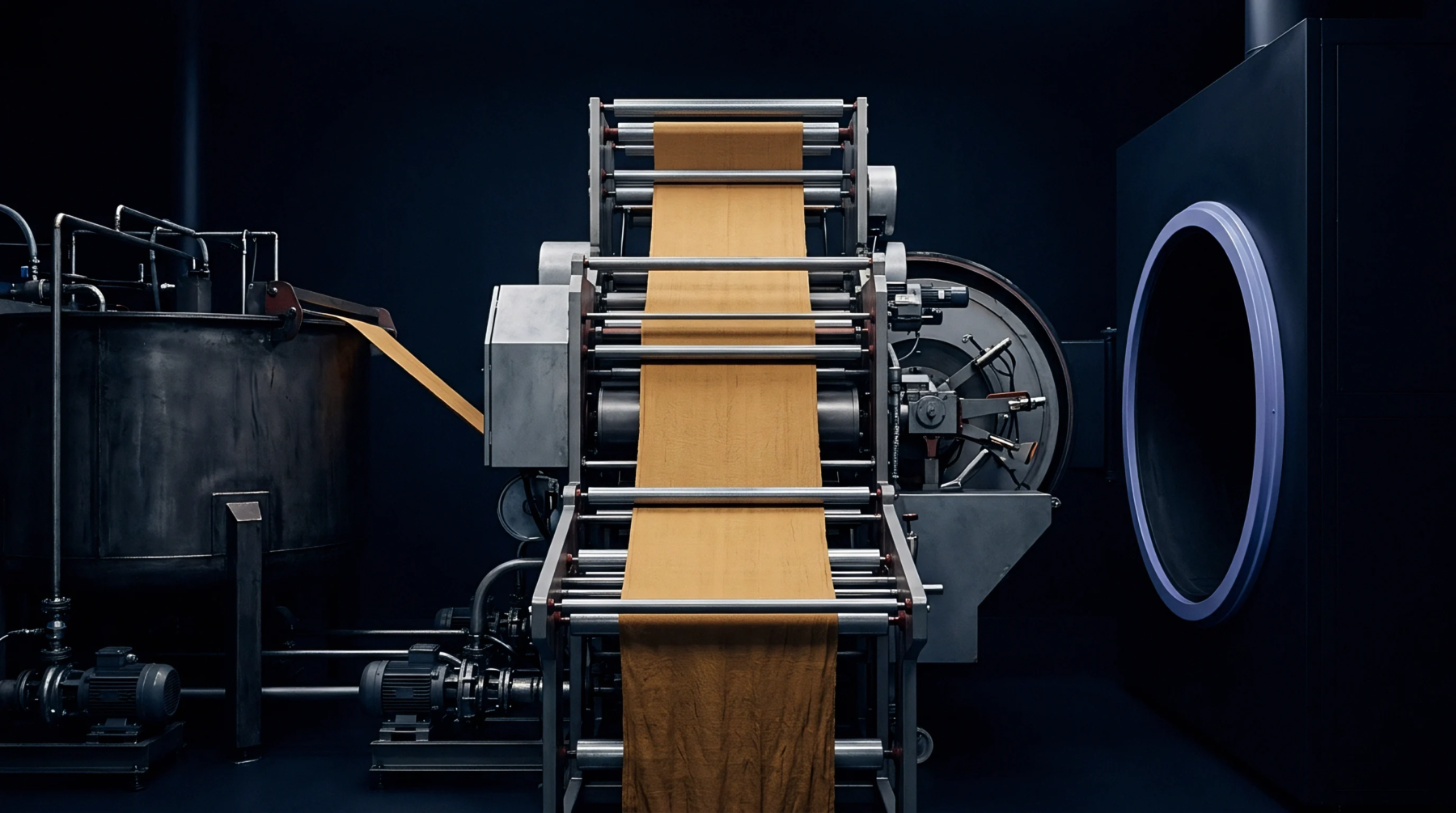
Uneven pressure across the padder rollers or temperature fluctuations across the width of the stenter frame are the primary drivers of this defect. These mechanical imbalances lead to uneven moisture extraction and dye migration during the drying process.
Commercial Tolerance
Brand specifications typically allow very small color differences across the fabric width, often requiring delta-E values to remain below one. Rolls that exceed this threshold are rejected or must be carefully laid out during cutting to prevent adjacent panels from showing mismatched shades.