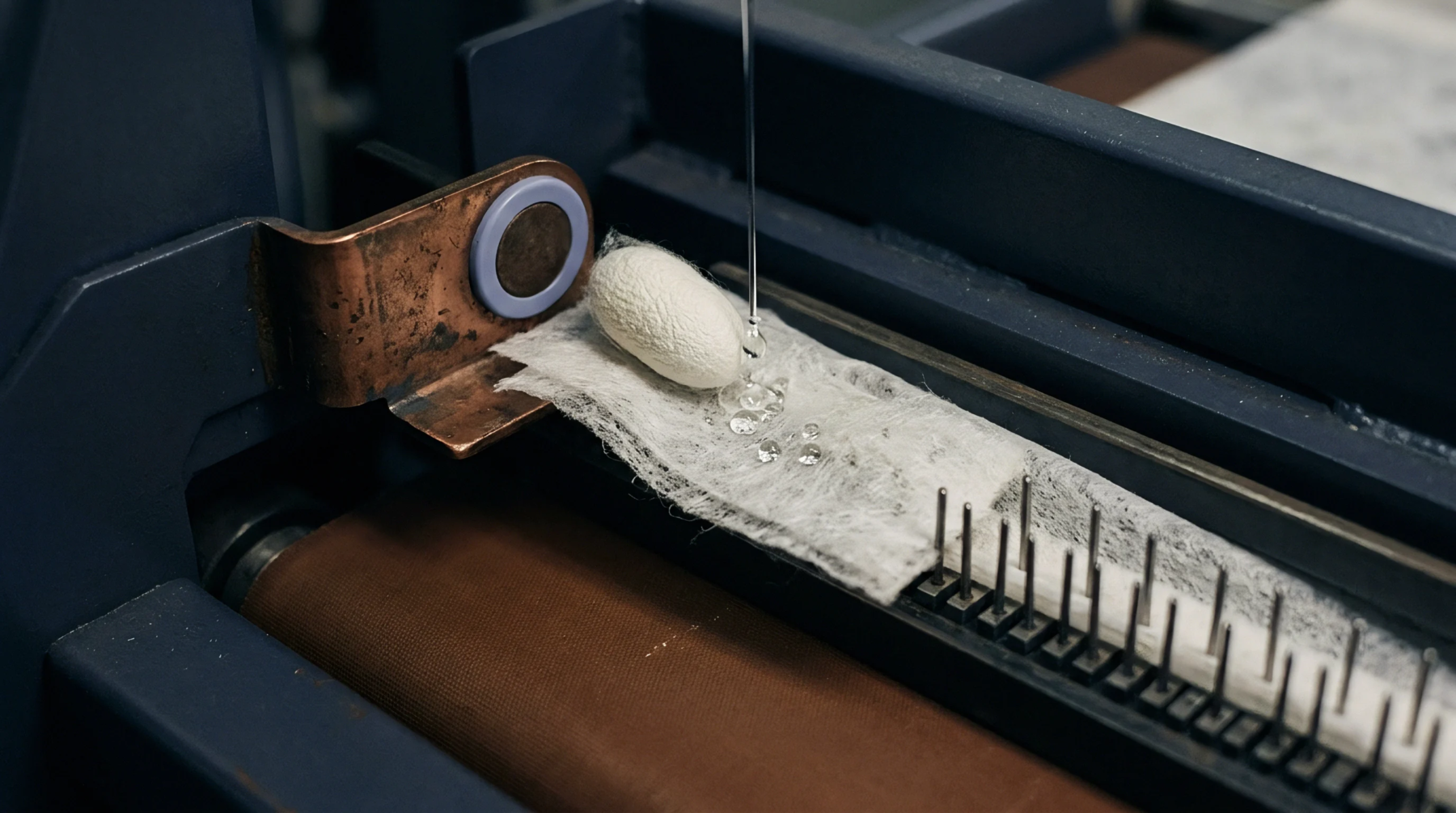
Chemical Solvent
Aqueous solutions of sodium zincate are used in analytical laboratories to dissolve specific regenerated cellulose fibers from fiber blends. The sodium zincate solvent provides a non-acidic method for separating viscose and modal from cotton during quantitative fiber analysis. This chemical separation is necessary to determine the blend ratio of the yarn.
Fiber Dissolution
The reagent selectively dissolves the regenerated cellulose while leaving the cotton fibers intact, which allows for an accurate gravimetric measurement of the remaining material. In this test, the sodium zincate solvent is prepared by dissolving zinc oxide in concentrated sodium hydroxide solution. The textile sample is immersed in this solution at room temperature for a specified period and then filtered.
This procedure leaves the cotton fibers behind, which are then rinsed, dried, and weighed.
Laboratory Verification
Chemists calculate the percentage of each fiber type in the blend by comparing the dry weight of the residue with the initial dry weight of the sample. If the sodium zincate solvent is too concentrated or used at the wrong temperature, it can partially dissolve the cotton fibers, which leads to inaccurate results. This calculation is a standard method in quality laboratories that verify fabric composition for customs declarations.
This test ensures that the garment matches the fiber content label.
Process Boundary
The solvent is effective for separating viscose and modal from cotton. It is not suitable for separating synthetic fibers like polyester or nylon, which do not dissolve in this reagent.