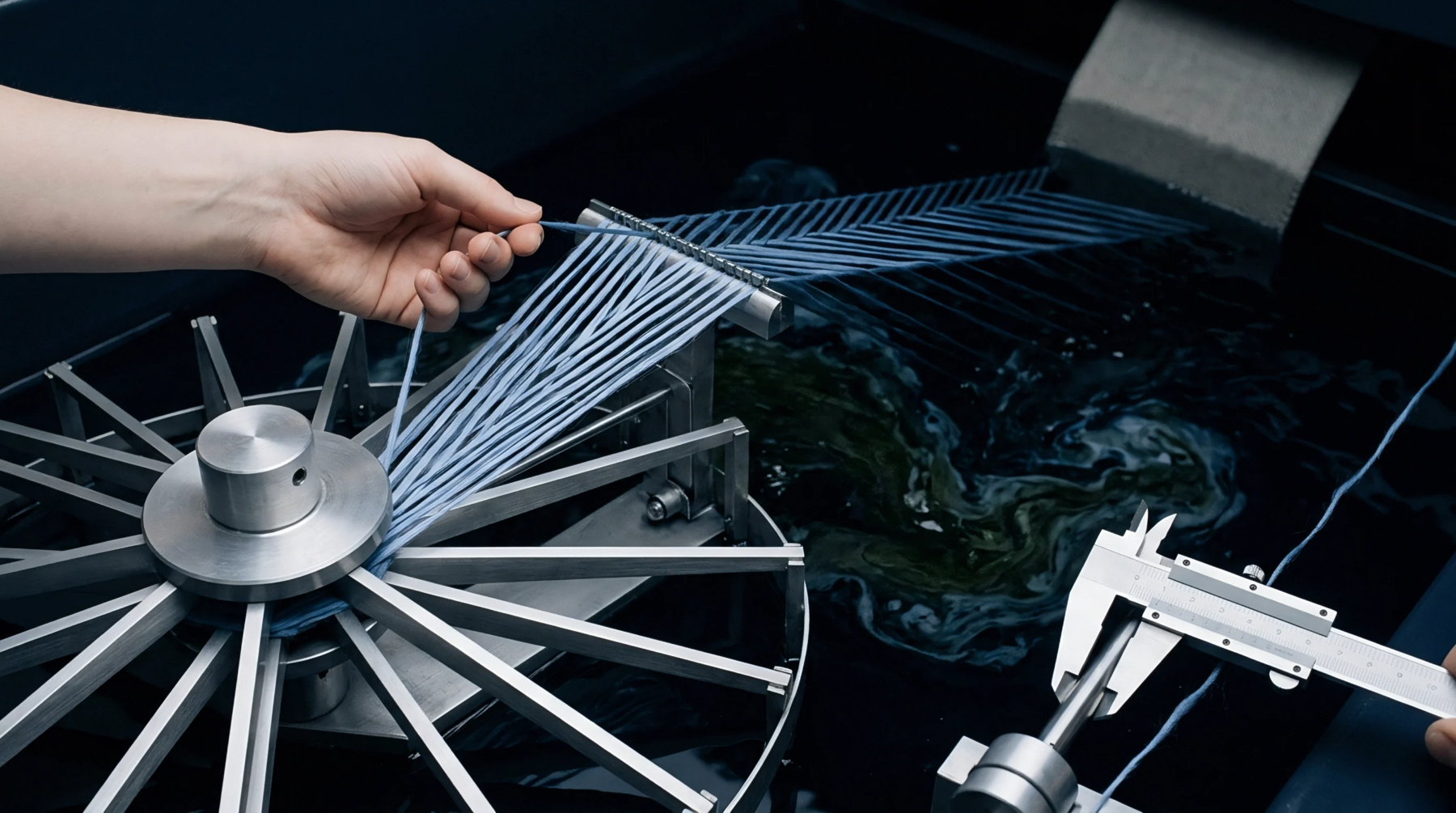
Controlling Wet Processing Auxiliaries in Subcontracted Wash Operations
Controlling subcontracted wash auxiliaries demands locked positive chemical lists, barrel tamper seals, and machine-side testing before garment lot immersion.
Contractual frameworks governing technical service agreements define the boundary where manufacturing support begins and ends for specialized textile machinery. Mill operators negotiate these formal arrangements to secure engineering assistance, diagnostic intervention, and routine maintenance schedules from equipment builders. Provisions within the document outline response times for mechanical failures, availability windows for remote diagnostics, and the allocation of replacement parts during unexpected downtime.
Each clause establishes specific performance thresholds that the service provider must maintain throughout the operational lifespan of the spinning frames, looms, or dyeing vessels. Authority over arbitration procedures and liability limits rests inside the governing text, which protects both parties from unbounded financial exposure during catastrophic component failures. Commercial terms also detail the billing structure for scheduled interventions versus emergency callouts, separating baseline subscription fees from variable labor charges.
Technical service agreements establish the sequence of events triggered when an automated loom halts due to a mechanical fault or electronic sensor failure. Plant technicians initiate a support ticket through a secure portal, transmitting error codes and telemetry data gathered directly from the integrated controllers on the floor. Service engineers analyze the incoming diagnostics remotely to determine whether the issue requires software reconfiguration or dispatching a field technician with replacement assemblies.
Onsite repairs commence only after the provider verifies part availability in regional warehouses, minimizing the duration of halted production runs for high-volume yarn processors. Diagnostic reports generated during the repair cycle update the central maintenance log, providing quality managers with auditable records for ISO compliance reviews.
Technical service agreements limit financial recovery by establishing explicit caps on damages recoverable by the mill when machine failure halts production. Exclusions within the indemnity clauses protect the machinery vendor from consequential losses arising from operator error, substandard raw materials, or failure to follow prescribed lubrication schedules. Service providers maintain specific insurance coverage verified annually by purchasing departments, ensuring adequate financial backing for claims involving property damage during major overhauls.
Provisions dictate that downtime resulting from delayed spare parts delivery carries predetermined daily penalties deducted directly from pending maintenance invoices. Jurisdictional clauses determine the applicable legal framework governing disputes, ensuring consistency when multinational equipment manufacturers contract with domestic weaving operations.
Technical service agreements dictate the deployment of specialized engineering personnel and diagnostic instruments across multiple manufacturing sites operated by a single textile group. Tiered support models prioritize emergency interventions for high-speed spinning facilities over auxiliary finishing plants, reflecting differences in contractual maintenance fees. Resource schedules guarantee access to certified technicians trained on specific controller architectures, reducing the risk of improper calibration during complex retrofits.
Inventory reserves held in local depots are contractually bound to the service agreement, ensuring that critical components for dyeing automation remain segregated from general commercial stock. Utilization metrics compiled quarterly track engineer response times against baseline commitments, providing data for subsequent contract renewals or penalty enforcement.
Controlling subcontracted wash auxiliaries demands locked positive chemical lists, barrel tamper seals, and machine-side testing before garment lot immersion.
Expertise is a utility, not a secret. sentiention™ publishes its working knowledge as open reference: intelligence layer covering the materials it sources, the markets it enters, and the reference that serves both.