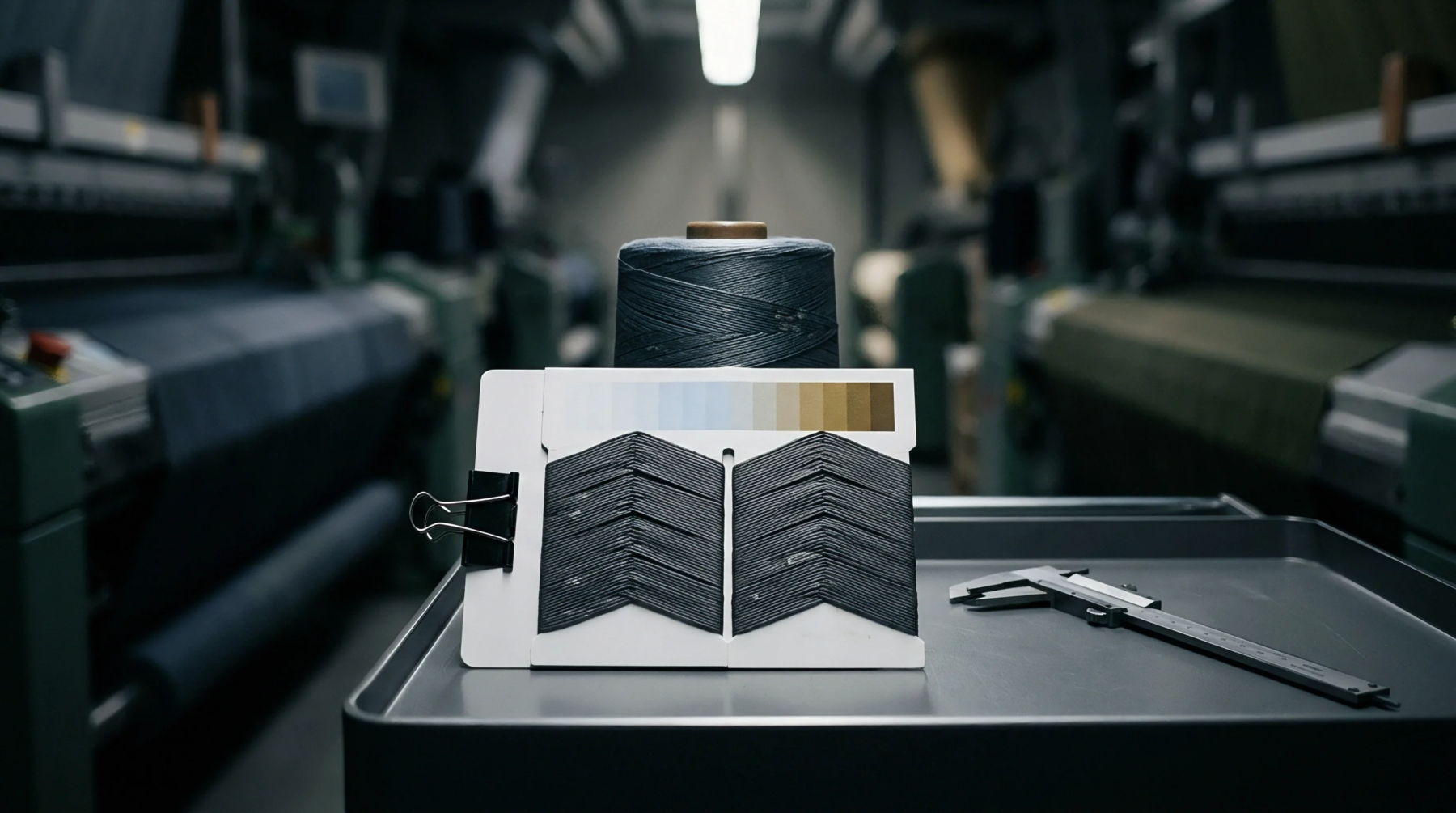
Cellulosic Fibre Hydrolysis Kinetics in Exhaust Dyehouse Operations
Exhaust cellulosic dyeing demands progressive alkali dosing and strict pH control to prevent glycosidic cleavage from destroying fabric bursting strength.
Progressive loss of maximum breaking force capacity across textile fibres occurs under cumulative chemical, thermal, mechanical or photochemical stress. Fabric engineers track tensile strength decay across processing steps, industrial laundering and outdoor weathering to establish end-use durability and product lifespans. The metric quantifies the downward deviation in ultimate tensile load against initial unexposed control values, expressed as a retention percentage or absolute loss in newtons.
The scope governs longitudinal load-bearing degradation on fibers, spun yarns and planar fabrics, stopping where localized puncture, tear propagation or immediate mechanical rupture takes precedence. Degradation rates depend directly on polymer composition, presence of stabilizing additives, processing temperature and duration of exposure to aggressive environments.
Molecular scission of long-chain polymer backbones drives physical strength loss within the fibre microstructure. Bleaching cycles, acidic desizing and prolonged exposure to ultraviolet radiation induce tensile strength decay by breaking covalent bonds within synthetic or natural polymers. In cellulosic materials, excessive hydrogen peroxide concentrations or improper pH control during scouring trigger catalytic cellulose depolymerization, cleaving glucose rings and reducing the degree of polymerization.
Similarly, polyamide yarns exposed to industrial acidic atmospheres undergo rapid hydrolytic chain cleavage, showing catastrophic strength loss despite maintaining an unaltered visual appearance. Synthetic polyester withstands hydrolytic attack under ambient conditions, but degrades when exposed to extreme caustic environments during uncontrolled alkaline weight-reduction finishing.
Material testing laboratories expose conditioned textile swatches to controlled stress cycles inside accelerated weathering chambers, laundering simulators or chemical exposure baths. Evaluating tensile strength decay requires baseline testing of virgin samples under standard conditions followed by periodic testing of exposed samples using constant-rate-of-extension tensile testers. ISO and ASTM standards specify sample preparation using strip or grab tensile configurations, standardizing crosshead speeds and gauge lengths.
Percentage decay equals initial unaged tensile strength minus aged tensile strength, divided by initial strength and multiplied by one hundred. If sample slippage occurs within the tensile testing clamps, breaking load figures become erratic, distorting calculated strength loss curves.
Exceeding acceptable strength reduction thresholds results in fabric failure during garment manufacturing, home laundering or technical deployment. Severe tensile strength decay limits the life of high-performance technical textiles, including fall-protection harnesses, industrial filtration media and outdoor architectural shade awnings. For cotton apparel, biopolishing and chemical resin crosslinking for non-iron performance trade off tensile strength against dimensional stability and smooth drying aesthetics.
Mills limit resin application concentrations to restrict acceptable fabric strength decay to twenty or twenty-five percent against raw greige baseline values. When tensile loss drops past contract limits, apparel displays premature seam failures and fabric holes under normal domestic wear cycles.
Exhaust cellulosic dyeing demands progressive alkali dosing and strict pH control to prevent glycosidic cleavage from destroying fabric bursting strength.
Expertise is a utility, not a secret. sentiention™ publishes its working knowledge as open reference: intelligence layer covering the materials it sources, the markets it enters, and the reference that serves both.