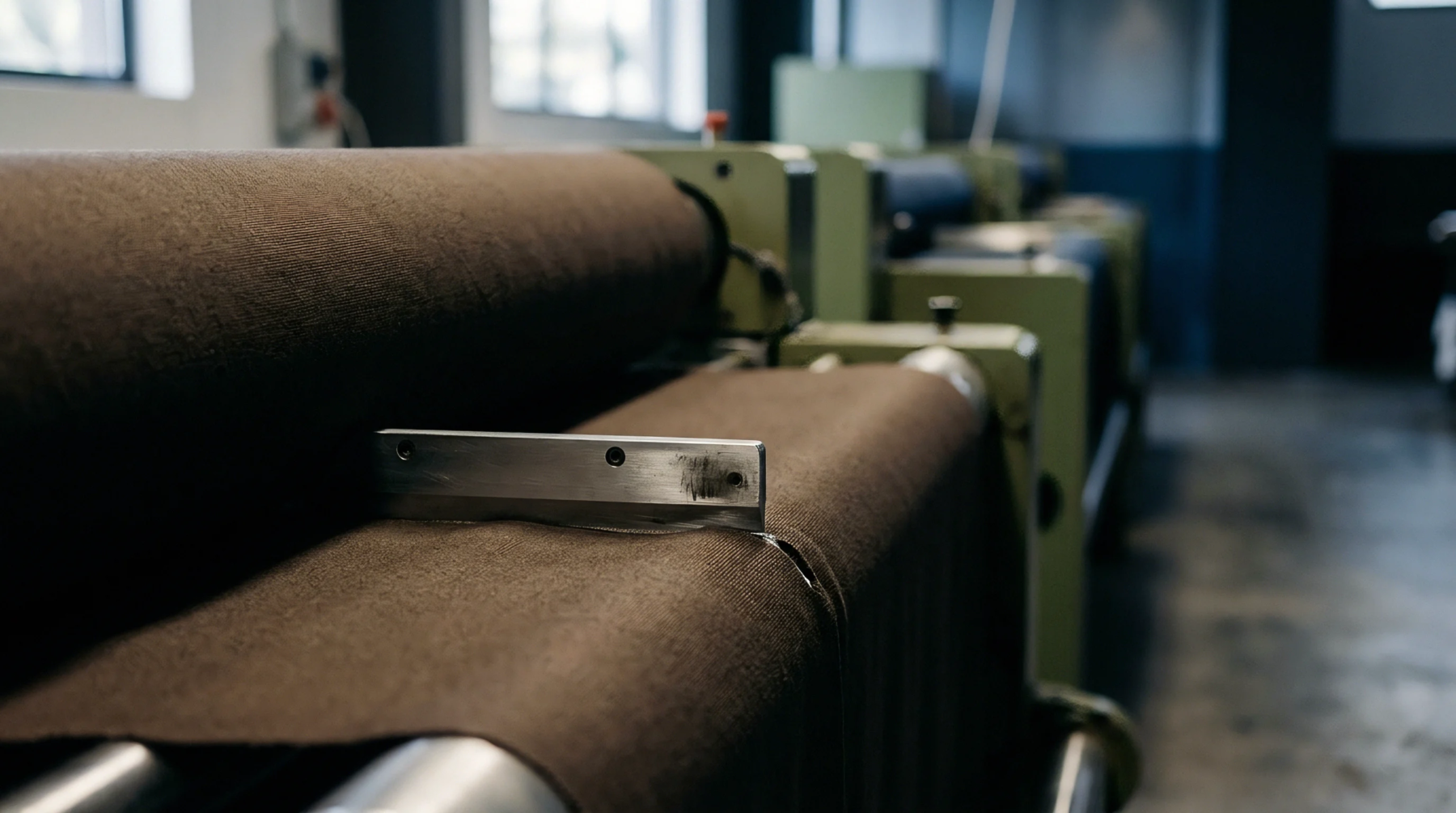
Woven Construction
Frequency of warp and weft yarns within a square unit of fabric, typically measured as ends and picks per centimeter or inch. A high thread sett indicates a dense, tightly woven material with a smooth surface and low permeability. This specification is the primary driver of fabric weight and determines how the material will behave during cutting and sewing.
Design Influence
Weavers adjust the tension on the loom and the speed of the take-up motion to achieve the required thread sett for a specific order. Increasing the density often improves the durability and opacity of the cloth but also consumes more yarn per meter. Designers must balance these physical properties with the desired hand feel and drape of the finished garment.
Production Control
Inspectors use a counting glass or a digital densitometer to verify the thread sett of the fabric as it comes off the loom. This check ensures that the weaving mill has met the technical requirements of the buyer’s specification sheet.
Quality Effect
Variations in the density can cause issues with color consistency and seam strength in the final product. A lower than expected thread sett might lead to excessive fabric slippage at the seams, while a density that is too high can cause needle heating and thread breakage during high-speed sewing. Consistent monitoring of this metric is necessary to maintain the quality standards of a production run.