Lateral Force
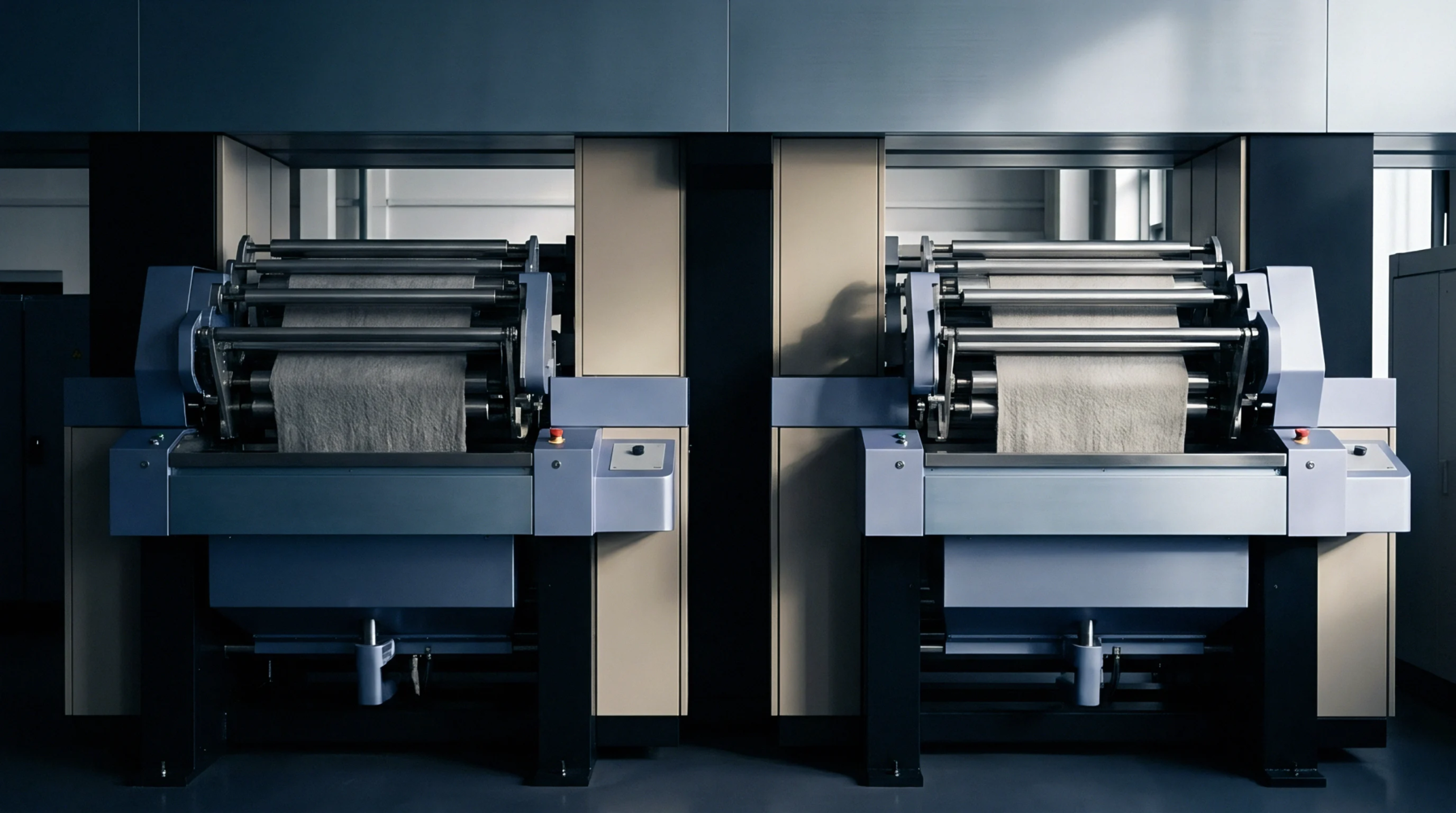
Lateral force across the width of a running material sheet defines the mechanical state where transverse web tension acts to keep the substrate flat against rollers. Producers measure transverse web tension to ensure uniformity across the roll, as variances during production lead to baggy edges or creases in finished textile goods. The mechanical condition originates from winding processes or nip pressure application during dyeing and finishing.
When the profile fails to maintain symmetry, the resulting distortion affects the subsequent coating or printing stages.
Stress Distribution
Force vectors operating perpendicular to the machine direction control the geometry of the fabric while it passes through processing machines. Tension fluctuations cause the material to drift or wrinkle as the internal stress builds up within the structure of the fibres. Machine operators monitor these loads to prevent permanent deformation in sensitive synthetic knits or delicate nonwoven membranes.
Constant adjustment keeps the material track centered without relying on manual intervention.
Processing Impact
Uneven load distribution creates significant quality hazards during heat setting or continuous drying. If the lateral force drops below the requirement, the fabric width narrows and the material moves inconsistently across the guide bars. Excessive force on one side produces bowed or skewed patterns that render the finished piece unsuitable for high tolerance garment manufacturing.
Precise control of the lateral load protects the integrity of the material width throughout the thermal processing cycle.
Control Mechanism
Load cells positioned at the entry and exit points of finishing lines calculate the force exerted across the width of the moving substrate. Feedback loops process these measurements to regulate the speed of the expansion rollers or the angle of the guiding mechanisms. Digital controllers adjust the lateral positioning to counteract deviations before the material enters the next set of nips.
Automated monitoring systems maintain the specified width parameters by continuously balancing the internal forces acting upon the web.