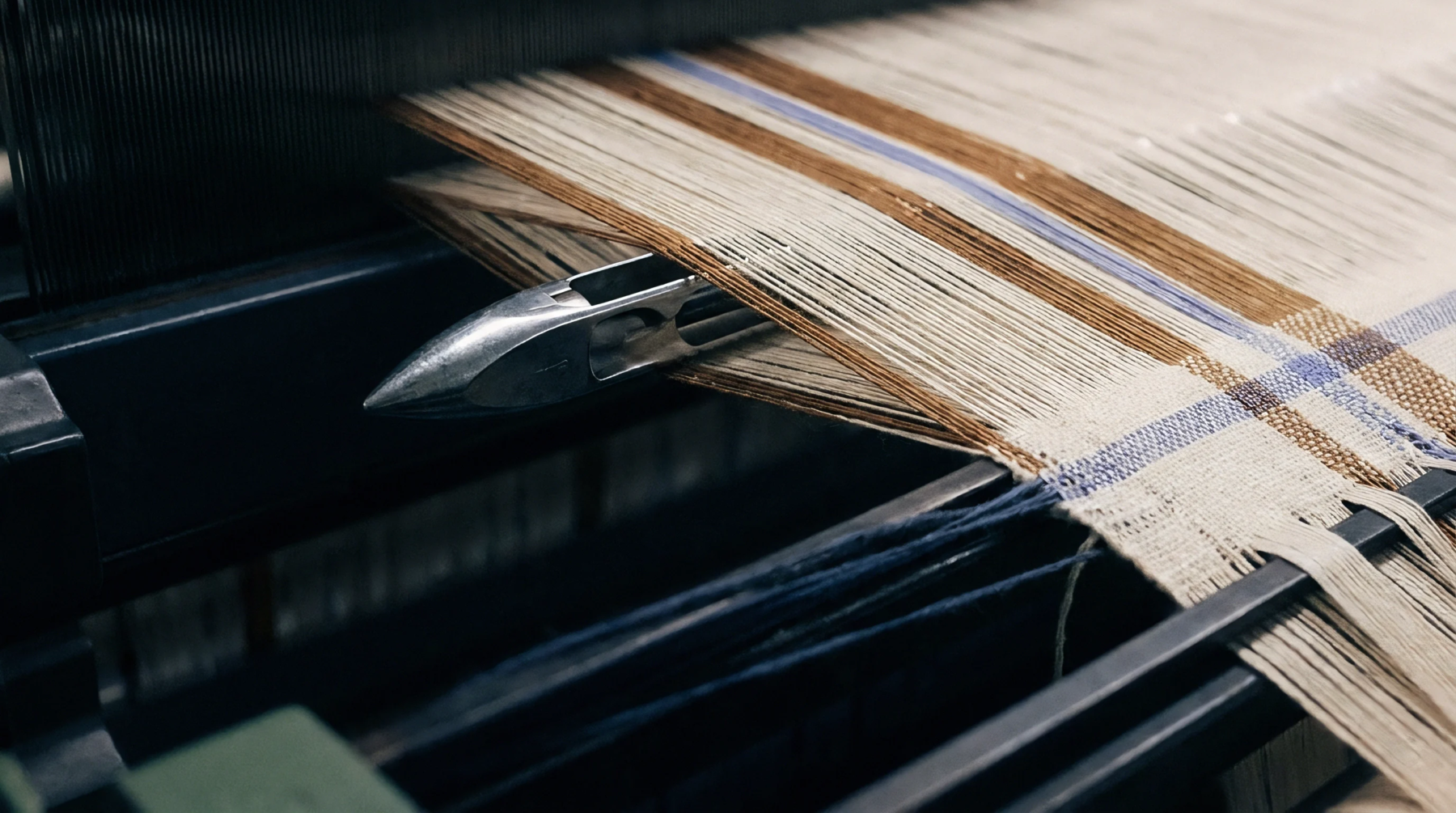
Loom Configuration
Determination of the required number of warp ends per centimeter on the loom ensures that the woven fabric achieves the desired density and weight. This mathematical procedure is the warp set calculation, which is performed before the warp yarn is wound onto the loom beam.
Density Determination
Weaving structures require different warp densities to achieve structural stability without causing excessive yarn friction during shedding. Through warp set calculation, the designer balances the yarn diameter and the weave repeat to find the optimal density. The formula uses the yarn count and the weave pattern to determine how closely the warp ends should be spaced in the reed.
An incorrect calculation leads to either an unstable, loose fabric or a jammed weave that causes high warp breakage rates on the loom, reducing weaving efficiency.
Yarn Selection
Fine yarns require a higher warp density to produce a cohesive fabric, which increases the warp set. The warp set calculation must adjust for the fiber type, as synthetic and natural yarns exhibit different packing densities under the pressure of the loom reed.
Finished Properties
Fabric weight and tear strength depend directly on the correct number of warp ends per unit width. Proper calculation ensures that the finished textile meets the structural specifications required for industrial or apparel applications.