Operational Interruption
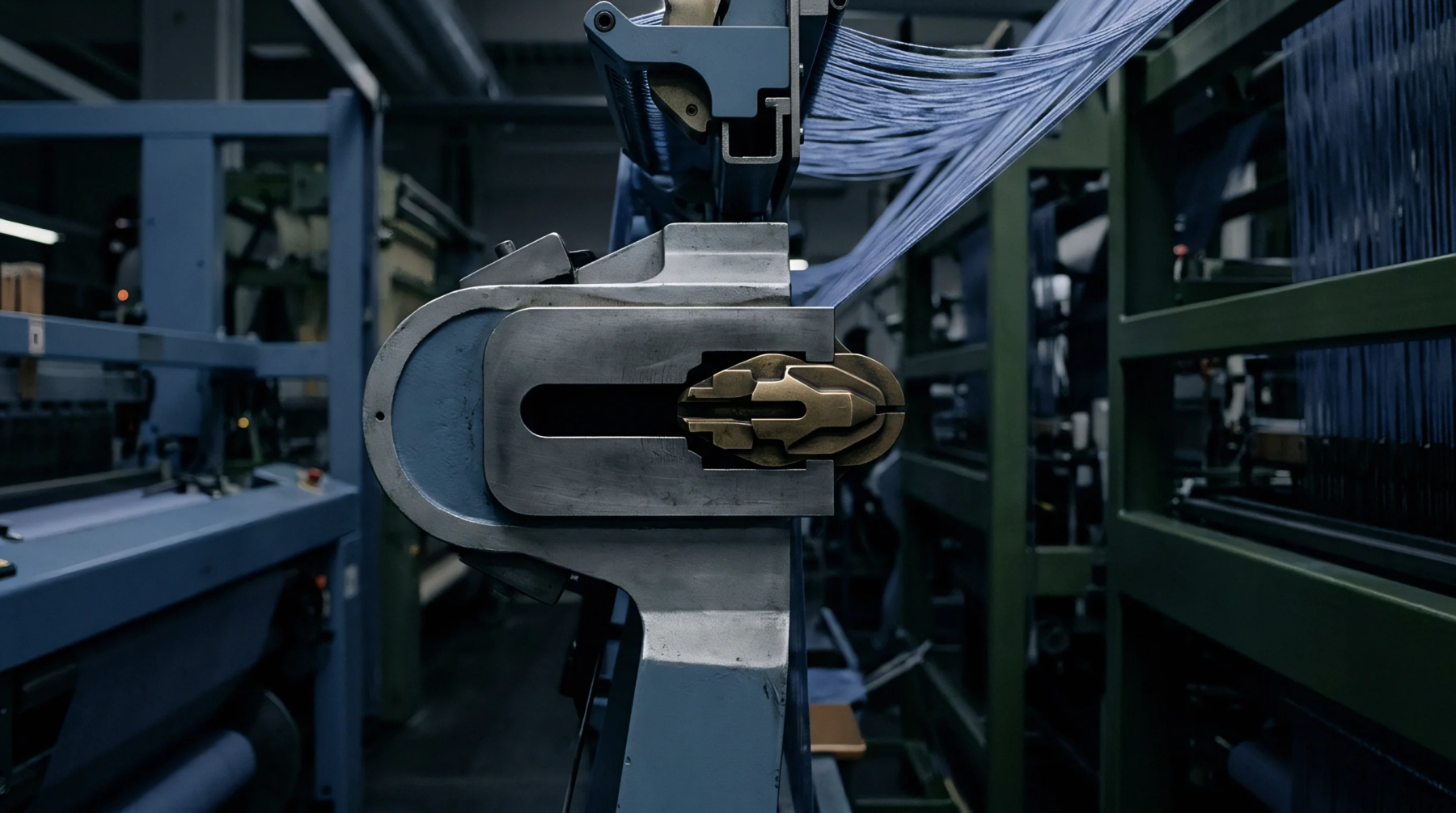
Looms running at high speed require a clean separation of warp yarns to allow the insertion of the weft without obstruction. The warp shed cling stops are automatic machine shutdowns triggered when sticky or hairy yarns fail to separate properly during the shedding cycle. This operational issue represents a significant source of inefficiency in weaving mills.
Physical Cause
When the loom’s harnesses move to separate the warp ends into an upper and lower sheet, individual yarn fibers can entangle or stick together. The warp shed cling stops occur because these entangled strands block the passage of the projectile, rapier, or air jet, causing the fill insertion sensor to halt the machine. This clinging behavior is often caused by excessive yarn hairiness, insufficient or uneven sizing, or high humidity in the weaving room.
If the outer fibers of adjacent yarns are not locked down by the sizing agent, they migrate outward and lock together like hook-and-loop fasteners.
Mill Prevention
Preventing these interruptions requires careful management of the yarn preparation and sizing processes. Weaving mills can reduce the frequency of warp shed cling stops by applying a high-quality sizing recipe that binds loose fibers to the yarn core. Sizing agents like starch and polyvinyl alcohol must be paired with appropriate lubricants to create a smooth, slick coating.
Additionally, maintaining the correct relative humidity in the weave room prevents the sizing from becoming too soft and sticky, which would otherwise encourage the warp ends to adhere to one another during shedding.
Production Diagnostic
Tracking the rate of these machine stops is a key diagnostic method for evaluating warp preparation quality. Frequent warp shed cling stops indicate a failure in the sizing recipe, a low level of yarn twist, or an incorrect density of ends in the loom setup. Weaving managers analyze stop-report data to identify problematic loom beams and adjust production parameters on the sizing line for future batches.
Minimizing these stops is essential for reducing labor costs, as each stop requires an operator to manually clear the cling and restart the loom.