Size Redistribution
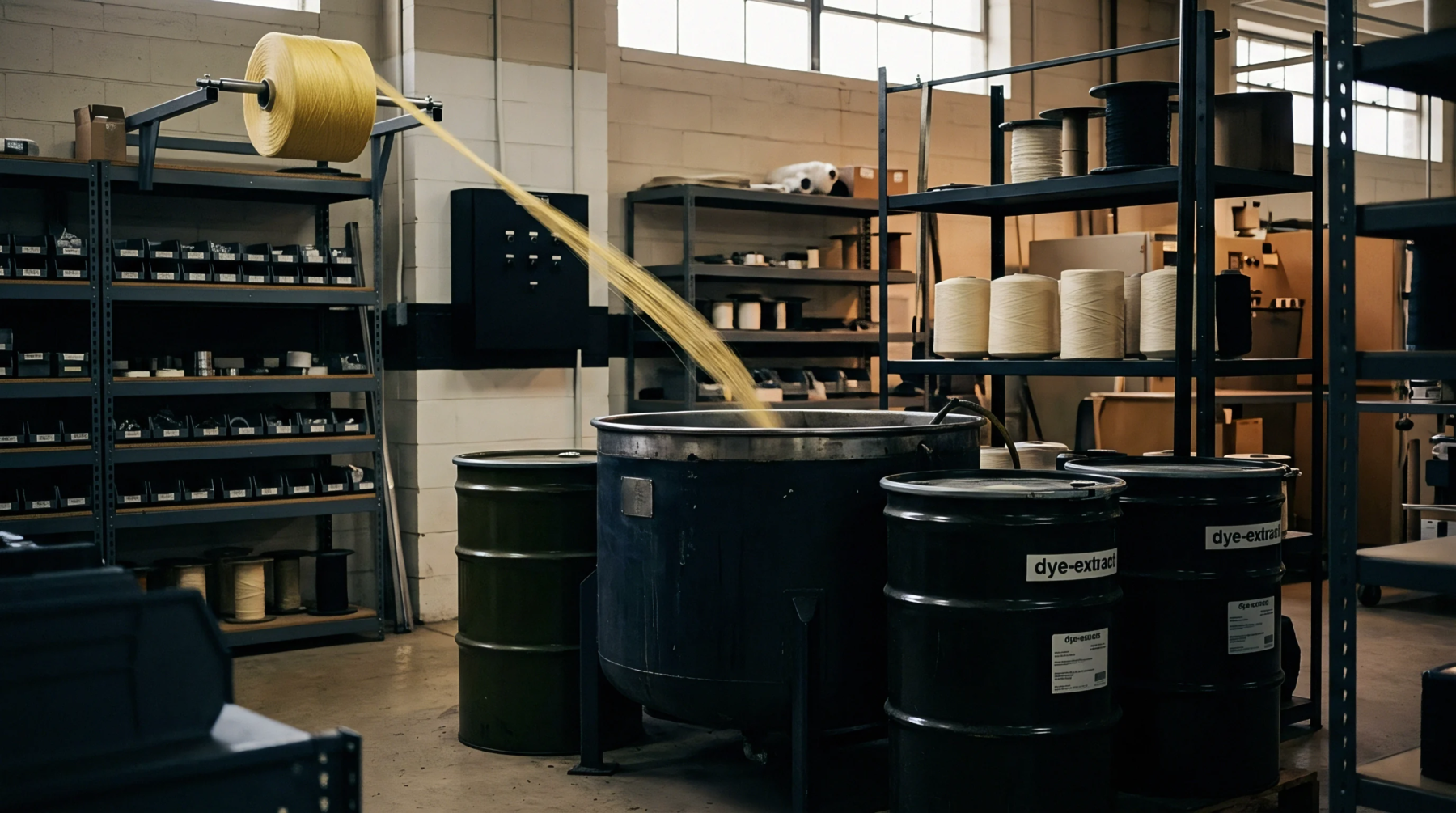
Movement of liquid sizing agent from the center of a yarn bundle to the outer yarn surface occurs during the drying stage of warp preparation. This physical phenomenon, termed warp sizing migration, is driven by the evaporation of water that carries the dissolved polymer with it. The result is an uneven distribution of the protective size film, leaving the core of the yarn weak and vulnerable.
It is controlled by optimizing dry cylinder temperatures and using high-solids size mixes.
Weaving Problems
When the size polymer accumulates on the outer surface, it makes the yarn brittle and stiff. This brittle shell easily cracks and flakes off during loom operations, causing heavy dusting and warp yarn breakages. It also leaves the yarn core without sufficient lubricant, which increases friction against loom parts.
Mill operators use split-drying configurations to minimize the temperature difference across the yarn.
Drying Rate Control
Slower initial drying allows the water to evaporate without creating a rapid liquid flow that drags the size to the surface. Infrared pre-drying is often used to heat the yarn uniformly.
Desizing Impact
Concentrated surface size is also more likely to undergo crystallization when exposed to intense heat. This makes the subsequent desizing process more difficult.