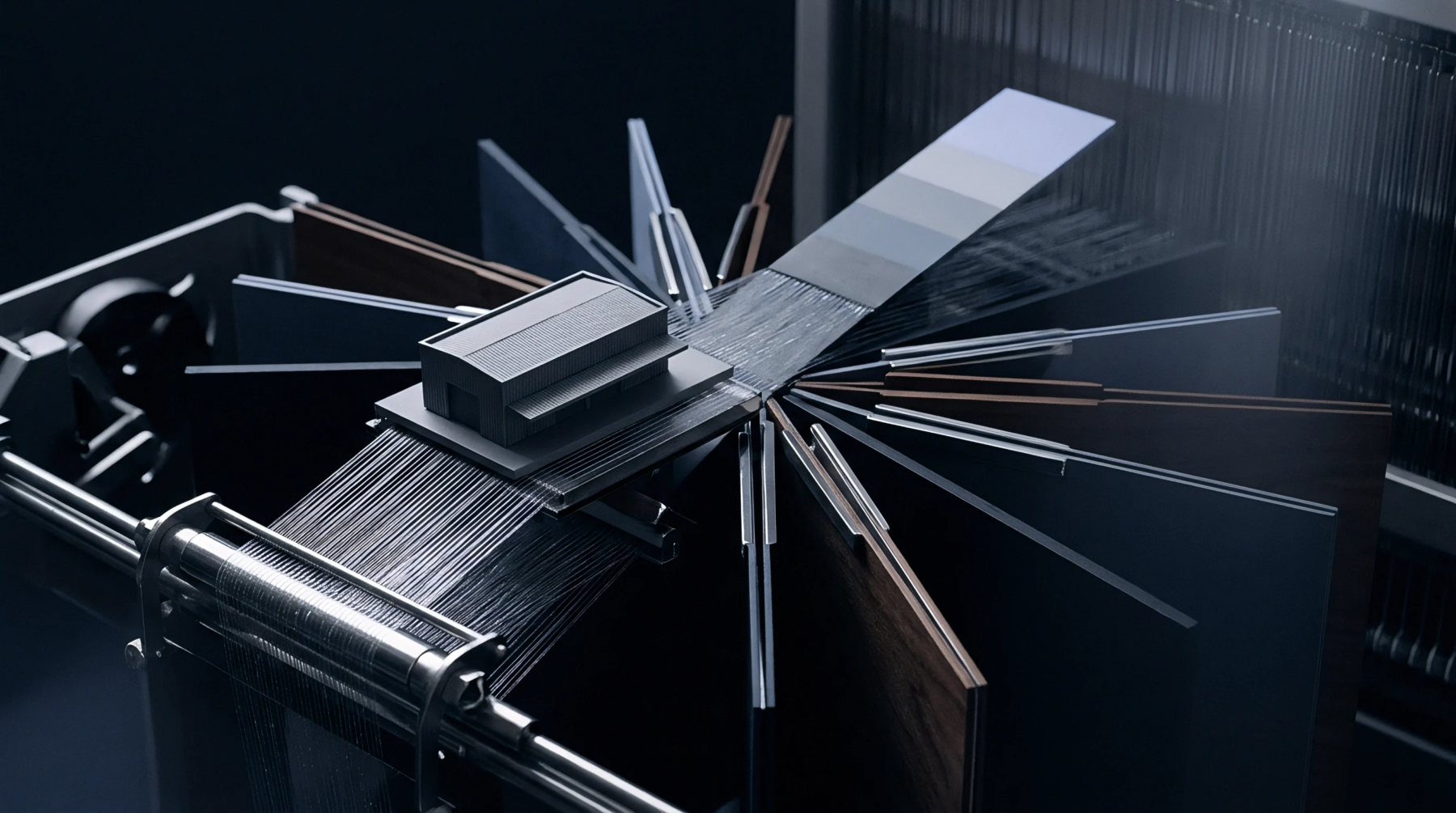
Tensile Limit
Mechanical stress acting on the lengthwise yarns during weaving produces warp strain fatigue over repeated shedding cycles. Tension fluctuations occur continuously as heddles lift individual ends against the reed. High speed projectile looms generate severe friction points where constant cyclic loading degrades yarn integrity before cloth formation finishes.
Unlubricated polyester monofilaments suffer accelerated molecular breakdown under such repetitive extension. Excessive tension profiles create brittle zones inside the yarn body. Laboratory tensile testers measure residual breaking strength reduction after standardized cyclic loading protocols.
Commercial inspection desks verify loom settings when yarn breakage rates exceed contractual allowances in grey goods.
Cyclic Degradation
Continuous mechanical repetition alters internal polymer alignment within individual filaments. Extensional stress introduces microscopic fissures along the yarn surface during beam unwinding. Fatigue accumulation depends on loom timing and shed geometry rather than static breaking load alone.
High density constructions experience greater frictional contact at the drop wires. Molecular chains lose their elastic recovery after millions of repeating cycles. Bulk production runs reveal strength losses that standard static tests fail to detect.
Mill operators monitor stop motions closely because localized weak spots trigger frequent loom halts.
Tension Tolerance
Machine calibration keeps lengthwise forces within safe operational windows. Yarn elongation limits dictate maximum allowable speeds on high production air jet looms. Excessive weight on the warp beam accelerates structural failure in fragile cotton blends.
Proper sizing applications coat individual ends with protective films to absorb frictional heat. Tension sensors mounted near the back rest provide continuous feedback to the let off motion. Production managers adjust weights on the tension levers whenever yarn elasticity shows premature decline.
Failure Margin
Remaining breaking strength dictates whether woven grey goods pass final mechanical screening. Structural degradation becomes irreversible once micro voids coalesce into macroscopic cracks across the filament cross section. Laboratory dynamometers record elongation at break to quantify the extent of internal damage.
Fabric buyers reject lots showing excessive tensile loss because finished garments fail seam slippage standards. Final verification relies on destructive testing of small swatches clipped directly from the loom state roll.