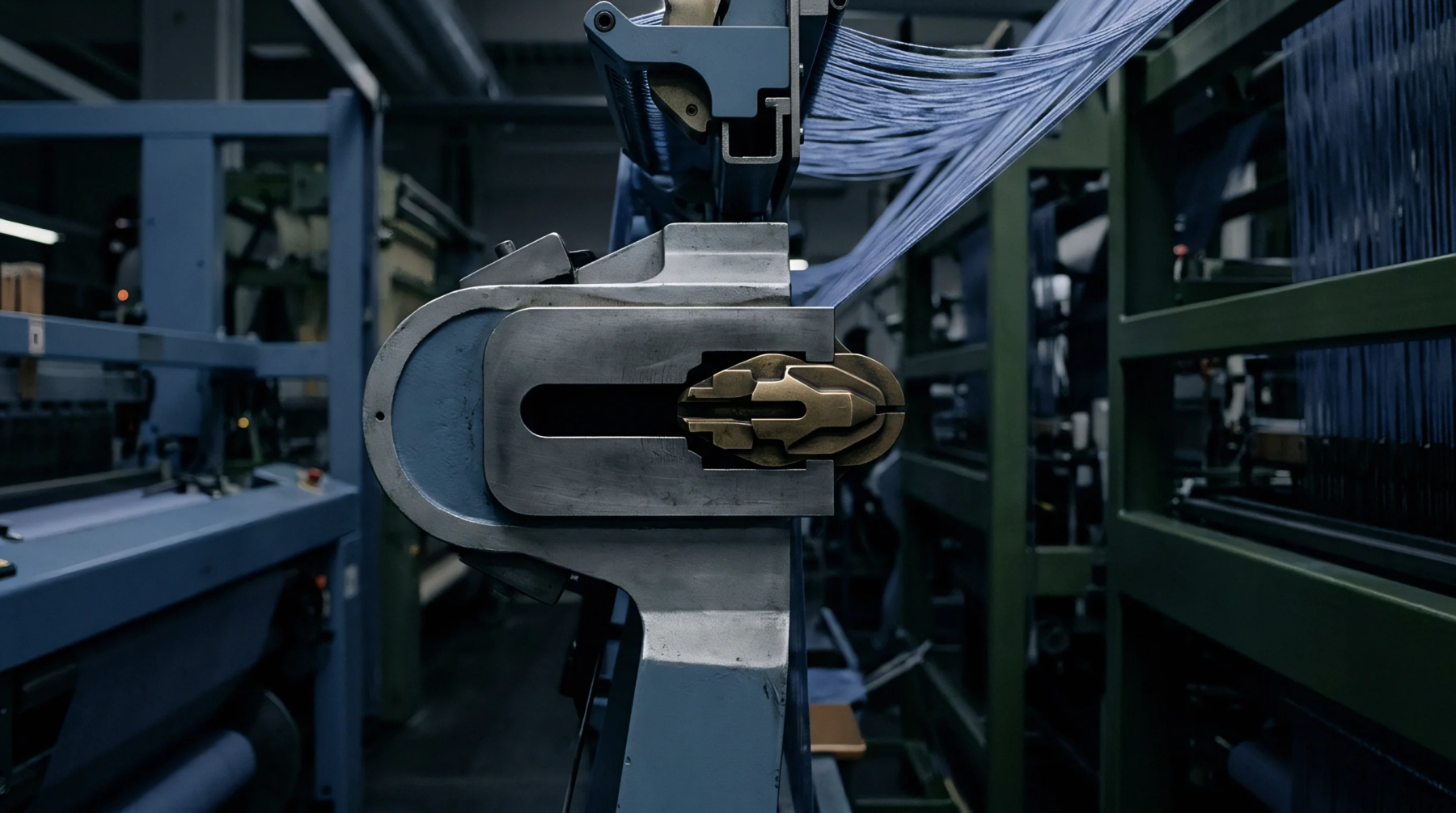
Physical Degradation
Repeated mechanical strain during the shed cycle causes warp yarn tension fatigue. Cycles of loading and unloading pull at the molecular structure of synthetic and natural fibers alike until the material loses its inherent elasticity. This process limits how many insertions a beam can withstand before breakage rates rise above acceptable production thresholds.
Load Mechanics
High speeds in modern weaving machines force individual yarns to undergo extreme acceleration and deceleration. Warp yarn tension fatigue accumulates as the stress waves pass through the fibers near the drop wires and heddles. Each impact cycle degrades the crystalline regions of polymer chains in synthetic monofilaments.
Weakened sections prone to snapping disrupt the continuity of the loom operation. Frequent breaks force the operator to perform manual splices which result in visible defects across the width of the final cloth.
Evaluation Methods
Laboratory testers simulate loom kinetics by subjecting yarn samples to cyclic loading until failure occurs. Standard protocols measure the number of cycles sustained under a specific gram force before the specimen breaks. Technicians record these results to determine the fatigue life expectancy of a particular batch of material.
Quality Boundaries
Performance limits depend on the environmental conditions present during the manufacturing phase. Humidity levels change the moisture content of natural fibers and influence how they distribute mechanical stress. High temperatures accelerate the molecular breakdown when synthetic yarns operate under constant load.
Corrective settings in the let off motion mitigate these effects by maintaining consistent slack throughout the duration of the warp run.