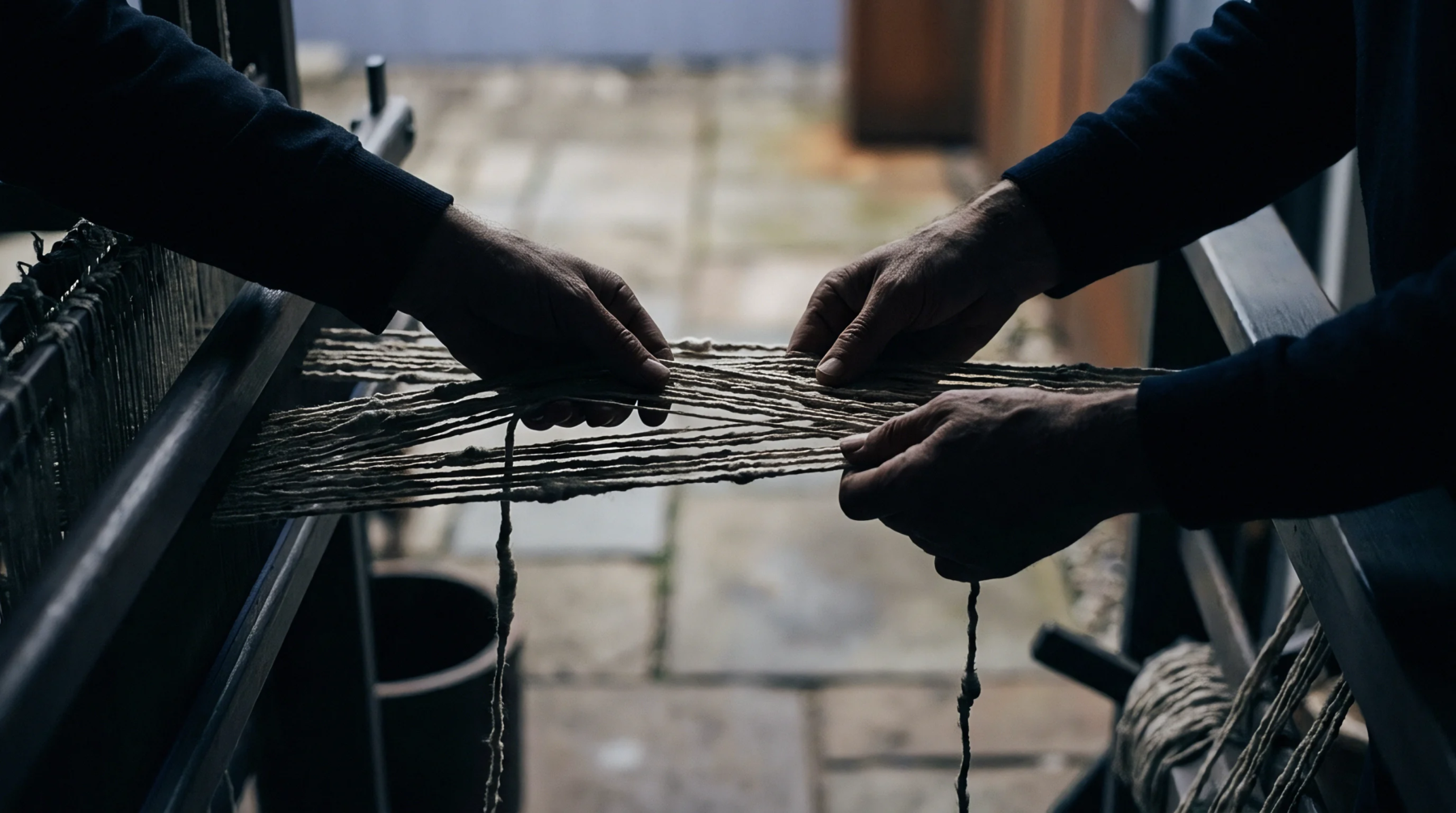
Count Verification
Physical counts of horizontal threads, or picks, found within a specific distance in a woven material determine the structural integrity of the cloth. Technicians measure weft density using a pick counter or a magnifying glass to ensure the fabric meets the required weight and durability. This metric directly influences the hand and the drape of the finished garment.
Loom Regulation
Mechanical settings on the weaving machine determine the speed at which the fabric is pulled forward. A slower take-up speed results in a higher weft density because the loom packs more threads into every centimeter. Consistent tension across the width of the loom is necessary to keep the density uniform throughout the entire length of the production run.
Physical Property
Increasing the number of horizontal yarns makes the fabric stiffer and more resistant to tearing. Low weft density creates a more porous and breathable material that might be suitable for summer clothing.
Quality Check
Inspections at the mill involve checking the pick count at the beginning and the end of every roll. If the weft density varies too much, the fabric will show visible stripes or shading differences. Most buyers allow a small tolerance for this measurement in the final contract.