Biaxial Viscoelastic Hysteresis Modeling under Multi Axial Garment Strain Profiles in Complex Stretch Weaves
Biaxial viscoelastic modeling prevents garment bagging by replacing uniaxial stretch tests with planar strain energy functions calibrated across finish thermal cycles.
Anisotropy
Planar Kinematics in Dual Axis Stretch Structures
Woven elastomeric structures respond differently depending on the direction of applied force relative to the warp and weft thread grid. Standard tensile characterization protocols relying on uniaxial strip extension per ISO 13934-1 measure force along a single yarn direction. Uniaxial testing fails to capture the transverse lateral strain and Poisson ratio contraction experienced by activewear panels during bodily motion.
Under biaxial strain fields, orthogonal yarn sets engage simultaneously, locking the weave intersection points and restricting lateral necking. Off-axis tension alters yarn alignment.
Crimp interchange governs structural response. As weft yarns stretch under lateral load, warp yarns are pulled into higher crimp amplitude. This structural interaction stiffens the orthogonal axis, elevating the effective modulus along the secondary direction.
High-density woven stretch fabrics utilizing elastomeric cores experience immediate crimp redistribution when loaded along both principal axes at a one-to-one strain ratio. Test frames utilizing planar biaxial cruciform specimens isolate this mechanism by holding edge tension constant while monitoring optical strain distribution across the central active area.
Shear Coupling under off Axis Garment Extension
When human joints flex inside a garment, strain lines cross fabric axes at oblique angles. Flexion across the knee or shoulder subjects panel elements to combinations of tensile extension and frame shearing. Shear displacement delays stress uptake.
Yarn-to-yarn friction controls the initial deformation resistance before core elastomers carry the load. Plain weave configurations demonstrate tight yarn crossing locking, driving steep stress accumulation during diagonal extension. Satin or twill floats permit greater yarn rotation, yielding softer initial bias stretch followed by rapid non-linear stiffening as float clearance closes.
Biaxial loading shifts local stiffness.
Off-axis extension in dual-elastic woven fabrics shifts strain energy into yarn shear rotation before engaging elastomeric cores.
Evaluating multi-axial deformation require planar biaxial test apparatus equipped with independent axis control. Synchronized load application profiles reveal that biaxial stress ratios dictate whether crimp interchange or filament elongation dominates total extension. Characterizing these anisotropic strain energy density surfaces provides input parameters for computational garment simulation packages.
Static testing understates dynamic loss.
Whether micro-mechanical yarn rotation models can accurately capture non-linear shear degradation over extended wear cycles without real-time optical strain mapping remains unsettled.

Creep
Time Dependent Stress Decay in Elastomeric Filaments
Polyurethane filaments wrapped inside staple cotton or synthetic sheaths exhibit distinct relaxation rates under sustained tension. Under fixed displacement, internal polymer chains disentangle, converting elastic strain energy into viscous energy loss. This stress decay occurs rapidly during the first sixty seconds of extension.
Elastomer breakdown reduces tension.
Core tension dictates elastomeric recovery. Core-spun yarns combining polyurethane cores with polyolefin elastester components demonstrate complex relaxation spectra. The polyurethane segment provides immediate restoring force, while the polyolefin component introduces slower, long-term viscoelastic relaxation.
Temperature accelerates chain mobility. Tests conducted at human body skin temperatures (37 degrees Celsius) show stress decay rates up to eighteen percent faster than identical tests executed at standard laboratory conditions (20 degrees Celsius, 65 percent relative humidity).

Hysteresis Loop Variance across Fibre Systems
Cyclic loading between zero and thirty percent extension highlights the energy loss between tensioning and unloading curves. The enclosed loop area defines the mechanical energy dissipated as heat during motion. Higher energy dissipation manifests as residual garment sagging and reduced holding force after repeated movement cycles.
Viscoelastic decay reduces holding force.
| Yarn System Type | Initial Biaxial Modulus (MPa) | Stress Relaxation at 60s (%) | Hysteresis Loss Ratio (Cycle 10) | Permanent Set After 1000 Cycles (%) |
|---|---|---|---|---|
| Single-Core Polyurethane (70d) / Cotton Staple | 14.2 | 22.4 | 0.31 | 5.8 |
| Dual-Core Polyurethane + T400 / Polyester Staple | 18.6 | 12.1 | 0.19 | 2.3 |
| Polyolefin Elastester (150d) Filament | 21.0 | 9.5 | 0.14 | 1.6 |
| Mechanical Stretch Textured Nylon 6,6 | 26.5 | 6.2 | 0.08 | 0.9 |
Repeated extension cycles reduce the peak tension captured at maximum strain. Structural stabilization typically requires between fifty and one hundred strain cycles. Beyond this threshold, the hysteresis envelope reaches a quasi-static equilibrium state, leaving a measurable permanent set.
- Elastic core slippage occurs when the staple sheath fibers detach from the elastomer core during repeated extension, causing local filament bunching and loss of elastic recovery force.
- Viscoelastic attenuation reduces the long-term holding force of garments subjected to sustained tension at body temperature, altering intended pattern compression gradients.
- Permanent set accumulation alters garment dimensions across successive wearing and laundering cycles, expanding critical fit zones beyond initial manufacturing tolerances.
A thirty percent biaxial strain sustained for ten minutes at body temperature generates a four point two percent unrecovered length increase in raw spandex core-spun twills.
Fabrics showing high initial relaxation rates stabilize earlier during cyclic wear than structures with delayed viscoelastic decay.
Dissipation
Biaxial Mechanical Energy Loss Modeling
Mathematical representation of two-dimensional energy attenuation relies on non-linear strain energy density functions augmented by hereditary integral terms. Phenomenological models adapt hyperelastic strain energy functions, such as the Ogden or Mooney-Rivlin formulations, by incorporating time-dependent Prony series relaxation kernels. Internal friction generates heat.
Determining material coefficients demands experimental biaxial load-extension data gathered across varied strain rates. Testing at speeds from 10 millimeters per minute up to 1000 millimeters per minute captures rate sensitivity driven by viscous dampening inside the elastomeric core. The total energy dissipated per cycle equals the integral of the closed stress-strain loop over the planar area of the cruciform specimen.
Biaxial viscoelastic models separate structural friction losses from viscoelastic dissipation inherent to the polymer matrix.

Micro Mechanical Unit Cell FEA Predictions
Representing individual warp and weft crossing points as deformable structural nodes allows finite element software to compute local stress concentrations. Micro-mechanical models generate unit cell geometry using thread counts, yarn diameters, cross-sectional shapes, and crimp levels measured from finished cloth sections. Finite element analysis assigns non-linear viscoelastic properties to individual yarn elements, calculating contact pressure and slip at thread intersections.
| Fabric Construction | Warp Crimp (%) | Weft Crimp (%) | Model Friction Coefficient | Predicted vs Measured Hysteresis Error (%) |
|---|---|---|---|---|
| 3/1 Warp-Face Twill (Dual Core) | 4.2 | 14.8 | 0.28 | 3.4 |
| 1/1 Plain Weave (Single Core) | 8.5 | 18.2 | 0.42 | 6.1 |
| 2/2 Satin Float (Multifilament) | 2.1 | 11.4 | 0.19 | 2.8 |
| Double-Cloth Interlock Inlay | 5.6 | 22.0 | 0.31 | 4.7 |
Computational accuracy relies heavily on yarn-to-yarn friction coefficients. Finishing chemical applications modify surface friction, causing discrepancies between unwashed greige predictions and finished fabric behavior.
- Mount the cruciform test specimen in the planar biaxial clamp frame with optical tracking markers attached to the central zone.
- Calibrate the non-contact video extensometer to monitor orthogonal displacement fields across the 50 millimeter active area.
- Apply a pre-tension load of 0.05 Newtons per centimeter along both principal axes to remove sample slack.
- Execute five pre-conditioning cycles to thirty percent extension at a constant strain rate of 100 percent per minute.
- Record stress-strain curves across twenty subsequent loading cycles under simultaneous 1:1 and 2:1 strain ratios.
- Extract relaxation parameters by holding peak displacement for 600 seconds while logging tension decay at 100 Hertz sampling frequency.
Friction between orthogonal yarn systems accounts for more than half of the hysteresis loop area during initial extension cycles.
Ignoring biaxial energy dissipation during pattern generation leads to premature garment bagging at high-flexion zones and costly bulk return claims from end users.


Stenter
Thermofixation Dynamics on Finishing Lines
Heat-setting chambers fix the physical dimensions of elastomeric woven goods by relaxing internal stresses locked into synthetic cores during spinning and weaving. Polyurethane core filaments require temperatures between 188 degrees Celsius and 195 degrees Celsius to achieve heat setting. Thermal processing recrystallizes the soft and hard segments within the polyurethane polymer matrix, establishing a stable zero-strain memory state.
Heat setting fixes dimensions.
Dwell temperature alters yarn crimp. Improper thermal exposure damages elastomeric strength. Dwell times under thirty seconds at target temperature leave residual stress within the yarn core, causing excessive wet heat shrinkage during subsequent dyeing operations.
Exceeding twenty-five seconds exposure above 198 degrees Celsius induces thermal degradation of the polyurethane hard segments, drastically reducing recovery force and increasing long-term hysteresis loss. Overfeed rates control warp shrinkage.

Should Mill Overfeed Settings Match Biaxial Hysteresis Limits?
Matching longitudinal feed speeds to calculated yarn shrinkage rates balances warp tension while preserving weft stretch potential. Stenter frames utilize chain rails equipped with pins or clips to carry fabric webs through heating zones. Feeding fabric onto the pin chain at speeds exceeding the chain drive velocity introduces longitudinal overfeed.
Warp overfeed rates between plus eight percent and plus fifteen percent force the warp yarns to swell, allowing weft elastomeric filaments to shrink freely and establish high potential elongation.
Inadequate warp overfeed holds warp threads under tension during heat setting. High longitudinal tension permanently lowers the weft stretch capacity by restricting cross-directional elastomeric shrinkage inside the heating chamber. Dyehouse operations applying functional chemical finishes must balance thermal exposure against chemical cross-linking requirements.
Silicone softeners applied in the padding mangle lower yarn friction coefficients, narrowing the hysteresis loop but increasing seam slippage risk under high bias strain.
- Temperature profile verification validates that stenter zone temperatures remain within two degrees of target thermal thresholds across the entire web width.
- Differential rail overfeed control prevents fabric skewing and off-axis bow formation that distorts planar stretch symmetry in finished panels.
- Residual moisture monitoring checks that fabric entering the heat zone achieves complete drying within the first two stenter bays.
- Cooling zone exhaust airflow rapid-quenches setting temperatures before fabric coiling to lock in the crystalline elastomer structure.
Submitting goods to stenter temperatures exceeding one hundred and ninety-five degrees Celsius permanently degrades polyurethane core elasticity and invalidates ISO 20932 performance compliance.
Converters frequently claim that post-wash fabric shrinkage stems entirely from garment washing laundries rather than uncalibrated overfeed rates during thermal finishing.
Margin
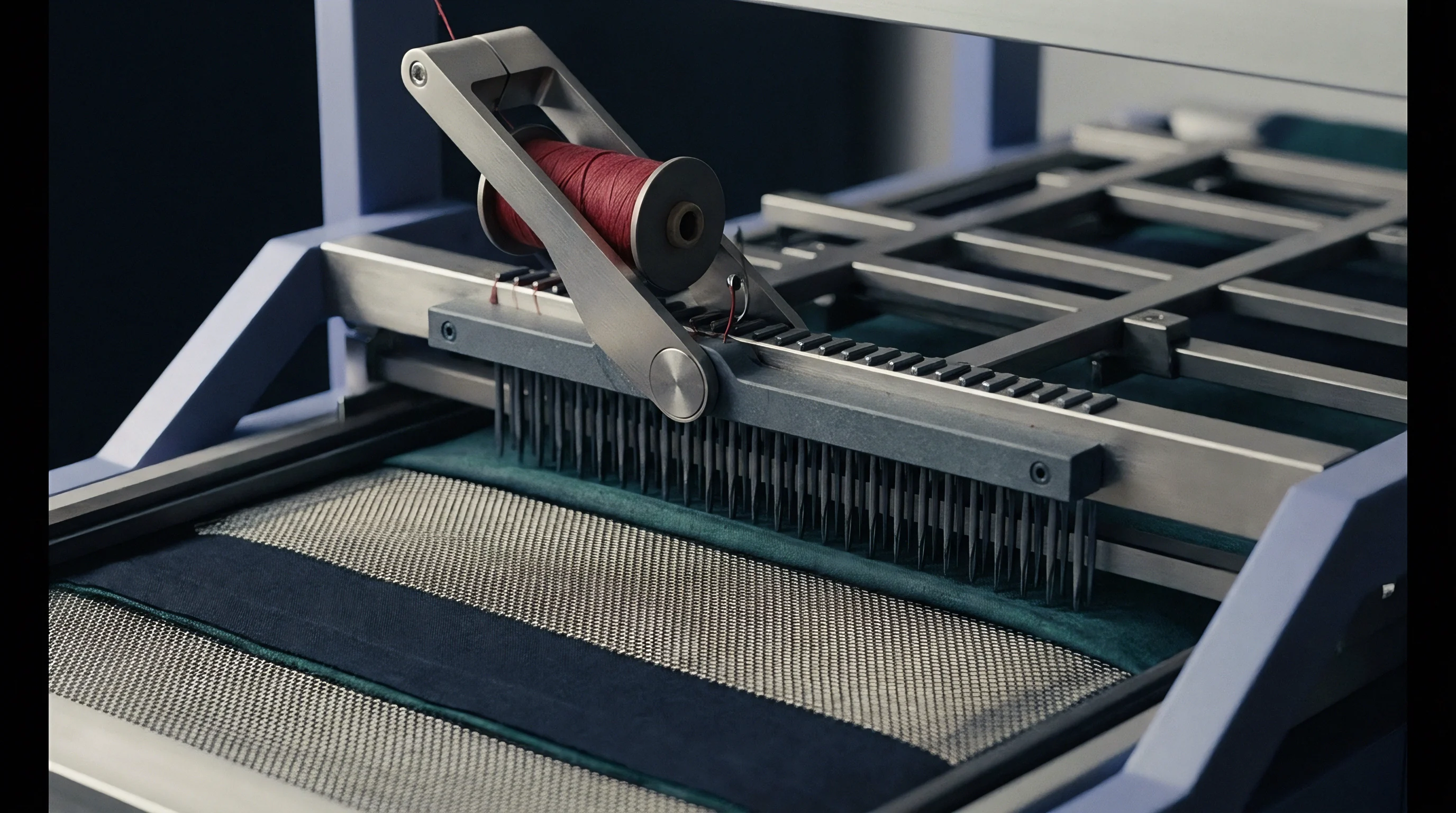
Pattern Engineering and Cutting Table Allowances
Translating non-linear biaxial stretch behavior into 2D CAD pattern templates requires precise scaling factors across warp, weft, and bias vectors. Standard grading software applies isotropic shrinkage reduction factors. Uniform scaling creates fitting errors because elastomeric stretch fabrics deform anisotropically under dynamic garment strain profiles.
Pattern scaling requires precise data.
High hysteresis loss requires negative pattern allowances in body-shaping garments to compensate for stress relaxation during wear. If a fabric relaxes by fifteen percent during the first hour of wear, pattern pieces require undersizing relative to nominal body dimensions. Failure to integrate relaxation rates results in garments that fit correctly upon donning but loose compression during active use.
Fabric yield drives garment cost.
Yield Calculations and Landed Cost Arithmetic
Fabric consumption per garment unit increases when dynamic stretch allowances dictate wider pattern seams and off-axis panel alignments. Cutting layouts aligning pattern pieces along diagonal bias angles to maximize garment mobility suffer severe marker efficiency penalties. Standard warp-parallel markers achieve eighty-five percent utilization, whereas off-axis alignment markers frequently drop below seventy-two percent efficiency.
| Pattern Adjustment Strategy | Marker Utilization Efficiency (%) | Fabric Consumption per Unit (m) | Landed Fabric Cost Differential (%) | Garment Bagging Risk Grade |
|---|---|---|---|---|
| Standard Isotropic Uniaxial Reduction | 86.4 | 1.25 | Base Rate (0.0) | High (Class 4) |
| Biaxial Anisotropic Strain Compensation | 82.1 | 1.31 | + 4.8 | Low (Class 1) |
| Off-Axis 45-Degree Panel Realignment | 71.5 | 1.51 | + 20.8 | Negligible (Class 0) |
| Viscoelastic Relaxation Underization | 84.8 | 1.27 | + 1.6 | Moderate (Class 2) |
| Data based on 145 cm cuttable width, 220 gsm dual-core elastomeric stretch twill, target garment compression grade 15-20 mmHg. | ||||
Cost calculations must account for the fabric yield loss generated by aggressive negative patterning and bias marker layouts. Sourcing managers calculating landed cost per unit balance raw material cost against garment field performance. Buying low-cost stretch fabric with high hysteresis loss forces pattern cutters to add panel seam reinforcers or increase garment negative tolerance, eroding initial fabric price savings through elevated consumption rates and higher sewing assembly times.
Procurement contracts specifying ISO 20932-1 elasticity testing enforce a mandatory forty-eight hour recovery window clause to prevent false rejections of slow-recovering polyolefin elastester blends.