Controlling Nanoscale Polyelectrolyte Migration during High Speed Stenter Processing
Modulating early stenter chamber heat and using ionic anti-migrants prevents nanoscale polyelectrolyte migration, preserving fabric hand and functional fastness.

Diffusion
Mass transport of aqueous functional polymers across porous textiles follows liquid water flux toward evaporation surfaces during thermal finishing. When a wet fabric saturated with a dissolved polyelectrolyte formulation enters a drying chamber, rapid thermal energy transfer initiates surface evaporation. Solute transport dictates chemical placement.
Water moves from the interior of yarn bundles toward exterior boundaries to replenish vaporized solvent. Dissolved macromolecular chains ride this convective solvent flow, accumulating at the outer fiber perimeter when convective transport speeds exceed the velocity of backward thermal diffusion.
Nanoscale polyelectrolytes, including cationic antimicrobial agents, polyacrylic stain release agents, and fluorinated soil repellents, possess hydrodynamic radii ranging from 5 to 150 nanometres. Molecular mass alters boundary friction. Because these charged macromolecules exhibit low translational diffusion coefficients relative to small inorganic ions, convective capillary forces easily sweep them toward the drying front.
This migration transforms a targeted uniform impregnation into an asymmetrical coating concentrated on outer filament faces.
Hydrodynamic Transport within the Evaporating Capillary Matrix
Liquid phase water moves through interstitial yarn voids driven by capillary pressure gradients created as heat hits surface fibers. The capillary radius between individual filaments determines the capillary pressure field. Narrow inter-filament spaces draw fluid from larger inter-yarn gaps, creating continuous liquid conduits from core to surface.
Polyelectrolyte chains suspended in this liquid matrix experience drag forces proportional to solution viscosity and molecular volume.
As evaporation depletes surface moisture, the meniscus recedes into the yarn structure. Capillary forces drive surface accumulation. The movement continues until the local moisture content drops below the critical moisture threshold, where the liquid film breaks into isolated droplets.
Prior to reaching this critical moisture content, high convective evaporation rates maintain an uninterrupted flow of dissolved polymer toward the boundary. If the polymer concentration at the surface exceeds its solubility limit, precipitation forms a dense, brittle shell over outer fibers while leaving core fibers untreated.

Peclet Number Thresholds for Nanoscale Boundary Accumulation
Ratio calculations comparing convective liquid velocity against polymer molecular dispersion speed determine whether active compounds stay fixed or drag upward. The dimensionless Peclet number governs this mass transport dynamic:
Pe = (v · L) / D
In this relationship, v represents the evaporation front velocity in metres per second, L represents the characteristic diffusion length or half-thickness of the fabric in metres, and D represents the translational diffusion coefficient of the polyelectrolyte in square metres per second. High convective drying rates increase the Peclet number significantly above unity.
When the Peclet number remains below 1.0, Brownian diffusion allows polyelectrolyte molecules to redistribute back toward lower-concentration core regions as fast as convection draws them to the surface. Fast drying distorts cross-sectional distribution. When high heat drives the Peclet number above 5.0, convection dominates completely.
Polyelectrolyte chains become trapped in the advancing evaporation front, producing severe surface accumulation, stiffened fabric drape, and weakened physical anchoring inside the yarn bundle.
A Peclet number exceeding five during initial moisture removal forces ninety percent of dissolved polyelectrolytes into outer surface filament bundles.
Controlling this boundary accumulation requires precise balance between thermal drying energy and polymer diffusion rates. Polyelectrolytes with high molecular weights above 100,000 grams per mole exhibit diffusion coefficients below 10-11 square metres per second, making them exceptionally susceptible to migration at standard industrial drying speeds. Reducing solvent movement during early drying stages preserves uniform chemical distribution across the substrate thickness.
The exact threshold where Peclet-driven migration transitions from reversible molecular flow to permanent surface deposition under non-isothermal stenter conditions remains unquantified across multi-component polyelectrolyte blends.

Coagulation
Chemical immobilization traps active polyelectrolytes inside the yarn interior before water vaporization reaches peak speed. By altering solution thermodynamics or introducing reactive crosslinkers directly into the pad bath, wet processing systems force dissolved polymers to aggregate or gel within core capillary channels. This rapid phase transition increases the effective hydrodynamic size of the polymer complexes beyond the pore diameters of the drying front, preventing fluid drag from carrying active chemistry to fabric surfaces.
Precipitation strategies rely on altering charge neutralization, ionic strength, or temperature sensitivity. Thermogelation locks active polymers early. Controlling these parameters transforms fluid pad formulations into non-migrating gels before convective air jets hit the wet web.

Ionic Gelation and Counter-Ion Salt Additives
Divalent metal cations collapse extended polyelectrolyte chains into compact clusters by screening electrical double layers. Adding precise concentrations of magnesium chloride, calcium nitrate, or zirconium ammonium carbonate to an anionic polyelectrolyte pad bath reduces intramolecular electrostatic repulsion. Ionic strength controls hydrodynamic volume.
As water begins evaporating in the initial stenter zones, local ionic strength spikes, triggering immediate gelation of the polymer matrix.
For cationic polyelectrolytes such as polyDADMAC or chitosan derivatives, multivalent anions like sodium sulfate or sodium tripolyphosphate induce instant coacervation upon mild thermal concentration. The resulting coacervate droplets lodge within inter-filament voids, resisting capillary displacement even under severe thermal flux. The choice of salt concentration must stay within strict limits to avoid premature precipitation in the pad trough prior to fabric immersion.
- Polyelectrolyte Chain Aggregation creates large insoluble macromolecular clusters that block yarn interstitial pores, raising local liquid flow resistance during initial thermal processing.
- Capillary Pore Blockage stops internal water vapor escape, generating high localized steam pressures that cause micro-bursting in tightly woven filament structures.
- Surface Film Cracking occurs when heavy exterior polymer deposits cure into brittle sheets, causing severe micro-flaking and loss of functional durability during laundering.
- Face to Back Charge Asymmetry develops when single-sided hot air impingement drags charged polymers toward the upper fabric face, leaving the lower face unfunctionalized.
Thermal Phase-Inversion Polymers as In-Situ Locks
Non-ionic surfactants exhibiting lower critical solution temperatures transform from clear liquids into thick gels upon heating inside the first drying chamber. Methylcellulose, hydroxypropyl cellulose, and block copolymers of ethylene oxide and propylene oxide act as thermal anti-migrants. When the padded wet cloth passes into a stenter zone heated above the cloud point of the additive, solution viscosity rises by two to three orders of magnitude within seconds.
This thermal gelation locks dissolved polyelectrolytes inside the viscous aqueous network. Capillary flow ceases because the yield stress of the gelled liquor exceeds the capillary pressure exerted by evaporating pores. Once the fabric moisture content drops past the critical threshold, standard thermal curing continues, leaving the active polyelectrolyte permanently fixed throughout the cross-section.
Pad bath formulations containing 0.5 percent thermal hydroxypropyl cellulose raise liquor viscosity from 15 millipascal-seconds to 4200 millipascal-seconds upon reaching 55 degrees Celsius.
Maintaining a pad bath temperature at least fifteen degrees below the thermal gelation point prevents nozzle clogging and bath instability during long continuous runs.

Zone
Thermal chamber partitioning allows finishing lines to manage moisture loss rates sequentially. Modern stenter frames feature five to ten individual heating zones equipped with independent temperature controls, variable-speed circulation fans, and adjustable exhaust dampers. Controlling nanoscale polyelectrolyte migration requires configuring these early zones to preserve liquid film continuity without inducing high-velocity capillary convection.
Air nozzle design and air velocity management dictate convective mass transfer coefficients. High-velocity air jets hitting wet fabric at ninety degrees drive rapid localized evaporation, establishing steep surface moisture gradients that maximize chemical migration.
Why Does High Evaporation Velocity Drive Polyelectrolyte Accumulation at Fabric Boundaries?
Rapid moisture removal at outer fiber faces creates an upward solvent flow that sweeps dissolved macromolecular solutes along. When hot air jets strip moisture from exterior filaments, capillary forces pull replacement fluid from inner yarn reserves. High air velocities accelerate surface evaporation while internal liquid diffusion lags behind, concentrating dissolved polymers at outer boundary layers before thermal fixation occurs.
Lowering air velocity in initial heating chambers reduces convective mass transfer coefficients while allowing heat to penetrate fabric cores via conduction and radiation. Balanced low-velocity drying maintains liquid balance across the fabric profile until core moisture drops below sixty percent of total dry fiber weight.
Infrared Pre-Drying and Stepped Air-Velocity Profiles
Radiant heat units positioned directly after the pad mangle raise core liquor temperatures without creating convective drafts. Gas-fired or electric infrared pre-driers transfer energy deep into the wet web, initiating uniform evaporation throughout the substrate thickness. Radiant heating minimizes air turbulence.
By driving off fifteen to twenty-five percent of initial wet pick-up using infrared energy, the fabric reaches a semi-dry state where polyelectrolyte mobility drops significantly before entering high-velocity air jet chambers.
Stepped air-velocity profiles configure early stenter chambers for low convective airflow while increasing air speed in final chambers to complete drying and curing. Chamber one operates at thirty percent fan speed and 110 degrees Celsius, chamber two operates at fifty percent fan speed and 130 degrees Celsius, and subsequent chambers run at full capacity and 170 degrees Celsius to achieve crosslinking.
| Stenter Chamber | Air Temperature (°C) | Fan Speed (%) | Air Velocity (m/s) | Target Moisture (%) | Migration Risk Level |
|---|---|---|---|---|---|
| IR Pre-Drier | 350 (Emitter) | 0 | 0.0 | 65 to 50 | Negligible |
| Chamber 1 | 105 | 25 | 8.5 | 50 to 38 | Critical Threshold |
| Chamber 2 | 120 | 40 | 14.0 | 38 to 22 | Moderate Control |
| Chamber 3 | 145 | 70 | 22.0 | 22 to 8 | Low Mobility |
| Chamber 4 | 170 | 100 | 28.0 | 8 to 2 | Locked State |
| Chamber 5 | 175 | 100 | 28.0 | 0 (Cured) | Zero Mobility |
Executing continuous line optimization requires calibrating physical machine settings against inline moisture sensors following a structured operational sequence.
- Measure initial wet-pick-up at the pad mangle exit using continuous microwave absorption sensors to establish baseline fluid loading across the full fabric width.
- Set the infrared pre-drier field intensity to reduce fabric moisture content to sixty percent of dry fiber mass prior to entering the first mechanical stenter clip zone.
- Adjust air nozzle velocities in stenter chambers one and two down to twelve metres per second to restrict convective mass transfer coefficients during constant-rate drying.
- Elevate thermal energy in chambers three through five to finish curing after capillary transport ceases and polymer mobility falls to zero.
Purchase order specifications mandating functional surface treatments must require continuous moisture-profile logging across all stenter chambers during bulk runs.
Ignoring zone-specific air velocity limits causes migration-induced surface encrustation, resulting in severe shade shifting, chalk marks during garment sewing, and rejected bulk lots.
Shell
Distribution analysis across yarn cross-sections reveals how finishing chemistry concentrates on outer filament faces. When polyelectrolytes migrate unchecked, they form a solid ring or shell surrounding the exterior perimeter of individual yarns. This surface shell creates a hard barrier that alters mechanical drape, reduces tactile softness, and restricts air permeability.
Low wet-pick-up application methods prevent shell formation by limiting the total initial volume of liquid introduced to the cloth. Reducing pad bath water volume removes the liquid transport medium necessary for long-range capillary movement.

Cross-Sectional Gradient Mapping across Yarn Assemblies
Microtome sectioning combined with fluorescence microscopy quantifies exact chemical density from center core to exterior perimeter. Fluorophore-tagged cationic polymers show high spatial density at core filaments under controlled low-migration processing, whereas high-speed unmanaged drying isolates over eighty percent of fluorescence intensity within ten micrometres of the yarn perimeter.
This cross-sectional gradient directly correlates with functional durability. Polyelectrolytes localized entirely on exterior yarn faces suffer accelerated physical loss during Martindale abrasion exposure, whereas deep core penetration protects active chemistry behind surrounding outer fibers.
Surface Accumulation versus Pore Penetration Mechanics
Capillary radii within tight woven filaments restrict large polymer coils, stranding high molecular weight fractions outside structural gaps. Low pick-up limits liquid movement. Replacing standard dip-and-squeeze pad mangles with foam applicators, vacuum extractors, or micro-fluidic rotor spray systems drops initial wet pick-up from eighty percent down to thirty-five percent.
At thirty-five percent wet pick-up, liquid resides predominantly as isolated capillary bridges at filament contact points rather than continuous fluid channels filling yarn cores. Without continuous water paths, convective capillary flow cannot establish long-range transport toward evaporating surfaces. Solute movement stays localized within individual inter-filament contact zones, preventing shell formation.
| Application Method | Wet Pick-Up (%) | Stenter Energy (kWh/m) | Cross-Sectional Uniformity Ratio | Bending Length (mm) | Fastness Rating (ISO 105-C06) |
|---|---|---|---|---|---|
| Standard Pad Mangle | 78 | 0.48 | 0.22 (Severe Migration) | 38.5 (Stiff Hand) | Grade 3.0 |
| Vacuum Extraction Pad | 45 | 0.29 | 0.68 (Moderate Penetration) | 26.0 (Soft Hand) | Grade 4.0 |
| Rotor Spray System | 32 | 0.19 | 0.89 (High Uniformity) | 21.5 (Original Hand) | Grade 4.5 |
| Foam Application Head | 28 | 0.16 | 0.94 (Optimal Core Distribution) | 20.0 (Original Hand) | Grade 4.5 |
Low wet-pick-up foam systems applying polyelectrolyte formulations at thirty percent moisture cut stenter energy consumption by sixty percent while eliminating cross-sectional chemical migration.
Chemical suppliers often claim that specialty anti-migrant additives allow standard wet pick-up processing without line speed reductions, but operational floor audits consistently show surface migration returning whenever convective drying rates spike above two kilograms of water per square metre per hour.

Validation
Laboratory verification of uniform chemical placement demands depth-sensitive spectroscopic and electrochemical measurements. Standard bulk chemical extraction techniques fail to detect spatial migration because they dissolve the entire substrate, averaging surface concentration spikes with depleted core values. Analytical methods must probe spatial location as a function of depth into individual fibers and yarns.
Deploying advanced surface analysis techniques allows dyehouse quality assurance teams to verify chemical penetration depth before committing commercial lots to downstream garment manufacturing.

Depth Profiling via Attenuated Total Reflectance Spectroscopy
Infrared beam penetration through crystal contact faces measures functional group absorbance at precise distances into treated films. Attenuated Total Reflectance Fourier Transform Infrared (ATR-FTIR) spectroscopy utilizing germanium or diamond crystals provides depth profiling capabilities from 0.5 to 2.0 micrometres below the fabric surface.
Comparing characteristic absorption peaks of the polyelectrolyte backbones ~ such as carbonyl stretching at 1720 cm-1 for polyacrylates or quaternary nitrogen peaks at 1480 cm-1 for polyDADMAC ~ against substrate reference peaks establishes a quantitative Surface Index. A high ratio of polyelectrolyte peak area to fiber peak area on outer surface faces indicates severe migration. Spectroscopic depth profiling yields answers.
Zeta Potential and Surface Charge Asymmetry Metrics
Streaming potential measurements across face and back fabric surfaces identify directional migration bias caused by single-sided air nozzles. Passing an electrolyte solution through fabric samples mounted in a solid-surface test cell records streaming potential differences generated by fixed surface charges. Streaming potential reveals surface charge.
Uncontaminated base fibers present uniform electrokinetic properties on both faces. When cationic polyelectrolytes migrate unevenly during stenter processing, the top fabric face exhibits positive zeta potential values (+35 millivolts) while the bottom face retains near-neutral or negative values (-12 millivolts). This charge asymmetry creates severe shade variation when fabrics undergo subsequent piece dyeing or garment washing.
- Attenuated Total Reflectance Verification requires collecting FTIR spectra at ten distinct points across fabric width to calculate surface chemical concentration ratios against core baseline values.
- Streaming Potential Symmetry Testing measures electrokinetic surface charge on top and bottom fabric faces to detect asymmetric polyelectrolyte migration caused by unbalanced air nozzles.
- Dynamic Mechanical Thermal Analysis determines stiffness changes across temperature ramps to confirm that anti-migrant polymer additions do not elevate fabric glass transition points.
- Bending Length Stiffness Evaluation utilizes ISO 9073-7 cantilever testing to quantify fabric stiffness increases resulting from outer surface polymer shell encrustation.
Per ISO 105-X12 testing guidelines for rubbing fastness, functional finishes demonstrating a face-to-back surface charge variance exceeding fifteen percent show a one-grade drop in dry crocking performance.

Route
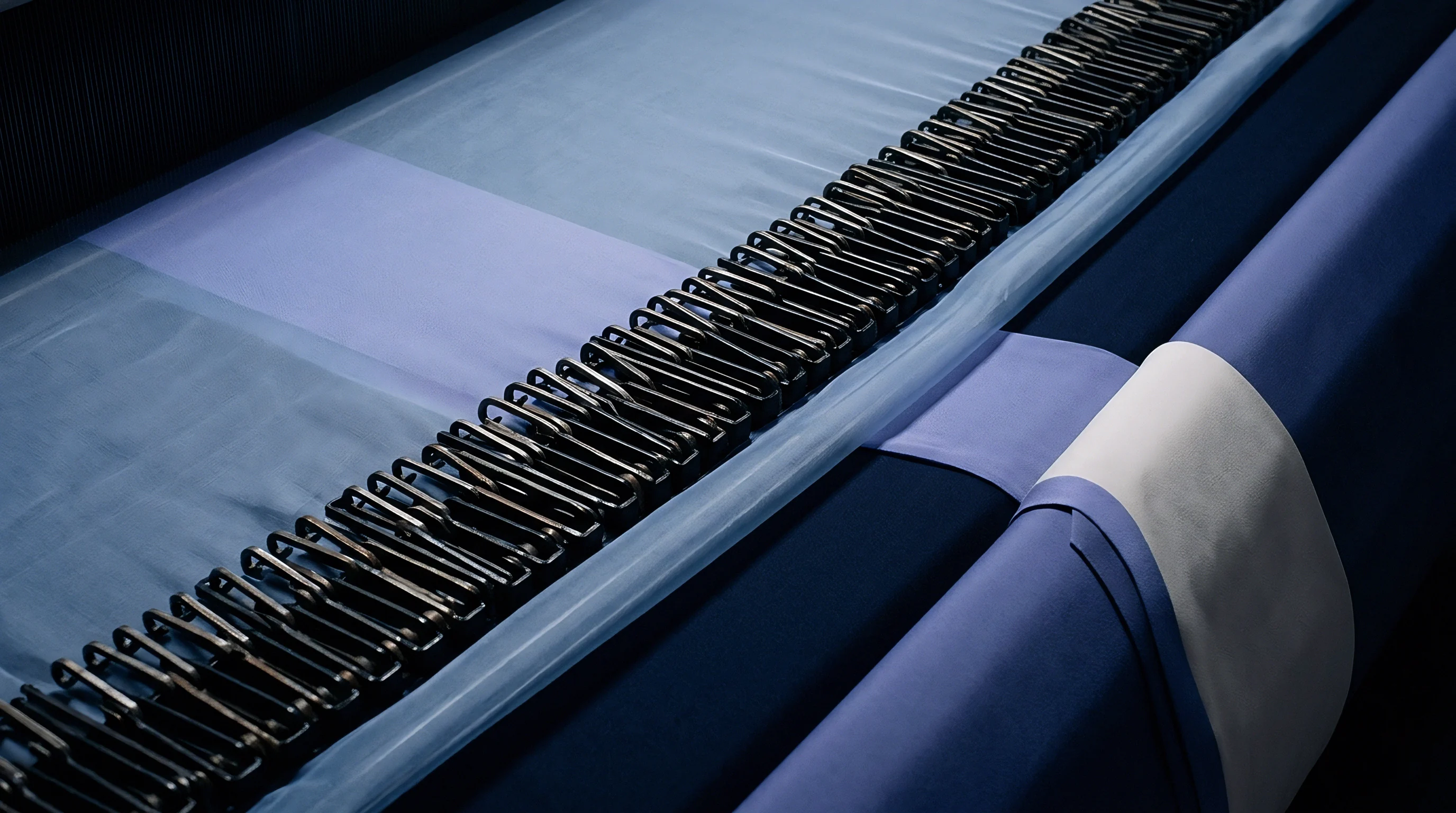
Commercial viability balances line speed throughput against the capital cost of thermal modification hardware and specialty chemistry. Finishing mills run stenters at maximum line speeds to amortize high capital investments and facility overhead. Slowing machine operation to suppress chemical migration raises direct processing costs per linear metre.
Selecting the optimal operational route requires calculating total landed costs across chemical anti-migrant additions, low wet-pick-up capital retrofits, energy consumption patterns, and line productivity metrics.

Commercial Line Speeds and Energy Expenditure Balances
Increasing stenter velocity from forty to eighty metres per minute cuts thermal residence time while doubling convective mass flux. Higher air jet velocities and temperatures become necessary to complete water evaporation within shorter chamber dwell times. This shift drives Peclet numbers into high migration regimes, requiring chemical anti-migrant dosing to preserve product quality.
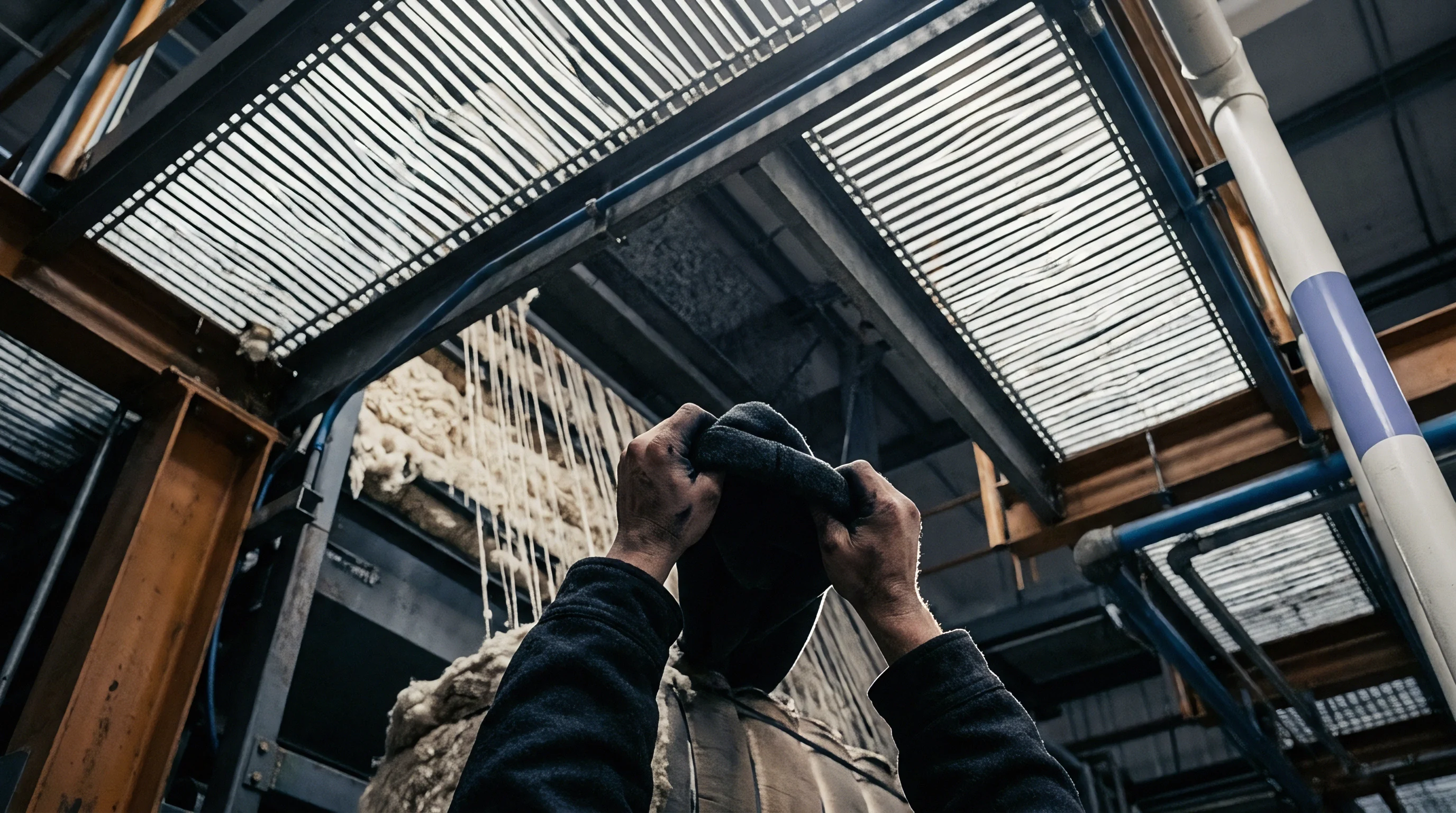
Thermal energy consumption accounts for thirty to forty-five percent of wet processing operation costs. Operating high-velocity hot air jets consumes significant electrical fan energy and natural gas fuel. Integrating radiant infrared pre-drying zones lowers net thermal energy costs per metre because radiant transfer heats water directly without forcing high volumes of ambient air through gas burners.
Landed Cost Impact of Anti-Migrant Additives versus IR Retrofits
Formulation adjustments add direct chemical expense to every linear metre processed through the dyehouse. High-performance thermal anti-migrants or multivalent gelation salts add between 0.04 and 0.12 USD per kilogram of pad bath liquor. Across a twenty-thousand-metre production run using a standard seventy percent wet pick-up, chemical anti-migrant costs add substantial operational expenditure.
Installing gas-fired infrared pre-drying panels before the first stenter zone requires a one-time capital investment of approximately 65,000 to 110,000 USD per line. Overfeed adjustments maintain tensile stability. Additive costs reduce mill margin.
Analyzing simple payback periods demonstrates that eliminating chemical anti-migrant dosing while running stenters at high line speeds repays infrared hardware investments within ten to fourteen months of continuous bulk finishing.
| Production Route Strategy | Line Speed (m/min) | Chemical Add-On Cost ($/m) | Thermal Energy Cost ($/m) | Defect Rate (%) | Total Finishing Cost ($/m) |
|---|---|---|---|---|---|
| Uncontrolled High Speed (No Additives) | 75 | 0.000 | 0.042 | 14.5 | 0.118 |
| Reduced Line Speed (Slow Drying) | 35 | 0.000 | 0.078 | 2.1 | 0.134 |
| Chemical Anti-Migrant Addition | 70 | 0.052 | 0.044 | 1.8 | 0.128 |
| IR Pre-Drier Retrofit + High Speed | 80 | 0.005 | 0.031 | 0.8 | 0.068 |
| Foam Applicator + IR + High Speed | 85 | 0.008 | 0.018 | 0.4 | 0.052 |
Mill management teams evaluating functional polyelectrolyte finishing options must balance chemical formulation costs against capital equipment upgrades to maintain competitive conversion rates. Implementing low wet-pick-up foam application paired with infrared radiant pre-drying delivers the lowest landed cost per metre while completely suppressing convective polyelectrolyte migration across high-speed stenter processing lines.