Inter-Yarn Friction Measurement in Greige Woven Fabric Processing
Single-yarn pull-out force testing establishes static and kinetic friction thresholds to prevent greige weave distortion during high-tension wet processing.
Shear
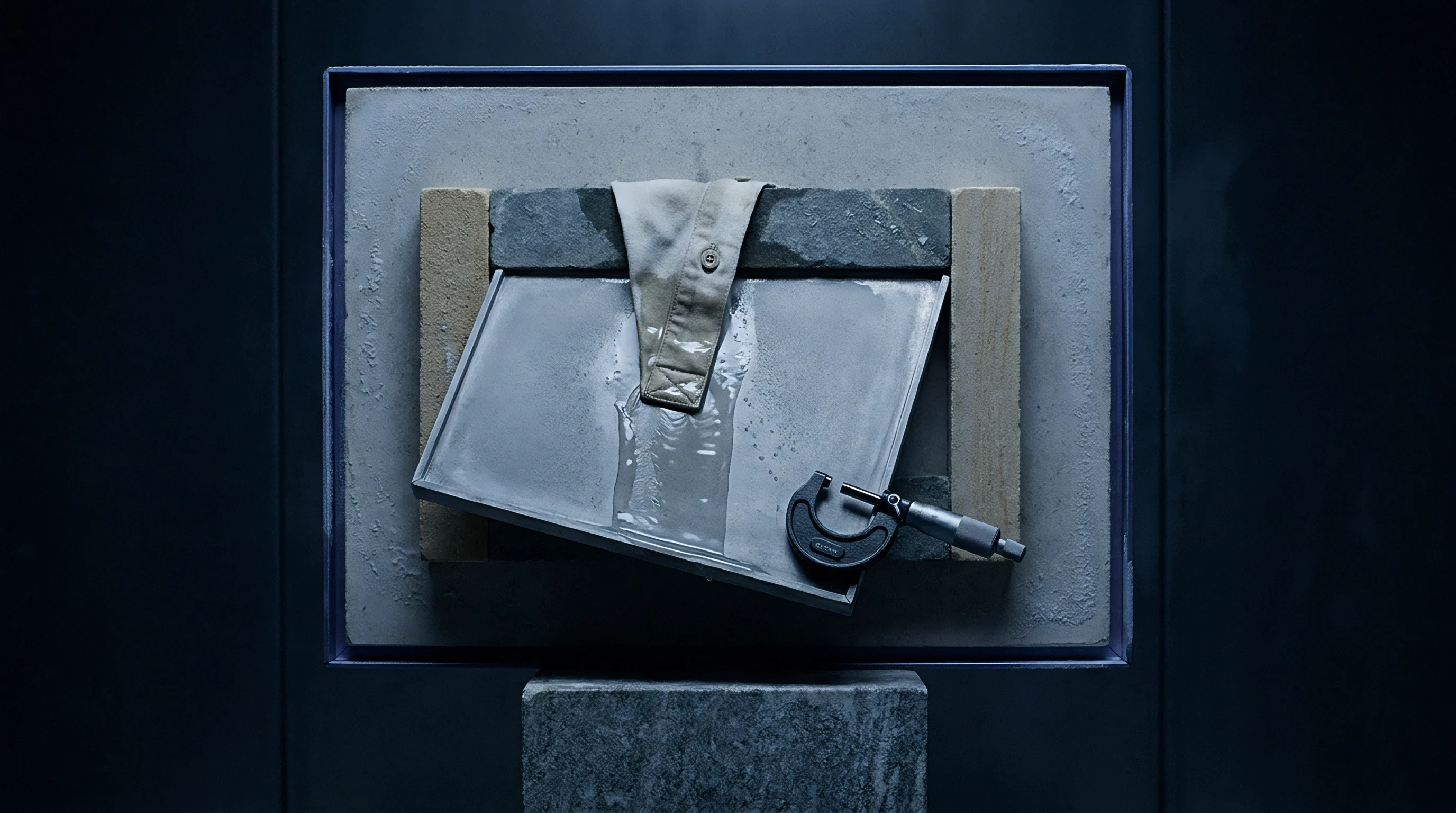
Intersecting yarns within unfinished woven structures maintain structural integrity through localized normal forces and surface contact resistance. When warp ends and weft picks cross during the weaving process, internal lateral pressures develop at every contact node. The magnitude of this inter-yarn pressure depends directly on yarn crimp geometry, thread density per centimetre, and bending rigidity.
High crimp angles increase the contact surface area between orthogonal yarns, elevating static resistance against sliding. In raw greige cloth, raw fiber surface topography combines with protective sizing agents to dictate the microscopic friction coefficient before any chemical desizing or wet processing occurs.
Yarns slip under tension.
Sizing films composed of corn starch, polyvinyl alcohol, or carboxymethyl cellulose coat outer yarn sheaths to protect filament bundles during high-speed shedding. These sizing formulations alter surface asperities, filling voids between individual staple fibers. Added lubricants such as tallow, hydrogenated vegetable wax, or synthetic softeners reduce yarn-on-metal friction at the loom reed.
However, these same wax additives lower the yarn-on-yarn static friction coefficient. When sizing wax concentrations exceed three percent by weight of dry size solids, the static resistance between warp and weft drops significantly, permitting yarn displacement under low longitudinal loads.
Normal force governs resistance.
Structural stability in plain weave constructions relies on high crossing counts per unit area compared to loose twill or satin weaves. In a tight plain weave, every warp yarn alternates over and under adjacent weft yarns, creating maximum inter-yarn contact points. Twill weaves with three-up one-down floats possess longer unfloated segments, reducing the total density of contact nodes.
Lower node counts decrease total static frictional resistance, enabling weft yarns to slide parallel along warp threads under mechanical tension on the processing floor.
Unlubricated high-crimp cotton warp ends resist yarn displacement under mechanical tension more effectively than wax-softened filament structures.
Sizing alters surface chemistry.
The transition from static adhesion to kinetic sliding governs fabric distortion tendencies. Static friction represents the initial energy barrier required to displace a single yarn from its resting weave matrix. Kinetic friction dictates the continuous force required to maintain sliding once movement starts.
Large differentials between static friction peak force and kinetic sliding force trigger stick-slip oscillations during mechanical manipulation. These stick-slip events induce permanent fabric defects such as reed marks, skewing, and localized pick density variations.
Sizing formulations lacking structural cohesion cause yarn slippage during tentering, resulting in rejected fabric rolls at the converter.
Extraction
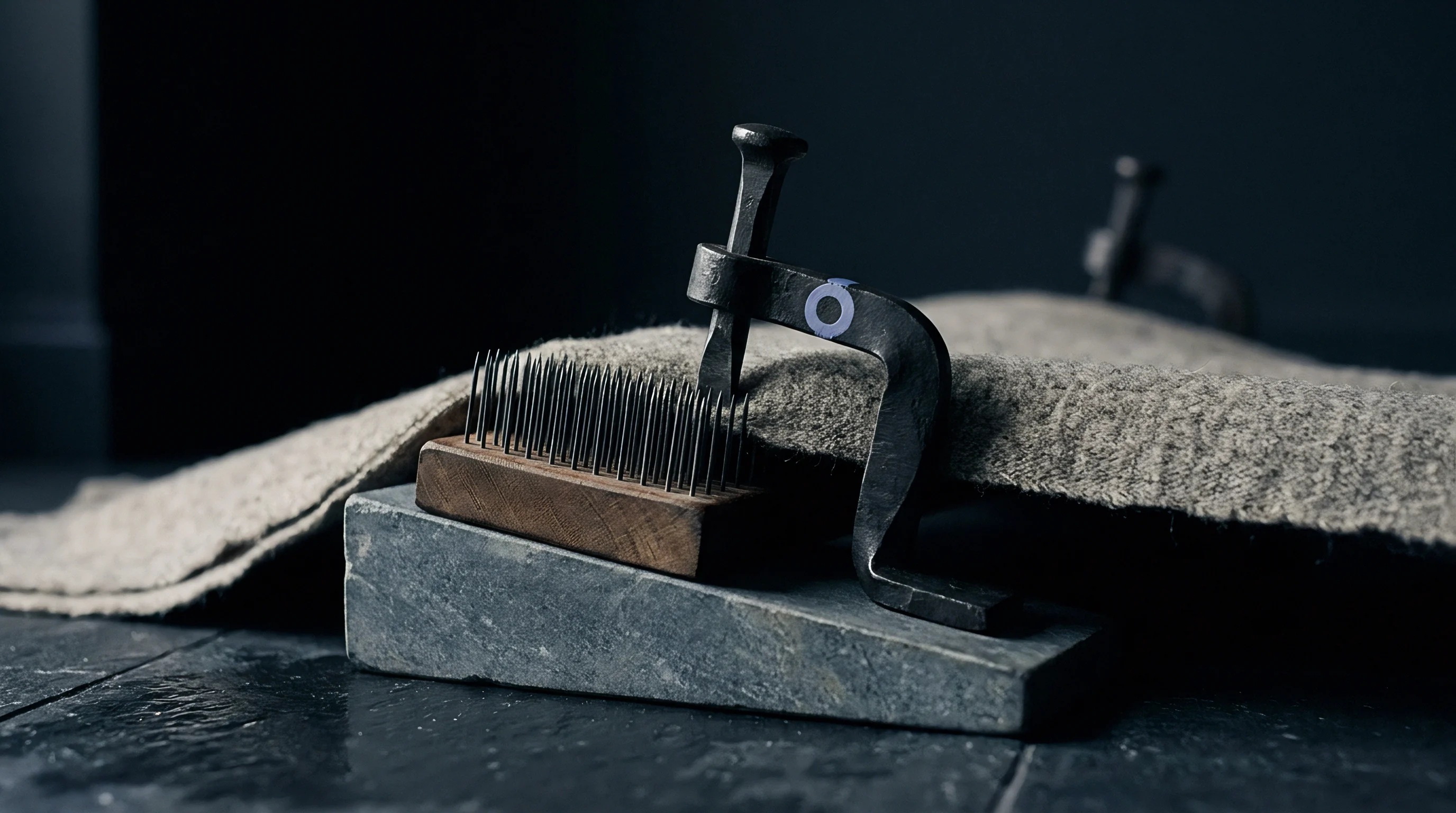
Quantifying yarn sliding resistance in greige cloth demands controlled laboratory extraction techniques. Tensile testing machines fitted with custom specimen grips pull individual warp or weft ends out of a conditioned fabric sample while recording load against displacement. Standard tensile test procedures designed for full fabric strip breaks fail to isolate node-level frictional interactions.
Modified ASTM D3775 and specialized single-yarn extraction methods measure the exact mechanical force needed to pull one thread through multiple intersecting orthogonal yarns over a set distance.
Peak force defines static resistance.
During a single-yarn pull-out test, the recorded load curve rises sharply to a primary peak before settling into a fluctuating kinetic plateau. The initial peak measures static friction force generated by the combined normal forces of all intersecting weave nodes along the embedded yarn length. Once the thread begins to move, the force drops to the kinetic sliding level.
The periodic peaks and valleys along the kinetic portion of the curve correspond to the yarn traversing successive perpendicular yarns within the fabric geometry.
- Stick Slip Instability causes irregular force spikes during single yarn displacement when static friction significantly exceeds kinetic resistance across contact points.
- Yarn Flattening Failure occurs when soft twist yarns compress under transverse load, expanding contact surface area and elevating extraction tension unpredictably.
- Sizing Film Fracture yields sharp force drops as brittle starch coatings break apart within weave intersections under longitudinal tension.
- Fibre Shedding Accumulation creates localized mechanical jams as loose staple fibres roll into small aggregates inside the yarn crossing nodes.
Kinetic friction governs continuous sliding.
Test parameters alter recorded frictional values substantially. Specimen gauge length, extraction velocity, environmental humidity, and jaw clamping pressure dictate data repeatability. Standard conditioning at 20 degrees Celsius and 65 percent relative humidity stabilizes moisture regain in hydrophilic fibers like cotton and viscose, preserving consistent film properties in starch sizes.
Higher crosshead speeds exaggerate stick-slip amplitudes, whereas lower speeds yield a smooth average kinetic friction value.
Tight setts increase normal force.
| Fabric Construction Class | Sizing Formulation Base | Static Friction Force (N) | Kinetic Friction Coefficient |
|---|---|---|---|
| Plain Weave 20s Warp / 20s Weft | Native Corn Starch + 1% Wax | 4.85 | 0.34 |
| Plain Weave 20s Warp / 20s Weft | PVA / Starch Blend + 3% Wax | 3.12 | 0.22 |
| 3/1 Twill 30s Warp / 30s Weft | Native Corn Starch + 1% Wax | 2.95 | 0.26 |
| 3/1 Twill 30s Warp / 30s Weft | Acrylic Size + 0.5% Softener | 3.60 | 0.29 |
Crosshead speed selection alters measurement sensitivity across different yarn twist levels. Evaluating pull-out data without accounting for yarn linear density yields misleading friction comparisons across varied fabric weights. Coarser yarns generate larger contact areas, inflating raw force values without necessarily reflecting higher intrinsic surface friction coefficients.
Normalizing pull-out force against total contact surface area provides a standardized friction index suitable for technical mill dossiers.
A 30s cotton plain weave sized with native starch exhibits a static pull-out force of 4.85 Newtons under standard laboratory atmospheric conditioning.
Stiff sizing elevates pull-out peak.
The mathematical representation of inter-yarn friction adapts the classical Amontons model to flexible fibrous structures. The total sliding resistance force equates to the product of the kinetic friction coefficient and the accumulated normal forces across all yarn nodes. In woven fabrics, crimp introduces non-linear normal forces that vary as the pulled yarn straightens under load.
Tensile strain on the extracted yarn reduces its effective cross-sectional diameter due to Poisson expansion effects, slightly lowering normal pressure at nodes deeper inside the specimen matrix.
Do single-yarn pull-out values reliably predict fabric shear resistance across varying weave float lengths?

Sled
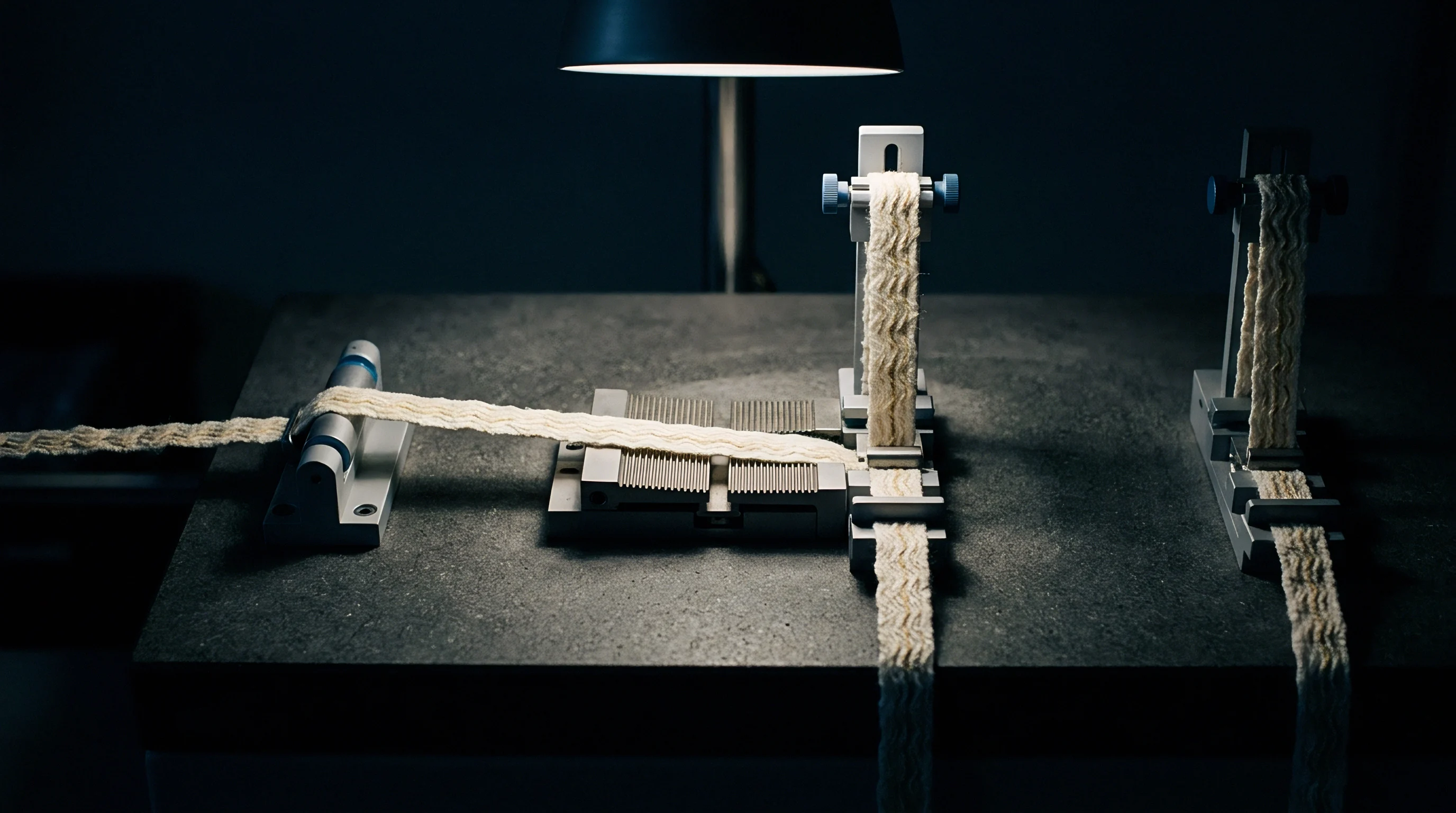
Adapted friction testing methods utilize flat sliding sleds loaded with fabric samples moving across stationary cloth beds to evaluate surface friction characteristics. While less localized than single-yarn pull-out tests, fabric-on-fabric sled methods capture macro-scale frictional interactions across large surface contact areas. ISO 8295 adaptations tailored for textiles measure static slip resistance and continuous kinetic drag when greige fabric rolls rub against equipment guide bars, scray slopes, or adjacent fabric layers during unrolling operations.
Crimp increases contact area.

Why Does Sizing Formulation Alter Inter-Yarn Micro-Friction?
Polymer chemistry in warp size formulations controls microscopic surface smoothness and yarn cohesion. Synthetic PVA sizes form smooth, continuous elastic films around yarn perimeters, reducing surface micro-asperities and lowering kinetic friction against metal and adjacent yarns. Native starches form stiffer, more brittle coatings with higher surface roughness, yielding elevated static friction coefficients.
Waxy additives migrate to the outer film layer during drying on sizing cylinders, creating a low-shear lubricating boundary layer that depresses both static and kinetic friction values.
- Mount a 100 millimetre by 200 millimetre greige fabric specimen onto the horizontal test platform without applying tension or causing diagonal distortion.
- Attach a secondary 63 millimetre square fabric specimen to the underside of the weighted 200 gram sliding block using double-sided adhesive tape.
- Position the weighted block carefully onto the platform specimen to align warp-on-warp or warp-on-weft sliding directions as defined in the test plan.
- Initiate crosshead movement at a constant speed of 100 millimetres per minute while recording load-displacement data for 150 millimetres of total travel.
Lower speeds prevent stick-slip oscillation.
Clamping pressure applied during specimen preparation drastically alters test repeatability. Excessive clamping strain stretches the greige sample prior to testing, altering thread spacing and artificially lowering measured static friction peaks. Insufficient clamping tension causes fabric buckling ahead of the moving sled, registering false force spikes caused by mechanical gathering rather than yarn surface friction.
Test protocols executed in accordance with ISO 8295 standards require specimen pre-conditioning at 20 degrees Celsius and 65 percent relative humidity for 24 hours.
Higher wax content lowers static friction.
The weaver claimed that elevated yarn breakage rates stemmed entirely from defective yarn supplied by the spinner, ignoring the excessive tallow wax additions applied during warp sizing that neutralized inter-yarn cohesion.
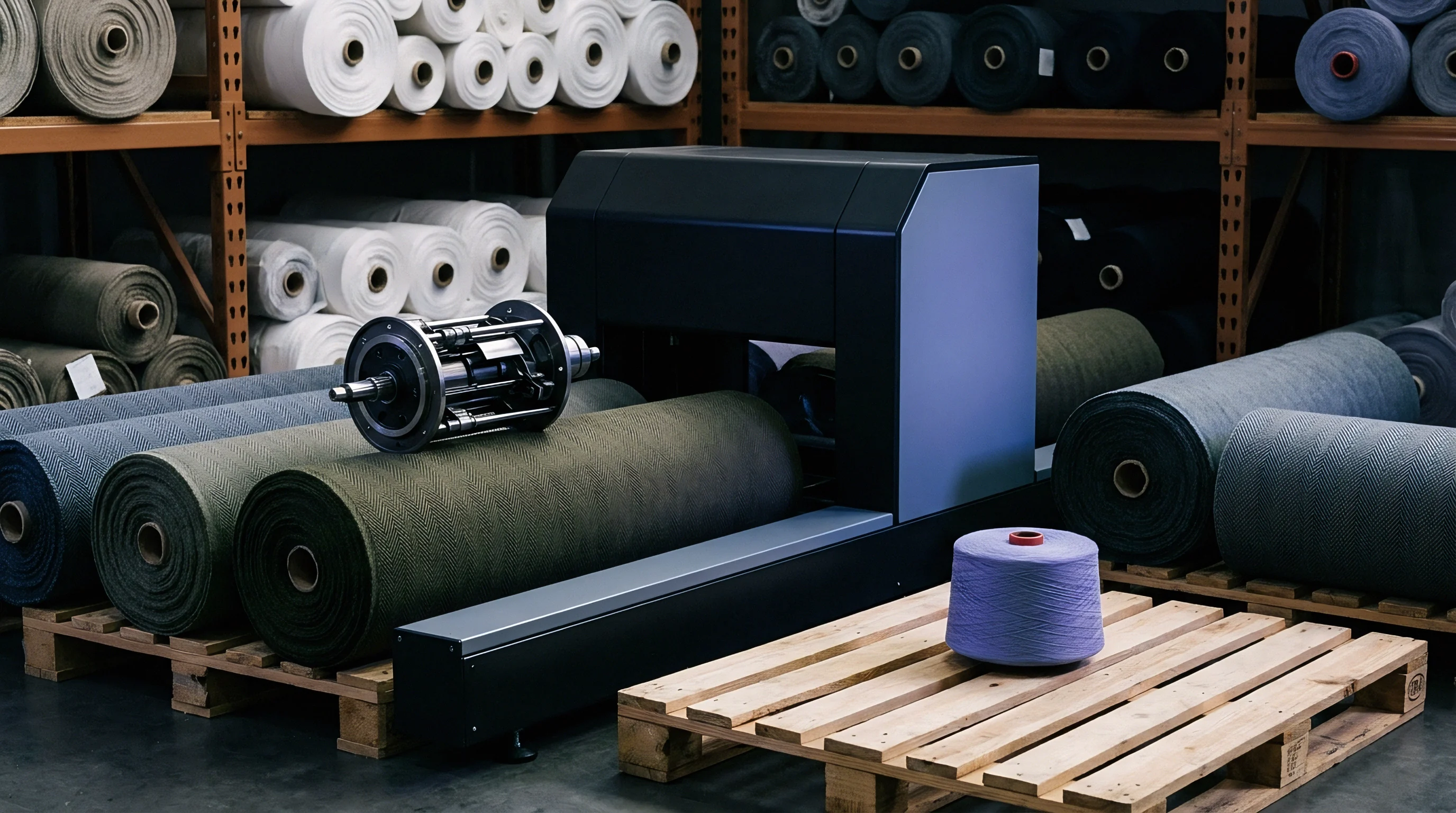
Bath
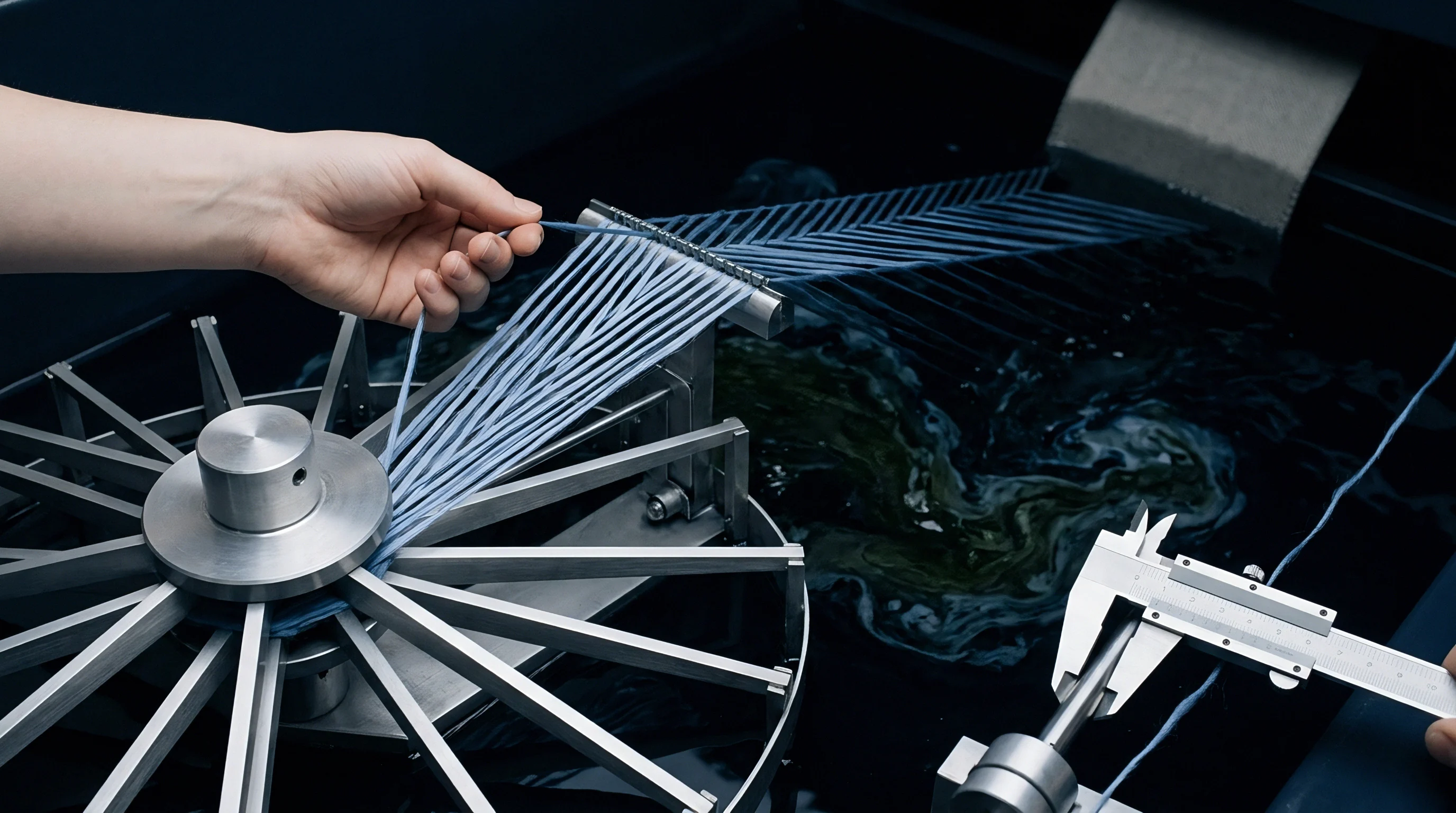
Immersing greige woven fabrics into hot aqueous processing liquors transforms internal friction mechanics dramatically. As water penetrates yarn structures, hydrophilic fibers such as cotton, flax, and rayon swell radially, expanding yarn diameters by 10 to 20 percent. Radial swelling tightens thread packing inside weave intersections, dramatically increasing localized normal forces between warp and weft.
Simultaneously, hot water dissolves or hydrolyzes water-soluble size coatings, stripping away protective surface films and exposing raw fiber asperities to direct contact.
Wet friction exceeds dry friction.
Starch desizing and scouring baths operate at temperatures ranging from 60 to 98 degrees Celsius, often containing alkaline agents like sodium hydroxide and wetting surfactants. High temperature softens residual wax lubricants, causing them to emulsify and wash away into the processing liquor. Without lubricating film layers, hydrodynamic lubrication regimes yield to direct fiber-on-fiber contact, resulting in a sharp increase in the wet inter-yarn friction coefficient.
Elevated wet friction stiffens fabric hand inside rope processing equipment, predisposing cloth to permanent crease marks.
Viscosity drops in hot liquor.
- Chafe Marks appear as whitish frosted abrasion lines along fabric folds when high wet friction causes localized fiber damage against machine walls.
- Rope Crease Marks form permanent longitudinal distortions when wet friction prevents yarns from shifting back into flat alignment inside jet dyeing tubes.
- Weft Skewing occurs in low-friction greige goods when wet processing liquors remove size rapidly, allowing unstable weaves to torque diagonally under tension.
- Seam Slippage manifests at sewn joinings when low wet inter-yarn friction permits warp threads to pull away from seams during high-speed tensioning.
Slubs initiate localized jamming.
| Kinetic Friction Coefficient Range | Fabric Processing State | Crease Mark Incident Rate (%) | Seam Slippage Frequency per 1000m |
|---|---|---|---|
| 0.15 to 0.25 | Dry Greige (High Wax Size) | 0.2 | 14.2 |
| 0.26 to 0.38 | Enzymatic Desized (Partial Size Removal) | 1.5 | 3.1 |
| 0.39 to 0.55 | Hot Scoured (Fully Desized, Raw Cotton) | 8.7 | 0.4 |
| 0.56 to 0.70 | Caustic Mercerized (Max Fiber Swelling) | 16.4 | 0.1 |
Fluid dynamics within jet dyeing vessels introduce complex hydraulic shear forces acting against fabric surfaces. When wet inter-yarn friction drops too low due to residual synthetic lubricants, internal yarn stability fails, causing fabric ropes to twist balloon-wise under nozzle pressure. Conversely, excessive wet friction locks yarns into rigid alignment, preventing proper liquor circulation through interior weave nodes and creating streaky, uneven dye absorption across bulk production lots.
Hot alkaline scouring liquor removes protective size lubricants, increasing raw cotton fiber-on-fiber wet friction coefficients beyond 0.50.
High tension exacerbates distortion.
Standard processing contracts specify maximum allowable seam slippage limits under ISO 13936 parameters, holding converters financially responsible for garments failing pull-apart thresholds due to inadequate greige yarn friction stability.
Clamp
Commercial procurement of greige woven fabrics requires explicit friction tolerance clauses integrated into technical purchase specifications. Relying solely on warp and weft thread counts, fabric weight per square metre, and tensile breaking strength leaves buyers vulnerable to severe downstream processing failures. Incorporating single-yarn pull-out force thresholds and maximum permissible friction variance limits ensures consistent fabric behavior across multiple weaving mill vendors.
Specifying static friction floor values protects buyers against seam slippage and weave instability defects.
Quality control dossiers provided by weaving mills must document sizing recipe formulations alongside measured physical friction metrics. Unannounced changes in sizing suppliers or substitution of synthetic lubricants for natural tallow alter greige yarn friction profiles without changing basic construction counts. Establishing baseline friction profiles during initial sample approval allows quality inspectors to flag suspect fabric lots before rolls enter continuous wet processing lines.
- Sizing Solid Content Limits define exact concentration ranges for starch, PVA, and lubricant additives within warp sizing dossiers.
- Single Yarn Pull Out Thresholds establish minimum static Newtons required to displace warp yarns from greige cloth samples.
- Maximum Coefficient Variance restricts batch-to-batch friction variation within five percent of approved lab dip baseline values.
- Desize Washoff Parameters mandate standardized temperature and surfactant conditions for evaluating wet friction transition behavior.
Controlling sizing wax percentages stabilizes friction values across seasonal atmospheric shifts inside weaving sheds.
| Fabric End Use Application | Weave Structure Type | Target Static Pull-Out Force (N) | Max Permissible Wax Content (%) |
|---|---|---|---|
| Heavy Industrial Canvas | Plain Weave (Coarse Count) | 6.50 to 8.50 | 1.0 |
| Shirting Poplin | Plain Weave (Fine Fine Count) | 3.20 to 4.50 | 1.5 |
| Apparel Chino Workwear | 3/1 Warp-Face Twill | 2.50 to 3.80 | 2.0 |
| Lightweight Lining Fabric | 1/1 Filament Polyester Plain | 1.80 to 2.60 | 0.5 |
A friction specification lacking defined environmental conditioning parameters allows mills to deliver non-compliant fabric that passes bench checks only under artificial laboratory dryness.