Inter-Yarn Crimp Exchange Dynamics during Continuous Bleaching and Caustic Mercerization
Controlling warp line tension during continuous bleaching and mercerization prevents structural jamming while maintaining target finished width.
Balance
Fresh from the loom shed, the yarn intersection geometry in a plain or twill weave reflects a mechanical compromise between warp line tension and filling yarn compression. Spatial path trajectories follow flexible-yarn equilibrium principles: warp and weft crimp record the extra yarn length taken up as threads bend over and under one another in the unit cell. Because reed tension pulls the warp into a flat, shallow trajectory while filling picks enter under negligible longitudinal tension, the weft takes on nearly all the out-of-plane curvature.
That starting asymmetry sets the crimp imbalance that dictates how the cloth responds to water, chemical swelling, and transport tension.

Structural Geometry of Greige Cotton Fabrics
Loom settings, yarn twist multipliers, and fiber flexural rigidity establish the structural dimensions of unfinished cloth, with wave height and thread spacing fixing the initial spatial layout. Ring-spun warp yarns carrying high twist multipliers have elevated bending stiffness that resists deformation during pick insertion. Filling yarns with lower twist multipliers yield readily to lateral displacement.
Drawn taut under warp line tension, the lengthwise ends flatten out, delivering greige fabric to wet processing with characteristic low warp crimp and high weft crimp.
| Woven Construction | Warp Yarn Count (tex) | Weft Yarn Count (tex) | Greige Warp Crimp (%) | Greige Weft Crimp (%) |
|---|---|---|---|---|
| Plain Weave (1/1) | 20 | 20 | 4.2 ± 0.3 | 9.8 ± 0.5 |
| Twill (2/1) | 30 | 30 | 5.1 ± 0.4 | 8.4 ± 0.4 |
| Twill (3/1) | 30 | 30 | 5.8 ± 0.4 | 7.6 ± 0.5 |
| Satin (4/1) | 15 | 15 | 6.5 ± 0.5 | 6.2 ± 0.4 |
Initial Equilibrium State before Wet Processing
Starch and synthetic sizing compounds freeze this greige configuration in place. By coating the warp ends in a stiff protective film, the size mixture locks the yarns against shifting, preserving the low warp crimp through batching and storage while the filling retains its pronounced wave amplitude across the width. Internal strain sits trapped at thread crossovers until aqueous baths dissolve the protective film; stripping the size away releases these locked forces, and yarn paths migrate toward a lower-energy configuration.
Whether the molecular relaxation of tensioned cellulose under rapid chemical hydration can ever occur without inducing localized structural skew remains an open inquiry for continuous range designers.
Leach
Continuous hydrogen peroxide bleaching strips non-cellulosic impurities from grey cotton, but the chemical bath solubilizes natural fats, waxes, and residual size at elevated temperatures while the web travels under axial tension. Stripping those native surface compounds fundamentally alters contact dynamics between crossing threads: without the natural wax barrier, clean cellulose faces meet directly, sharply raising sliding resistance at yarn crossover points. Transport through tight-strand washer boxes drives warp tension upward, flattening the lengthwise yarns and forcing the filling to accommodate the displaced wave height.
Chemical Extraction and Inter-Fiber Lubricity Loss
Alkaline bleaching liquor contains sodium hydroxide at concentrations between 20 and 30 g/L alongside hydrogen peroxide and organic chelating agents. Processing at temperatures from 95 degrees Celsius to 102 degrees Celsius saponifies the natural waxes embedded within the primary cell wall, stripping the native hydrophobic coatings that functioned as internal lubricants during weaving.
Higher inter-yarn friction inside un-sized cotton fabric restricts the free rotation of crossing threads during subsequent mechanical pulling.
With the wax barrier eliminated, bare cellulosic fibers come into direct contact, driving up the kinetic friction coefficient between adjacent yarns. This higher sliding resistance binds the crossover points and impedes localized crimp redistribution across the unit cell unless external axial forces overcome the frictional threshold.

Axial Tension Effects during Continuous Preparation
Guiding the moving web across driven rollers imposes continuous longitudinal loads between 150 N and 350 N across standard processing widths. As chemical hydration plasticizes the cotton fibers, this longitudinal machine tension pulls out residual warp crimp and straightens the warp axis, forcing the filling yarns to steepen their crimp angle to compensate.
- Warp Crimp Depletion Excessive machine draft flattens the warp axis completely, driving warp crimp down toward 1.0 percent and leaving zero elastic recovery in the longitudinal direction.
- Weft Crimp Surge Unconstrained cross-machine contraction allows the filling yarns to buckle tightly around rigid warp threads, elevating filling crimp beyond 15.0 percent.
- Interlock Jamming Excessive filling wave height brings adjacent picks into direct mechanical contact, producing localized width collapse and pronounced stiffness.
Maintaining minimal transport tension across continuous bleaching ranges preserves inter-yarn mobility, preventing premature structural lock before mercerization.


Clamp
Immersing prepared cotton web into high-concentration sodium hydroxide solutions initiates rapid swelling within the cellulosic structure. As caustic liquid penetrates amorphous zones, native Cellulose I crystal lattices convert into Cellulose II alkali hydrate complexes; fiber cross-sections swell laterally while contracting along their longitudinal axes. Unrestrained cotton fibers shrink up to 30 percent in length during caustic immersion.
Continuous industrial mercerizers apply severe mechanical forces to control this contraction, using warp drive rollers to impose axial tension while stenter chains grip fabric selvedges with mechanical clips to arrest shrinkage and develop substantial internal swelling stress through the yarn matrix.

Morphological Swelling and Intrinsic Force Generation
Caustic mercerization relies on sodium hydroxide concentrations between 22 percent and 28 percent by weight at bath temperatures from 15 degrees Celsius to 20 degrees Celsius. Concentrated sodium hydroxide forces cellulose polymer chains apart, breaking intermolecular hydrogen bonds as solvated sodium ions draw water molecules into the fiber core. The collapsed, kidney-bean fiber cross-sections de-convolute into circular cylinders, with transverse area swelling reaching 40 percent to 50 percent.
That lattice expansion produces a substantial increase in yarn diameter, obliging intersecting threads to negotiate longer circular arcs at every crossover. Accommodating these enlarged diameters within the unit cell generates internal swelling forces up to 2.5 cN/tex along both yarn axes.
Stenter Pin and Chain Restraint Dynamics
Chain mercerizing ranges use heavy-duty clip arrays or pin plates to withstand transverse swelling forces, while drive motors maintain precise speed differentials between range sections to control warp tension; without that mechanical restraint at the selvedges, fabric width contracts rapidly.
| Mercerization Format | Caustic Concentration (% w/w) | Warp Tension Force (N) | Width Restraint Level (%) | Final Warp Crimp (%) | Final Weft Crimp (%) |
|---|---|---|---|---|---|
| Chainless Roller Mercerizer | 24 | 450 | 92 (Unconstrained) | 1.2 ± 0.2 | 16.5 ± 0.6 |
| Stenter Clip Mercerizer | 24 | 380 | 100 (Nominal Width) | 2.1 ± 0.2 | 14.2 ± 0.4 |
| Stenter Clip Mercerizer | 26 | 250 | 103 (Over-stretched) | 3.8 ± 0.3 | 11.0 ± 0.4 |
| Low-Tension Cold Mercerizer | 22 | 150 | 95 (Partial Restraint) | 4.5 ± 0.3 | 13.1 ± 0.5 |
By gripping fabric edges, mechanical clip chains counteract inward forces generated as filling yarns contract. When high warp tension pulls the warp straight while caustic swelling expands yarn diameters, the filling yarns bend more sharply around the swollen, taut warp ends. This interaction causes rapid crimp exchange, shifting structural wave amplitude from the warp system into the filling system.
A 25 percent caustic solution applied at 18 degrees Celsius under 400 N warp tension converts 80 percent of cotton cellulose to Cellulose II within 30 seconds of dwell time.
Failing to maintain adequate transverse restraint during caustic impregnation causes unrecoverable width loss and excessive weight per square meter that violates customer delivery specifications.

Exchange
Path-length interchange between intersecting warp and weft yarns represents the central structural mechanism governing woven fabric dimensional stability during wet processing. Applied tension on one yarn system forces crimp out of that system and transfers it directly into the intersecting threads ~ an exchange amplified when chemical swelling increases yarn diameters and demands greater total wave height inside the unit cell. Because elevated warp line tension prevents warp yarns from supplying this wave height, filling yarns curve around the rigid warp axis, consuming width to satisfy geometric balance.
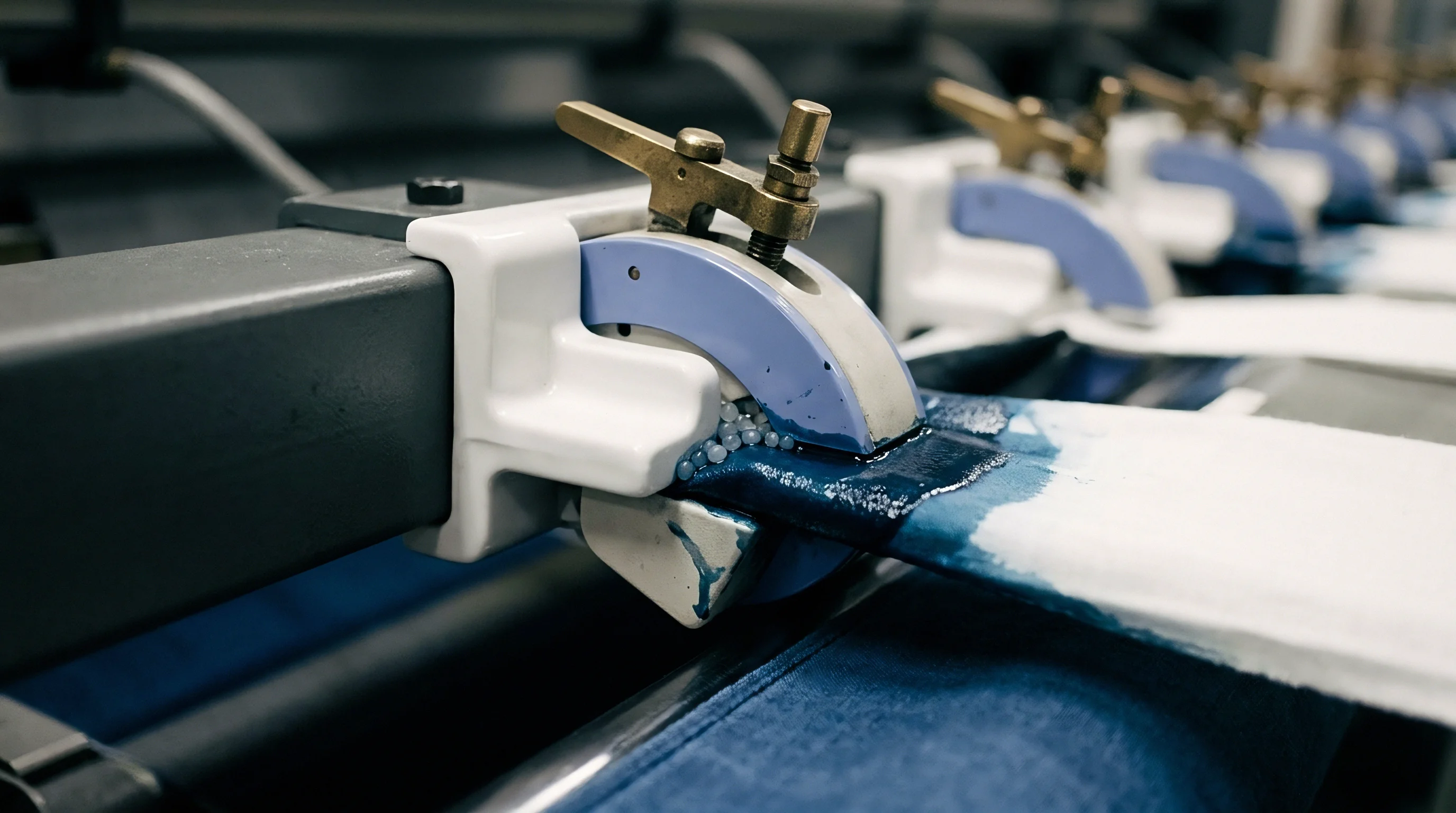
How Does Differential Restraint Dictate Yarn Path Conversion?
Mechanical tension applied along the machine direction forces warp yarns into a flat trajectory, driving warp crimp toward its geometric minimum. Classical yarn crimp equations express warp crimp as the ratio of extended yarn length to woven fabric length minus one. When swelling increases warp yarn diameter and filling yarn diameter simultaneously, the total wave height equals the sum of both swollen diameters.
Under high machine draft, warp wave height approaches zero. The filling yarn must supply virtually the entire wave height needed to clear the swollen warp diameter, producing a surge in filling crimp and pulling the fabric inward to reduce usable finished width.
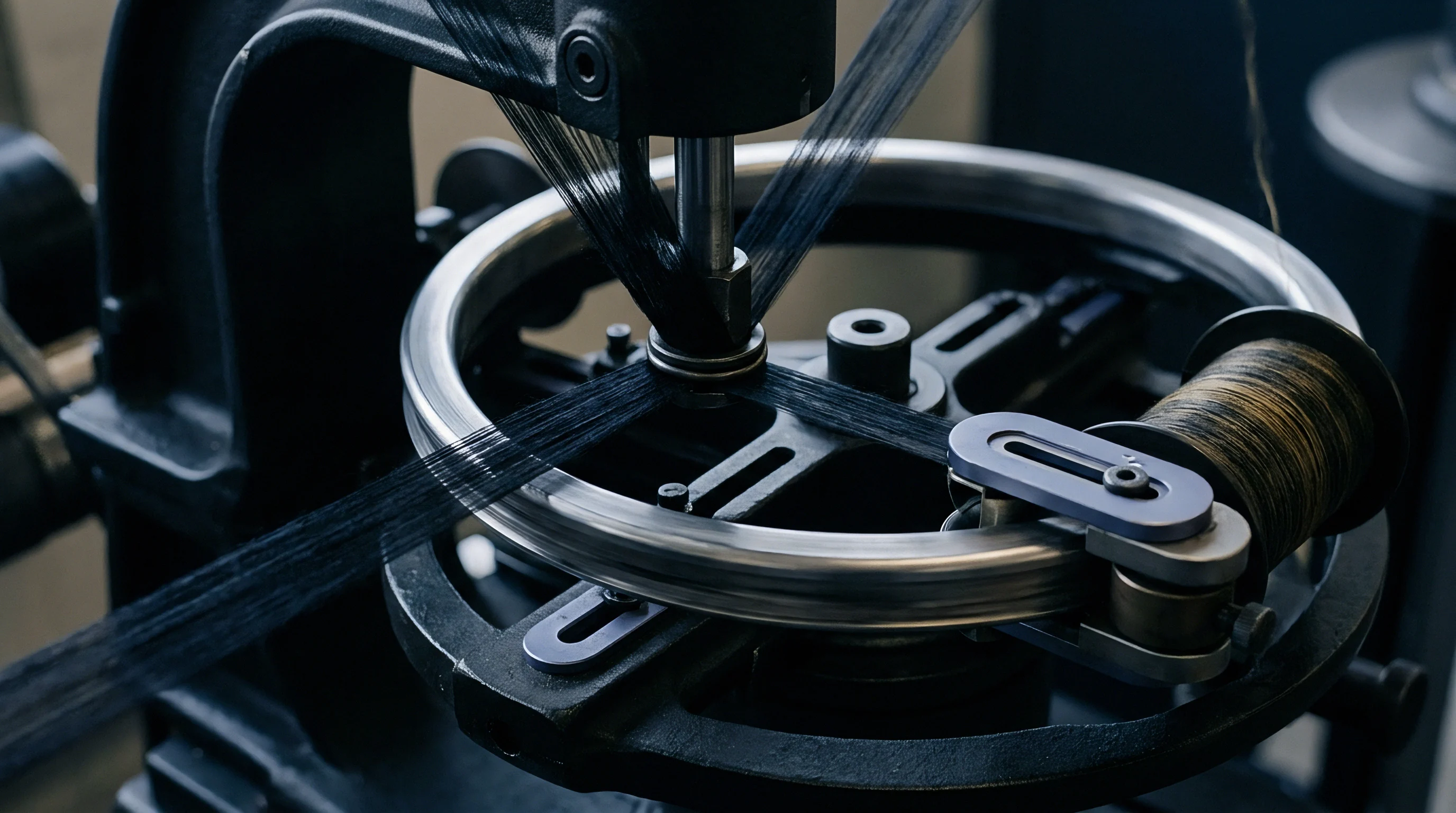
Quantitative Crimp Interchange Calculation and Jamming Limits
Tracking this crimp transfer requires analyzing a concrete fabric construction under defined finishing parameters. Take a 3/1 twill cotton fabric entering continuous mercerization at a greige weight of 190 g/m2, woven with 40 ends/cm and 24 picks/cm from 30 tex warp yarns and 30 tex filling yarns. Baseline dry yarn diameters equal 0.18 mm for both systems, with greige warp crimp at 7.5 percent and greige filling crimp at 8.0 percent.
Processing conditions apply 380 N warp tension while stenter clip chains target a finished width of 150 cm. Concentrated caustic swelling expands yarn diameters by 25 percent to 0.225 mm, increasing the total wave height required at yarn intersections from 0.36 mm to 0.45 mm, while machine draft pulls the warp nearly straight and reduces warp crimp from 7.5 percent down to 2.0 percent.
Because warp crimp drops to 2.0 percent, filling yarns must bend around the enlarged warp yarns, calculating out to a crimp jump from 8.0 percent to 14.2 percent. Longitudinal warp contraction during washing drives pick density from 24 picks/cm to 28 picks/cm; taking the reciprocal of pick density yields a post-wash pick spacing of 0.357 mm.
Geometric jamming occurs when thread spacing drops below the sum of intersecting yarn diameters. Here, swollen yarn diameters sum to 0.450 mm, while post-wash pick spacing contracts to 0.357 mm. Crossing below this theoretical limit drives the fabric into structural jamming: cross-machine thread compression forces adjacent filling picks into tight mechanical contact, causing severe fabric stiffness unless transverse stenter width is increased.
- Tension Application Warp drive rollers engage at the entry nip, pulling warp yarns to 98 percent of their fully extended length before chemical contact.
- Caustic Impregnation Concentrated sodium hydroxide swells fiber cross-sections, forcing yarn diameters outward while warp threads remain taut.
- Transverse Expansion Clip chains pull selvedges outward, converting excess weft wave height into regulated lateral fabric width before the neutralization bath.
- Acid Neutralization and Washing Dilute sulfuric acid neutralizes caustic residue, freezing the newly established yarn crimp configuration into place.
Because crimp interchange governs final fabric hand, controlling yarn paths during mercerization prevents structural stiffness caused by thread jamming.
Standard delivery specifications under ASTM D3776 require finished fabric weight tolerances to remain within plus or minus 3 percent of target contract weight.
Post-mercerization width shrinkage traces to improper stenter draft setting adjustments rather than natural cotton fiber variability.
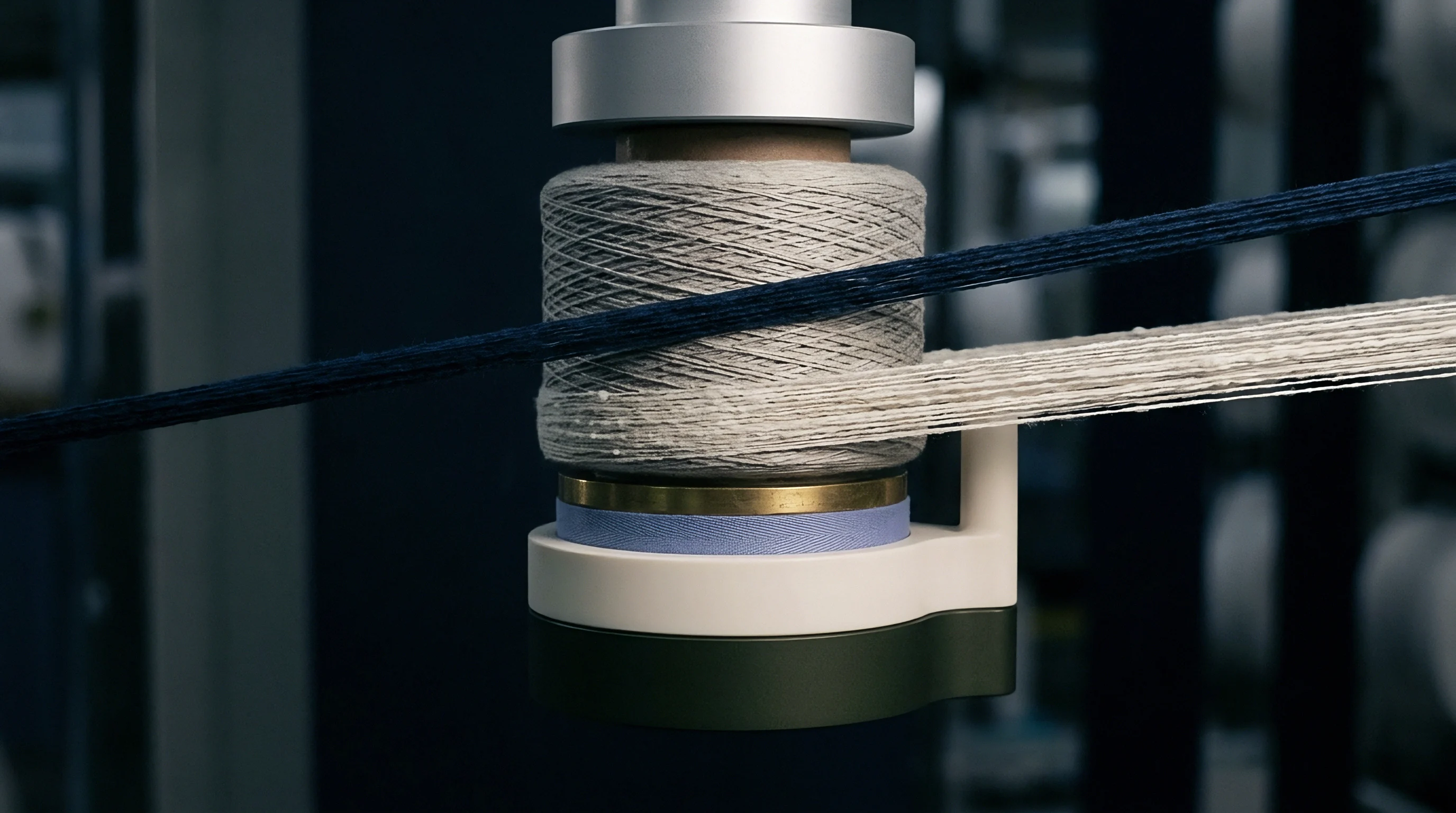
Audit
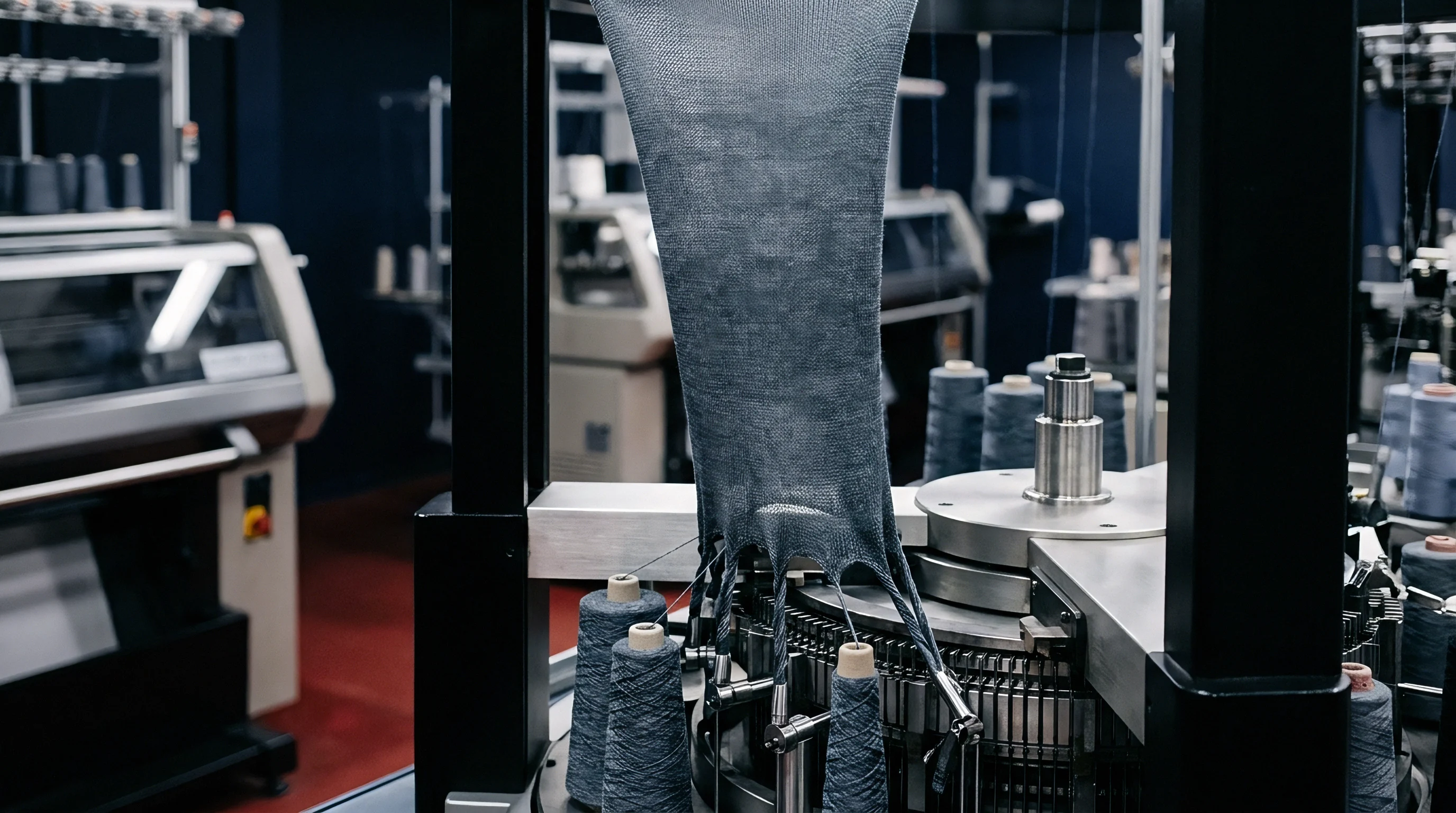
Verifying structural crimp redistribution requires standardized physical testing of finished fabric rolls alongside mill-floor process instrumentation checks. Standard test methods measure yarn crimp percentages by dissecting fabric swatches under controlled pretension, correlating residual crimp strain directly with washing performance. Mismanaging crimp exchange produces unbalanced fabrics that shrink excessively in garment laundering; accurate testing identifies these imbalances before bulk cutting.
Standardized Verification Protocols and Test Procedures
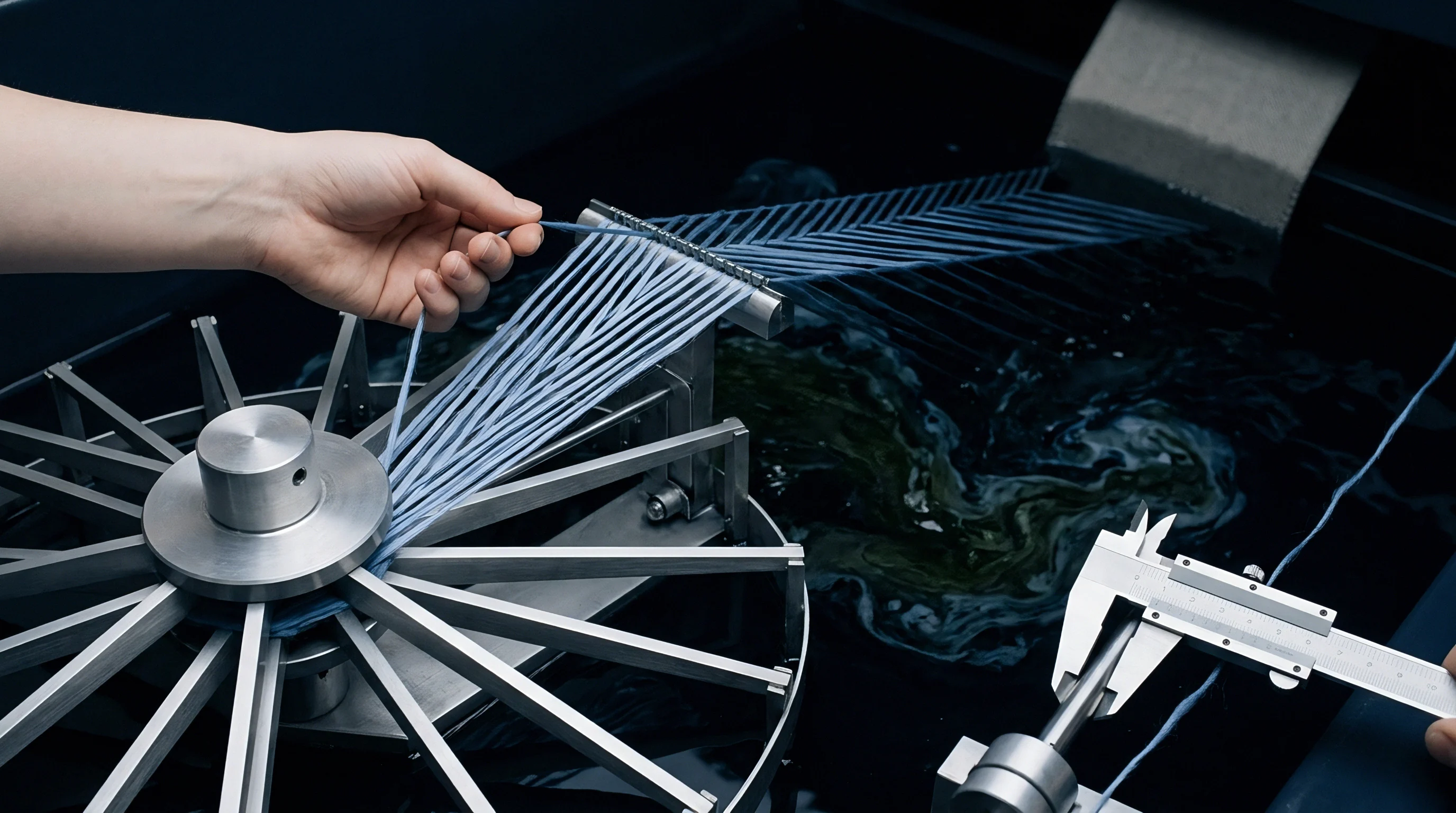
Physical verification follows ISO 7211-5 standard test procedures for determining yarn crimp in woven fabrics. Testing requires dissecting ten warp yarns and ten filling yarns from conditioned fabric swatches under a standardized pretension of 0.5 cN/tex based on nominal yarn count to avoid false elongation readings. Extended yarn length is measured against folded fabric length to calculate exact crimp percentages.
ISO 5077 evaluates dimensional change after domestic laundering according to ISO 6330 washing procedures. Fabric samples undergo multiple wash cycles to reach structural relaxation. Unbalanced crimp exchange manifests as asymmetric dimensional change, where warp yarns shrink while filling yarns expand.
| Finishing Condition | Warp Crimp ISO 7211-5 (%) | Weft Crimp ISO 7211-5 (%) | Wash Shrinkage Warp ISO 5077 (%) | Wash Shrinkage Weft ISO 5077 (%) |
|---|---|---|---|---|
| High Warp Tension / Unconstrained Width | 1.1 ± 0.1 | 16.2 ± 0.5 | -6.8 ± 0.3 | +1.4 ± 0.2 |
| Balanced Tension / Controlled Width | 3.2 ± 0.2 | 9.5 ± 0.3 | -1.8 ± 0.2 | -0.5 ± 0.1 |
| Low Warp Tension / Over-Stretched Width | 4.8 ± 0.3 | 6.2 ± 0.3 | +0.2 ± 0.1 | -4.5 ± 0.3 |
Commercial Implications and Yield Governance
Excess warp tension during finishing creates temporary length gains during continuous processing. These artificial length gains collapse during garment laundering, causing severe warp shrinkage that incurs commercial penalties including rejected shipments, garment remakes, and financial chargebacks.
- Cut ten fabric specimens across the full usable width of the finished roll, avoiding the outer 10 percent near selvedges.
- Condition specimens for 24 hours at 20 degrees Celsius and 65 percent relative humidity according to ISO 139 standard atmosphere guidelines.
- Extract twenty warp and twenty filling yarns per specimen, applying 0.5 cN per tex pretension to determine mean crimp percentages.
- Compare measured crimp values against greige weave technical sheets to confirm that crimp interchange ratios match the nominal finishing specification.
Rigorous draft control preserves fabric yield, while managing warp and filling tension across continuous ranges ensures consistent finished fabric performance.
Fabric woven with high greige filling crimp requires precise clip tension during caustic washing to prevent diagonal skewing across finished cuts.
Incorporating ISO 7211-5 crimp interchange thresholds into raw material purchase contracts obligates the finisher to re-process non-compliant rolls before cutting.