Standardized Superheated Fluid Protocols for Extracting Elastane from Microfiber Polyamide Knits
Superheated ethanol at 165 degrees Celsius extracts elastane from polyamide microfibers below 0.3 percent residual mass while preserving intrinsic viscosity.

Phase
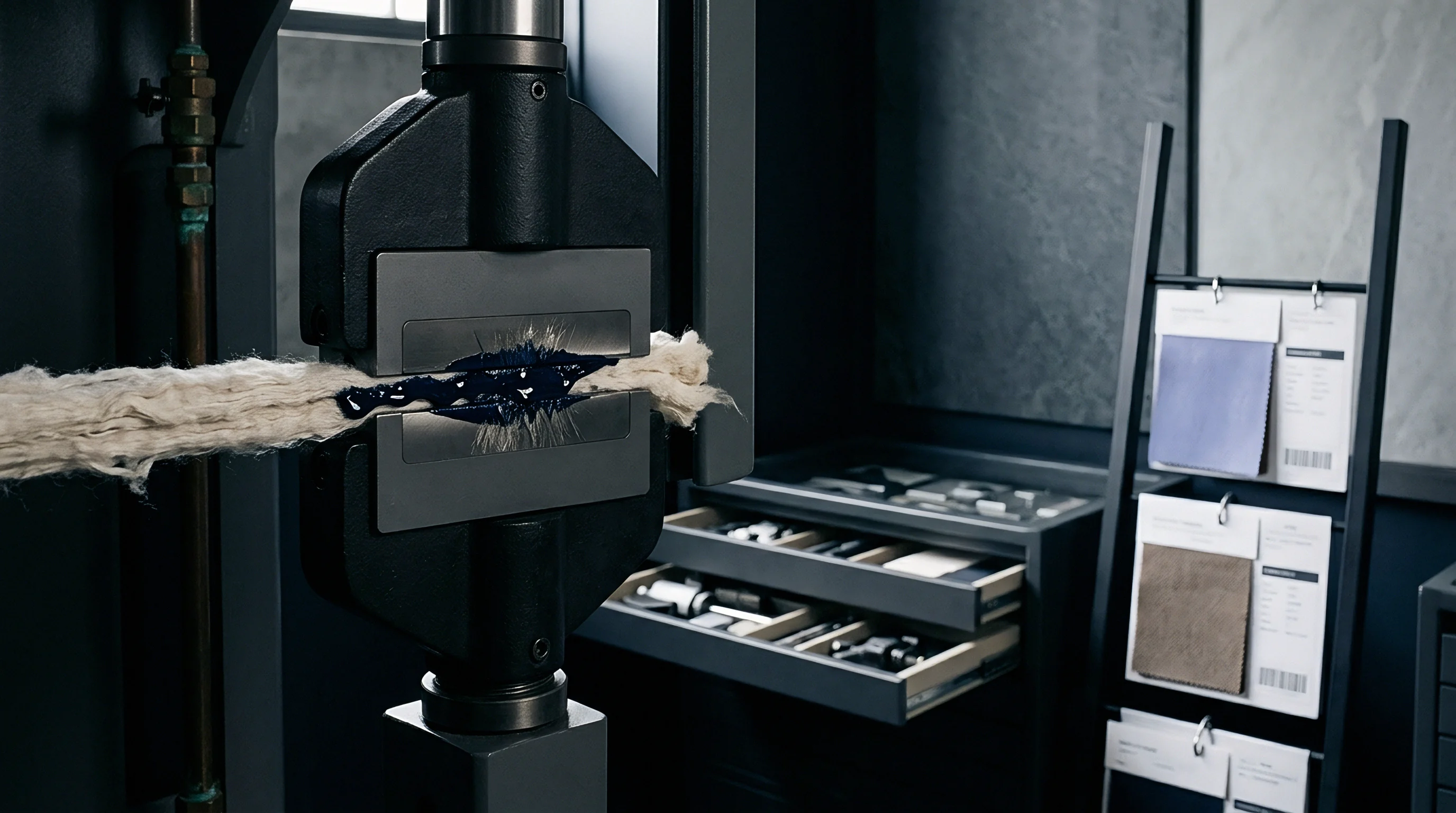
Superheated liquid media operating above standard atmospheric boiling points alter fundamental solvent properties. Water maintained between 160 and 220 degrees Celsius under pressures from 1.8 to 3.5 megaspascals exhibits a dropping dielectric constant. At room temperature, water holds a dielectric constant near 80.
Raising temperature to 200 degrees Celsius under autogenous pressure drops this value to approximately 35. Fluid density drops rapidly.
This drop aligns the solvent polarity of subcritical water with that of low-molecular-weight organic solvents like acetone or ethanol. Polyurethane elastanes contain soft polyether or polyester segments linked by hard aromatic polyurea domains. Decreasing solvent polarity permits selective penetration into these non-polar soft domains.
Swelling opens the polymer network, accelerating mass transport into the microfiber core.
Pressurization keeps the extraction solvent in a dense liquid phase, avoiding high heat-capacity vapor barriers that stall thermal transfer. Thermal energy transfers directly into the microfiber bundle without phase transition enthalpy losses.
| Solvent Phase | Temperature (C) | Pressure (MPa) | Dielectric Constant | Elastane Removal (%) | Polyamide IV Loss (%) |
|---|---|---|---|---|---|
| Subcritical Water | 180 | 2.1 | 42.5 | 88.4 | 1.2 |
| Subcritical Water | 210 | 2.8 | 34.8 | 99.2 | 3.8 |
| Superheated Ethanol | 150 | 3.0 | 18.1 | 94.6 | 0.6 |
| Superheated Ethanol | 165 | 3.8 | 15.9 | 99.7 | 1.1 |
Subcritical water at 210 degrees Celsius and 2.8 MPa reduces elastane content below 0.3 percent within twelve minutes.
Operating outside these verified thermodynamic windows damages the primary polyamide resin. Exceeding target extraction temperatures by fifteen degrees Celsius initiates severe hydrolysis of aliphatic amide bonds, dropping intrinsic viscosity below commercial re-spinning limits and destroying batch value.

Selectivity
Differential cleavage of chemical bonds in polymer matrices governs target extraction efficiency. Elastane structures rely on urethane and urea bonds that display lower thermal stability than the aliphatic amide bonds of polyamide 6 and polyamide 6,6. Cleavage activation energy for urethane linkages ranges from 90 to 110 kilojoules per mole.
Polyamide amide bonds require activation energies exceeding 140 kilojoules per mole. Controlling thermal inputs allows selective degradation of the polyurethane network while leaving the polyamide backbones intact.
Cleavage Kinetics in Urethane Links
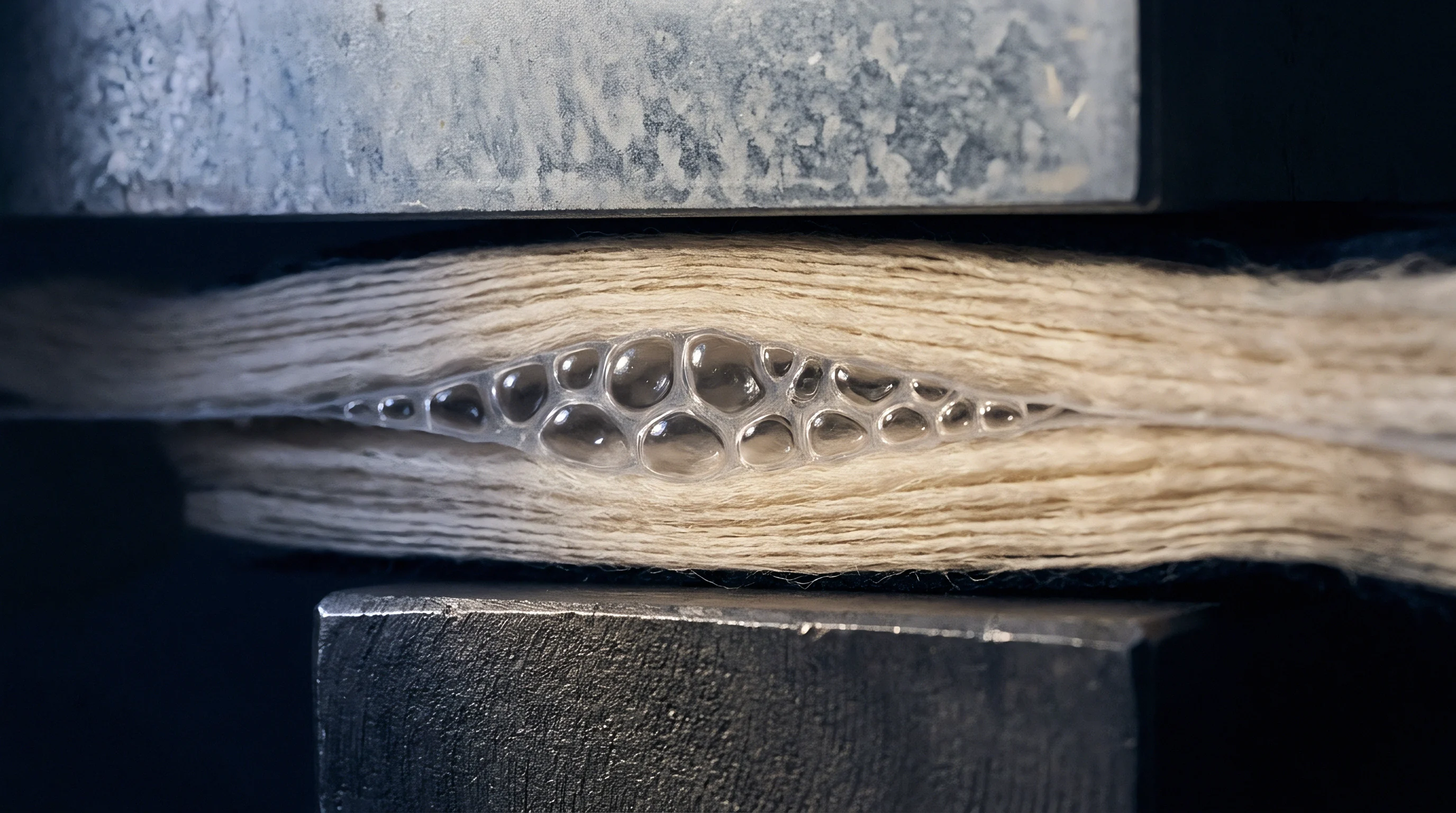
Polyurethane elastanes rely on alternating hard aromatic segments and soft aliphatic polyether blocks. Urea bonds break first. Superheated polar fluids perform nucleophilic attacks on the carbonyl carbon of the urethane and urea linkages.
Water drives hydrolysis, yielding amine end-groups, polyols, and carbon dioxide. Alcohol solvents drive transesterification, producing low-molecular-weight carbamate derivatives that dissolve rapidly into the fluid stream.
Microfiber geometries accelerate reaction kinetics. Yarns constructed from microfibers below 0.8 decitex offer specific surface areas exceeding 3.5 square meters per gram. This surface exposure reduces diffusion resistance, allowing the fluid to clear dissolved elastane fragments before secondary re-crosslinking occurs.
Would Subcritical Ethanol Reduce Polyamide Chain Scission?
Alcoholic extraction media lower the activation energy required for transesterification while preserving backbone molecular weight. Anhydrous superheated ethanol attacks urethane bonds rapidly at 165 degrees Celsius. Water molecules promote hydrolytic cleavage of polyamide chains, but ethanol minimizes this pathway due to lower nucleophilicity toward aliphatic amides.
- Thermal Hydrolysis occurs when free water cleaves amide bonds along the polyamide backbone, increasing carboxylic acid end-groups and lowering relative viscosity.
- Oligomer Precipitation develops when dissolved polyurethane fragments cool below critical solution temperatures, re-depositing sticky aromatic residues onto clean microfibers.
- Amide Transesterification proceeds under high thermal loads, causing exchange reactions that broaden molecular weight distribution without changing total mass.
- Amine End-Group Accumulation tracks polyurethane decomposition, serving as an analytical indicator for monitoring extraction completion in continuous fluid lines.
Viscosity dictates market price. Preserving a high relative viscosity in the extracted polyamide yarn ensures compatibility with high-speed filament extrusion equipment. Testing samples via capillary viscometry verifies whether chain scission remained within tolerable limits during fluid processing.
A standardized purchase contract specifying ISO 1833-20 quantitative chemical analysis with a maximum residual elastane threshold of 0.5 percent shifts quality liability directly to the recycling processor.
Mesh
Yarn linear density below one decitex fundamentally alters fluid movement through packed fabric beds. Microfiber knits compress tightly under fluid pressure, forming dense filter beds within axial-flow extraction vessels. The compact spatial arrangement of filaments restricts fluid pathways, causing micro-channeling and uneven solvent percolation.
Bed Compaction and Pressure Drops
Dense microfiber knits deform under axial liquid flow within extraction columns. High packing density elevates differential pressure across the vessel length. Microfibers increase fluid resistance.
When differential pressure exceeds 0.6 megaspascals across the fabric bed, fluid channels form along vessel walls, bypassing the interior core of the textile package. Unextracted elastane pockets remain inside compressed zones.
Standard batch specifications demand a packing density under 250 kilograms per cubic meter to prevent preferential fluid channeling.
- Scour microfiber knit fabric in an aqueous surfactant bath at 60 degrees Celsius to remove knitting oils.
- Load the damp knit into an axial-flow basket reactor maintaining a loose spiral configuration.
- Evacuate vessel air to 5 kilopascals to eliminate oxidative degradation during heating cycles.
- Pressurize the loop with preheated ethanol solvent to 3.2 megaspascals before reaching target temperature.
- Recirculate extraction fluid at a space velocity of four vessel volumes per minute.
| Bed Packing Density (kg/m3) | Superheated Flow Velocity (m/s) | Pressure Drop (MPa) | Residual Elastane Variance (%) |
|---|---|---|---|
| 180 | 0.12 | 0.15 | 0.08 |
| 230 | 0.09 | 0.32 | 0.14 |
| 280 | 0.05 | 0.78 | 1.45 |
| 320 | 0.02 | 1.24 | 3.80 |
Processing mills often claim that uneven elastane extraction stems from spin-finish oil variations rather than improper vessel packing.

Recovery
Post-extraction separation streams divide solubilized degradation products from intact solid filaments. The pregnant fluid stream leaving the extraction vessel carries dissolved polyols, aromatic amine derivatives, and unreacted solvent. Effective processing isolates pure polyamide microfibers while recovering chemical streams for re-use.
Precipitation and Flash Separation
Depressurization of pregnant solvent streams triggers rapid cooling and solute drop-out. Dropping pressure from 3.8 megaspascals to atmospheric levels vaporizes superheated ethanol instantaneously. Volatile solvents flash off, leaving non-volatile elastane degradation products behind in the collection vessel.
Flash drying removes ethanol.
Cooling subcritical water streams below 90 degrees Celsius causes low-solubility oligomers to precipitate out of liquid suspension. Solid-liquid separators must remove these sticky fractions prior to sending fluid back through heat exchangers. Oligomers foul narrow piping.
Filtration and Drying Schedules
Solid PA6 cake retains solvent within microscopic interfiber capillaries. Vacuum-assisted wash cycles utilizing clean warm solvent displace residual solute-rich liquor from the microfiber mass. Solvent recovery drives margin.
Solvent recovery circuits operate most efficiently when flash evaporation pressures remain strictly above the monomer boiling point.
- Distillation Column Duty balances energy input against solvent purity thresholds, maintaining moisture content below 0.2 percent for alcohol re-injection.
- Oligomer Filtration Rating specifies continuous mechanical removal of particles down to two microns to protect high-pressure fluid pump impellers.
- Solvent Moisture Control prevents excess water accumulation in organic extraction loops, preserving chemical selectivity toward urethane links.
- Nylon Cake Volatiles measures residual fluid remaining in extracted microfiber beds before vacuum tumble-drying operations begin.
Rinsing extracted microfiber cakes with fresh hot solvent before vessel depressurization prevents redeposition of dissolved polyols onto yarn surfaces.
Ledger
Financial viability turns on total thermal energy expenditure per kilogram of reclaimed resin. Capital equipment amortization, high-pressure utility demands, and solvent makeup losses dictate whether superheated fluid extraction competes against virgin polyamide polymerization. Energy costs dominate processing budgets.
Thermal Energy and Solvolysis Accounting
Heat exchangers capture enthalpy from exiting solvent streams to preheat incoming feedstocks. Processing one metric ton of microfiber knit fabric (82 percent PA6, 18 percent elastane) requires precise energy management. Solvent recovery systems capture 98.5 percent of circulating ethanol through closed-loop condensation circuits.
Calculating operational expenditures demands rigorous tracking of yield loss, electricity, steam generation, and chemical makeup. Purity governs resale value.
| Cost Component | Operational Quantity | Unit Cost (USD) | Line Item Cost (USD) |
|---|---|---|---|
| Thermal Energy (Steam) | 1.8 MWh | 65.00 / MWh | 117.00 |
| Pumping Power (Electric) | 320 kWh | 0.12 / kWh | 38.40 |
| Ethanol Solvent Loss | 12.5 kg | 1.40 / kg | 17.50 |
| Direct Operating Labor | 3.5 hours | 45.00 / hour | 157.50 |
| PA6 Fiber Yield Loss | 24.6 kg | 2.65 / kg | 65.19 |
| Total Direct Processing Cost per Ton Raw Input | 395.59 | ||
Assuming a processed yield of 800 kilograms of clean PA6 resin per ton of input fabric, direct fluid extraction costs total $0.49 per kilogram of recovered polymer. Adding equipment capital amortization of $0.35 per kilogram yields a landed cost of $0.84 per kilogram. Virgin PA6 resin trades near $2.65 per kilogram.
Tariff rates favor pure polymers.
Customs Classification and Tariff Duty
Cross-border shipments of reclaimed textile polymers face distinct tariff schedules based on remaining impurity thresholds. Material containing over 0.5 percent residual elastane classifies under mixed synthetic waste headings, attracting elevated import tariffs in major manufacturing jurisdictions. Cleared, fully extracted polyamide pulp qualifies for entry under virgin polymer tariff line 3908.10, cutting border duties significantly.
Customs authorities reclassify extracted polyamide pulp under virgin synthetic polymer tariff headings once elastane content tests below half a percent.
Whether commercial solvent recovery systems can maintain closed-loop energy balance below one dollar per kilogram across ten thousand operating cycles remains an open industrial challenge.
Subcritical Ethanol Depolymerization Kinetics In Microfiber Polyamide Knits
Evaluating Intrinsic Viscosity Loss Mechanics In Depolymerized Subcritical Fluid Extracted Polyamide Microfiber Yarns