Designing Two-Stage Composite Sampling Protocols for Industrial Garment Dyeing
Two-stage composite sampling requires spatial unit extraction across dye vats and composite size limits tuned to instrument detection floors to prevent masking.

Liquor
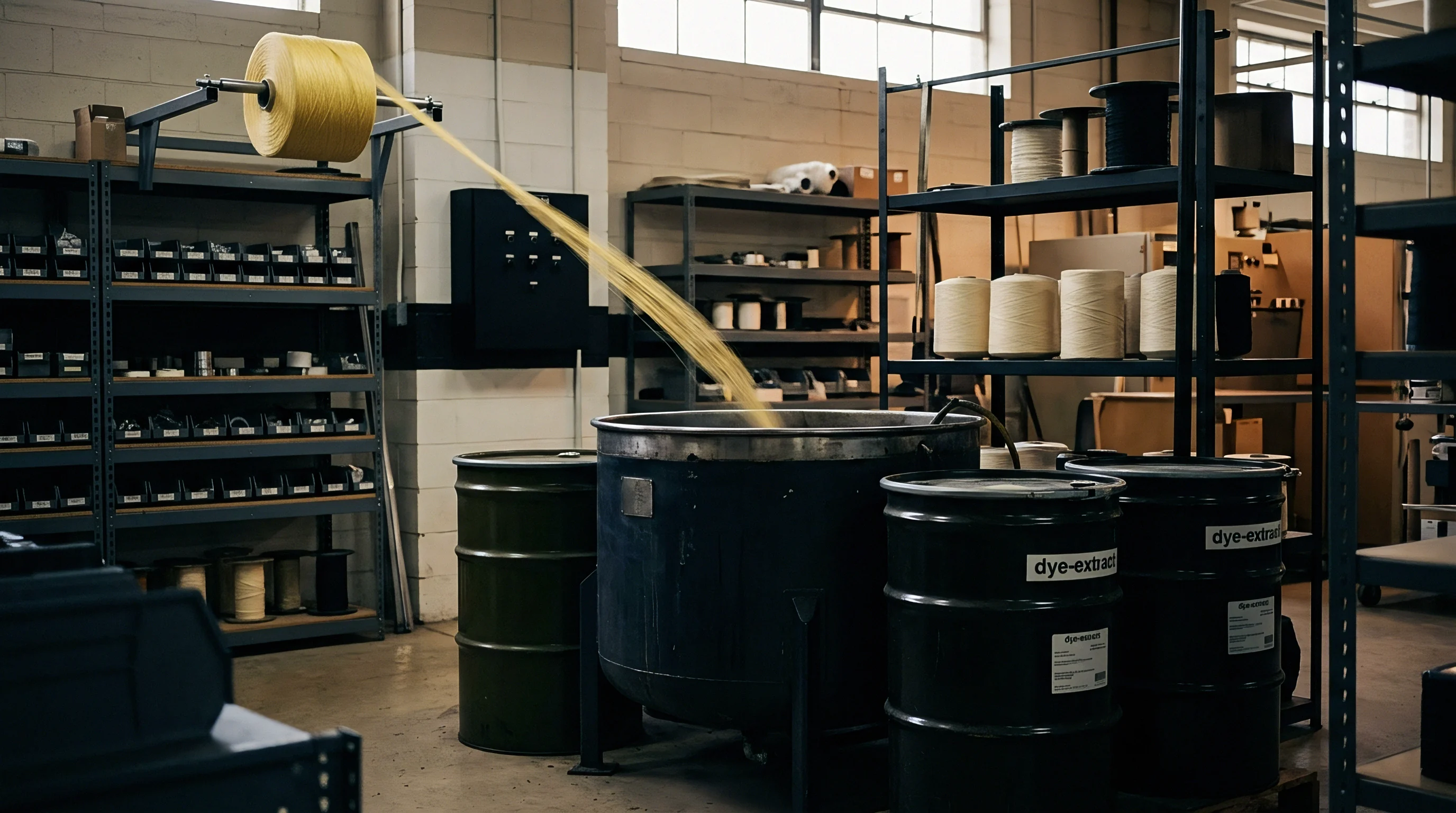
Garment dyeing transforms fully constructed apparel items inside rotary drum machines or side-paddle vats where fluid dynamics differ sharply from continuous piece-goods processing. High bath ratios ranging between 10:1 and 20:1 move bath liquid around packed garments, yet local fluid velocities vary across the drum chamber. Garments positioned near the rotating axis experience lower turbulent shear than those crashing against the outer wall vanes.
These mechanical gradients produce measurable variations in dye exhaustion rates, salt accumulation, alkali fixation levels, and residual surfactant retention within a single production lot.
Primary sampling unit selection forms the first stage of any statistically valid compliance audit. Selecting garments exclusively from the top layer of a unloaded extraction cart skews the sample toward the last garments removed from the basket. A compliant two-stage protocol mandates primary sampling across three distinct spatial locations within the centrifuge or unloading vessel: top, center core, and bottom sump.
Sampling technicians draw primary garments directly after hydro-extraction to capture un-fixed dye and process chemicals before thermal drying locks volatile residues into the fiber structure.
Dye bath temperatures fluctuate.
Industrial garment dyeing batches often combine multiple small rotary loads to fulfill a single commercial purchase order. Even when using identical shade recipes, batch-to-batch variation between concurrent dye runs introduces significant variance. Primary sampling protocols must account for both intra-vat non-uniformity and inter-vat thermal or chemical drift.
The primary sample size determination relies on a modified binomial distribution where the total number of primary units extracted reflects total garment count and vat volume distribution.
| Dye Vat Type | Lot Size Range (Garments) | Minimum Primary Units (Stage 1) | Spatial Sampling Points per Vat | Intra-Batch Variance Factor |
|---|---|---|---|---|
| Rotary Drum (Low Liquor) | 500 to 1,500 | 13 garments | 3 (Axial, Mid, Wall) | 1.18 |
| Rotary Drum (High Liquor) | 1,501 to 3,500 | 20 garments | 4 (Top, Core, Bottom, Gate) | 1.25 |
| Side-Paddle Vessel | 3,501 to 7,000 | 32 garments | 5 (Quadrant Cross-Section) | 1.42 |
| Multi-Vat Combined Lot | 7,001 to 15,000 | 50 garments | 6 (Distributed per Vat) | 1.65 |
Primary Unit Selection Protocols
Field inspectors pull primary units immediately following the final spin phase of the wet process. Taking garments post-drying risks masking chemical residues that evaporate or migrate under high thermal stress. The selection protocol follows a fixed interval sequence calculated by dividing total batch units by target primary sample count.
An inspector evaluating a 3,000-garment batch requiring 20 primary units selects every 150th garment coming off the unloading conveyor.
- Confirm the total garment unit count against the dyehouse vat loading sheet before initiating extraction.
- Divide the total batch unit number by the required primary sample size to determine the sampling interval step.
- Extract single intact garments at designated step intervals during vat unloading across top, middle, and bottom unloading stages.
- Place each primary unit immediately into an individual un-plasticized polyethylene specimen bag to avoid cross-contamination.
- Seal and label every primary package with vat ID, extraction time stamp, and precise spatial origin within the drum.
A twenty-unit primary sample drawn across four distinct vat loading zones reduces intra-batch chemical variance measurement error below five percent under standard testing protocols.
Ignoring primary sampling distribution across drum zones introduces systematic sampling bias that distorts chemical compliance data. When a high-density pocket of un-fixed aromatic amine precursors resides in the center core of a congested side-paddle vat, surface-only sampling lets contaminated lots clear incoming quality control. The entire lot then faces border detention or costly consumer recalls when regulatory authorities re-sample deep container contents.

Anatomy
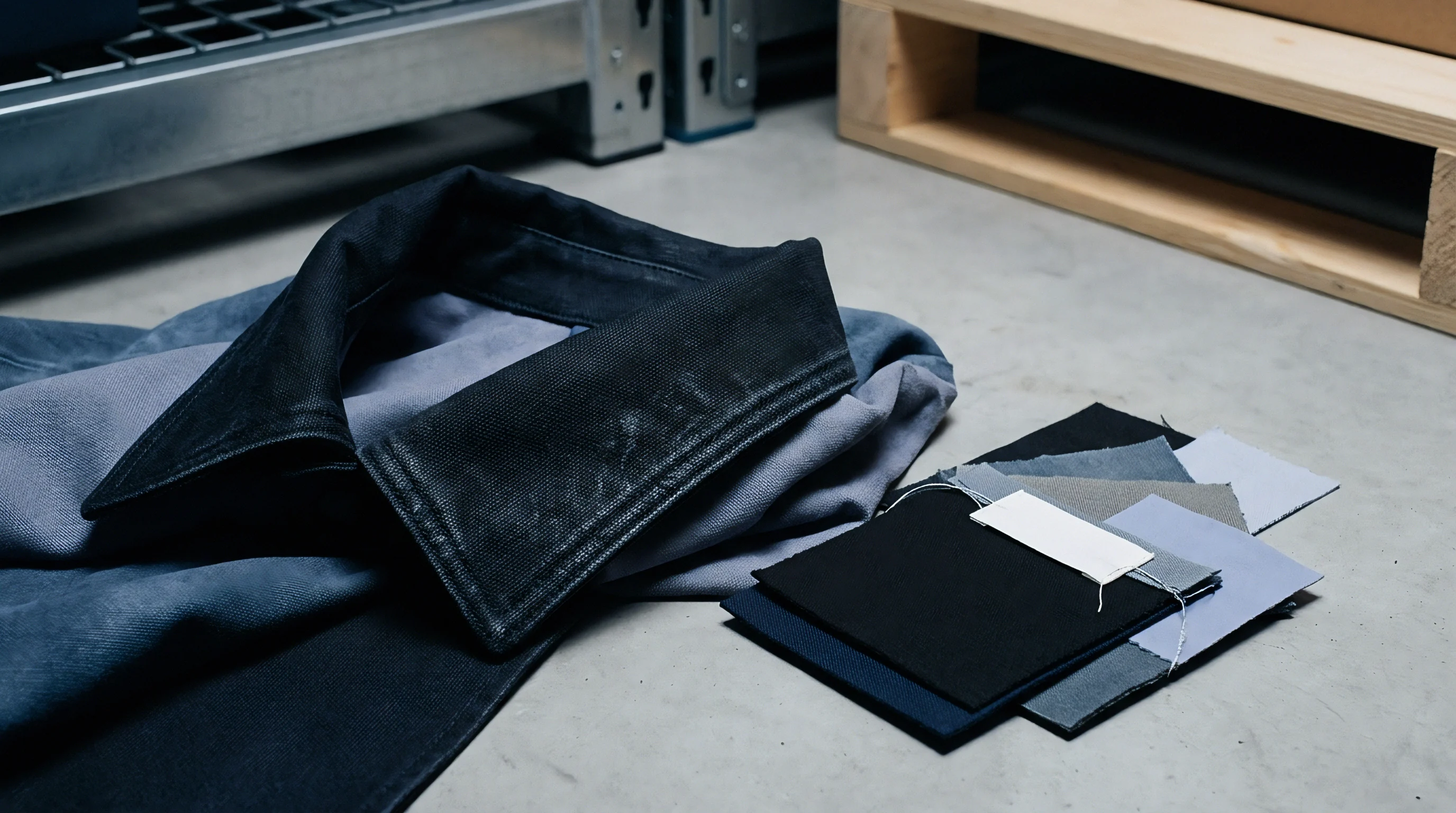
Garments are complex assemblies of diverse textile components, including main shell fabrics, pocket bags, ribbing, sewing threads, zippers, elastic bands, and pocket linings. Stage-two sampling selects specific physical zones from each primary garment unit to construct analytical specimens. Chemical concentrations concentrate heterogeneously across garment structures during dyeing and finishing operations.
Heavy seams, folded pocket corners, multi-layered plackets, and elasticized waistbands retain higher concentrations of chemical auxiliaries due to restricted liquor drainage and delayed drying rates.
Seams trap chemical residues.
Direct secondary sampling from flat, single-layer panel fabric frequently yields false-pass results for restricted substances. Dispersing agents, cross-linking formaldehyde resins, and heavy metal complexing chemicals migrate toward high-density construction zones during the thermal migration phase of industrial tumble drying. A rigorous stage-two protocol dictates cutting swatches from both flat panel areas and high-density construction zones to capture peak chemical burden.

Zone Specific Sub-Sampling Strategy
Sub-sampling requires systematic cutting of defined surface areas from identical geographic locations across all selected primary garments. Technicians cut circular swatches measuring precisely ten square centimeters using stainless steel punch dyes. For aromatic amine analysis under ISO 14362-1, swatches must include seam structures containing assembly sewing threads, as dyed threads often carry elevated azo colorant concentrations relative to the base fabric.
Metal trimmings release extractable ions.
Trim elements require dedicated secondary processing paths. Plastic buttons, coated metal snaps, and heat-transfer labels undergo individual physical separation before compositing. Standard analytical protocols prohibit mixing rigid hardware with flexible textile substrates during initial solvent extraction steps because solvent absorption rates and liquid distribution coefficients differ by orders of magnitude.
Seam zones and multi-layered plackets carry up to three times the residual chemical concentration of single-layer panel fabric due to capillary liquid migration during industrial drying cycles.
Sub-Sampling Failure Configurations
Failure modes during stage-two sub-sampling originate from inconsistent specimen geometry, biased component selection, or mechanical cross-contamination. The following list identifies critical operational points where stage-two execution breaks down during garment preparation.
- Flat Fabric Selection Bias swatches taken exclusively from smooth chest or back panels miss elevated chemical concentrations trapped within structural seams and waistbands.
- Thread Exclusion Errors removing assembly sewing threads from cut swatches disguises high-risk azo dye chemistry present on thread fibers.
- Hardware Cross-Contamination crushing metal snaps together with fabric swatches transfers surface-active metal residues onto textile fibers during punching.
- Unequal Mass Allocation cutting variable swatch sizes across primary garments skews composite representations toward larger physical pieces.
- Punch Tool Contamination using un-cleaned stainless steel punch dies transfers oily process residues between different colorway lots.
The dyehouse manager claimed that elevated formaldehyde levels detected in the initial test resulted from ambient storage conditions in the finishing department rather than improper washing of the garment lot.


Pooling
Compositing combines sub-samples from multiple primary garments into a single laboratory test specimen to reduce analytical testing costs. Mass-proportional pooling requires every primary sub-sample to contribute an identical weight to the combined composite mass. A typical composite specimen for chemical extraction weighs exactly two grams.
If a protocol pools sub-samples from five primary garments, each garment must contribute exactly 0.40 grams of finely shredded material to the extraction flask.
Dilution hides local non-compliance.
The math of composite sampling introduces a mathematical dilution effect. When only one garment in a five-garment composite contains a restricted substance, the compositing process dilutes that chemical by a factor of five. To ensure compliance with regulatory action limits, laboratory reporting thresholds must be adjusted downward by dividing the standard regulatory limit by the number of primary units in the composite pool.
| Chemical Parameter | Standard Limit (mg/kg) | Maximum Composite Size (Units) | Adjusted Action Limit (mg/kg) | Method Detection Limit (mg/kg) |
|---|---|---|---|---|
| Aromatic Amines (ISO 14362-1) | 20.0 | 3 garments | 6.67 | 5.0 |
| Extractable Heavy Metals (ISO 17072-1) | 1.0 (Lead) | 4 garments | 0.25 | 0.1 |
| Formaldehyde (ISO 14184-1) | 16.0 (Baby Class) | 2 garments | 8.00 | 2.0 |
| Phthalates (CPSC-CH-C1001-09.4) | 500.0 | 5 garments | 100.00 | 20.0 |
| Alkylphenol Ethoxylates (ISO 18254-1) | 100.0 | 4 garments | 25.00 | 10.0 |

Where Does Analytical Masking Skew Compliance Results?
Analytical masking occurs when the diluted concentration of a restricted chemical falls below the Method Detection Limit (MDL) of the analytical instrument, despite an individual garment exceeding statutory limits. If a regulatory threshold for an aromatic amine sits at 20 mg/kg and a lab tests a 5-unit composite, the adjusted action limit becomes 4.0 mg/kg. If the instrument’s MDL is 5.0 mg/kg, the test cannot reliably detect a single non-compliant garment containing 22 mg/kg.
Composite sizes must be mathematically constrained so the adjusted action limit remains strictly above the laboratory instrument’s validated detection floor.
Composite testing saves laboratory expense.

Composite Decision Checklist
Compliance managers evaluate specific criteria before approving composite reduction protocols for industrial production lots. The decision sequence requires verification of instrument sensitivity and lot homogeneity.
- Instrument Sensitivity Verification confirm the laboratory method detection limit sits below the calculated composite action limit for every targeted analyte.
- Sub-Sample Mass Precision verify that individual swatch masses fall within a plus-or-minus one percent mass tolerance before physical blending.
- Shade Colorway Grouping pool sub-samples exclusively from identical shade recipes and garment wash lots to prevent chemical variance distortion.
- Homogenization Degree Check ensure mechanical shredding produces fiber particles smaller than one millimeter to prevent extraction preference.
What mathematically optimal composite size balances laboratory budget limits against the statistical risk of missing a localized chemical hot-spot in a ten-thousand-garment shipment?

Assay
Extracted specimen materials require rigorous chemical preparation before entering analytical instrumentation. Physical homogenization uses cryogenic impact milling or high-speed rotary cutting to reduce combined sub-samples into uniform fiber particles. Particle size directly influences solvent extraction kinetics.
Coarse fabric pieces retain restricted chemicals inside inner yarn cores, yielding artificially low test results, whereas finely milled powder ensures total solvent contact across fiber surfaces.
Pockets retain unfixed pigments.
Solvent extraction procedures follow strict thermal and temporal parameters. Extracting azo dyes under ISO 14362-1 requires citrate buffer solutions at pH 6.0 maintained at 70 degrees Celsius, followed by reductive cleavage using sodium dithionite. Any deviation in buffer pH or extraction temperature alters the reduction yield of cleavage amines.
Quantitative analysis uses gas chromatography-mass spectrometry (GC-MS) or liquid chromatography-diode array detection (LC-DAD) calibrated against certified reference materials.
| Target Chemical Class | Test Method Standard | Extraction Solvent | Temperature & Duration | Instrumental Finish |
|---|---|---|---|---|
| Restricted Azo Colorants | EN ISO 14362-1:2017 | Citrate Buffer (pH 6.0) | 70°C for 30 min | GC-MS / LC-DAD |
| Extractable Trace Metals | EN ISO 17072-1:2019 | Acidic Synthetic Sweat | 37°C for 4 hours | ICP-OES / ICP-MS |
| Free Formaldehyde | EN ISO 14184-1:2011 | Deionized Water | 40°C for 60 min | UV-Vis Spectrophotometry |
| Organotin Compounds | ISO 22744-1:2020 | Ethanol/Methanol/Hexane | 60°C ultrasonic 60 min | GC-MS |

Laboratory Documentation Requirements
Assay integrity depends on transparent, audit-ready laboratory records. A valid analytical report includes specific metadata detailing specimen preparation, composite ratios, and instrument performance metrics.
- Itemized primary sample receipt logs recording garment condition, security seal numbers, and individual unit masses.
- Stage-two sub-sampling maps identifying exact geographic locations where swatches were cut from each garment.
- Gravimetric weighing logs confirming individual swatch masses contributing to the composite specimen.
- Cryogenic milling grain size verification records confirming particle size distribution below 1.0 mm.
- Calculated composite dilution factors alongside raw instrumental signals and calibrated reporting limits.
- Reagent blank data and matrix spike recovery percentages within standard 80 to 120 percent control bands.
Solvent volume alters extraction yield.
Scope certificates confirm chemical compliance.
Under section 4.2 of standard buyer compliance agreements, any composite test result exceeding the adjusted action limit automatically triggers immediate individual re-testing of all underlying primary units at the dyehouse’s expense.
Ledger
Commercial contracts place ultimate financial liability for chemical non-compliance on the garment manufacturer or importer of record. Border detention fees, container demurrage, laboratory re-testing expenses, and total lot destruction costs aggregate rapidly when a custom authority rejects a shipment. Standard purchase orders incorporate compliance clauses that tie payment releases directly to verified two-stage composite test certificates issued by ISO 17025 accredited facilities.
Salt concentration alters fixation rate.
Retesting uncovers hidden batch variances.
Alkali additions change bath equilibrium.
A cost-effective assurance strategy balances sampling frequency against non-compliance risk exposure. Testing single-garment specimens across every vat generates unsustainable laboratory fees that destroy production margins. Conversely, over-compositing primary samples creates high analytical masking risks that expose buyers to catastrophic border rejections.
Implementing a mathematically optimized two-stage composite protocol controls testing overhead while preserving statistical detection power for high-risk chemical analytes.
Defending chemical compliance claims before customs authorities demands unbroken chain-of-custody documentation from vat extraction to final GC-MS analytical spectrums. When primary garments are selected across spatial vat zones, sub-sampled at structural concentration points, and composited within strict instrument sensitivity boundaries, the resulting compliance dossier withstands rigorous regulatory audit.
Sampling intensity scales directly with historical mill defect rates and structural chemical risk.