Mass Balance Yield Verification Protocols for Certified Textile Import Audits
Textile import audits require reconciling conditioned oven-dry mass against verified mechanical loss factors to validate transaction certificate volume claims.


Tare
Inbound customs declarations for certified goods depend heavily on the distinction between invoice weight and conditioned commercial mass. Standard commercial shipment invoices frequently record gross packed weight ~ incorporating wooden pallets, strapping, paper cones, and plastic wrap. When these unconditioned raw weights enter customs filings, auditors comparing Bill of Lading figures against Transaction Certificates hit an immediate document discrepancy.
Under accredited custody systems, clean dry fiber content is the sole admissible baseline for input calculations; port auditors routinely reject declarations that substitute packing mass for true fiber content, triggering re-entry filings and port holding charges.
Commercial moisture allowances govern weight determinations across natural and synthetic materials under ASTM D1909 and ISO 139 test methods. Raw cotton carries a standard commercial moisture regain allowance of 8.5 percent, whereas conventional polyester maintains a regain value of 1.5 percent. A raw cotton shipment entering customs inspection at an ambient moisture level of eleven percent exhibits an artificial two-and-a-half percent weight inflation above allowable trading standards.
Inspectors convert gross weights to oven-dry mass through forced-convection desiccation at 105 degrees Celsius, afterward applying the material’s specific commercial moisture regain factor to derive true allowable invoice mass. Omitting moisture adjustments at entry distorts every subsequent mass balance ratio through spinning, weaving, and wet processing.
Consignment documentation claiming certified fiber content requires oven-dry mass adjustments under standard atmospheric tolerances before customs clearance filings.

Commercial Weight Standards and Moisture Regain
Discrepancies compound when imported lots undergo ambient humidity shifts during maritime transit. Freight containers traversing equatorial trade lanes encounter high heat and maritime humidity, driving moisture absorption inside baled fibers long before reaching destination gates. Certified organic cotton fibers take up atmospheric water vapor readily, expanding container mass by dozens of kilograms between the inland gin and the destination yard.
An unadjusted entry document credits the mill with raw material volume that physically evaporates once bales reach the blowroom line. Auditors evaluating certified consignments rely on commercial weight certificates issued by ISO 17025 accredited inspection agencies, requiring raw weights to reflect corrected moisture values rather than raw container gate tickets.

Container Weighbridge Records against Shipping Manifests
Logistics documentation offers secondary verification points for customs verification officers checking input integrity. Gate weighbridge slips, intermodal railway weight bills, and automated container terminal receipts record gross, tare, and net vehicle weights before vessel loading. When the gross container tare recorded on the maritime bill differs from the physical container stamping by more than twenty kilograms, the calculated cargo mass loses evidentiary validity.
Border inspectors examine container inspection dockets to verify that shipping containers underwent tare calibration prior to loading; if tare calculations rely on generic container fleet averages rather than individual equipment checkweighing, certified input data fails customs administrative review.
When discrepancies between gate tickets and Transaction Certificates emerge during port clearance, container tare variations and maritime dampness are frequently cited to explain a five percent weight surplus, though auditors require empirical verification.


Spool
Mechanical yarn manufacturing strips unusable short fibers and foreign matter from the certified supply line across distinct processing stages ~ opening, carding, drawing, and spinning ~ as raw baled fiber is converted into wound packages. Each transformation sheds mass through drop waste, carding strips, noils, and pneumatic filter waste into collection bins beneath the machinery. Waste percentages in ring spinning vary according to target yarn count and fiber staple distribution.
Open-end rotor systems tolerate broader staple length spreads, generating three to five percent total waste, whereas combed ring-spun cotton processes remove sixteen to twenty-two percent of raw mass as comber noils.
Audit verification protocols mandate reconciling raw bale consumption against wound package scale receipts. If a spinning mill procures 100,000 kilograms of certified virgin staple fiber and issues transaction certificates for 94,000 kilograms of combed ringspun yarn, the mass balance calculation fails audit criteria. Although comber noils represent high-grade secondary fiber, their extraction permanently removes mass from the certified primary yarn balance.
Auditors classify unrecorded noil extraction as unassigned production diversion, demanding batch processing logs that trace secondary fiber fractions to specific non-certified utility products or open sales lots.
A combed ring-spun processing line removing eighteen percent comber noils cannot legally balance finished yarn output exceeding eighty-two percent of clean input fiber.

Mechanical Loss Profiles in Staple Processing
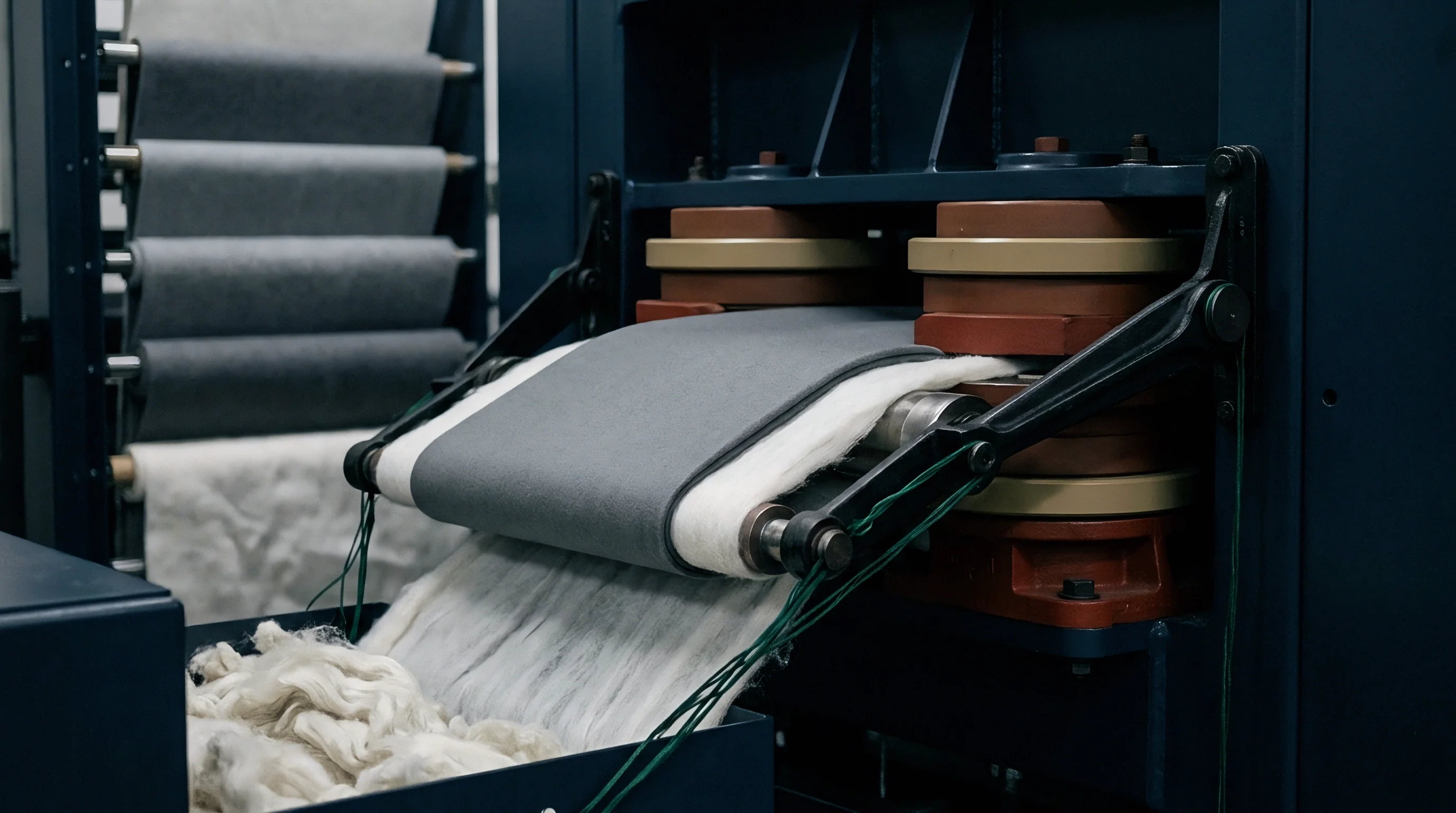
Opening and carding stages release trash particles, seed coat fragments, and broken fibers into centralized dust extraction systems. Coarse trash separation removes dense vegetative contamination during initial mechanical beating, while micro-dust extraction filters draw microscopic particles out of transport air into collector hoppers. Carding flats generate cylinder strips consisting of tangled fibers unsuitable for premium rotor or ring spinning, bringing total spinning waste up to eight percent.
The auditor computes acceptable output limits by balancing gross input fiber against aggregated waste streams recorded on machine shift logs.
The table below summarizes standard processing conversion factors and allowable mechanical waste fractions across primary fiber spinning operations.
| Processing System | Fiber Type | Target Yarn Count | Allowable Waste Fraction | Nominal Conversion Factor |
|---|---|---|---|---|
| Rotor Open-End | Recycled Cotton Blend | Ne 16/1 Carded | 4.5 to 6.5 Percent | 0.945 |
| Ring Spinning | Organic Cotton | Ne 30/1 Carded | 8.0 to 10.5 Percent | 0.905 |
| Combed Ring Spun | Pima Long Staple | Ne 50/1 Combed | 17.0 to 22.0 Percent | 0.800 |
| Air-Jet Vortex | Viscose Filament Waste | Ne 40/1 Vortex | 2.5 to 4.0 Percent | 0.965 |
| Semi-Worsted | Certified Wool | Nm 28/2 Worsted | 11.0 to 14.0 Percent | 0.870 |
Invisible Loss in Atmospheric Exhausts
Fibers lose volatile moisture and airborne particulate mass into factory air currents without falling into physical collection boxes. Mill exhaust systems vent micro-particles through rooftop scrubbers, causing an uncollected mass drop termed invisible loss. In ring spinning sheds operating below forty percent relative humidity, dry cotton fibers break rapidly, dispersing micro-dust into overhead extraction ducts.
Carding rooms maintaining sixty-five percent relative humidity suppress static electricity and retain fiber moisture, lowering uncollected airborne loss to under one percent. Auditors permit invisible processing loss allocations between 0.5 and 1.5 percent on audited mass ledger sheets. Unsubstantiated entries exceeding two percent indicate fraudulent yield balancing, prompting customs auditors to demand physical waste collection logs and filter bag changeout receipts.
Verification inspectors execute the following procedural sequence when auditing yarn manufacturing facilities for import dossier assembly:
- Tare Verification establishes the baseline dry mass of inbound fiber bales using accredited laboratory core sampling reports before production release.
- Machine Log Extraction captures running times, stop frequencies, and batch allocations across opening, carding, drawing, roving, and spinning frames for the certified lot.
- Collection Bin Weighing records the physical mass of comber noils, card sweeps, and suction filter dust stored in designated storage bays.
- Package Scale Reconciliation tallies gross and net weight receipts of wound yarn cones before transfer to warehousing racks.
- Conversion Factor Validation computes the final batch yield against established standard loss bands, flagging positive variations for physical batch tracing.
Purchase specifications incorporating Textile Exchange Content Claim Standard section 4.2 stipulate that certified transaction output balances automatically terminate if internal conversion losses deviate from verified mechanical averages by more than two percentage points.


Run
Woven and knitted manufacturing lines subject raw yarn to chemical immersion, thermal drying, and substantial wet pick-up. Sizing operations add external starches, polyvinyl alcohol, and lubricants to warp yarns to withstand weaving loom abrasion, inflating gray cloth weight above the nominal mass of incoming yarn spools. A mill weaving 10,000 kilograms of certified yarn adds 800 to 1,200 kilograms of sizing chemistry before loom beams enter production.
When that cloth later enters continuous wet processing, desizing processes strip the protective starch film, scouring dissolves natural pectins and waxes, and bleaching removes residual seed residues.
Gray goods entering finishing ranges experience severe chemical mass fluctuations that mislead document-based customs reviews. Cotton scouring tanks remove three to six percent of initial natural fiber weight through sodium hydroxide saponification of waxes and pectic substances. Subsequent dyeing and chemical finishing stages reverse this depletion by introducing dyestuffs, softeners, optical brighteners, and resin crosslinkers.
Auditors evaluate these sequential additions and removals using oven-dry chemical extraction tests; a balance sheet recording finished cloth output identical to incoming gray cloth weight reveals improper reconciliation, because chemical loss and functional finish additions alter substrate mass.
Chemical finishing records must document oven-dry extraction yields to prove whether yardage weight gains reflect retained fiber volume or topical chemical resins.

Sizing Takeup and Desizing Mass Depletion
Industrial desizing departments utilize enzymatic baths or oxidative chemical solutions to dissolve starch films from woven webs. Alpha-amylase enzymes hydrolyze insoluble starches into water-soluble maltose and glucose fragments, rinsed away during continuous hot water counter-current washing. If a batch records an incoming gray mass of 5,000 kilograms with an eight percent sizing add-on, the desized woven web sheds 400 kilograms of external chemical weight before entering the dye padder.
Mills failing to measure desizing bath liquor solids run the risk of calculating this wash loss as lost fiber content; verification protocols and port laboratory testing require analytical checks of effluent to isolate dissolved sizing chemicals from suspended cotton lint.

Which Conversion Factors Survive Customs Scrutiny?
Customs enforcement agencies enforce stringent rules of origin and supply chain integrity laws that challenge empirical mill conversion claims. Customs officers evaluate production dossiers against historical mass balance yield tables compiled across accredited processing facilities. A processing conversion factor derived from laboratory trials fails customs review when production records reveal intermittent machinery performance and chemical batch variations.
Importers substantiate wet processing yields by maintaining chemical formulation batch cards, wastewater biological oxygen demand records, and dry-weight gravimetric coupons taken before and after chemical immersion. When customs audits detect unexplained weight increases across wet finishing operations, uncertified commodity cloth substitutions account for the disparity.
The table below illustrates mass shifts across standard woven finishing stages, isolating fiber loss from chemical add-on mass.
| Finishing Step | Chemical Agent Applied | Target Action | Fiber Mass Effect | Chemical Mass Shift |
|---|---|---|---|---|
| Sizing | Polyvinyl Alcohol and Starch | Yarn Abrasion Shield | Zero Change | +6.0 to +10.0 Percent |
| Desizing | Alpha-Amylase Enzyme | Starch Hydrolysis | -0.5 Percent Lint Loss | -6.0 to -9.5 Percent Size Loss |
| Scouring | Sodium Hydroxide (NaOH) | Pectin and Wax Saponification | -3.5 to -5.5 Percent | -0.5 Percent Auxiliary Loss |
| Bleaching | Hydrogen Peroxide (H2O2) | Natural Pigment Removal | -0.8 to -1.5 Percent | Zero Net Addition |
| Resin Finishing | DMDHEU Crosslinker | Crease Resistance | Zero Change | +2.0 to +4.5 Percent |
Production inconsistencies in chemical processing generate specific operational failure modes that undermine third-party verification integrity during trade audits:
- Uncalibrated Flowmeters produce erroneous chemical consumption records that distort chemical add-on percentages during padding operations.
- Effluent Lint Misallocation occurs when settling basin fiber sludge passes into yield losses without analytical separation of chemical precipitation from fiber fragments.
- Moisture Gradient Distortions result from packing rolls directly from stenter frames without ambient moisture re-equilibration, yielding false dry weights.
- Batch Blending Inconsistencies appear when operators combine certified and non-certified scrap lots to fulfill continuous dye lot liquor volume requirements.
Production conversion models demonstrate consistent accuracy only when gravimetric measurements occur under constant relative humidity and identical ambient barometric pressure.


Ledger
Chain of custody accounting balances certified fiber inputs against outgoing certified product volumes across designated accounting intervals. Certified supply chains rely on two distinct traceability architectures: physical separation and credit transfer mass balancing. Physical separation models demand segregated machinery lines, distinct storage bins, and strict lot identification markers that follow the fiber from bale opening to container loading.
Credit mass balance systems permit the physical co-mingling of certified sustainable fibers with conventional non-certified stock inside high-volume continuous spinning and chemical processing equipment, balancing input volumes against outgoing delivery documents via credit ledgers so that certified output sales never outstrip physical certified intake.
Auditors assessing credit transfer ledgers examine the temporal boundaries of accounting credit banks. Under the Textile Exchange Content Claim Standard, mills establish fixed reconciliation intervals, typically ninety days or twelve calendar months, within which credit inputs must convert to certified production outputs. If a converter buys certified fiber in January, processes conventional stock throughout spring, and issues certified transaction certificates in November without physical inventory to back the claim, the allocation chain fails scrutiny.
Customs auditors inspect physical warehouse stock registers to verify that unallocated certified inventory existed on site during the exact production window recorded on export bills of lading.
Chain of custody credit transfers lose legal standing when outgoing transaction certificates carry date stamps falling outside established physical inventory retention windows.

Credit Booking Horizons and Batch Boundaries
Inventory rollover controls prohibit certified mills from accumulating perpetual sustainability credit banks across multiple fiscal years. Certified inventory expires if unused within authorized calendar boundaries, preventing facilities from utilizing old procurement volumes to cover sudden shortfalls during peak manufacturing runs. Port inspectors reviewing import declarations compare commercial invoice dates against the issue dates and validity windows of backing Transaction Certificates.
If a transaction certificate references raw material credit batches purchased fourteen months prior to finished goods manufacturing, customs auditors demand proof of physical fiber preservation. Without climate-controlled warehouse receipts proving long-term fiber storage, auditors nullify the transaction documentation.
The table below evaluates operational rules and verification controls across dominant chain of custody accounting frameworks.
| Framework | Physical Co-Mingling | Max Credit Window | Conversion Loss Audit | Mass Balance Claim Permitted |
|---|---|---|---|---|
| GOTS 7.0 | Prohibited | Single Batch Lot | Mandatory Stage Run | No On-Product Claim |
| Textile Exchange CCS | Permitted via Segregated Lots | 12 Calendar Months | Standard Factor Review | Allowed via Claim Rules |
| ISCC PLUS | Permitted via Credit Allocation | 3 Months Rollover | Empirical Mass Yield | Mass Balance Hangtag |
| FSC Chain of Custody | Permitted via Percentage Credit | 12 Calendar Months | Volume Balance Sheets | Percentage Base Claim |

Will Secondary Waste Reconcile in Annual Reviews?
Secondary waste fractions such as spinning droppings, comber noils, and edge trimmings pose significant accounting hurdles during annual certifying reviews. Mills selling comber noils to open market paper mills or upholstery manufacturers must book those transfers as non-certified volume deductions on internal credit sheets. If internal accounting registers classify secondary waste as production loss while simultaneously selling those fiber byproducts as certified post-industrial recycled inputs to secondary converters, double counting occurs.
Auditors trace raw material balances to confirm that every kilogram of generated waste is categorized either as unusable landfill loss or as accounted secondary certified output.
Verifying transactional validity for imported consignments demands careful document inspection across the administrative file:
- Transaction Certificate Authenticity requires direct electronic validation through central standard registry databases to verify cryptographic issuer signatures and scope legitimacy.
- Article Number Concordance confirms that commercial packing slips, border entry summaries, and transaction certificates identify identical yarn or fabric reference numbers.
- Volume Allocation Balancing ensures that total finished product weight listed on commercial documents equals input mass minus verified operational loss allowances.
- Scope Certificate Expiry Windows verify that processing facilities possessed current, active standard accreditations on the precise date manufacturing commenced.
Audit authorities continue to debate whether chemical depolymerization yield losses for recycled synthetic inputs should balance through stoichiometric molecular equations or physical gravimetric factory measurements.

Exposure
Importers of record bear absolute legal and financial responsibility for the accuracy of certified origin and content declarations submitted to customs authorities. Under customs compliance regulations, buyers cannot shield corporate entities from administrative penalties by presenting fraudulent third-party certificates generated by overseas vendors. If a customs audit reveals that imported apparel items were manufactured using unverified conversion ratios or manipulated mass balance records, authorities seize shipments under suspicion of fraudulent documentation.
Detention charges at major marine terminals accrue daily container demurrage rates exceeding three hundred dollars per container, erasing shipment profit margins within days.
Commercial exposure escalates under aggressive trade enforcement directives including the Uyghur Forced Labor Prevention Act and modern forced labor import regulations. Importers must demonstrate unbroken chain of custody documentation proving that certified inputs originate from authorized geographical regions and certified supply sources. A single broken link in mass balance conversion ledgers, such as an unverified yarn spinning loss factor or an unattributed weaving waste figure, breaks legal evidentiary custody.
When customs examiners reject mass balance documentation files, shipments face formal seizure, administrative forfeiture, and potential civil fraud investigations against corporate purchasing executives.

Customs Detention Demurrage and Administrative Penalties
Detained consignments generate substantial financial losses across supply chains before customs issues formal admissibility rulings. Marine terminal demurrage fees, chassis rental charges, customs examination warehouse fees, and bonded drayage expenses accumulate rapidly while compliance officers audit batch production records. If an importer fails to deliver verified yarn conversion logs and desizing yield evidence within thirty calendar days of an audit demand, customs issues formal Notices of Redelivery with liquidated damages set at three times the entered commercial value of the merchandise.
Legal defense representation during formal customs mitigation proceedings adds significant unbudgeted operational overhead to international procurement transactions.

Contractual Indemnification for Unevidenced Yield Claims
International procurement agreements must incorporate defensive indemnification mechanisms that transfer regulatory non-compliance costs to defaulting manufacturing vendors. Sourcing contracts require specific warranties confirming that conversion loss values conform to verified mechanical limits and that mass balance ledgers remain accessible for audit examination for five years following shipment entry. Default clauses must stipulate that mills failing to pass customs verification audits reimburse buyers for customs penalties, port demurrage fees, forensic auditing costs, and lost retail revenue resulting from canceled seasonal sales orders.
Importers failing to establish rigorous batch yield verification systems face immediate container seizures, compounding terminal demurrage liabilities, and severe corporate civil fines under applicable customs tariff enforcement statutes.