Inorganic Synergist
Inorganic chemical compounds classified as flame retardant synergists facilitate the suppression of combustion when combined with halogenated additives in technical synthetic textiles and upholstery backcoatings. Manufacturers utilize antimony trioxide primarily as a catalyst during the production of polyester fibers and as a performance enhancer in fire resistant finishes. The substance operates most effectively when paired with bromine or chlorine.
Such a combination allows for the creation of fabrics that meet safety requirements for public spaces. Procurement officers monitor these levels to ensure adherence to safety protocols. Verification occurs at the point of fiber entry and again at the finished garment stage.
Catalytic Reaction
Melt extrusion processes for synthetic resins frequently employ specific metallic oxides to accelerate the conversion of monomers into long chain molecules. Within this chemical framework, antimony trioxide enables the rapid formation of polyethylene terephthalate by lowering the activation energy required for the polycondensation phase. Speed is critical for preventing the thermal degradation of the polymer chain that occurs when raw materials are exposed to high heat for extended periods.
Because the catalyst is not consumed during the reaction, it remains dispersed throughout the fiber cross section in the form of microscopic particles. These residues must be monitored carefully. Excessive concentrations can impair the clarity of the yarn or lead to spinning breaks during high speed winding.
Process engineers adjust the catalyst loading to balance reaction speed against final fiber quality.
Combustion Mechanism
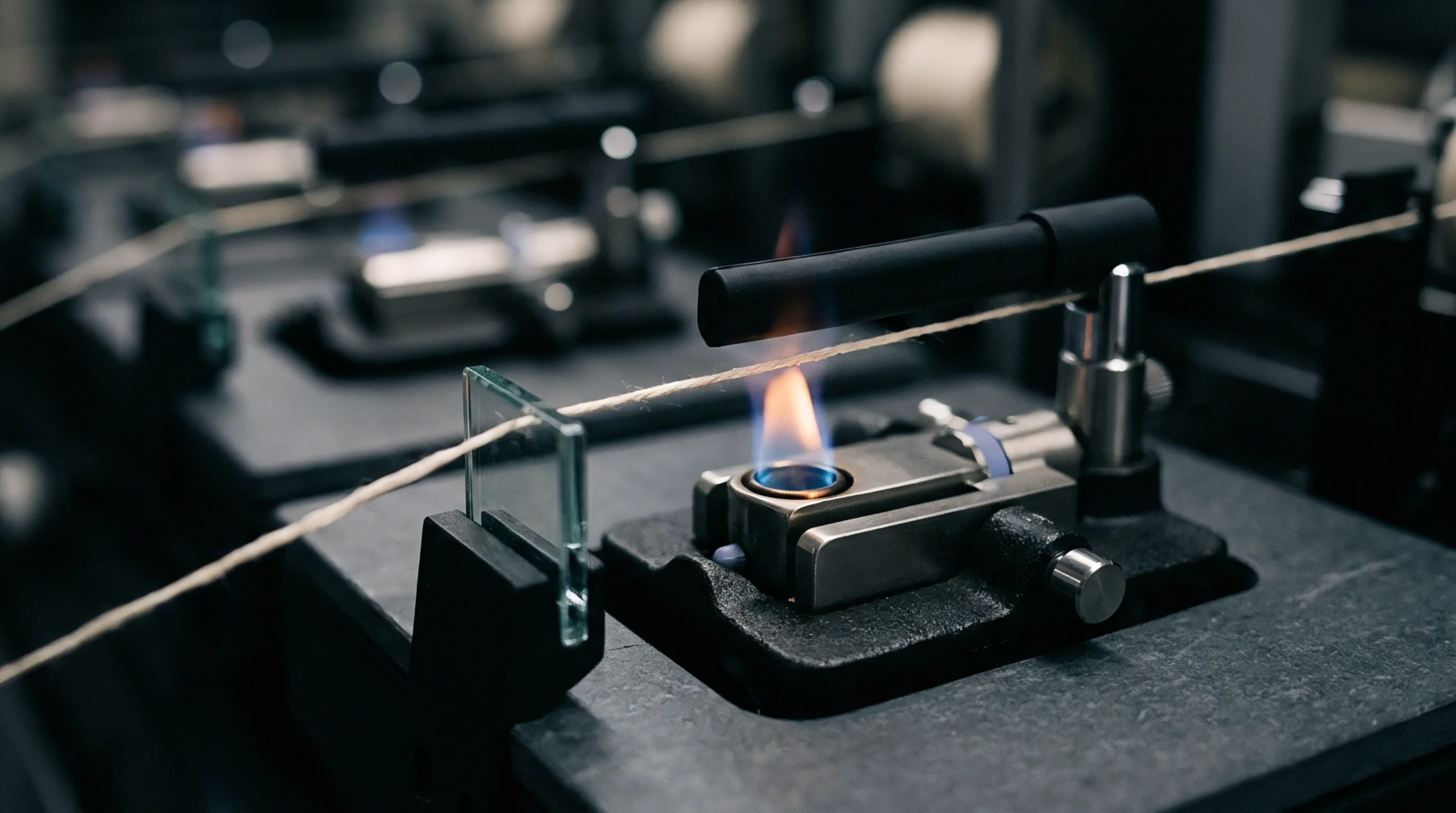
Technical textiles designed for public transport or hospitality sectors rely on complex chemical interactions to meet safety codes for vertical flammability. When a fire occurs, the halogenated compounds in the fabric coating release acidic gases that react with the antimony trioxide to form volatile antimony halides. These vapors move into the flame zone where they capture high energy radicals and stop the propagation of the fire.
Gas phase activity is complemented by the formation of a carbonaceous char layer on the fabric surface. Such a barrier prevents oxygen from reaching the underlying polymer and slows the transfer of heat. The durability of this treatment depends on the particle size of the powder.
Particles must be small enough to stay suspended in the binder without settling or causing stiffness in the handle of the cloth. Fine grinding ensures that the additive does not negatively affect the textile drape.
Industrial Assessment
Global trade in apparel requires rigorous verification of chemical safety to meet the requirements of international certification bodies and environmental legislation. Laboratory technicians measure the amount of antimony trioxide using inductively coupled plasma mass spectrometry after preparing the sample through microwave assisted digestion. Analysis determines whether the heavy metal content exceeds the permissible thresholds for skin contact or environmental release.
Brands often specify lower limits for childrenswear or items intended for prolonged contact with the body. Manufacturers must provide certificates of analysis for each batch of polymer or coating chemical to prove that the heavy metal levels are within the agreed tolerance. Moving away from these compounds involves adopting titanium or germanium catalysts.
These alternatives often involve higher costs or different processing parameters. All testing must be conducted by accredited third party facilities.