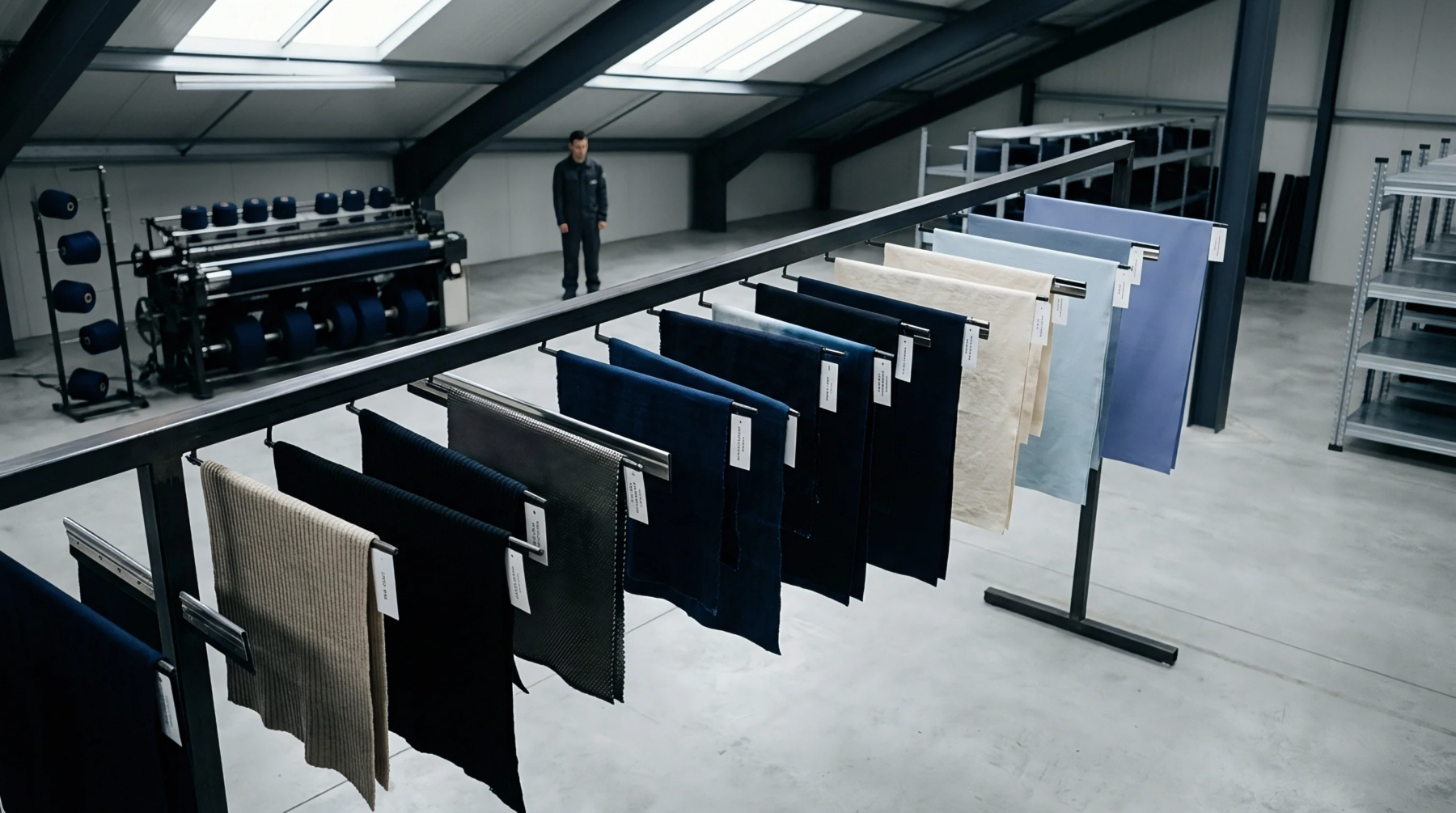
Needle Density
Knitting machine specifications define the number of needles contained within a single inch of the cylinder circumference. The circular knitting gauge determines the thickness, weight, and loop density of the resulting fabric. It establishes whether a machine is configured to produce fine jerseys or heavy rib knits.
Yarn Selection
Fibre and yarn counts must be matched to the needle spacing to prevent fabric defects like holes or yarn breakage. A high circular knitting gauge requires very fine, high-strength yarns to fit into the narrow needle slots. If the yarn is too thick, the machine can jam or experience needle hooks snapping under tension.
Fabric Characteristics
Density and stitch structure are directly controlled by the spacing of the knitting elements across the cylinder. When the circular knitting gauge is increased, the fabric becomes smoother, denser, and less air-permeable, which is ideal for performance activewear. This high density prevents garments from showing through when stretched, making it crucial for leggings and swimsuits.
On the other hand, a lower gauge produces a more open, breathable structure suitable for casual sportswear, where moisture management and airflow are more important than wind resistance.
Production Efficiency
Knitting mills adjust their output by selecting machines with specific needle counts to match the desired garment weight. Since the circular knitting gauge cannot be easily changed without replacing the entire cylinder, mills maintain dedicated banks of machines for different fabrics. This fixed setup requires careful scheduling to meet changing seasonal demands.