Drying Phase
Evaporation of surface moisture from a saturated material occurs at a uniform speed when the rate of water replenishment from the interior equals the rate of vaporization. During this interval, constant rate drying in industrial textile processing keeps the substrate surface at the wet bulb temperature of the air. Free moisture remains abundant across the entire material face during this period.
Thermodynamic Mechanism
Energy transfers from the hot air stream to the wet textile primarily through boundary layer resistance. In this zone, constant rate drying relies on a constant vapour pressure gradient between the saturated surface film and the bulk air. Factors like turbulence and temperature difference dictate the speed of this heat transfer.
Industrial Application
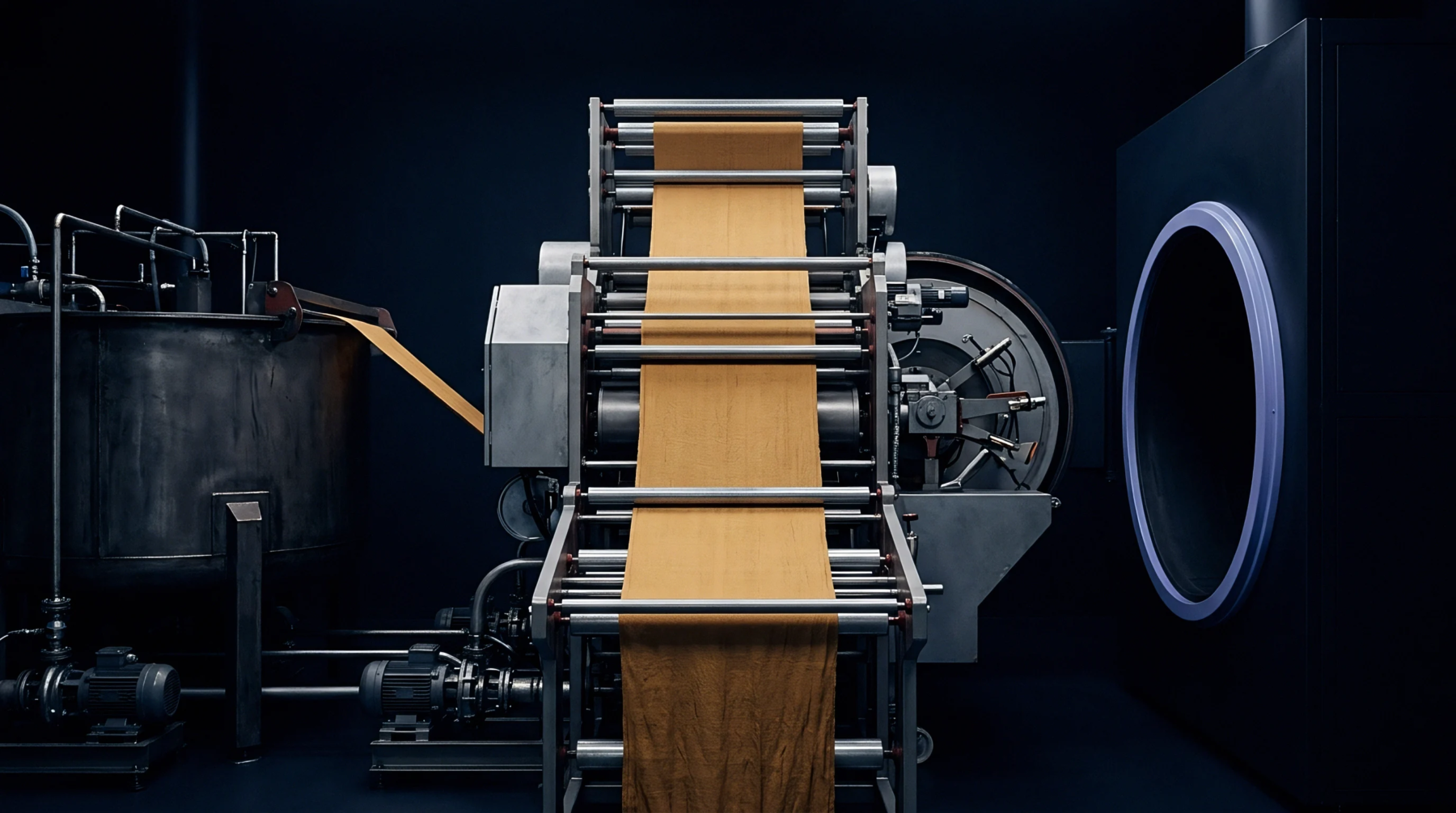
Apparel finishing lines require close monitoring of moisture content to prevent premature transit to the falling rate stage. When processing heavy cotton knits, maintaining constant rate drying ensures uniform dye migration is completed before the fabric surface begins to dry out. Runaway temperatures do not occur during this period because the evaporating water absorbs the supplied thermal energy.
Process engineers adjust the dry bulb temperature of the dryer to maximize this phase when high volume throughput is needed.
Physical Boundary
Internal moisture transport ceases to keep pace with surface evaporation at the critical moisture point. Once this threshold is crossed, the constant rate drying phase terminates and the surface temperature rises. This change signals the transition to diffusion controlled drying in the subsequent zones.