Fabrication Method
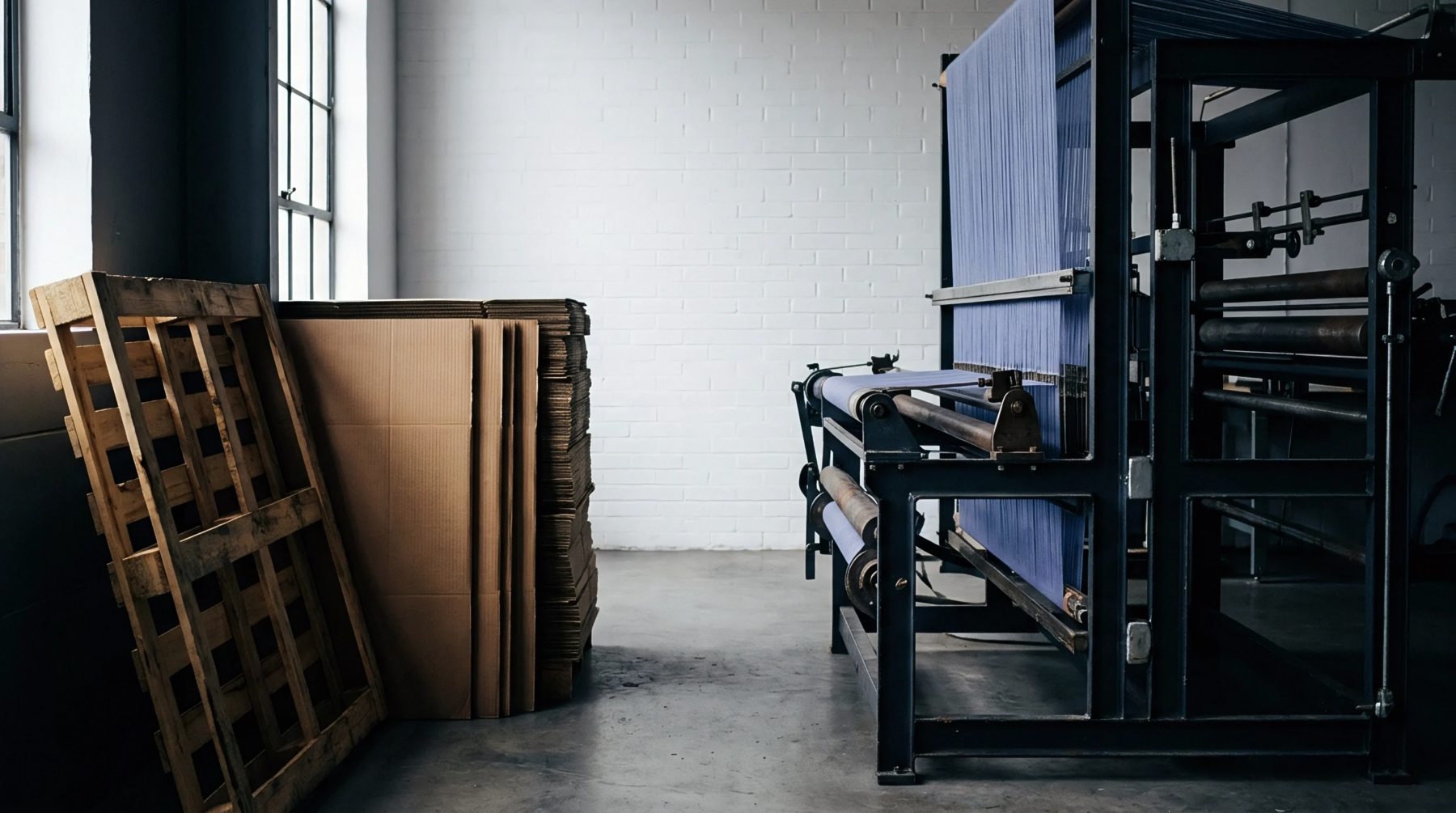
Weaving of long synthetic polymer or silk strands represents a mechanical production method that handles unbroken, low-twist yarns from extrusion packages. In continuous filament weaving, the absence of short staple fibres removes the risk of lint accumulation but introduces difficulties related to yarn slippage and low surface friction. The process requires precise control of yarn path angles and contact points to maintain yarn structural integrity.
This method is utilized for technical textiles where high tensile strength and smooth fabric surfaces are mandatory, such as airbag fabrics or parachute silks.
Tension Adjustment
Mechanical tensioning devices on the creel or beam provide uniform resistance to prevent the formation of loose loops. Slippage occurs if warp tension drops below established limits, causing erratic pick spacing and uneven fabric density. Mill operations run these looms with specialized roll coverings that grip the slick yarn surfaces without abrading the outer filaments.
Consistent delivery prevents yarn-on-yarn friction during warp shed division.
Shedding Action
Low warp sheds reduce the abrasion that occurs when synthetic bundles rub against heald eyes and reed wires. Projectile or air-jet insertion mechanisms transport the pick across the warp sheet with minimal contact to preserve yarn cohesion. In many settings, a liquid sizing agent is applied before weaving to bind the filament bundles together temporarily.
This starch or polyacrylate coating prevents snagging during shed changes and is washed out during subsequent scouring.
Quality Control
Final inspection of the woven roll occurs under specialized lighting to detect broken filaments or warp striping before thermal setting. Because continuous filament weaving uses smooth synthetic yarns, any tension variation becomes highly visible after dyeing as dye pick-up differences. Mills verify yarn path settings by monitoring yarn deflection angles across all guiding rollers.