Alkaline Treatment
Caustic chemical modification under mechanical tension restructures cotton cellulose to produce sustained lustre, enhanced dye reception and increased tensile strength across open-width goods. Industrial installations run continuous mercerization by transporting woven or stable knit fabrics through concentrated aqueous sodium hydroxide baths, followed immediately by controlled mechanical elongation and multi-stage dilution washing. The physical conversion alters the internal crystal morphology of native cotton from cellulose I to cellulose II, rounding the kidney-shaped lumen and relieving internal growth stresses.
The alkaline swelling reaction occurs within twenty to fifty seconds of liquor contact, requiring synchronized dwell passages before any relaxation occurs. Fabric structures that lack uniform yarn counts or balance warp-to-weft densities resist balanced penetration, producing irregular face-to-back luster differentials.
Alkali Impregnation
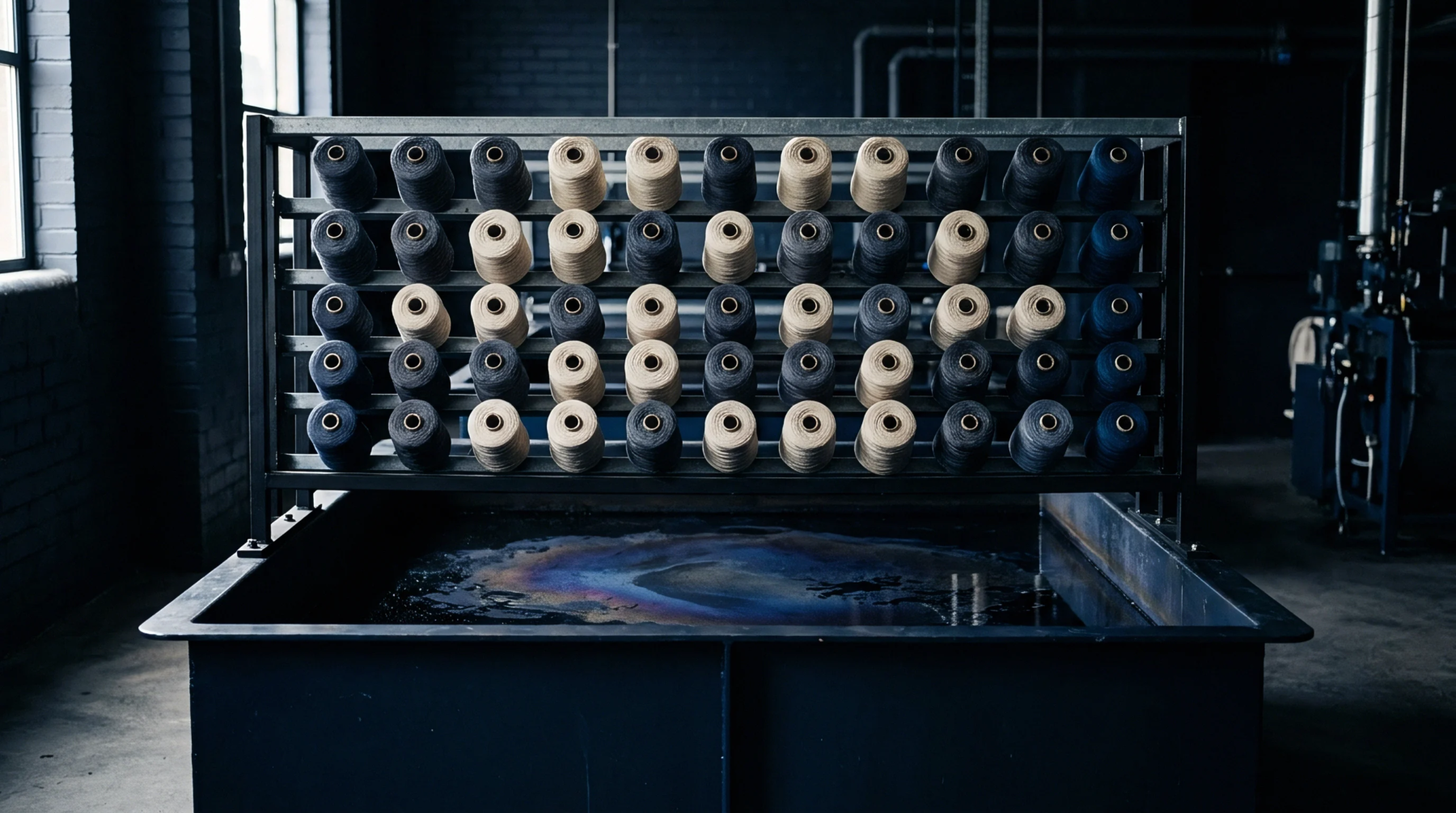
High concentrations of sodium hydroxide, maintained between twenty-six and thirty degrees Baumé, saturate the dry or pre-wetted textile web inside temperature-regulated impregnation boxes. The continuous mercerization line holds liquor temperatures between fifteen and twenty-five degrees Celsius for conventional cold mercerization, or elevates temperatures above sixty degrees for rapid hot mercerization regimes. Submerged nip rolls compress the swollen web to drive chemical saturation deep into high-twist yarn cores while expelling entrapped air pockets.
Automatic dosing systems regulate specific gravity and chemical replenishment continuously, compensating for dilute moisture carried inward by pre-scoured fabric rolls. Inadequate wetting agents or erratic bath densities cause patchy crystalline conversion that manifests later as barre or uneven shade depth during reactive piece dyeing.
Tension Control
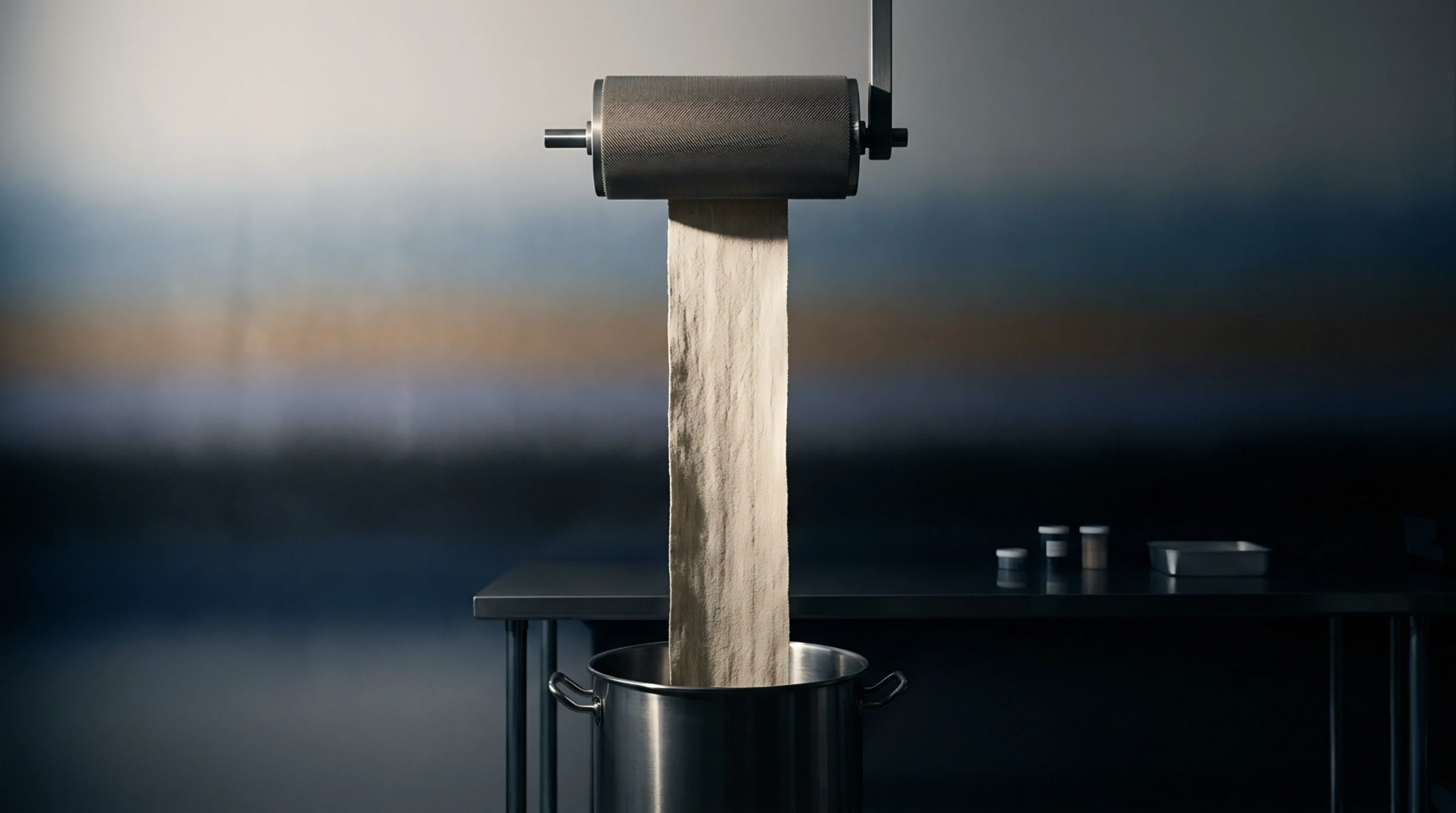
Mechanical elongation applies warp and weft forces simultaneously to eliminate shrinkage while pulling the collapsed tubular fibres into cylindrical geometry. Chain mercerizers employ heavy lateral tenter clips that grip fabric selvedges inside the stabilizing zone, pulling the goods to a predetermined target width while heavy steel rollers govern longitudinal warp tension. Chainless designs replace lateral clips with an array of grooved, counter-rotating expander rolls, relying on continuous surface contact and wrap angles to arrest transverse shrinkage during caustic extraction.
Washing begins directly on the tension carriage, spraying progressively diluted caustic liquors over the fabric face to reduce residual sodium hydroxide below five percent before mechanical restraint ceases. Premature tension release while alkalinity remains high allows instantaneous, irreversible fabric shrinkage and destroys surface reflectance.
Operational Verification
Technical specifications evaluate treatment completeness using the barium activity number according to standard test method AATCC 89. Values between one hundred and one hundred and five indicate unmercerized cotton, whereas properly processed continuous mercerization delivers barium activity numbers between one hundred and twenty and one hundred and thirty-five. Laboratory technicians conduct axial cross-section microscopy to measure circularity ratios, distinguishing genuine structural conversion from topical silicone sheen.
Fabric buyers audit residual core pH across the width of finished lots to confirm that subsequent neutralization washing fully cleared residual alkali from inside the yarns. Insufficient caustic removal leads to hydrolytic cellulose tendering, yellowing during thermal curing and extensive shade shifts in finished garments.