Industrial Sequence
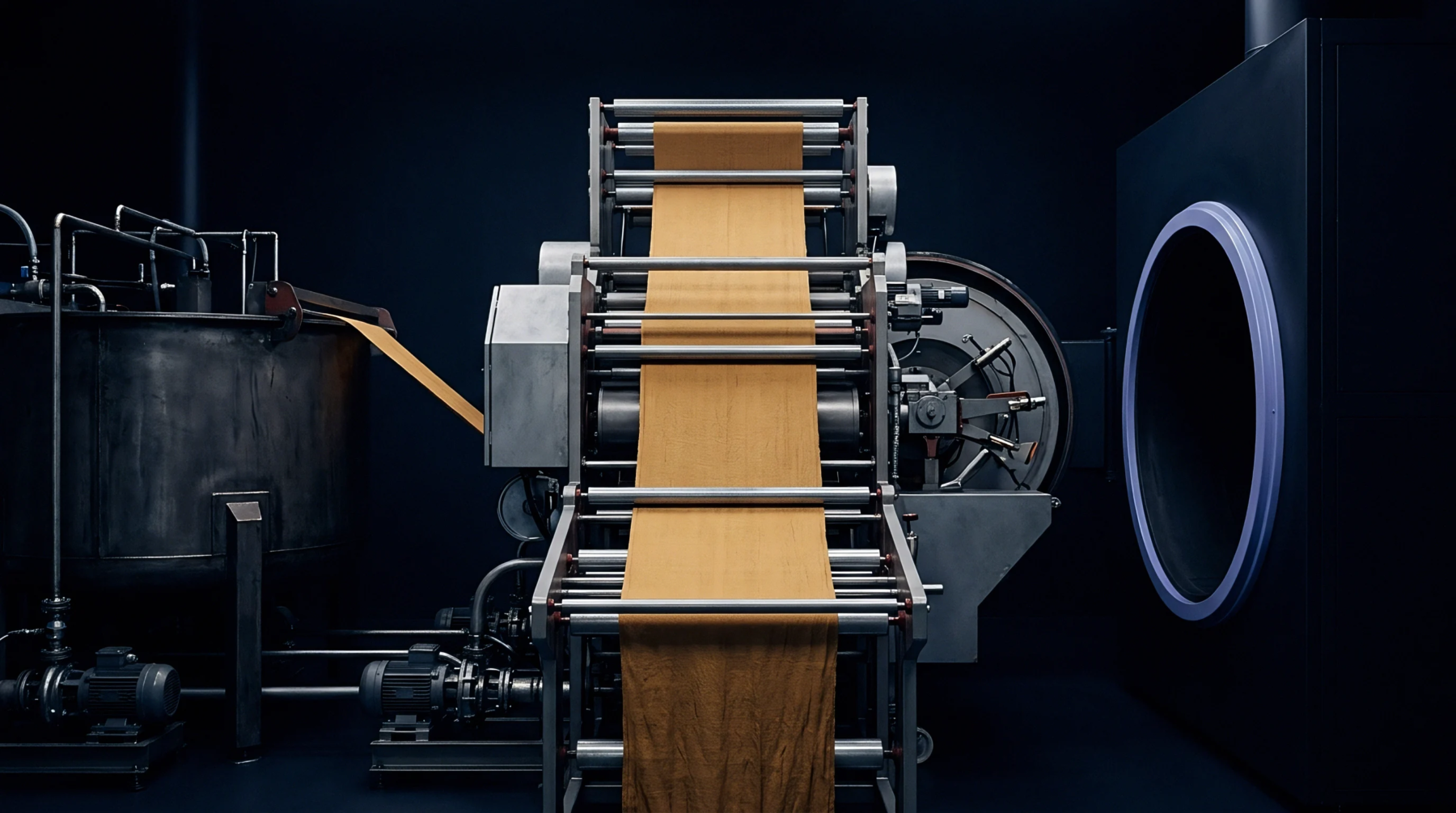
Chemical application method integrates padding, pre-drying, and thermal fixation into a single unbroken production sequence for fabric finishing. Using continuous pad-dry-cure systems allows mills to apply resins or water repellents across thousands of metres without intermediate storage. The fabric travels from the immersion bath directly into a multi-chamber oven to set the chemical finish.
Mechanical Configuration
Gravity or tension rollers guide the web through the liquor before infrared or forced air units begin the initial evaporation. Efficient continuous pad-dry-cure depends on strict synchronization between the speed of the motor drive and the burner temperature. Changes in one parameter force immediate adjustments in the other to prevent scorching.
Technical Boundary
Tension must be monitored constantly because wet fabric stretches differently than dry material during the transition. In a typical continuous pad-dry-cure run, the resin migrates to the surface as the water leaves, making heat distribution critical for a smooth handle. Lab trials determine the exact dwell time needed for full polymerization without damaging the cellulose.
Fixation Limit
Verification occurs at the end of the line using standardized rub or spray tests to confirm finish durability. The use of continuous pad-dry-cure is standard for durable press treatments.