Weaving Parameter
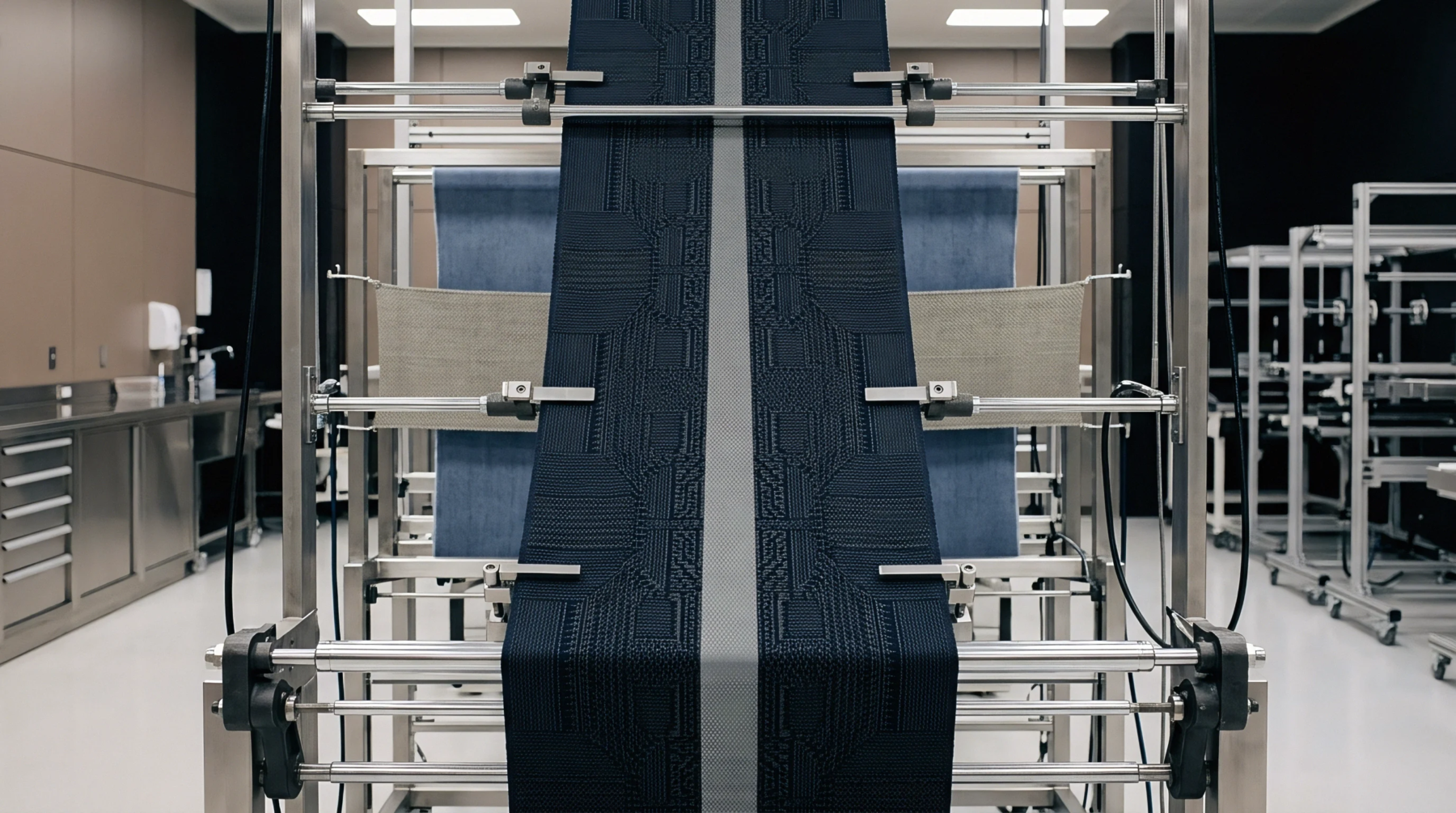
The proportional relationship between the feed rates of two independent warp beams determines the structure of complex fabrics. This setting, known as the dual beam ratio, is critical when weaving or warp knitting fabrics that combine different yarn types or structures.
Yarn Consumption
Separate beams deliver yarns at different speeds to accommodate varying rates of crimp or take-up. When one beam feeds the ground structure and the second feeds the pattern or pile yarns, the dual beam ratio regulates how much yarn each beam releases per stitch or pick. This coordination prevents yarn starvation and excessive slackness.
Structural Control
Plush fabrics, seersuckers, and terry towels rely on distinct warp tensions to create their characteristic surface textures. Adjusting the feed speed of the top beam relative to the bottom beam allows the manufacturer to control the height of loops or the intensity of the puckered effect. The dual beam ratio defines the final thickness and hand of the finished textile.
If this ratio fluctuates even slightly during operation, the fabric surface will show variations in density that compromise the aesthetic and commercial value of the product.
Quality Correlation
Inconsistent feed rates during the production cycle lead to uneven fabric weight and visual bands. Monitoring the feed tension of both beams prevents defects and ensures that the finished roll meets the specified yield and weight targets.