Positional Stability
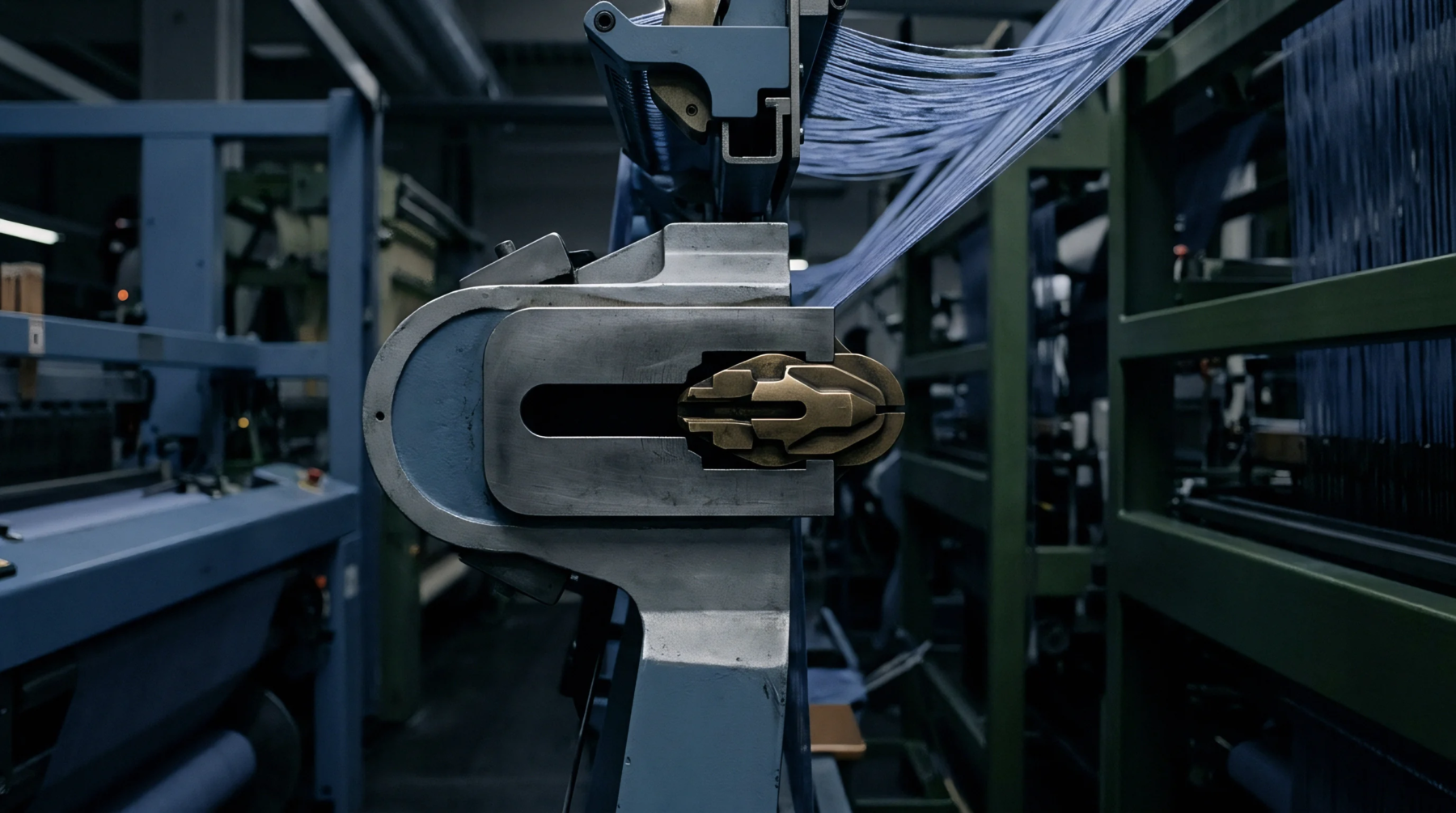
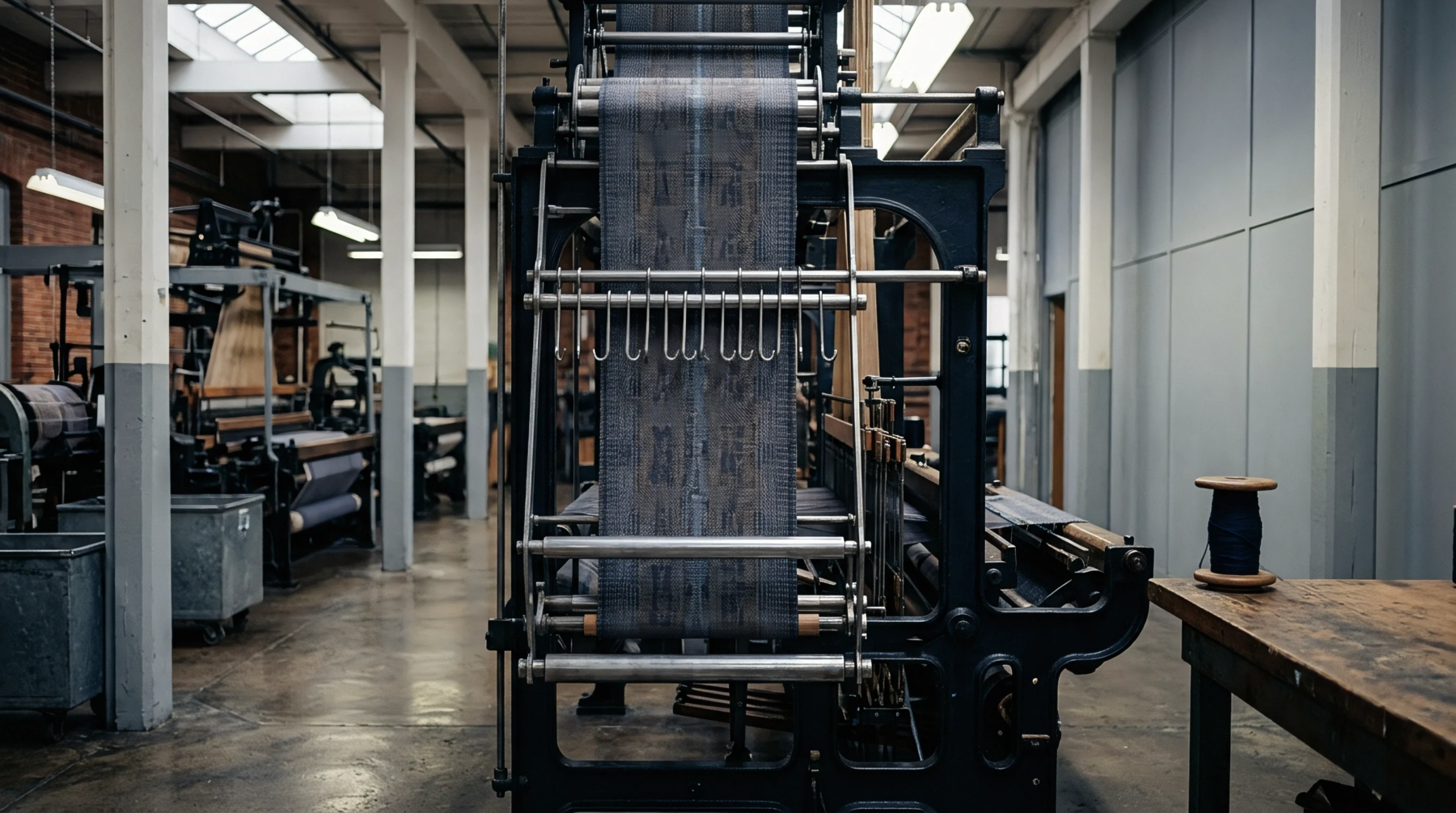
The shifting of the boundary where the woven fabric meets the unwoven warp yarns occurs during stops and restarts of the loom. This movement, known as fell line displacement, alters the spacing of the first few inserted picks after a machine interruption. The position of the fell line is determined by the balance of tension between the warp yarn and the woven cloth.
Any variation in this balance during a stoppage results in a visible defect in the fabric structure.
Mechanical Factor
Viscoelastic creep in both synthetic and natural fibers causes warp yarn to relax when a loom is left stationary. This relaxation leads to fell line displacement as the tension on the warp side drops while the cloth side remains under different tension. Modern weaving machines compensate for this behavior by automatically executing a forward or backward movement of the warp let-off and cloth take-up motors prior to restarting.
This adjustability allows the loom to return the boundary to its correct position before the next pick is beat up.
Defect Prevention
Correcting for the shift avoids the creation of pick-start marks or gaps in the fabric. When fell line displacement goes uncorrected, the first pick after a restart either overrides the previous pick or sits too far from it, creating a thick or thin place. These density variations are highly visible in high-density cottons and technical fabrics, where they reduce both structural integrity and visual grade.
High-resolution sensors and precision motor controllers are utilized at the inspection stage to verify that the start marks are eliminated.
Monitoring Boundary
Machine correction is dependent on pre-programmed parameters. While automatic systems manage fell line displacement during planned stoppages, they cannot correct for long manual interventions where yarn relaxation has progressed too far.