Optimizing Rapier Loom Backrest Heights for Asymmetric Dobby Sheds
Elevating rapier loom backrest height during asymmetric dobby shedding balances warp end strain, prevents top shed slackness, and drops loom stop rates.
Shed
On high-speed weaving frames, mechanical geometry determines how yarn stress spreads during shaft movement. Operating a rapier loom with a dobby shedding mechanism places complex kinematic demands on the machine when weaving asymmetric structures. Balanced weaves like 1/1 plain or 2/2 twill split the warp ends evenly between the upper and lower shed lines on every pick, but asymmetric dobby patterns ~ such as 3/1 twill, 4/1 satin, and multi-shaft Bedford cords ~ break that symmetry by splitting ends unequally between the top and bottom sheets.
When a dobby loom opens a 4/1 satin shed, eighty percent of the active warp threads move into the upper layer while twenty percent drop into the lower layer. This uneven displacement alters the physical geometry of the rear weaving zone ~ the space between backrest roller and heald frames. Under standard zero-baseline settings, with the top of the whip roll level with the breast beam line, the yarn path length in the upper shed diverges significantly from that in the lower shed.
Mechanical Principles of Asymmetric Shaft Lift
Dobby shedding mechanisms move individual harness frames to form distinct top and bottom thread layers, with peak warp tension occurring at maximum shed opening right as the rapier head reaches the shed entrance. In symmetric shedding, the hypotenuse of the upper yarn layer equals that of the lower layer, so both sheets undergo identical mechanical extension and hold uniform tension across the warp sheet.
Asymmetric patterns disrupt this path parity. Upper threads lifted by multiple shafts cover a longer diagonal distance from whip roll to reed than lower threads resting on fewer shafts. This length differential forces the upper warp sheet to stretch beyond its nominal elastic limit, while the under-strained lower sheet loses structural tension and sags toward the raceboard.
As a result, slack ends in the bottom layer float into the path of the incoming rapier head, while over-strained upper ends rub heavily inside the reed dents.
Warp Thread Path Length Inequality Mechanics
Geometric deviation between the top and bottom yarn sheets creates significant tension variance during loom rotation. The difference in thread path length between upper and lower shed lines depends on harness frame vertical displacement and the depth of the rear weaving zone. When high strain acts on single spun yarns or continuous filaments during shaft lift, micro-fractures develop along the protective size mantle, increasing yarn-to-yarn friction and hairiness.
Shortening the rear shed distance intensifies this imbalance. Moving the backrest closer to the heald frames steepens the shedding angle, amplifying the path length difference between high-lift and low-lift shafts. Electronic tensiometer logs confirm that uncompensated path length differences generate dynamic tension peaks exceeding 35 grams per end on high-lift shafts, against baseline static tension settings of 15 grams per end.
Peak warp tension on 4/1 satin weaves increases by 34 percent when the whip roll sits at zero millimetre baseline offset during 300 millimetre shed openings.
Incorrect backrest geometry on heavy face weaves drives up warp break rates, causes reed marking, and leads to permanent cloth grading downgrades in bulk finishing.
Offset
Whip roll elevation relative to the breast beam baseline dictates thread tension balance across shed openings. Adjusting vertical backrest height shifts the neutral axis of the warp sheet, introducing geometric compensation to the rear weaving zone. Raising the backrest roller above horizontal zero lengthens the physical path of the lower shed layer while reducing the relative extension demanded of the upper shed layer during shaft lift.
Whip Roll Elevation and Warp Line Geometry
Vertical adjustments alter the geometric hypotenuse of the rear weaving zone, measured in millimetres relative to the zero line connecting cloth fell to breast beam. Elevating the whip roll by 10 to 25 millimetres creates an inclined neutral warp line. When the dobby mechanism lifts eighty percent of the ends into the top shed, this elevated backrest position eases the extension required of those ends, heading off peak tension spikes.
Lower warp ends, forced over a steeper entry angle across the raised whip roll, hold positive mechanical tension throughout the shed cycle, keeping the lower sheet from drooping into the rapier tape channel. Horizontal whip roll positioning works alongside vertical offset: pushing the backrest roller farther back from the harness frames lengthens total warp span, spreading geometric strain across a longer yarn segment and reducing overall elasticity modulus demand.
Does Raised Whip Roll Position Prevent Upper Sheet Slackness?
Elevating the backrest roller extends the physical path of the lower yarn layer. The upper layer gains slackness during shaft lift, relieving strain on heavily populated top harness frames. Too much backrest height, however, transfers slackness to the upper sheet during shed closure, causing ends to cross or roll ahead of the reed.
Technicians set vertical offset to achieve equal tension readings at the exact instant of rapier insertion.
Monitoring dynamic warp tension across the loom cycle requires calibrated instrumentation. Electronic tension sensors attached to individual warp ends measure force variations in centinewtons per tex over full shaft rotations. Data logs show that optimized backrest elevation flattens peak tension spikes on 3/1 twill constructions from 38 cN/tex down to 22 cN/tex on upper ends, while bringing bottom sheet tension up from a slack 4 cN/tex to a stable 14 cN/tex.
| Weave Structure | Shaft Split (Top/Bottom) | Backrest Offset (mm) | Top Shed Tension (cN/tex) | Bottom Shed Tension (cN/tex) | Path Differential (mm) |
|---|---|---|---|---|---|
| Plain 1/1 | 50 / 50 | 0 (Baseline) | 18.5 | 18.2 | 0.1 |
| Twill 3/1 | 75 / 25 | 0 (Baseline) | 31.4 | 6.2 | 3.8 |
| Twill 3/1 | 75 / 25 | +15 (Elevated) | 21.8 | 14.9 | 1.1 |
| Satin 4/1 | 80 / 20 | 0 (Baseline) | 36.8 | 4.1 | 4.6 |
| Satin 4/1 | 80 / 20 | +22 (Elevated) | 22.1 | 15.8 | 0.8 |
| Bedford Cord | 66 / 34 | +10 (Elevated) | 24.3 | 13.7 | 1.5 |
Defects often trace back to improper whip roll alignment, making it standard practice for operators to inspect warp sheet profile, harness lift height, and reed entry angles before starting bulk runs.
- Upper Sheet Thread Sagging ~ Reduced strain on the top yarn layer causes loose ends to drop into the rapier trajectory, inducing yarn cuts and insertion failures.
- Bottom Layer Strain Spikes ~ Excessive geometric stretching on lower ends exceeds yarn elastic limits, driving warp end breaks at the reed dent entrance.
- Reed Mark Generation ~ Unequal end distribution across dent gaps during beat up leaves permanent warpwise spacing lines in finished grey cloth.
- Asymmetric Crimp Imbalance ~ Divergent tension profiles between warp sheets force unequal weft take-up, altering fabric face and back appearance.
ISO 13934 tensile degradation standards trigger fabric rejection whenever uneven yarn strain during weaving reduces warp-direction breaking force below 450 Newtons.
Higher whip roll positions stabilize bottom sheet tension during heavy top shed openings while keeping upper threads from sagging into the rapier trajectory.
Deflection
Dynamic forces during filling insertion dictate physical clearances between yarn sheets and moving rapier heads. Both flexible and rigid insertion elements require an unobstructed open yarn tunnel. Rapier head geometry demands a stable shed opening height, typically between 55 and 70 millimetres at the insertion zone, to avoid scuffing warp ends.
Improper backrest height narrows this envelope by letting the warp sheet sag vertically.
Rapier Clearance and Insertion Window Stability
Shed clearance depends directly on bottom layer tension stability. When backrest height matches the asymmetric demands of the dobby weave, lower warp ends form a flat line across the raceboard or race-plate guides. If the bottom sheet sags under uncompensated top-heavy shed openings, the lower rapier guide blade strikes suspended warp threads during high-speed entry.
Friction between rapier tape guides and slack warp ends causes filamentation in synthetic yarns and slubs in staple cotton. High-speed video of 230 centimetre rapier looms running at 550 picks per minute shows that a 12 millimetre drop in lower shed line tension creates 8 millimetres of dynamic vertical yarn movement, intersecting the 14 millimetre clearance plane of the outer rapier head.
Beat up Mechanics and Fell Line Displacement
Reed contact with the fabric fell pushes woven picks into structural alignment. Cloth fell movement occurs when peak warp tension varies from pick to pick. In asymmetric dobby weaves, alternating between heavy and light top shed picks causes the cloth fell line to oscillate horizontally toward and away from the reed position.
| Backrest Offset (mm) | Bottom Shed Sag (mm) | Rapier Clearance (mm) | Fell Oscillation (mm) | Stops per 10^5 Picks | Finished Cover Factor |
|---|---|---|---|---|---|
| -5 (Submerged) | 9.4 | 1.2 | 2.8 | 14.2 | 19.8 |
| 0 (Baseline) | 6.1 | 3.5 | 2.1 | 8.6 | 20.4 |
| +10 (Elevated) | 2.2 | 6.8 | 1.1 | 3.1 | 21.2 |
| +20 (Elevated) | 0.8 | 8.1 | 0.6 | 1.4 | 21.8 |
| +30 (Excessive) | 0.2 (Tight) | 8.5 | 1.9 | 6.9 | 20.9 |
Fell oscillation generates weft band defects, pick density variation, and starting marks after machine stops. Raising the whip roll stabilizes fell position by maintaining positive tension on the bottom sheet, resisting the forward push of the reed during pick beat-up.
- Shaft Lift Ratio Assessment ~ Quantify the proportion of warp ends lifted into the top shed versus lowered into the bottom shed for the target weave repeat.
- Sensowarp Peak Tension Target ~ Calibrate whip roll vertical position until peak warp tension differential between top and bottom shed movement remains within 5 cN per end.
- Rapier Tape Guide Clearance ~ Verify minimum 3 millimetre vertical distance between lower face of rapier head and lower warp sheet at maximum shed opening.
- Beat Up Fell Position Check ~ Confirm cloth fell displacement during reed impact does not exceed 1.5 millimetres to prevent pick density variation.
Elevating the whip roll above the cloth fell baseline equalizes peak tension across heavy top sheds while tightening the lower yarn layer.
Contractual quality clauses under ISO 13934-1 specify rejection of commercial lots exhibiting pick variation or warp streakiness exceeding two light-box grading points.


Tension
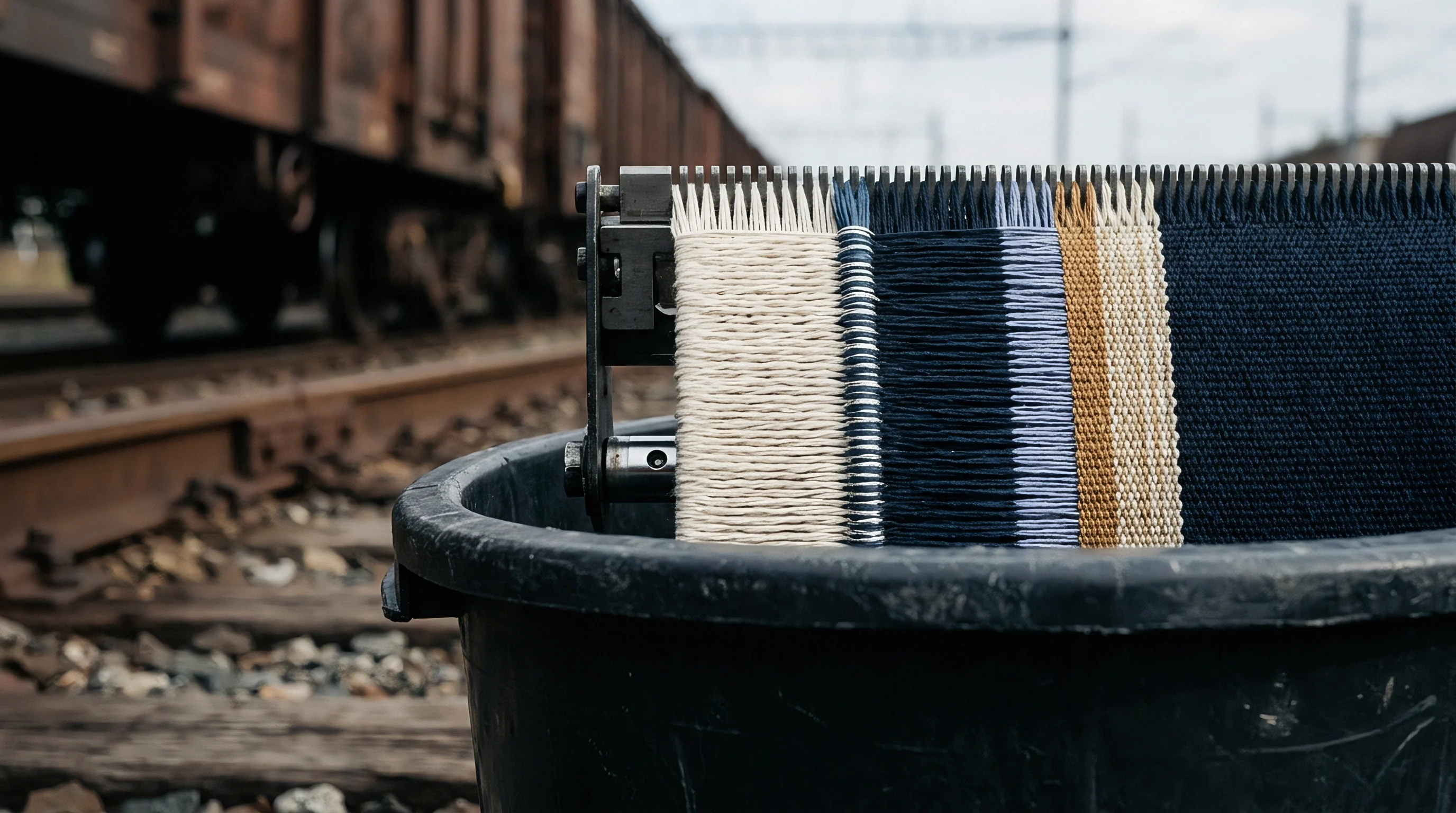
Mechanical strain during shedding leaves permanent physical signatures on finished woven structures. Structural yarn crimp balances warp and weft thread bending across every crossover point. When asymmetric dobby shedding subjects upper warp ends to excessive tension while lower ends remain slack, a warp crimp differential develops between the face and back of the cloth.
Downstream Fabric Quality and Crimp Distribution
Fabric structural stability depends on uniform crimp distribution. High peak tension forces active warp ends into a straight axial line within the cloth matrix, compelling weft yarns to bend around them. This condition increases warp-direction shrinkage during wet processing while reducing weft-direction elasticity.
Martindale abrasion resistance drops on fabric faces where over-tensioned warp floats project above the surface plane.
Unequal tension causes structural deformation in the yarn itself. High peak loads stretch staple spun yarns beyond their yield point, driving internal fiber migration and reducing yarn diameter. In continuous filament warps, excessive tension induces micro-voids within individual filaments, altering optical reflection and dye uptake.
Wet Processing Consequences and Shade Uniformity
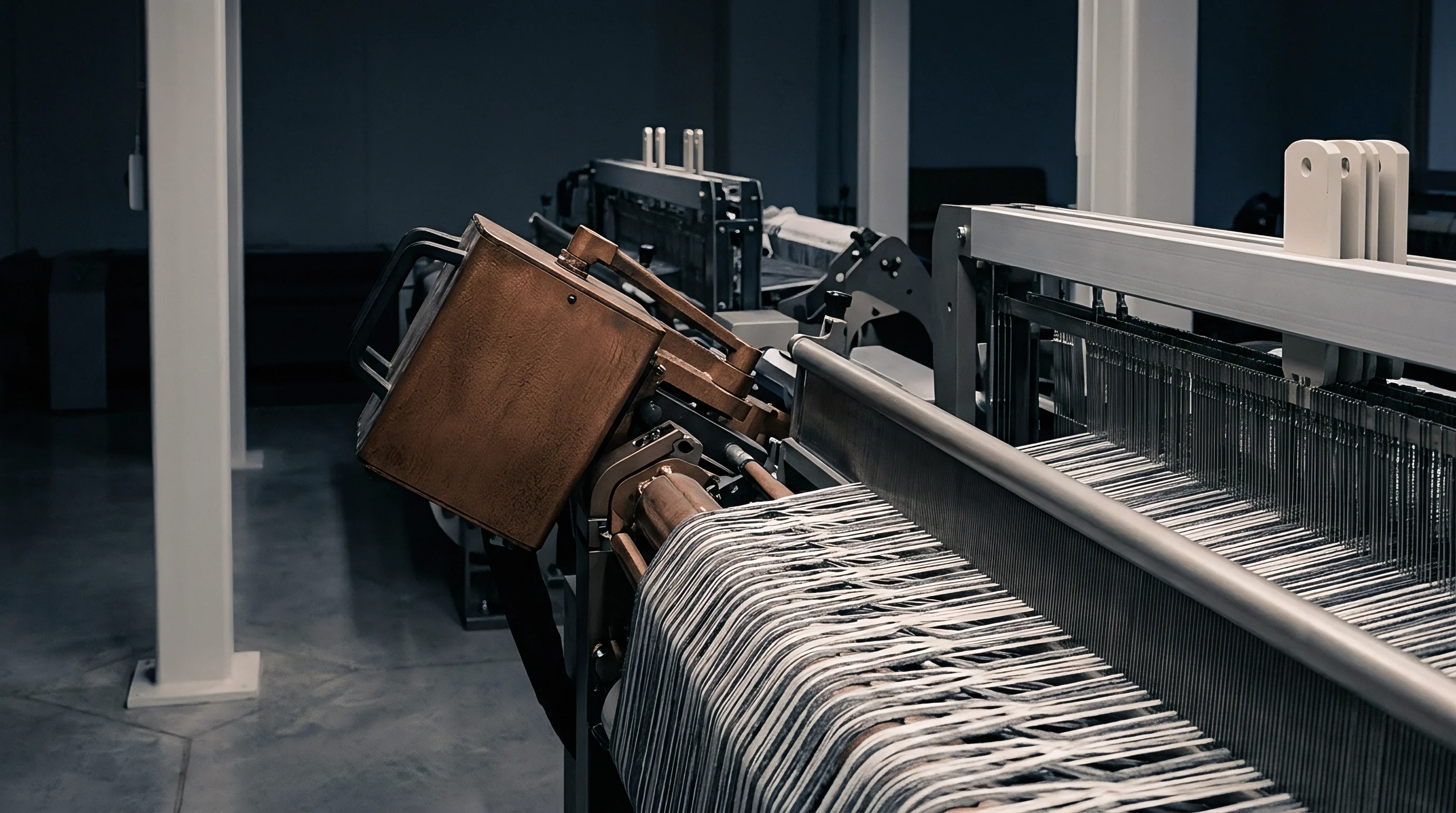
Finishers encounter non-uniform dye uptake when yarn strain variations alter fibre crystalline structure. In synthetic warps like polyester or polyamide, localized elongation changes polymer orientation, creating streakiness or barri defects upon immersion in jet dyeing liquor. Dye penetration varies between warp ends subjected to peak mechanical strain and those woven under low tension.
- Measure static warp tension across the full loom width using an electronic tensiometer prior to harness lift adjustment.
- Raise the backrest roller baseline in 5 millimetre increments while observing top shed yarn sheet tightness at full open dwell.
- Inspect rapier tape entering and exiting the shed to ensure zero contact with floating upper warp threads.
- Execute a 500-pick test run, collecting Sensowarp dynamic tension logs to verify peak strain equalization across asymmetric weave picks.
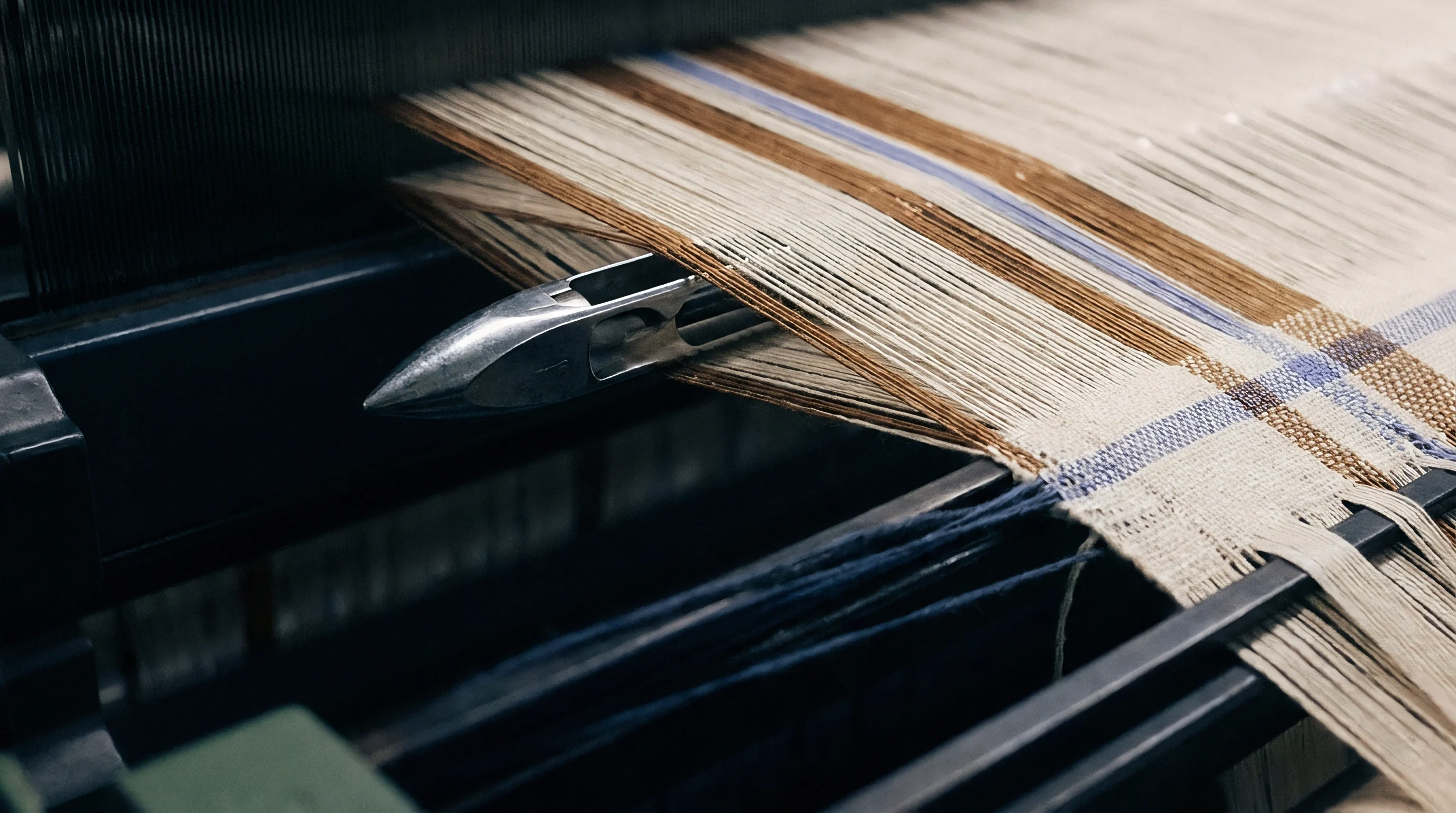
Rapier tape guide clearance collapses when slack upper ends drop into the filling insertion path during shed dwell.
Weaving mills frequently attribute pick band defects to yarn lot inconsistency when improper whip roll height was what actually caused thread tension variance during beat up.
Throughput
Commercial productivity in high-speed weaving facilities relies on minimizing yarn-related loom stoppages. Unplanned loom shutdowns consume weaving labor and reduce total pick generation. Warp break stops on rapier looms running asymmetric dobby weaves cost facilities an average of 4.5 minutes of downtime per incident, including piecing, knotting, and defect inspection.
Financial Impact of Warp Break Stoppages
High loom stop frequencies erode operating margins. Operating with unoptimized backrest geometry on heavy face twill or satin weaves elevates warp stop rates from a baseline target of 0.8 stops per 10^5 picks up to 4.2 stops per 10^5 picks. Higher stop rates directly lower weaving efficiency percentages across the mill, extending delivery schedules and increasing labor overhead per woven metre.

Worked Optimization Calculation for Dobby Looms
Consider a weaving facility running seventy rapier machines at five hundred picks per minute on a 4/1 satin cotton warp construction. Standard production parameters dictate a continuous 24-hour schedule over a 30-day operating block. Weaving efficiency without backrest optimization averages 84 percent due to frequent warp stops and clear-up cycles.
Calculating financial losses involves evaluating total lost picks, lost output length, and technician repair costs across the machinery floor.
| Operational Metric | Unoptimized Baseline (0 mm Offset) | Optimized Backrest (+20 mm Offset) | Net Operational Differential |
|---|---|---|---|
| Warp Stop Rate (per 10^5 picks) | 4.25 stops | 1.15 stops | -3.10 stops (-73%) |
| Total Stoppage Downtime (Hours) | 1,071 hours | 290 hours | -781 downtime hours |
| Actual Weaving Efficiency (%) | 84.1 % | 92.8 % | +8.7 % efficiency gain |
| Total Production Output (Metres) | 423,800 metres | 467,600 metres | +43,800 finished metres |
| Yarn Repair Labor Cost (USD) | $16,065 | $4,350 | $11,715 direct labor saving |
| Landed Fabric Revenue (at $4.20/m) | $1,779,960 | $1,963,920 | +$183,960 net revenue lift |
Quantifying financial gain through systematic backrest adjustment demonstrates the commercial value of precise mechanical setup. Optimizing whip roll offset recovers lost machine capacity, lowers direct repair labor expenditure, and prevents expensive fabric quality deductions at customer inspection gates.
Operational teams continue to evaluate whether automatic real-time whip roll height adjusters deliver sufficient payback over manual mechanical positioning on variable dobby order books.