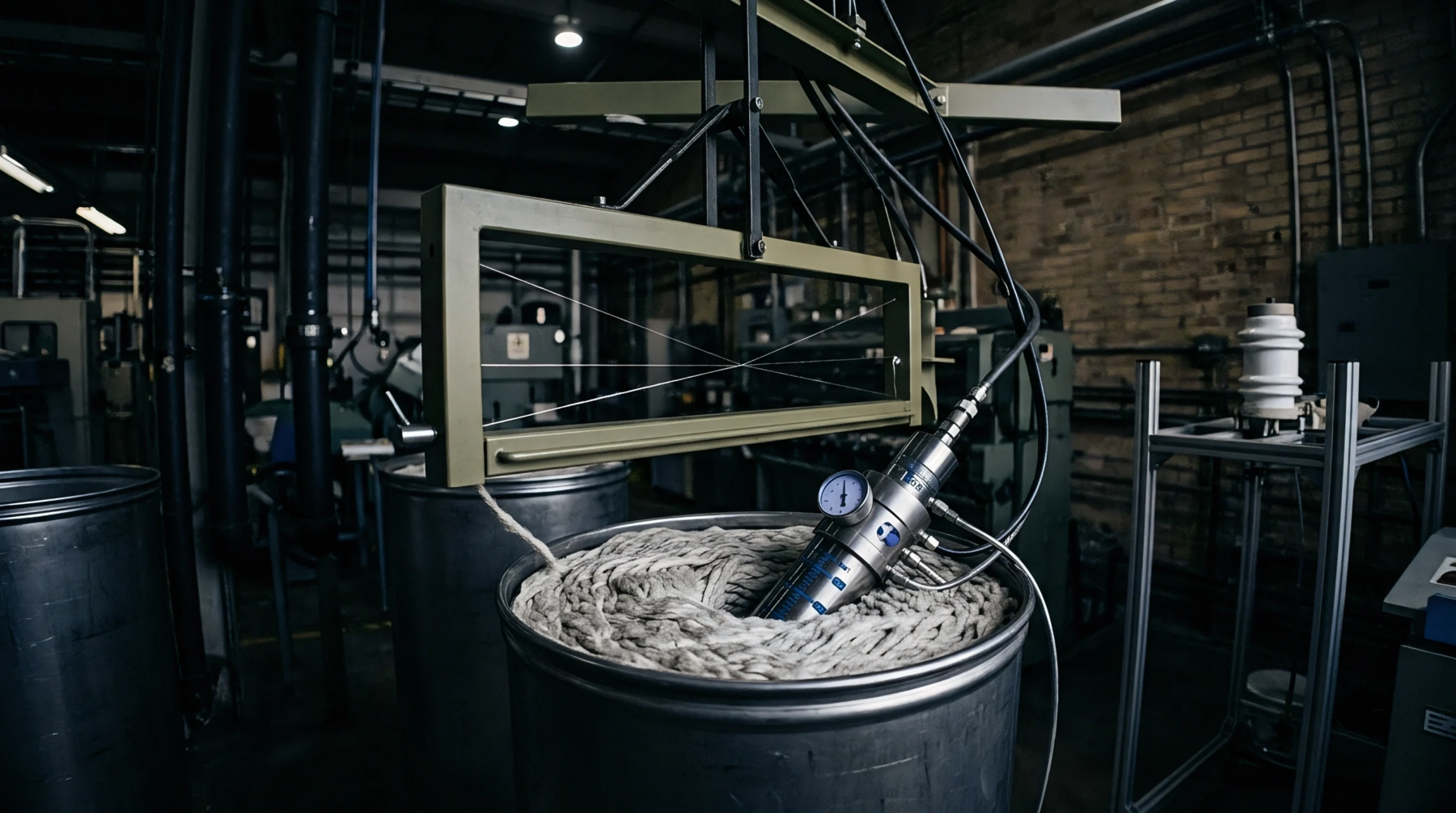
Volumetric Compression
Structural packing measurements determine the mass of opened staple material occupying a specific volume during mechanical preparation stages. Within cotton and synthetic spinning mills, fiber tuft density measures the mass per unit volume of opened fiber bundles delivered through blowroom chutes and feed aprons. The physical state of these tufts governs whether succeeding carding machines can untangle individual filaments or whether wire points crush unopened clusters.
Spinning technicians adjust opening cylinder speeds and grid bar settings to regulate this characteristic before feeding cards.
Carding Interaction
Carding clothing requires loose, airy tufts to execute complete individualization of fibres across revolving flats and main cylinders. Excessive fiber tuft density causes licker-in cylinders to grab heavy staple aggregates, leading to broken filaments and torn wire clothing. Well-opened tufts with lower density allow metallic wires to penetrate bundles gently, separating trash particles without degrading mean fiber length.
Sliver cleanliness tests confirm that uniform low-density feeding reduces seed coat fragments in carded cotton.
Chute Feed
Pneumatic reserve chutes maintain pneumatic pressure across feed widths to deliver continuous batts of opened staple to carding units. Irregular compaction within chute columns causes localized spikes in fiber tuft density, producing transverse weight variations across the resulting card web. Electronic pressure transducers detect air compression fluctuations, modulating variable-speed delivery rollers to stabilize batt consistency.
Uneven batt density directly compromises downstream draw frame leveling.
Sliver Regularity
Downstream yarn count consistency depends directly upon stable batt delivery at the card infeed zone. Variations in fiber tuft density translate directly into periodic mass variations along carded slivers, raising downstream Uster unevenness values. Rotor and ring spinning frames cannot compensate for severe mass surges initiated by dense tuft feeding.