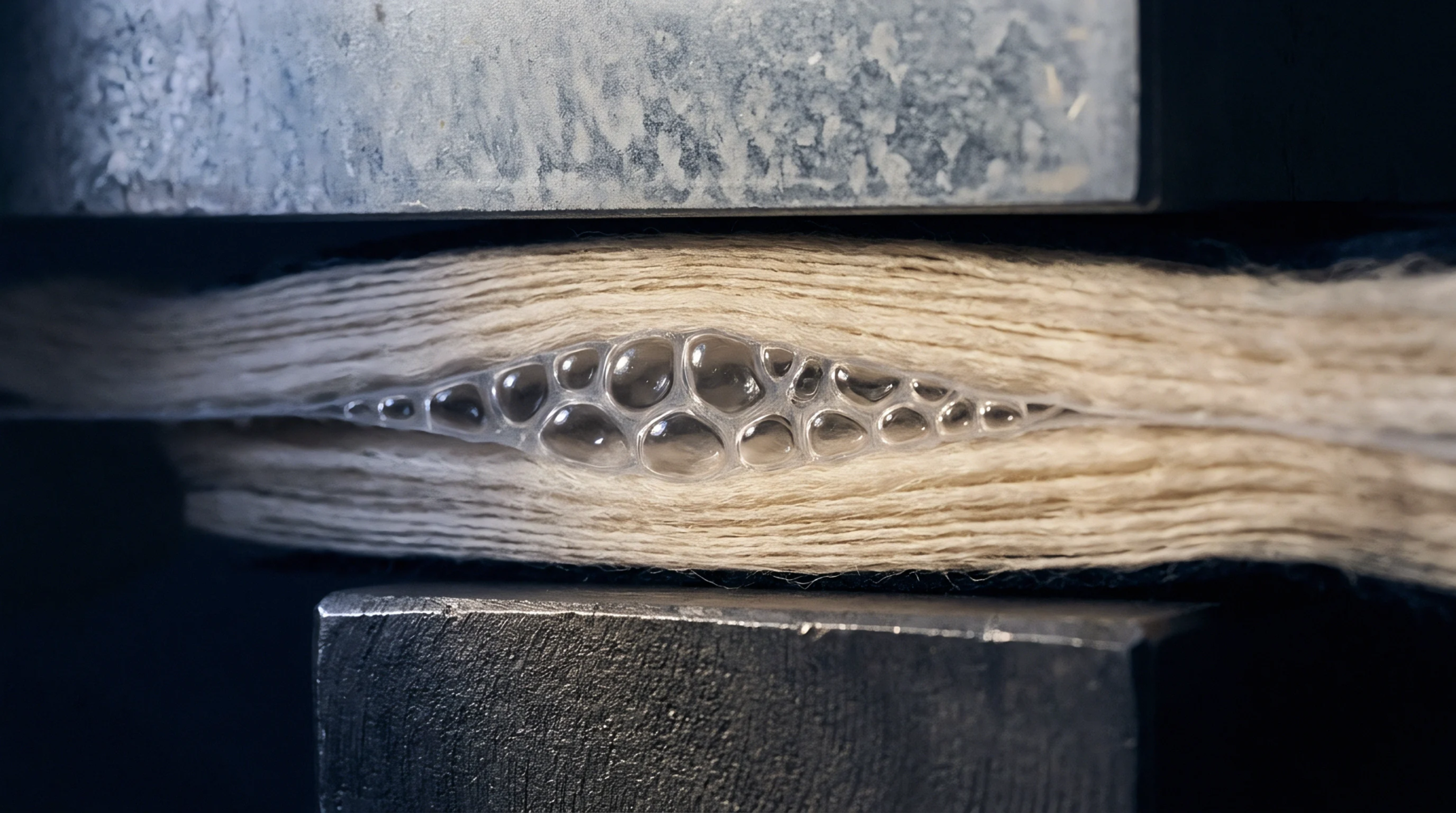
Grain Defect
Yarn misalignment in woven fabrics occurs when the filling yarns are not perpendicular to the warp yarns across the width of the roll. This structural distortion, known as off grain skewing, creates an angular deviation from the straight ninety degree crosswise pattern. It usually arises from uneven tension during the fabric winding or washing processes in the finishing mill.
Garment Distortion
Cutting skewed fabric leads to severe garment twisting, especially in trousers and knit tops where seams will spiral around the wearer’s limbs. Patterns must be aligned with the grain line of the yarn, meaning that skewed yarn lines will force the finished garment to lose its shape after the first home wash. Apparel brands reject rolls that exceed a two percent skew limit because the defect cannot be corrected after cutting.
Mill Correction
Correction of this issue is done at the stenter frame using a weft-straightener device that applies differential tension across the width of the fabric web. The machinery uses optical sensors to detect the angle of the filling yarns and dynamically adjusts the rollers to pull the lagging side forward. This real-time adjustment ensures that the fabric is delivered to the packing department with straight crosswise yarns.
Quality Tolerance
Quality control teams measure the defect by drawing a line perpendicular to the selvedge and calculating the maximum distance to the skewed yarn. A large deviation halts spreading. This inspection is a critical gate.