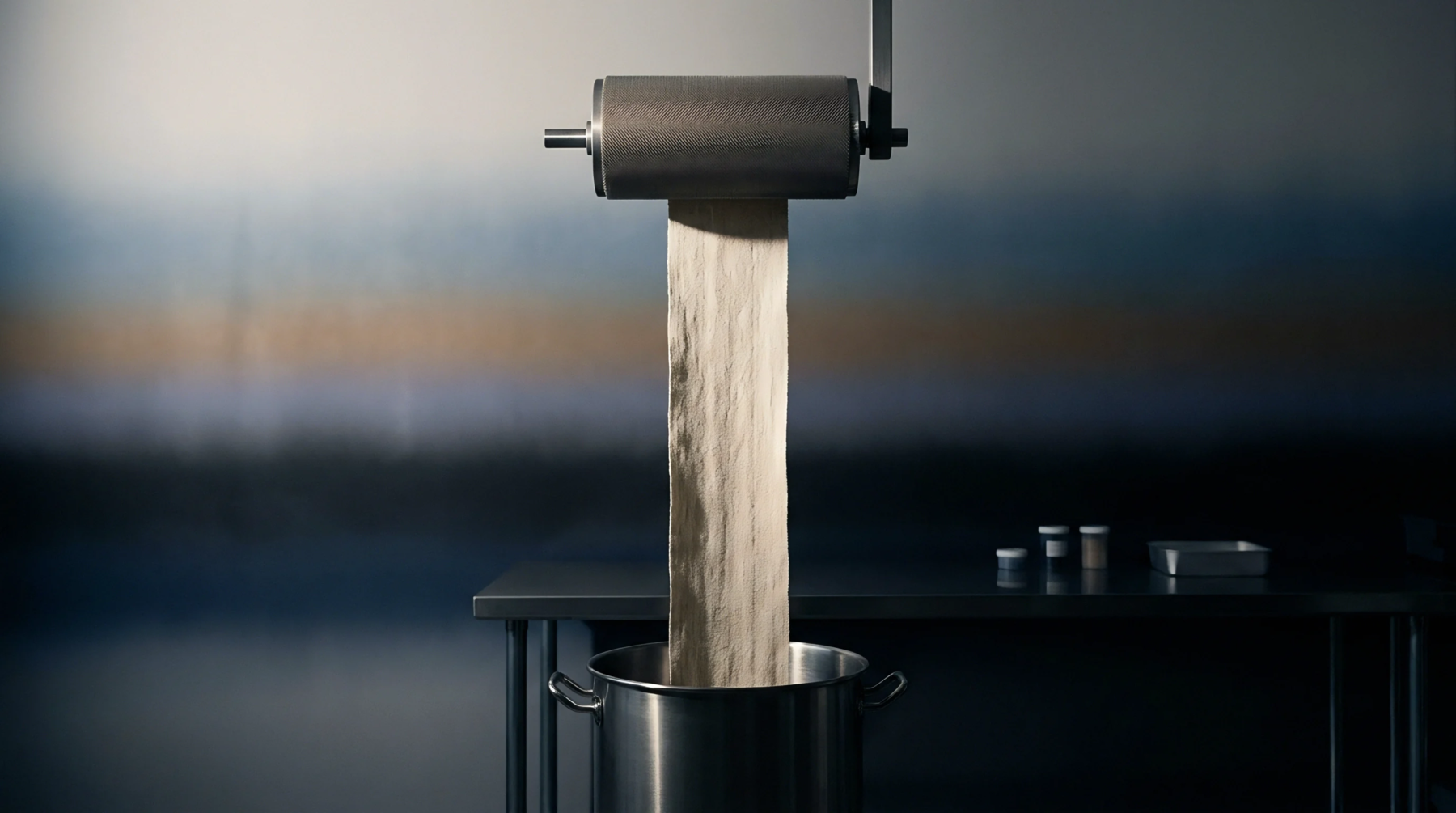
Flow Phenomenon
Circulation and mixing patterns of dye liquor within the application trough govern the uniformity and stability of fabric impregnation. The pad box fluid dynamics determine whether the liquid is distributed evenly across the width of the moving fabric. Poor flow distribution can create stagnant zones where the dye cools down or depletes in concentration.
This leads to side-to-center shading defects across the textile web.
Turbulence Impact
Moving fabric carries a boundary layer of air and liquid into the trough, which creates complex flow currents that must be managed. Properly designed pad box fluid dynamics utilize the movement of the fabric to promote mixing while preventing extreme turbulence that would cause foaming. Internal baffles and feed pipes are positioned to distribute the fresh feed liquor evenly across the entire width of the chamber.
This maintains a uniform temperature and concentration.
Measurement and Analysis
Computational fluid dynamics are used by machine manufacturers to optimize the shape of the trough for different fabric speeds. These models analyze the velocity vectors and residence time distribution of the liquid under various production conditions. In the factory, operators monitor these fluid patterns by observing the behavior of the liquid surface and checking for the absence of dead spots.
This ensures that every part of the fabric receives identical chemical exposure.
Operating Boundary
When fabric speeds exceed five hundred metres per minute, the liquid can be pulled out of the trough faster than it can be replaced. This disrupts the flow patterns and causes air entrainment in the dye bath.