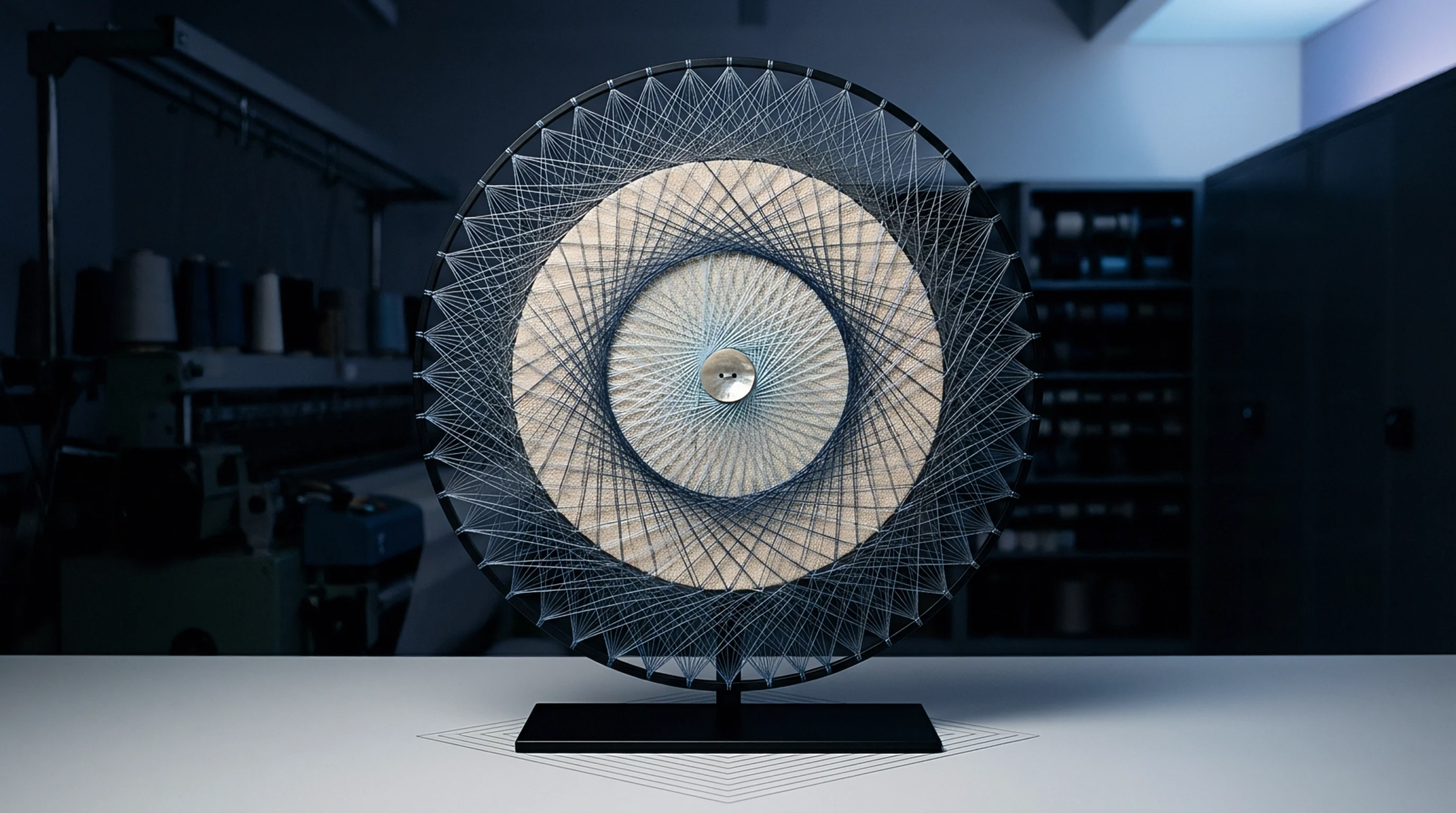
Mechanical Component
Grooved machine components mounted on the drafting and drive systems of circular knitting machines adjust loop length by regulating the linear feed velocity of yarn delivered to the needles. Operating within positive storage feeding systems, a quality pulley utilizes an adjustable split-sheave or stepped diameter mechanism to increase or decrease the effective driving circumference of the central transmission belt. This dimensional change directly alters the speed ratio between the machine cylinder rotation and the individual yarn feeder wheels.
The pulley establishes mechanical control over fabric weight, stitch density, and overall yield in circular knit manufacturing. Its function stops at loop formation, bearing no influence over subsequent chemical finishing, dyeing shrinkage, or mechanical compacting operations.
Adjustment Mechanism
Technicians loosen a central locking nut to shift overlapping conical discs toward or away from each other, altering the effective belt track diameter. Expanding the pulley diameter drives the main feed belt faster relative to the knitting needle cylinder, pulling more yarn from the yarn packages and feeding higher run-in lengths per cylinder revolution. Conversely, reducing the quality pulley diameter slows the feed belt, shortening the knitted loop length to yield a tighter, denser fabric construction.
A graduated scale engraved on the pulley hub permits calibrated adjustments, ensuring reproducible mechanical settings when returning to specific fabric specifications across production runs.
Factory Verification
Knitting room technicians verify settings on the quality pulley during sample development and machine setup through yarn run-in checks. While the machine runs under tension, an operator measures the exact length of yarn drawn into the needles during one single revolution of the needle cylinder using a yarn length meter. If the measured run-in value deviates from the design specification, the technician repositions the quality pulley until the yarn consumption precisely matches the tech pack requirement.
Correct pulley calibration guarantees uniform fabric yield in grams per square metre across hundreds of machine rolls, preventing shade bands and shrinkage differences caused by variable stitch densities. Finished garment dimensions depend heavily on this initial mechanical yarn metering.
Operational Boundary
Drive belt slippage or mechanical wear on the pulley face disrupts the exact transmission ratio, causing uncalibrated variations in yarn feeding speed. If multiple circular knitting machines are set to identical pulley markings, differences in belt tension, lint buildup, or drive motor speeds will still produce variations in fabric density. The pulley only establishes uniform yarn delivery rates on positive feeding devices, providing zero regulation for elastomeric plating yarns run from friction-driven or unmonitored passive packages.
Uneven yarn wax levels or inconsistent cone wind densities induce yarn tension spikes downstream of the pulley that override the intended loop length settings.