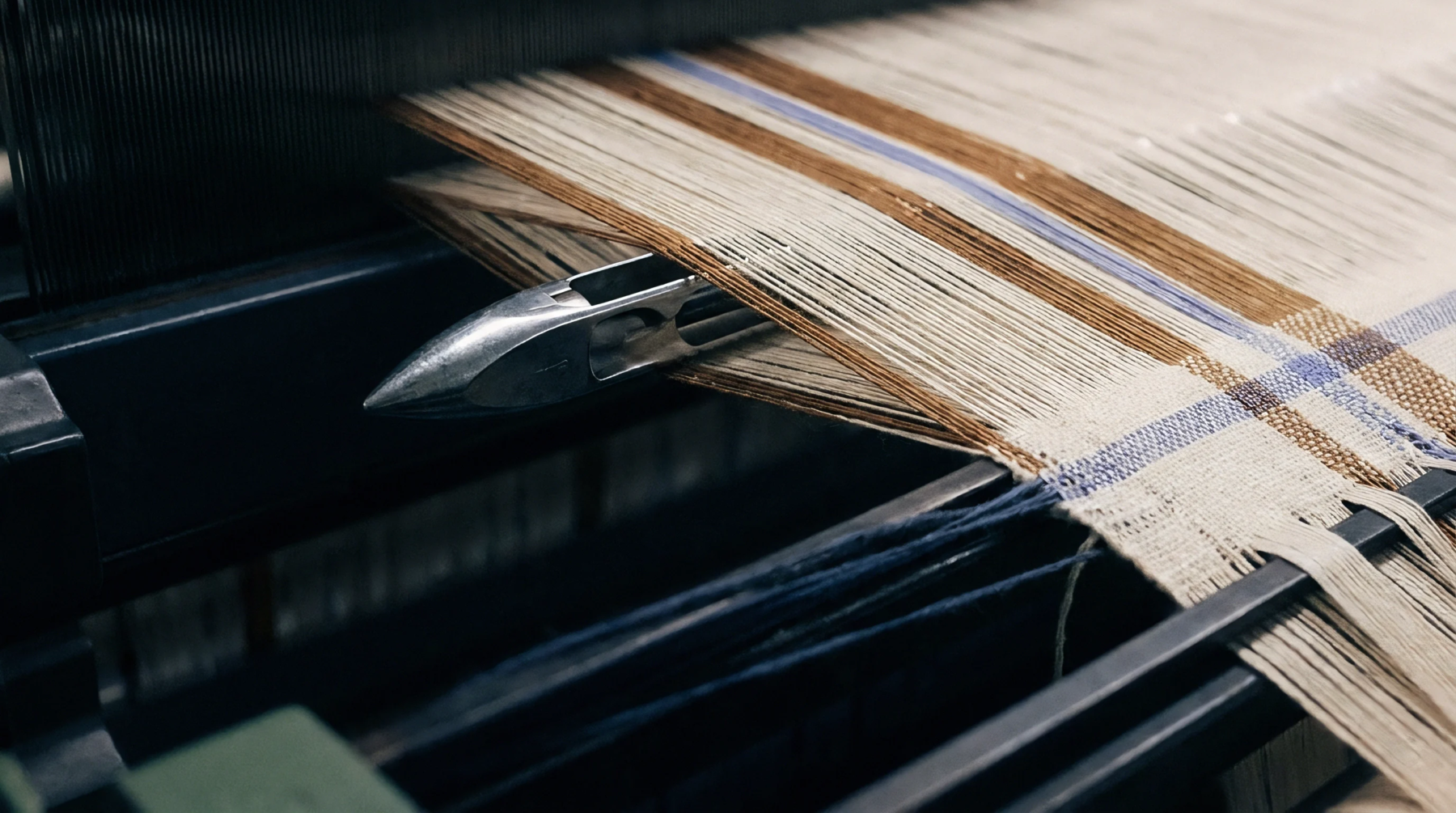
Basic Minimum Warp Set Calculation Principles for Greige Weaving
Greige warp set calculations must integrate reed width contraction, warp crimp, sizing stretch, and setup waste to establish accurate yarn purchase masses.
Total warp ends tally represents the fixed numerical summation of individual yarns arranged parallel within a loom beam before the initiation of weaving operations to establish fabric width and construction density. The total warp ends tally functions as a primary production control variable that dictates the finished width of a textile product based on the predetermined reed count and the desired picks per centimetre. Factories derive this figure by multiplying the number of dents per centimetre in the reed by the reed width while accounting for the number of ends passing through each individual dent.
Discrepancies between this calculated sum and the actual yarns mounted on the beam reveal errors in section warping or beaming operations that compromise structural integrity. Accurate quantification prevents uneven tension distribution across the fabric surface and mitigates the risk of side-to-side variation during the dyeing or finishing phases.
Production personnel utilize this aggregate value to verify the conformity of raw material input against technical specifications provided by the designer or client. Variations in the expected count suggest either a breakage during the transfer process or a faulty initial count at the creel stage. Quality control departments demand reconciliation of this data against the physical inventory to avoid under-delivery of finished goods or excessive waste of expensive raw fibre.
Mechanical sensors on the loom stop the machine when the sensor detects a breakage, yet these systems do not identify a missing end caused by a calculation error in the preparation stage. Supervisors perform a full physical count upon the arrival of the beam at the loom site to confirm the data matches the accompanying mill ticket.
Processing parameters for high-density fabrics require a precise total warp ends tally to maintain the geometric stability of the weave pattern throughout the length of the batch. Any deviation leads to a modification of the crimp ratio, which forces the fabric width to contract or expand beyond the allowable tolerance levels established in the contract. Fibres with low elongation properties show these fluctuations as distinct streaks that remain visible after final finishing, rendering the bolt unsuitable for apparel construction.
Designers calculate the required number of yarns based on the desired physical properties such as tear strength and drape characteristics, meaning the mill must hit this exact number to satisfy the performance guarantee.
Technical auditors evaluate the consistency of this tally against historical production logs to identify recurring patterns of machine malfunction or operator error. Data points extracted from batch reports allow plant managers to refine the setup process for complex multi-beam configurations that demand perfect alignment. Consistent records demonstrate that manual errors occur most frequently when technicians fail to account for selvedge yarns, which possess a different tension requirement than the body yarns.
Reliable verification of the total warp ends tally provides the necessary assurance that the final fabric width conforms to the rigid requirements of industrial cutting machines.
Greige warp set calculations must integrate reed width contraction, warp crimp, sizing stretch, and setup waste to establish accurate yarn purchase masses.
Expertise is a utility, not a secret. sentiention™ publishes its working knowledge as open reference: intelligence layer covering the materials it sources, the markets it enters, and the reference that serves both.