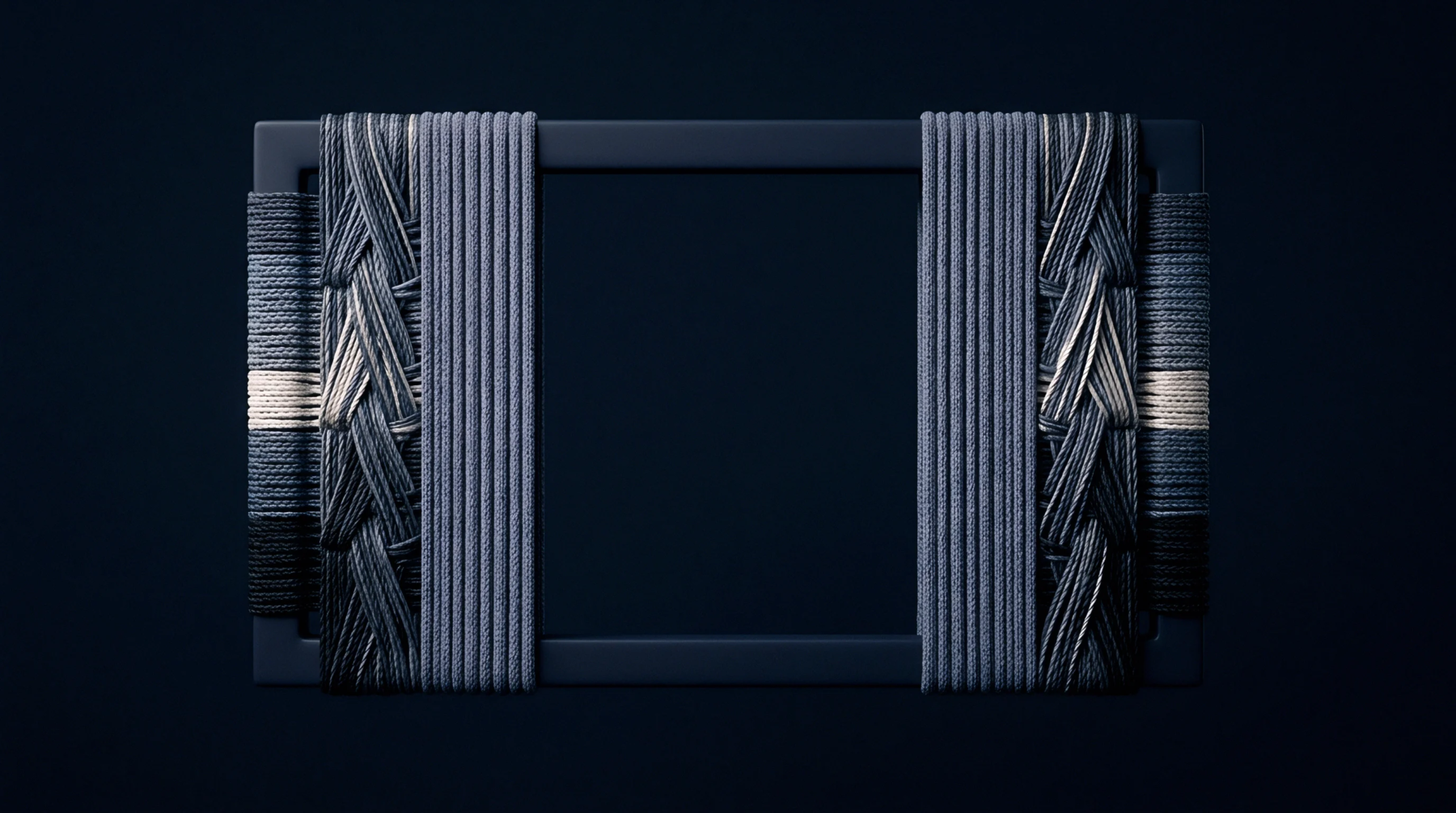
Yarn Undulation
Structural analysis calculates the percentage of extra yarn length required to accommodate the interlacing of warp and weft yarns in a woven fabric. Weavers calculate warp yarn crimp to determine the correct yarn count and tension needed to achieve the desired fabric weight and elasticity. This metric represents the difference between the crimped length of the yarn in the fabric and its straightened length.
It applies to woven fabrics, but is not used for knitted structures.
Measurement Method
A technician removes a yarn from a measured length of fabric and straightens it under a specific tension to remove the crimp. The difference in length is divided by the original fabric length to calculate the crimp percentage. For example, a yarn that measures one hundred and ten millimetres when straightened from a one hundred millimetre fabric sample has a crimp of ten percent.
This is a standard test.
Fabric Property
Crimp directly influences the fabric’s stretch, thickness, and tear strength. Higher warp crimp increases the fabric’s elasticity in the length direction and improves its soft feel. However, it also increases the amount of yarn required to construct a given length of fabric, which raises production costs.
Balancing crimp is a fundamental design decision.
Loom Setting
Loom operators adjust the let-off tension and take-up speed to control the crimp during fabric production. If the tension is too high, the crimp will be too low, and the fabric may be too stiff. Regular testing during the production process ensures that the fabric meets the required specifications.