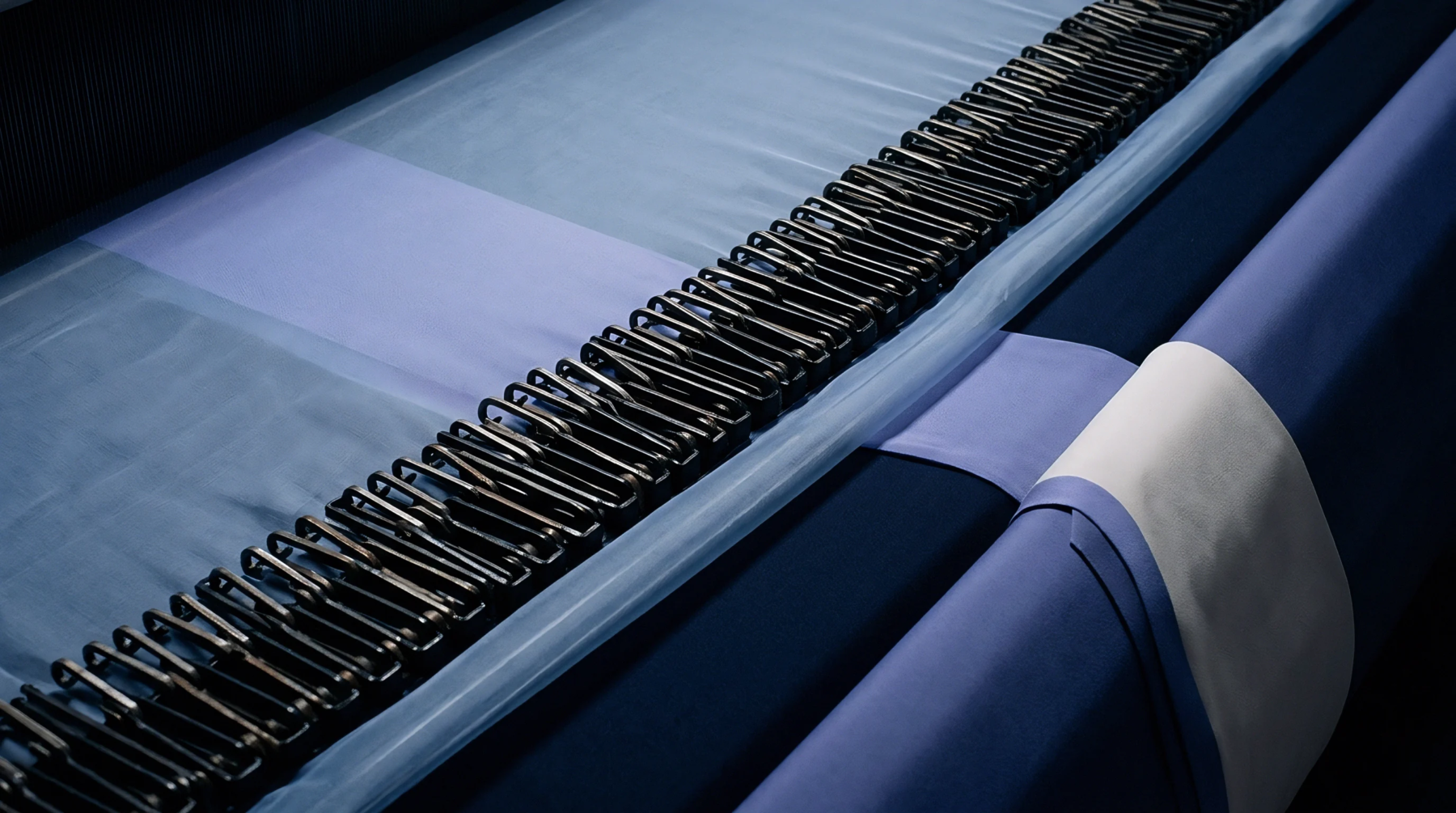
Dimensional Shrinkage
Dimensional shrinkage is the geometric loss of linear dimensions in woven fabrics as yarn paths curve around crossing elements during loom release. Weft contraction specifically measures the reduction in horizontal fabric width from the reed width state to the relaxed greige state on the inspection table. Tension applied by the warp during shedding forces the filling yarns to adopt a sinusoidal path rather than a straight line.
Physical dimensions of the final garment depend directly on quantifying this reduction accurately before cutting patterns in the apparel factory.
Yarn Geometry
Geometric adaptation forces filling yarns to bend over and under warp ends within the shed. Cross-sectional profiles of individual filaments dictate the degree of bending resistance encountered during insertion. Higher twist levels in staple spun yarns increase fiber interaction and pull the filling inward with greater force.
Testing laboratories measure this displacement by comparing reed dents per inch against finished picks per inch under standard atmospheric conditions.
Tension Mechanics
Mechanical constraints during weaving generate stored elastic energy within the filling yarn. Release from the warp tension profile allows the stored energy to convert into lateral displacement. Fabric construction parameters govern the magnitude of this lateral movement during off-loom relaxation.
Denser interlacing points restrict yarn mobility and lower the total shrinkage observed in the final product.
Production Allowance
Industrial finishing specifications require exact shrinkage allowances to achieve specified finished garment dimensions after wet processing. Mill technicians calculate dimensional loss percentages to set appropriate reed widths on industrial weaving machines. Exceeding standard tolerances results in narrow fabric batches that fail cutting room audits and apparel manufacturing specifications.