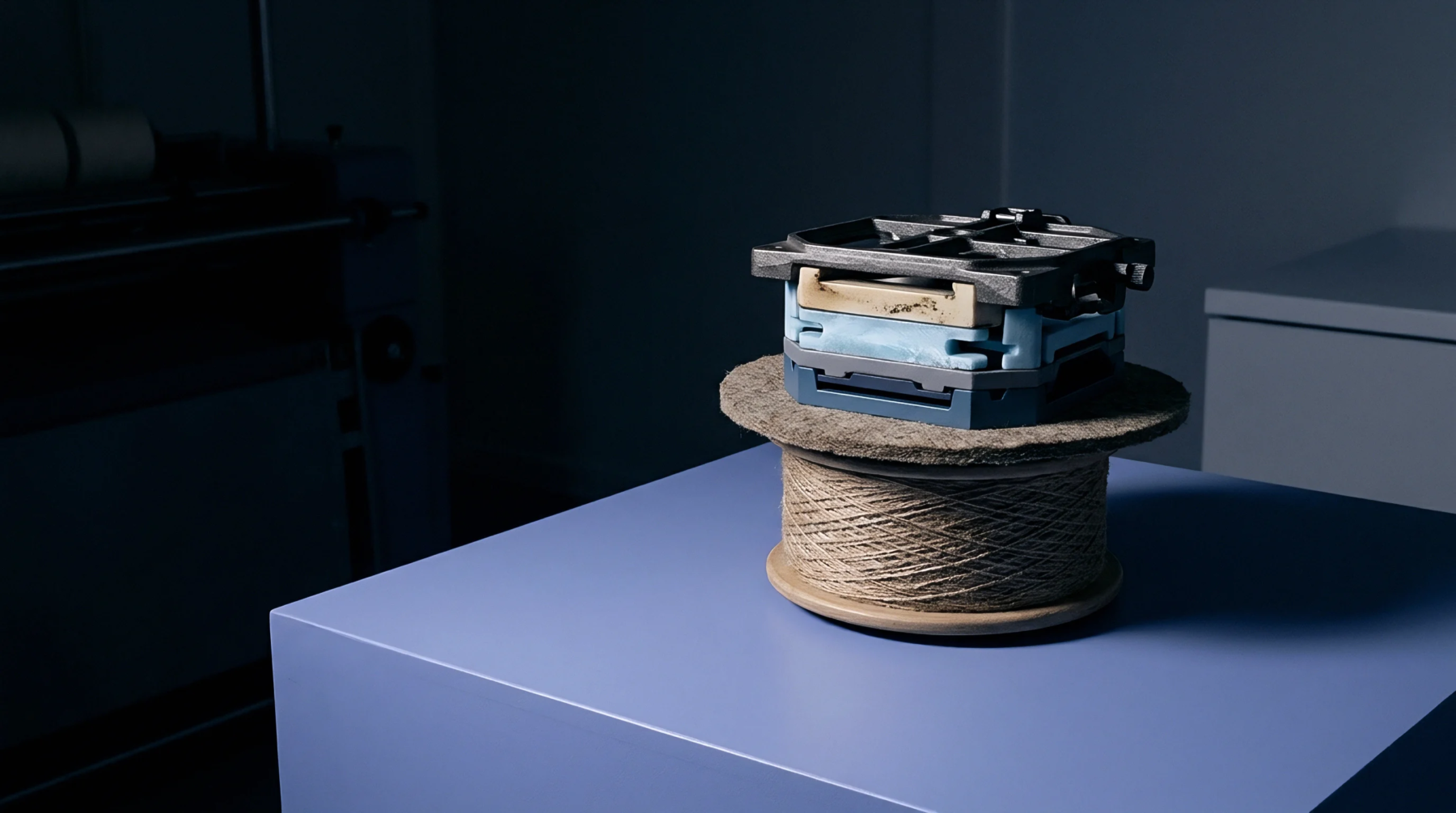
Elastic recovery failure
Dimensional stability deviations occur when the pick length exceeds the intended boundary after the loom release. A weft recoil defect arises as the yarn recovers from the temporary tension applied during insertion. This phenomenon results in uneven fabric edges or width variance across the roll.
Tension mechanism
Positive feeders supply yarn at a constant rate during the insertion cycle. Excess yarn volume accumulates between the gripper and the selvedge if the accumulator fails to retract the surplus. Mechanical synchronization between the shed geometry and the beat-up timing dictates the force held by the yarn.
High friction in the guide path hinders the retraction speed needed to maintain a flat profile.
Measurement protocol
Technicians determine the magnitude of the fault by measuring the variance between the target width and the actual width after the tension is released. Lab personnel compare the relaxed state of the fabric against the original weave design. Statistical tolerances define the acceptance limit for these deviations during the quality control inspection at the finishing stage.
Production consequence
Improper recoil control leads to irregular selvedge loops that compromise the stability of subsequent cutting operations. Variations in the width prevent the effective use of automated lay planning systems. A shift in the edge position reduces the uniformity of the seam allowance during garment construction.
Uncontrolled retraction forces the downstream processors to adjust their tentering settings to compensate for the uneven material width.