Applied Stress
Yarn tension cn per tex quantifies the mechanical load placed upon a continuous strand during high speed manufacturing processes by calculating the force per unit of linear density. Mills utilize this normalized value to maintain consistency across varying material thicknesses because it provides a common reference point independent of total mass. Engineers calculate this figure by dividing the measured force in centinewtons by the linear density expressed in tex units.
Proper management of this physical constraint prevents structural deformation in delicate synthetic filaments and reduces breakage frequency within warping or knitting equipment. High values often suggest excessive drag during delivery while lower figures signal inadequate control during winding operations. Operators adjust braking mechanisms or input speed based on these recorded results to ensure the integrity of the feedstock remains within tolerance before conversion into intermediate forms.
Calibration Metric
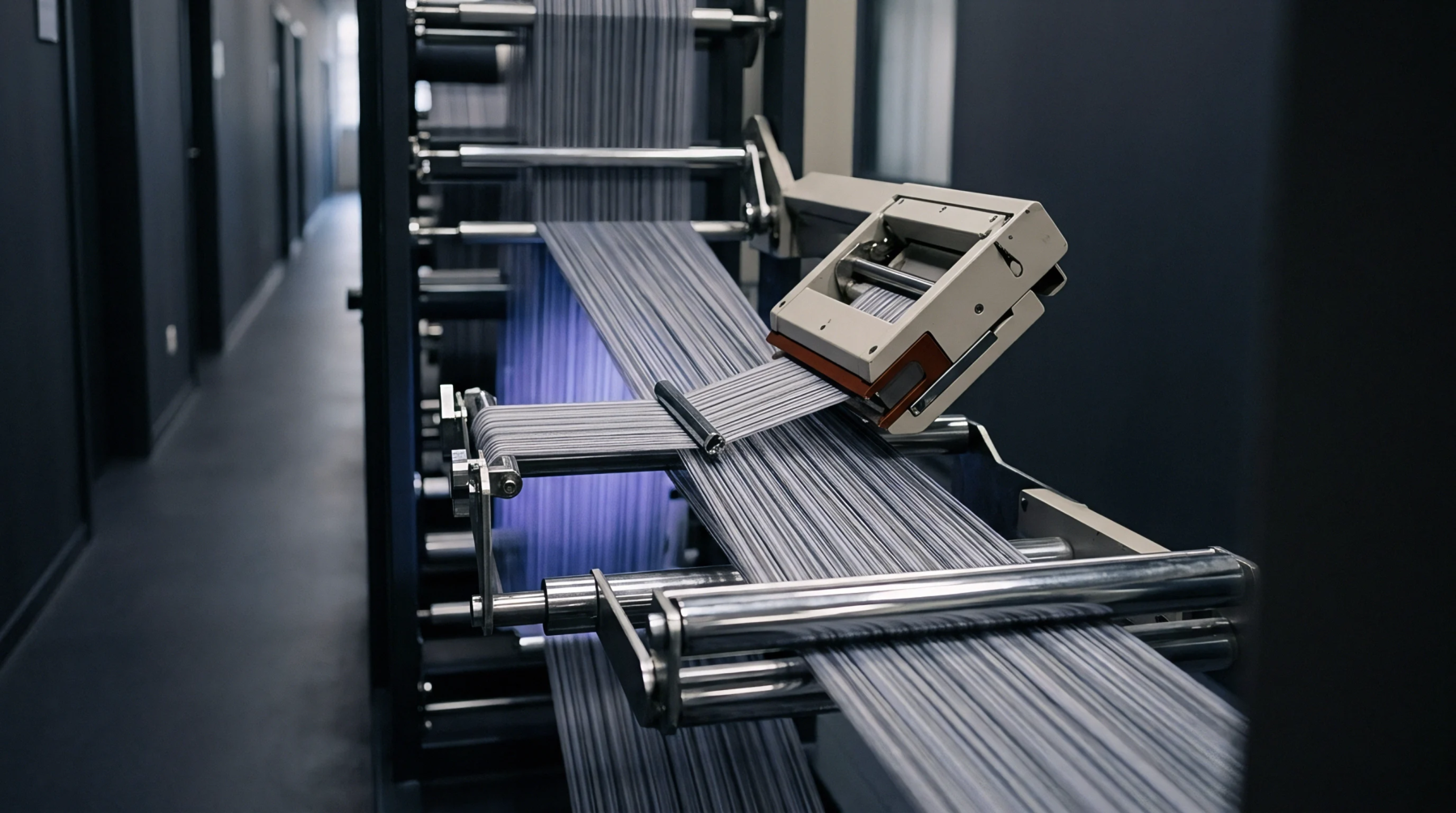
Physical testing labs confirm yarn tension cn per tex levels using digital tensiometers positioned between the supply package and the machine intake point. Dynamic measurements occur under production speeds to capture fluctuations caused by unwinding geometry or surface friction at the guide eyes. Static checks provide a baseline but fail to account for the inertial effects common in rapid assembly cycles.
Technicians document the variance observed across multiple spools to determine whether the deviation originates from the spinning stage or the physical geometry of the machine path. Stable levels across the entire length of the yarn suggest a controlled process while erratic signals indicate mechanical interference or inconsistent material application.
Performance Constraint
Operational limits define the window where yarn tension cn per tex remains compatible with specific machine hardware and fibre types. Synthetic polymers prone to elongation undergo permanent damage if the applied force exceeds the yield point of the chemical structure. Natural fibres such as cotton require lower thresholds to avoid premature snapping because these materials possess less elastic recovery.
Mills enforce these limits to guard against machine downtime caused by entangled breaks that halt production flow for extended durations. Excessive load forces a rearrangement of internal molecular alignment inside the fibre which alters the physical dimensions of the resulting textile structure.
Material Influence
Surface characteristics change the effective yarn tension cn per tex during contact with solid guides or ceramic surfaces. Rough coatings on guide pins increase the measured force through frictional drag compared to polished surfaces under identical speed settings. Lubrication application impacts these readings by reducing the friction coefficient and allowing smoother passage through the tensioning hardware.
Factors including humidity levels influence the moisture content of the fibre which subsequently changes the internal resistance against bending or stretching. Precise control over these conditions ensures that the recorded force accurately represents the mechanical stress applied to the strand rather than environmental noise. This normalized value acts as the final control mechanism for maintaining quality standards during high speed production cycles.