Greige Substrate Tracking in Commission Wet Processing
Commission wet processing requires matching greige incoming mass and piece-end stamps against finished yield to prevent substrate loss and shade mixing.


Origin
Commission wet processing plants receive unrefined material directly from weaving or knitting facilities under contract agreements. The initial arrival at the receiving dock establishes the physical baseline for every subsequent chemical and thermal operation. Loom state fabric arrives loaded with warp sizing agents, knitting oils, field dirt, and natural waxes.
These non-fibrous additives conceal the actual fiber mass and structural parameters of the substrate. Without immediate physical verification and systematic tagging upon arrival, substrate identity degrades before fabric reaches the singeing or scouring ranges.
Greige rolls arrive dirty. Loom state fabric holds wax. Weight shifts with moisture.
Sourcing practices that fail to audit incoming greige parameters transfer substantial commercial risk to the brand owner. Weavers ship fabric based on gross weight recorded immediately after taking rolls off the loom shed. That weight includes non-conditioned yarn moisture, volatile spinning lubricants, and temporary size formulations like polyvinyl alcohol or corn starch.
A commission dyehouse accepting fabric on gross weight without establishing bone-dry fiber mass creates an immediate accounting vulnerability. When scouring and desizing strip away these temporary additives, the fabric experiences an unavoidable mass loss ranging from three to eight percent depending on fiber type and yarn preparation.

Loom State Specifications and Mill Identification
Weaving and knitting plants document construction parameters on paper roll tickets attached to the inner core of each roll. These tickets record the weaver loom number, operator ID, yarn lot numbers, greige width, and gross weight. Paper tickets fail when exposed to water, steam, or chemical baths during wet preparation.
Establishing trace identity requires transferring loom ticket data into a permanent marking system directly on the fabric selvage or roll head-end.
| Method | Chemical Resistance | Heat Resistance (Celsius) | Readability Method | Cost Per Roll (USD) |
|---|---|---|---|---|
| Indanthrene Stamp Ink | High (Alkali and Acid resistant) | 210 | Visual inspection | 0.04 |
| Woven Salvage Barcode | Complete (Fiber structure match) | 260 | Optical scanner | 0.15 |
| Sewn Polyester Tags | Moderate (Degrades in strong acid) | 190 | Visual inspection | 0.08 |
| Punch Hole Encoding | Complete (Physical perforation) | 300 | Manual pattern gauge | 0.02 |
Verification at the receiving dock proceeds through a standardized physical sequence before rolls enter the warehouse queue:
- Record incoming container seal numbers and match them against the weaver shipping manifest upon truck dock arrival.
- Unload greige rolls onto inspection tables to inspect physical roll tag numbers and verify physical piece-end stamps.
- WEIGH EACH ROLL on calibrated platform scales to determine gross wet mass and subtract cardboard tube tare.
- Extract 100-millimeter full-width greige swatches from head-ends to conduct rapid warp and weft density counts.
- Log verified roll weights, yarn counts, and loom serial identifiers into the dyehouse enterprise software system.
Piece End Marking Techniques and Chemical Durability
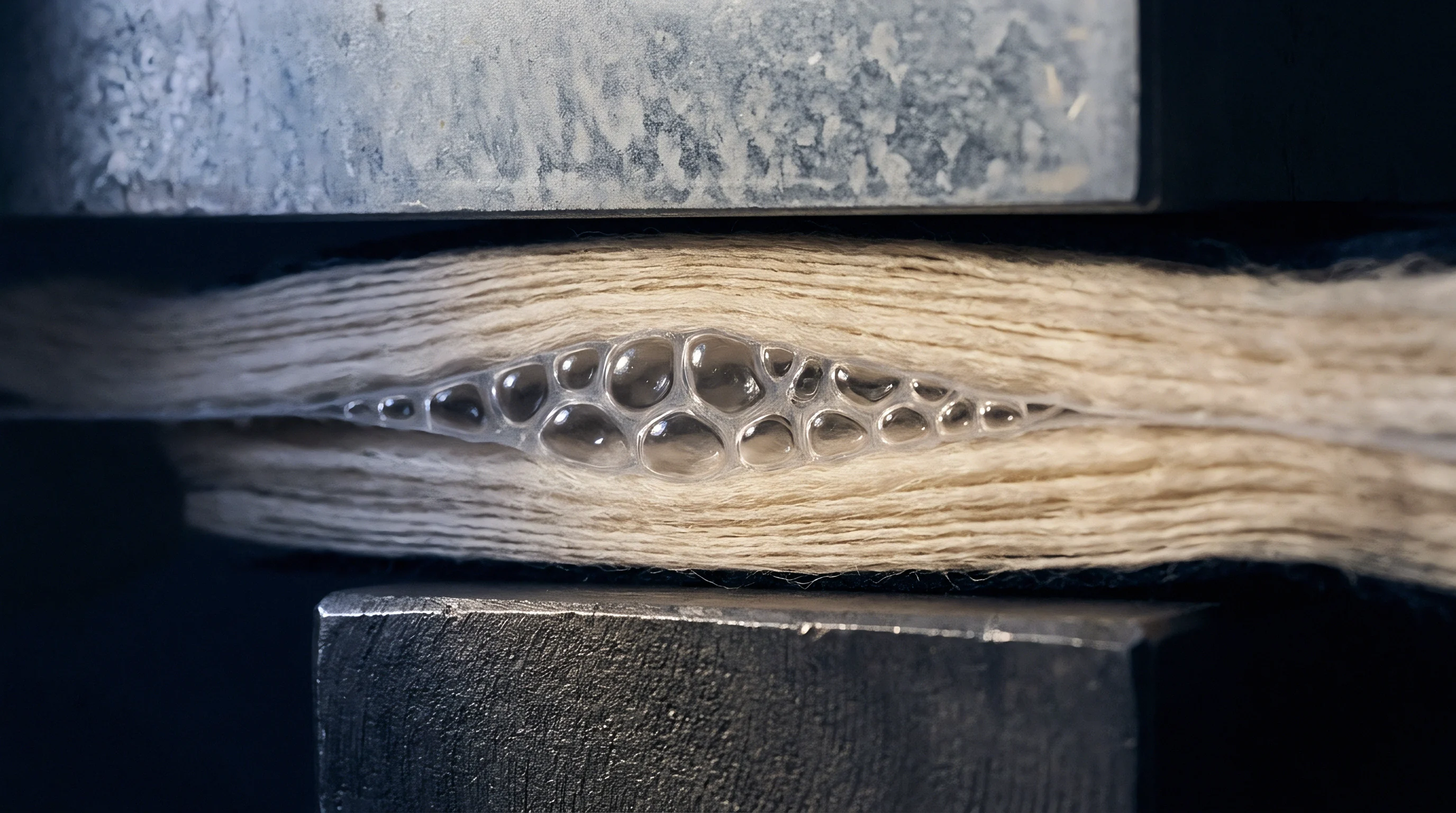
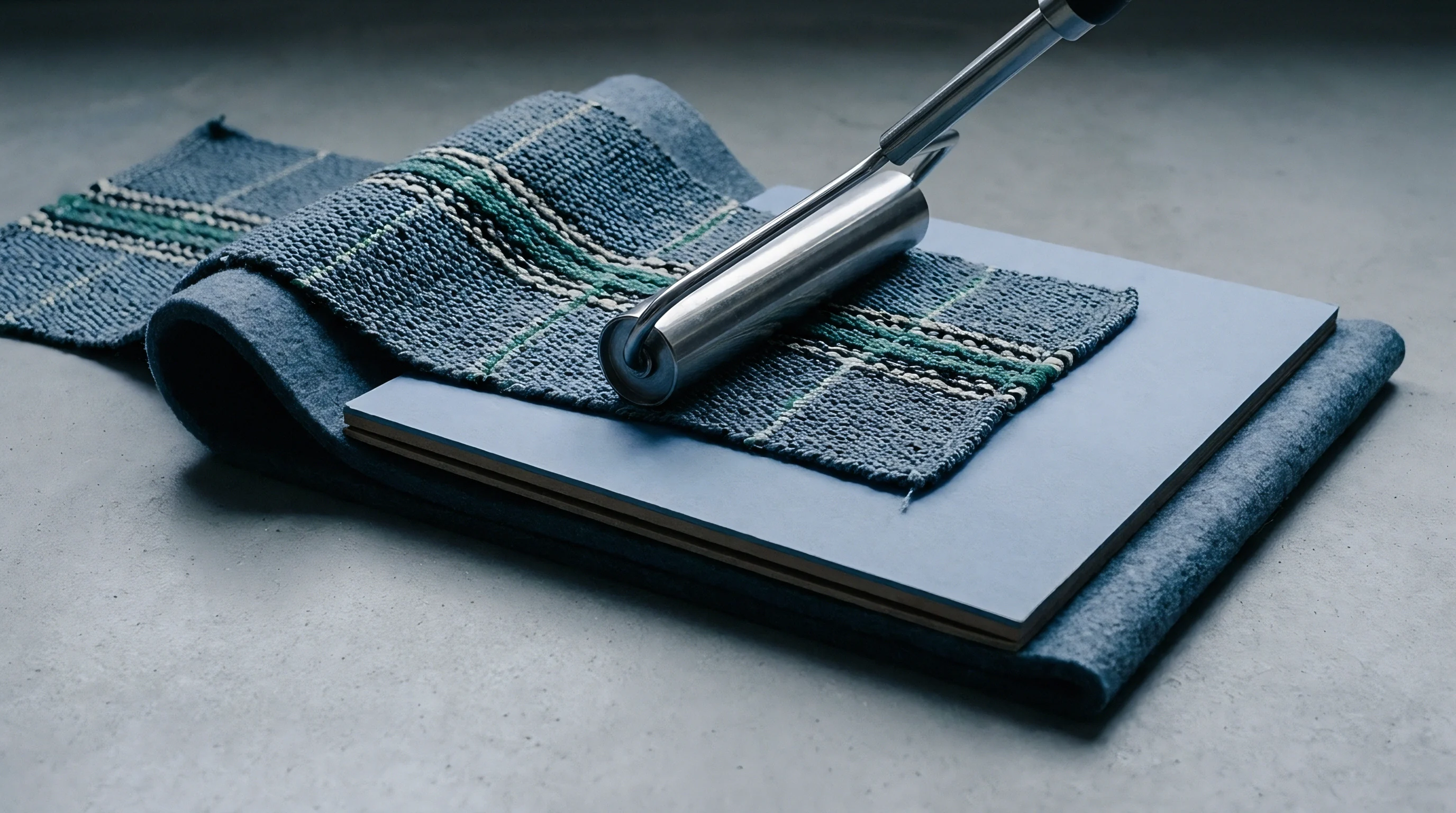
Permanent tracking relies on ink formulations capable of enduring alkaline boiling off, acid bleaching, and high-pressure liquor circulation. Standard carbon black or solvent-based markers dissolve inside hot sodium hydroxide baths, leading to unidentifiable rolls mid-process. Pigmented inks utilizing vat dye bases or cross-linked polymer binders resist chemical stripping during preparation.
Applying these inks with custom stamp blocks on the lead edge of every roll guarantees that piece identification survives jet dyeing temperatures up to 135 degrees Celsius.
Dyehouse managers often claim that loom tickets and shipping manifests provide sufficient operational tracking without physical piece-end stamping. That reliance overlooks the physical reality of batch preparation, where individual rolls are stitched together into continuous ropes. Once paper tags tear off inside the desizing washer, un-stamped rolls become anonymous meterage that cannot be assigned to specific yarn lots.
Stamp
Chemical preparation strips dirt, natural fats, and synthetic sizes from raw greige. The aggressive nature of scouring, bleaching, and mercerization destroys weak physical markings. Imprinting clear, chemically inert identification codes onto fabric ends prevents batch mix-ups during these initial high-stress wet treatments.

Chemical Environments and Ink Resistance
High-temperature jet dyeing subjects textile roll markings to organic solvents, strong reducers, and caustic alkalis. Sodium hydroxide concentrations during cotton scouring reach 40 to 50 grams per liter at temperatures exceeding 100 degrees Celsius. Inks based on simple organic pigments break down under these conditions.
Indanthrene-based marking compounds maintain structural integrity because the pigment particles entrain within the cotton lumen or synthetic filament bundles without dissolving.
Ink bleeds under alkali. High heat degrades pigments. The selection of marking chemistry depends directly on the scheduled wet processing route.
Synthetic fabrics undergoing high-temperature heat setting before dyeing require inks rated for 210 degrees Celsius to prevent pigment sublimation onto adjacent fabric layers.
Physical tags sewn with synthetic threads match the thermal limits of the substrate to prevent melting inside high-pressure vessels.

How Does Piece End Stamping Survive Scouring?
Selection of pigment chemistry dictates survival when exposed to sodium hydroxide baths and peroxide bleaching stages. Synthetic resin binders containing cross-linking acrylic polymers form an insoluble film around the dye pigment particles upon thermal curing. When the wet fabric passes through the scouring padder, the cured polymer matrix shields the pigment from caustic saponification.
The stamp remains fully visible through subsequent washing and neutralization passes, preserving roll identification for the jet operator.
Failure to verify ink durability prior to launching continuous scouring runs results in severed batch identity, lost roll sequencing, and untraceable fabric damage claims.


Transit
Material movement between separate processing units exposes greige lots to identification loss. Commission finishing chains frequently split processing steps across specialized facilities. A single order might undergo singeing and desizing at Mill A, continuous bleaching at Mill B, and jet dyeing with stenter finishing at Mill C. Each transport leg between independent factories increases the probability of roll mislabeling, wet mass distortion, and physical damage.
Seams fail under tension. Wet fabric stretches easily. Managing multi-stage commission transit demands physical hand-off checkpoints where roll counts, net weights, and piece-end stamp integrity undergo manual audit before unloading.

Continuous Processing Seam Identification
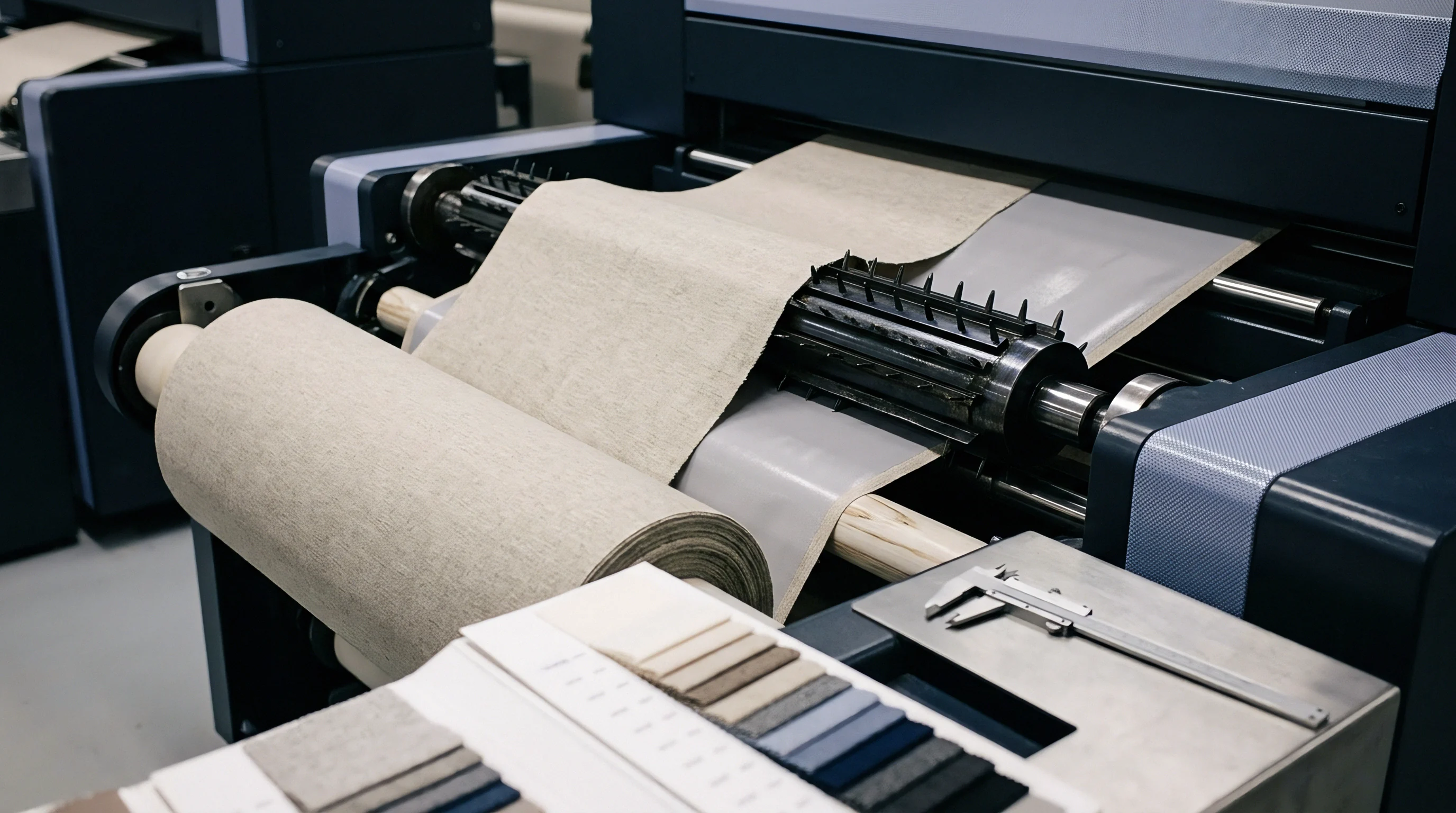
Joining individual rolls together forms endless continuous ropes for bleaching ranges and continuous thermosol dyeing lines. High-speed sewing machines join the tail-end of one roll to the head-end of the next using chain-stitch or flatlock configurations. The seam carries the critical transition code between different greige loom lots.
Standard commission finishing agreements limit unassigned roll mixing to half a percent of total lot linear length before financial liability transfers to the finisher.
Dyehouse operators mark these seams using high-visibility contrast sewing threads or metallic wire threads detectable by automatic seam sensors. If a seam ruptures inside a continuous bleaching range running at 150 meters per minute, hundreds of meters of fabric accumulate inside hot chemical pits. Re-threading the range disrupts roll order.
Without clear piece-end stamps adjacent to every seam, operators re-stitch broken ends arbitrarily, mixing different yarn lots within a single production run.
| Processing Stage | Loss Mechanism | Risk Level | Preventative Action |
|---|---|---|---|
| Continuous Desizing | Paper tag disintegration in hot bath | High | Apply indanthrene piece-end stamps |
| High-Pressure Jet Dyeing | Seam tearing and rope twisting | Critical | Use reinforced polyester sewing thread |
| Stenter Frame Heat Setting | Edge trimming of stamped selvages | Moderate | Position stamps 150mm inward from edge |
| Batch Inspection Rolling | Manual transcript errors on roll labels | Moderate | Implement barcode scan hand-offs |
Lot Splitting and Sub Batch Reconciliation
Dyehouse capacity limitations often split single weaver shipments into multiple dye lots. A 20,000-meter greige shipment arriving on 200 rolls exceeds the 500-kilogram capacity of standard jet dyeing vessels. The commission dyer splits the shipment into four 5,000-meter sub-lots.
Systematic tracking requires assigning a sub-lot suffix to every original roll number within the inventory system.
- Seam Separation During Scouring occurs when stitching yarn dissolves in sodium hydroxide, causing roll separation inside high-speed washing ranges and scrambling batch order.
- Thermal Degradation of Inks happens when heat setting temperatures exceeding 190 degrees Celsius vaporize volatile solvent carriers, erasing piece-end identity numbers completely.
- Sub Lot Tag Transposition takes place when dye house operators re-tag split rolls manually during jig loading without updating central ledger software.
- Salvage Trimming Operations cut away piece-end identity stamps when automated pin-feed guiders trim fabric edges before stenter entry.
Maintaining strict sub-lot discipline ensures that shade variance between separate jet runs remains traceable to specific loom allocations.


Allowance
Physical fabric mass changes throughout wet preparation. Raw cotton contains natural waxes, pectins, and seed coat fragments amounting to five to eight percent of unwashed fiber weight. Synthetic yarns carry spin finishes, coning oils, and antistatic lubricants applied during extrusion.
Calculating true commission yield requires separating actual material loss from moisture variation and stretch contraction.

Mass Loss Mechanisms in Chemical Preparation
Desizing dissolves starches and polyvinyl alcohol sizing agents added during warp yarn preparation. Sizing constitutes six to twelve percent of total dry warp weight in woven fabrics. Complete desizing removes this mass entirely.
Scouring subsequently saponifies natural fats into water-soluble soaps. Bleaching with hydrogen peroxide removes residual color bodies and seed fragments, further reducing dry fiber weight.
Desizing and scouring of 100 percent cotton greige fabric yields a mass loss of 4.5 percent to 6.2 percent depending on starch formulation and natural wax content.
Cotton loses sizing mass. Synthetics shrink during setting. Width contracts in drying.
Evaluating finished output weight without adjusting for removed size components creates false assumptions of mill theft or short shipping. Standard laboratory testing measures dry mass loss by taking oven-dry samples of raw greige and comparing them against thoroughly scoured, desized swatches dried to zero regain.
| Fiber Type | Preparation Stage | Mass Loss Range (%) | Moisture Regain Standard (%) | Net Weight Yield Factor |
|---|---|---|---|---|
| 100% Combed Cotton | Enzymatic Desize & Caustic Scour | 5.5 to 8.0 | 8.5 (ISO 139) | 0.935 |
| 100% Carded Cotton | Continuous Bleaching Range | 6.0 to 9.5 | 8.5 (ISO 139) | 0.920 |
| Polyester / Cotton 65/35 | Pad-Batch Scour | 3.0 to 4.5 | 4.0 (Commercial Standard) | 0.960 |
| 100% Filament Polyester | Alkaline Reduction & Wash | 1.5 to 3.0 | 0.4 (ISO 139) | 0.975 |
Dimensional Variance and Stenter Calculation
Warp tension pulls fabric long during continuous bleaching. This longitudinal stretching temporarily increases linear meterage while reducing fabric width and density. Stenter framing reverses this mechanical distortion.
Feeding fabric onto stenter pins with controlled overfeed allows weft yarns to relax and warp crimp to recover, restoring specified finished mass per square meter.
Calculating expected finished meterage relies on the crimp balance formula linking greige warp sett to finished density:
Finished Length = Greige Length x (1 – Warp Shrinkage Allowance) x (1 + Stenter Overfeed Percentage / 100)
When a contract specifies five percent finished dimensional stability under ISO 6330 wash testing, the stenter operator applies sufficient overfeed to pre-shrink the fabric during heat setting. Excessive overfeed yields surplus meterage with inadequate width, whereas insufficient overfeed delivers extended length that fails garment wash standards later.
Contractual allowance clauses must explicitly define whether commission processing fees apply to incoming greige gross weight, conditioned greige weight, or net finished weight delivered to the cutting table.

Discrepancy
Yield calculations compare incoming greige mass against outgoing finished roll totals. Discrepancies between expected and actual finished output reveal operational problems including physical fabric theft, unrecorded seam cut-offs, excessive side trimming, or structural substitution. Systematic reconciliation pinpoints the exact stage where material balance strays outside tolerance bands.
Shortage triggers immediate audit. Shade bands link lots. Converters pay for missing meters.
Traceability protects invoice totals. When finished meters drop more than two percent below calculated allowances, technical managers execute immediate batch audits.
Mass Balance Verification Equations
Calculating expected finished output relies on net yarn mass minus removable additives. The mathematical mass balance equation governs accurate inventory management:
Net Finished Mass = Gross Greige Mass x (1 – Sizing Fraction – Natural Wax Fraction) x (1 – Moisture Correction) + Finish Chemicals Applied
A 10,000-kilogram lot of raw cotton greige containing seven percent starch size and one percent natural wax holds only 9,200 kilograms of actual cellulose fiber. If the commission dyer applies a soft resin finish at two percent dry solids pickup, the final dry fabric mass equals 9,384 kilograms. Adding standard commercial moisture regain of 8.5 percent yields a final billing weight of 10,181 kilograms.
Deviations exceeding one percent from this calculated total indicate undocumented process losses.

Identification of Substrate Substitution
Unscrupulous sub-contractors occasionally exchange premium combed cotton greige for inferior carded lots or lighter weight constructions. Detecting substrate substitution requires comparing physical yarn parameters extracted from finished rolls against archived greige swatches retained during receiving inspection.
- Weight Variance Exceeding Three Percent requires immediate halt of finished lot packing to perform full chemical assay of residual oil and sizing content.
- Width Contraction Beyond Specification prompts physical measurement of crimp balance across warp and weft yarns to distinguish physical contraction from missing yarn mass.
- Unmatched Piece End Stamp Numbers triggers isolation of affected finished rolls in quarantine bays until weave structure matches the greige archive sample.
- Fastness Failure After Redyeing mandates tracing the fabric lot back to original greige sizing chemistry to verify whether silicone lubricant contamination prevented dye fixation.
Microscopic analysis reveals structural substitutions that evade routine visual checks. Single yarn twist counts, fiber length distributions, and neps counts distinguish high-grade combed yarns from cheaper carded substitutes. Running fiber cross-section assays verifies whether micro-denier synthetic yarns were replaced with standard denier equivalents during batch assembly.
What structural evidence proves that a yield shortfall stems from excessive stenter trimming rather than weaver meterage short-shipping?


Audit
Final inventory reconciliation matches finished fabric rolls back to greige bill of lading line items. Commission wet processing completed without comprehensive roll mapping leaves brand owners vulnerable to supplier dispute over missing meterage and off-shade goods. Establishing an auditable physical and digital ledger locks down yield calculations before final payment clearance.

Roll Map Reconstruction and Greige Matching
Traceability ledgers map every finished dye lot back to specific loom numbers and weaver shipment batches. Reconstructing the roll map involves compiling piece-end stamp numbers recorded at receiving, seam log books maintained on continuous ranges, and final roll inspection records from the packing floor. Physical roll maps trace every defect found on the inspection frame directly to its origin, distinguishing weaving flaws like broken picks from dyeing defects like jet marks or stenter pin tears.

Financial Reconciliation and Invoice Authorization
Commission finishing invoices charge fees based on processed linear meters or dry weight. Authorizing payment requires matching invoiced quantities against verified mass balance reports. If a dyer receipts 5,000 meters of greige fabric but delivers only 4,600 meters of finished cloth against an allowable 3 percent shrinkage allowance (4,850 meters expected), the 250-meter shortfall represents unapproved fabric loss.
Commercial deduction clauses permit buyers to debit the dyer for the raw greige value of short-shipped meterage alongside the commission processing fees. Retaining verified greige swatches, receiving scale tickets, and piece-end stamp logs provides the legal and technical foundation required to defend these financial debit notes during contract settlement.