Predicting Synthetic Interlock Aerial Density across High Temperature Jet Dyeing
Predict synthetic interlock aerial density by combining greige loop length, yarn dtex, jet draft, oligomer mass loss, and stenter pin overfeed calculations.


Greige
Double-knit machine setups establish the initial loop parameters that govern subsequent dimensional shifts in wet processing. When knitting synthetic interlock on high-gauge circular frames, machine gauge, needle layout, yarn linear density, and feed rate fix the structural foundation of the fabric. Interlock consists of two 1×1 rib structures produced by opposing needle beds on alternate feeds.
This double-layer arrangement creates internal crossover points that generate friction between loop columns, resisting relaxation until high-temperature processing adds energy to the system.
Raw structural mass per unit area depends directly on course count, wale count, loop length, and yarn dtex. The theoretical weight of unwashed double-knit fabric follows standard yarn geometry. In 100 percent filament polyester interlock, a 75 dtex yarn with 72 filaments (75dtex/72f) forms a stable greige structure knitted at a stitch length of 2.75 millimetres per loop.
Dropping loop length to 2.65 millimetres increases stitch density, raising greige mass while restricting the internal space needed for thermal compaction during high-temperature jet processing.
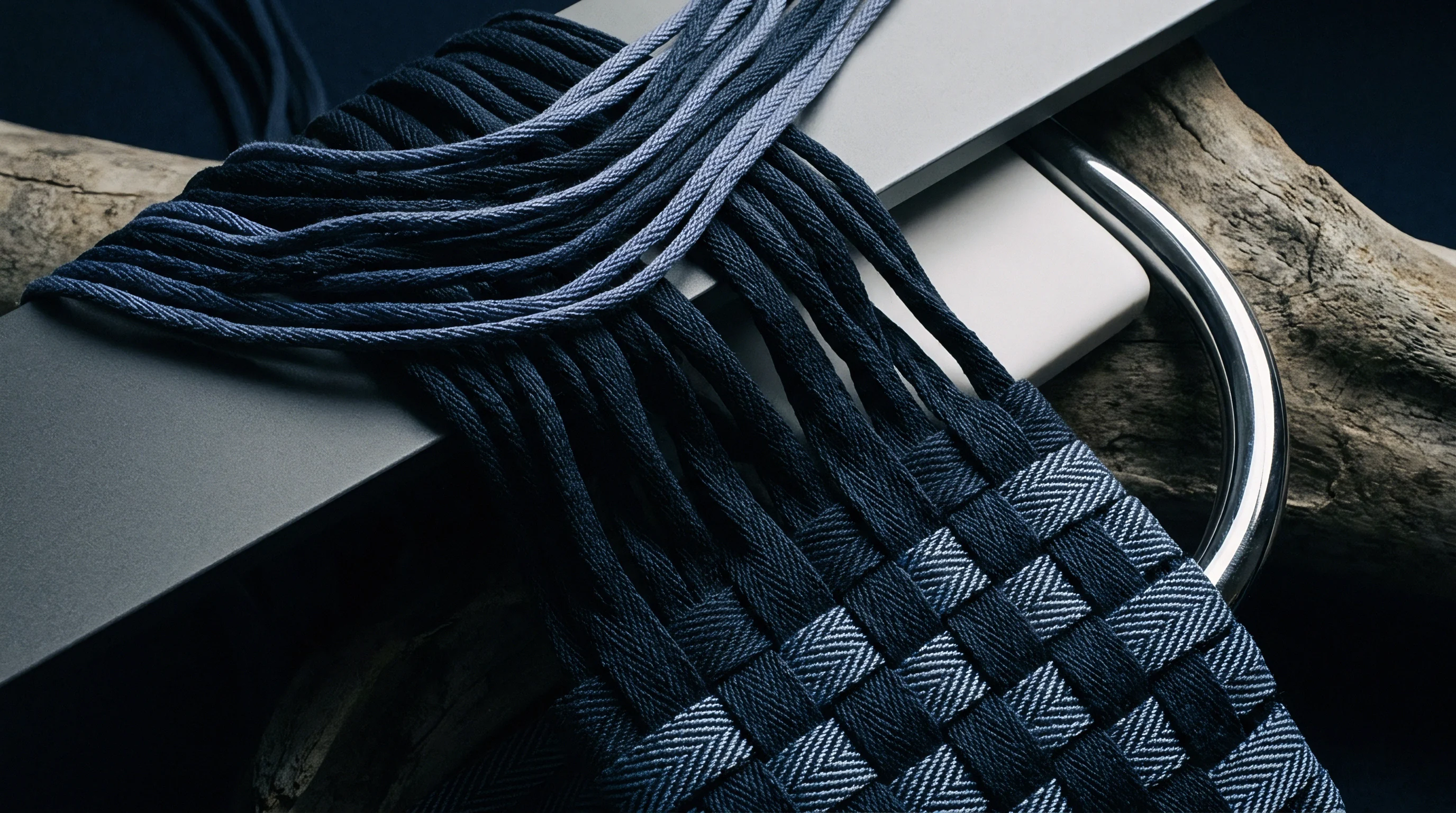
Knitting Machine Dynamics and Loop Length Stability
Positive storage feeders maintain constant yarn tension across every feed on the cylinder and dial. Variations in delivery speed create immediate course-density fluctuations, causing yield to drift across different machines running the same yarn lot. Tight knitting limits loop movement during jet processing, forcing structural contraction into fabric thickness rather than area compaction.
Loose knitting, by contrast, allows wide structural migration in the jet liquor, leading to heavy length contraction and erratic finished mass.
ISO 3801 Method 5 dictates conditioning specimens at 20 degrees Celsius and 65 percent relative humidity for 24 hours prior to mass determination on cut circular swatches.
Yarn linear density directly determines total filament surface area per unit fabric weight. Micro-denier yarns like 50dtex/144f polyester present far more surface area than standard 50dtex/36f filaments. That additional surface area increases inter-filament friction inside the loop structure, dampening structural relaxation in the high-temperature dye bath.
Specifying greige targets requires accounting for both raw yarn dtex and anticipated elastane draft when core-spun or air-covered elastic yarns enter the matrix.
| Machine Gauge (G) | Yarn Specification | Greige Loop Length (mm) | Greige Mass (g/m²) | HT Jet Shrinkage (%) | Finished Target Mass (g/m²) |
|---|---|---|---|---|---|
| 24 | 100dtex / 144f Polyester | 3.10 | 185 | 14.5 | 225 |
| 28 | 75dtex / 72f Polyester | 2.80 | 195 | 12.0 | 230 |
| 36 | 50dtex / 72f Polyester | 2.45 | 170 | 10.5 | 198 |
| 40 | 40dtex / 48f Nylon 6,6 | 2.20 | 155 | 9.0 | 178 |
Mills sometimes try to save yarn by widening loop lengths on the machine, counting on heat setting to pull fabric width back to spec. Fabric knitted past loop tolerances loses structural recovery during wet processing, leaving the dyehouse unable to hit target mass without forcing excessive stenter overfeed. Setting uncalibrated greige loop lengths on the knitting floor almost guarantees off-spec finished weight, leading to lot rejections or forcing cutters to recalculate marker yields against narrow usable widths.

Bath
High-temperature jet processing subjects synthetic double-knits to pressurized water baths at 130 to 135 degrees Celsius. At these temperatures, polyethylene terephthalate (PET) passes its glass transition point in water, dropping from roughly 75 degrees Celsius dry to near 60 degrees Celsius hydrothermally. Amorphous regions in the polymer chains become mobile, releasing mechanical stresses built up during extrusion, drawing, and knitting.
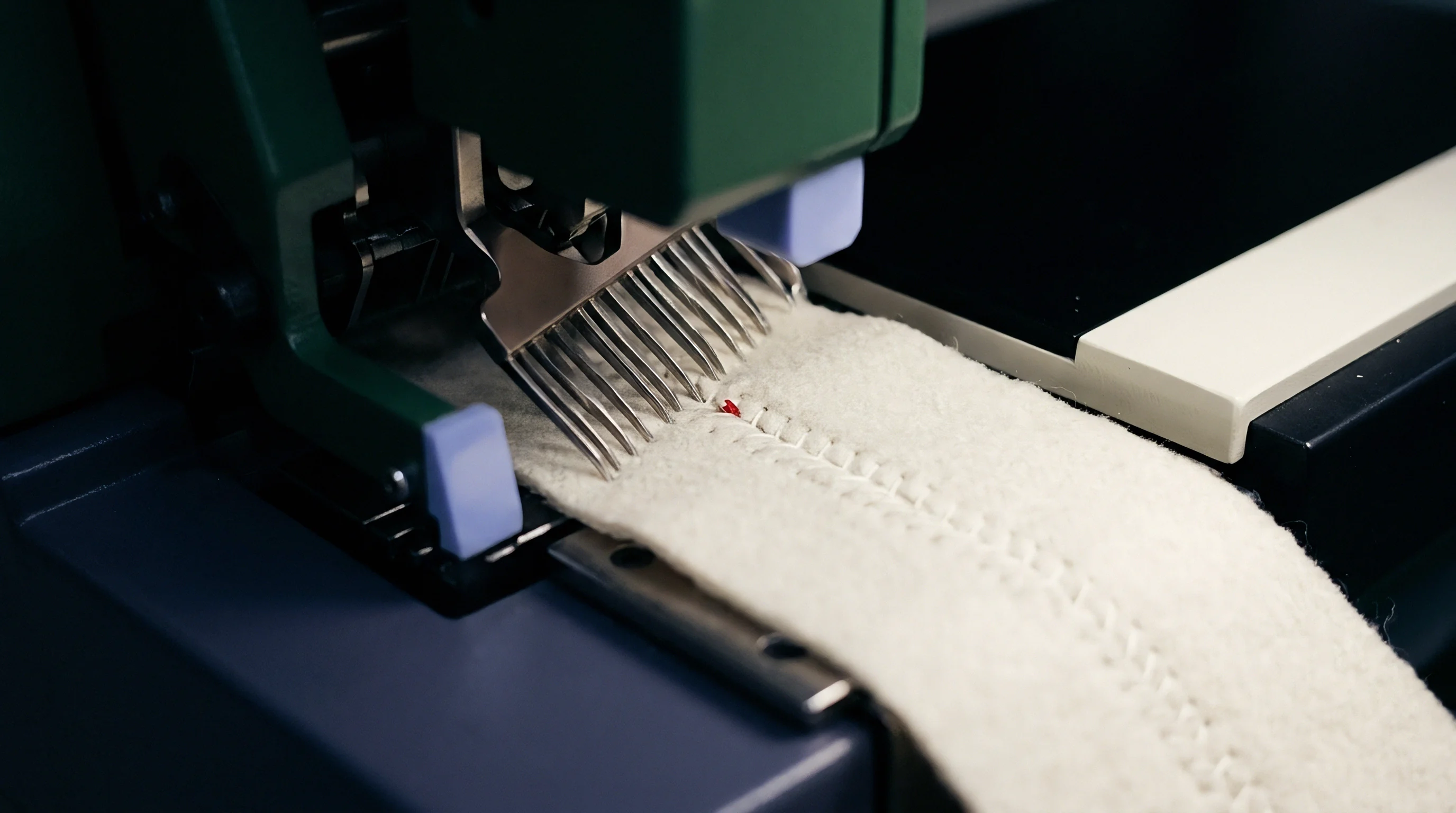
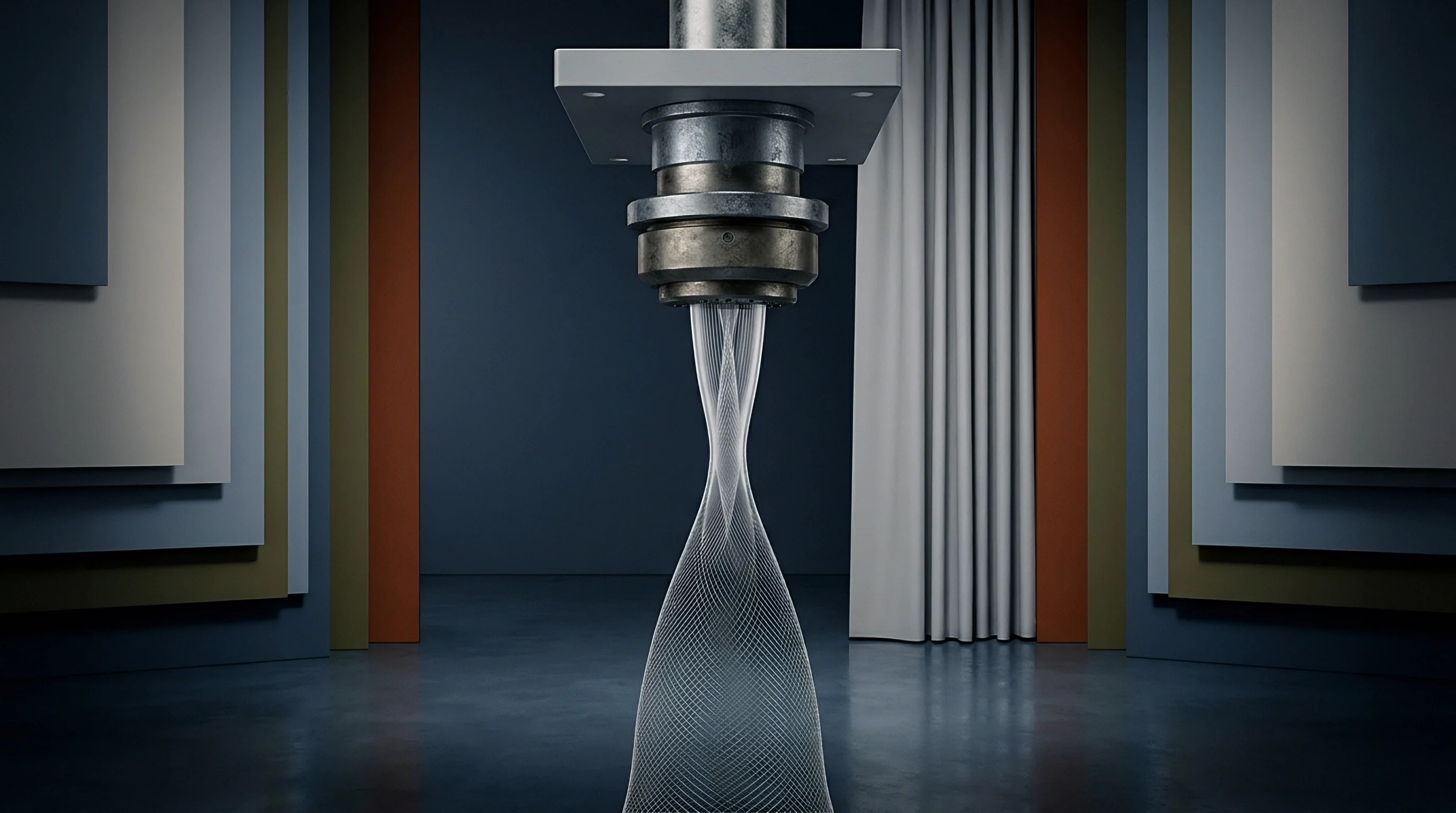
Hydrodynamic forces inside the jet transport tube exert simultaneous longitudinal draft and radial compaction on the fabric rope. As unset loops collapse in water, nozzle pressures from 1.5 to 2.8 bar drive liquor through the venturi at rope speeds of 250 to 400 metres per minute. The balance between liquor flow velocity and winch rotation determines whether the interlock undergoes net elongation or thermal relaxation during the 45 to 60 minute hold at top dyeing temperature.
Auxiliaries and spin finish extraction alter fabric mass during high-temperature dyeing. Yarns arrive from the throwster carrying 1.0 to 2.5 percent by weight of spin finishes, coning oils, and anti-static agents. Hydrothermal scouring inside the jet removes these compounds, along with low molecular weight oligomers that migrate out of the fiber core at 130 degrees Celsius.
Extracting these materials reduces raw yarn mass by up to 1.8 percent ~ a loss in aerial density that structural compaction has to offset to hit target specifications.
- Liquor Ratio Fluctuation shifts hydrothermal mass transfer and buoyant support, causing rope contraction rates to vary across machine capacities.
- Nozzle Over-pressurization creates excessive fluid shear, pulling interlock courses apart and permanently lowering finished aerial density.
- Oligomer Precipitation deposits cyclic trimers on the yarn surface, artificially raising mass while degrading hand feel and sewing performance.
- Thermal Shock Cooling freezes distorted loop shapes if bath temperatures drop faster than 1.5 degrees Celsius per minute before internal stresses relax.
Nozzle selection alone does not dictate structural relaxation in isolation from finished aerial density. Improper venturi selection stretches synthetic interlock ropes under hydraulic tension, producing lightweight, elongated goods that fail density verification after dyeing.
Tension
Mechanical draft along the longitudinal axis of tubular or open-width fabric alters course spacing during dyeing. Interlock structures deform into extended parallelograms when pulled end-to-end. When drive winch speed exceeds liquor velocity in the transport tube, the fabric rope absorbs continuous tensile force, pulling wales closer together while stretching courses out.

Loop Geometry and Heat Setting
Thermal fixing on a pin stenter reorganizes polymer chains while holding fabric dimensions under restraint. As wet interlock passes through drying zones at 180 to 195 degrees Celsius, moisture evaporates and synthetic fibers hit their thermal setting point. Overfeed rolls deliver fabric onto stenter pins faster than chain speed, compressing course loops along the length axis.
A +20 percent pin overfeed increases course density per centimetre, directly raising finished mass per unit area.
- Measure greige course and wale count with an ISO 7211-2 counting glass to set benchmark density.
- Run a pre-setting trial at 190 degrees Celsius at 15 percent pin overfeed to establish baseline thermal shrinkage.
- Monitor liquor velocity inside the jet pipe using ultrasonic doppler equipment to detect rope drag.
- Calculate longitudinal draft across the winch assembly by comparing winch surface speed against rope cycle duration.
- Adjust the stenter feed roll differential to match expected longitudinal contraction during final heat setting.
Cross-directional pin width settings work against longitudinal overfeed. Pulling a 160-centimetre greige interlock out to 180 centimetres on the frame thins course walls, spreading the same yarn mass over a wider area and reducing aerial density. The trade-off is roughly inverse: expanding width by 10 percent drops finished mass by 8 to 11 percent, depending on yarn elasticity and needle bed gauge.
Stenter pin overfeed settings above 30 percent cause pin-mark distortion and selvedge wave, forcing cut-and-sew operations to trim away usable fabric edge width.
Contracts governed by ISO 13934 require dimensional stability to hold within 3 percent length variation across three commercial wash cycles. If a dyehouse masks incorrect greige weight by overfeeding fabric past its natural loop equilibrium, the first home or commercial wash releases that artificial compaction. The fabric shrinks heavily in length and loses course density, failing delivery standards and leaving the mill liable for distorted garments.
Yield
Predictive models translate yarn linear density and machine settings into finished fabric weight. Historical calculations relied on Doyle’s empirical interlock constants, linking fabric mass to loop length through basic structural factors. In high-temperature jet dyeing of synthetic interlock, those constants require adjustment for hydrothermal polymer shrinkage, oligomer loss, and mechanical draft.
The modified equation calculates finished aerial density from yarn and loop geometry:
GSM = (10000 T c w l) / (1 – L_loss)
Where T represents yarn linear density in dtex, c is finished course density in courses/cm, w is finished wale density in wales/cm, l is loop length in centimetres, and L_loss accounts for fractional mass lost to scouring, oligomer extraction, and auxiliary treatments.
Take a 28-gauge polyester interlock knitted from 75 dtex / 72 filament yarn at a greige loop length of 0.280 centimetres. The greige fabric counts 16.0 courses and 14.0 wales per centimetre, giving an initial mass of 195 grams per square metre. At 130 degrees Celsius in the jet, the filament contracts 6.5 percent thermally, while scouring removes 1.5 percent of initial yarn mass in spin finishes.
After dyeing, the fabric enters the stenter at +22 percent overfeed, drying at 185 degrees Celsius to set final dimensions. Structural density rises to 21.5 courses and 16.2 wales per centimetre through length compaction and controlled pinning to 165 centimetres. Feeding these parameters into the equation yields:
GSM_predicted = (10000 75 21.5 16.2 0.262) / (1 – 0.015) = 232.5 grams per square metre.
Testing under ISO 3801 conditions returns an actual mass of 231.0 grams per square metre ~ a variance under 0.7 percent. That level of precision lets plant managers finalize yarn orders and knitting specifications before committing to bulk production.
| Greige Mass (g/m²) | Nozzle Pressure (bar) | Stenter Overfeed (%) | Finished Width (cm) | Predicted Mass (g/m²) | ISO 3801 Mass (g/m²) | Variance (%) |
|---|---|---|---|---|---|---|
| 195 | 1.8 | +15 | 170 | 218 | 216 | +0.9 |
| 195 | 2.2 | +20 | 165 | 228 | 229 | -0.4 |
| 195 | 2.5 | +25 | 160 | 239 | 236 | +1.2 |
| 195 | 2.8 | +30 | 155 | 248 | 244 | +1.6 |
| Data compiled across 100 percent filament polyester interlock dyed at 130 degrees Celsius for 45 minutes liquor-ratio 1:8. | ||||||
Discrepancies grow when elastane enters the structure. Core-spun polyester-elastane or air-covered yarns introduce strong elastic recovery forces that pull loop geometry tight during heat treatment. Because elastane increases thermal sensitivity, predictive models must include an elastic draw coefficient that adjusts course density based on raw elastane content and stenter temperatures.
Matrix
Variance between predicted and delivered fabric weight usually comes down to specific mechanical and thermal interactions during wet processing. Linear density variations from the spinner introduce early error. Packages quoted at nominal denier can vary by up to +/- 2.5 percent dtex under standard commercial tolerances, shifting finished interlock mass by 5 to 6 grams per square metre.
| Process Stage | Variable Shift | Direct Structural Effect | Aerial Density Impact (g/m²) | Corrective Adjustment |
|---|---|---|---|---|
| Knitting | Loop length +0.1 mm | Low course density | -12.0 | Tighten positive feeder delivery |
| High Temp Dyeing | Liquor temp -5°C | Incomplete thermal shrinkage | -8.5 | Recalibrate vessel temperature sensors |
| Jet Transport | Winch draft +8% | Longitudinal course extension | -14.0 | Synchronize winch with nozzle pressure |
| Stenter Finishing | Overfeed reduced 10% | Course spacing widening | -18.0 | Increase pin overfeed percentage |
Uneven temperature across the stenter width is another common source of variation. Chambers with clogged burners or misaligned air nozzles can show temperature differentials up to 8 degrees Celsius between drive and operator sides. Fabric traveling through cooler zones receives less thermal set and retains higher residual shrinkage, causing weight readings to drift across the cut width.
- Yarn Denier Verification Certificate records actual dtex test results per lot prior to knitting layout.
- Greige Loop Length Calibration Sheet tracks measured stitch length across cylinder and dial feeds on every shift.
- Jet Nozzle Hydrodynamic Profile Log records fluid velocity, nozzle diameter, and rope cycle speed during high-temperature holds.
- Stenter Thermal Zone Audit Record tracks temperature uniformity and pin-overfeed speeds across all heating chambers.
A variance of 0.05 millimetres in greige loop length shifts finished interlock mass by 6.5 grams per square metre under constant jet dyeing conditions.
Interactions between yarn heat-shrinkage torque and structural relaxation set a practical limit on how precisely mathematical models can predict weight during bulk commercial runs.

Discrepancy
Commercial acceptance hinges on whether aerial density remains within contract tolerances. Standard buyer specifications allow a +/- 5 percent window around nominal mass. When a 220 gram per square metre interlock drops below 209 grams per square metre, buyers reject the lot for opacity failures, harsh hand, or inadequate bursting strength under ISO 13938 testing.
Delivering fabric above the upper tolerance creates equally serious financial issues. Interlock arriving at 235 grams per square metre consumes more yarn per linear metre, driving up material costs for the mill while lowering yield for the cutter. Marker efficiency relies on consistent mass and width; overweight fabric changes garment drape, distorts size grading, and can force brands to re-qualify package weights against freight limits.
Conditioning protocol errors cause a significant share of weight disputes between buyers and mills. Polyester has a low moisture regain of about 0.4 percent, but blends containing nylon or elastane absorb up to 4.5 percent ambient moisture by weight. Conditioning specimens outside standard room environments shifts cut swatch weights, generating false out-of-spec readings that trigger unnecessary lot rejections.
Greige loop length stability controls finished fabric weight far more reliably than post-dyeing stenter stretching.