Differentiating Cotton Maturity from Fineness in Combed Sliver Preparation
Differentiating maturity from fineness prevents high comber waste and nep generation caused by relying on composite single-compression micronaire values.
Conflation
Single-compression airflow instruments measure total specific surface area per unit mass within a packed plug of raw cotton. This physical measurement forms the basis of commercial Micronaire readings. High specific surface area restricts airflow, returning a lower numerical value.
Low specific surface area allows rapid air passage, yielding a higher numerical value. Air permeability depends simultaneously on two independent anatomical dimensions of the cotton fibre: gravimetric fineness, defined as linear density in millitex, and secondary cell wall development, expressed as maturity ratio. Airflow meters aggregate surface area.
Conflating these distinct properties creates operational blind spots during combed sliver preparation. Fine cotton staples with fully developed secondary walls display identical Micronaire values to coarse staples with thin, undeveloped cell walls. A raw cotton lot exhibiting a Micronaire of 3.8 can represent an intrinsically fine fibre with a high maturity ratio of 0.95 and a linear density of 130 millitex.
The same reading of 3.8 can equally represent an intrinsically coarse fibre with a low maturity ratio of 0.65 and a linear density of 185 millitex. These two raw materials behave in entirely different ways when processed through carding, lap formation, and combing.
Linear density dictates draft torque. Secondary cell wall thickness governs mechanical rigidity, flexural recovery, and structural resistance against comb needle impacts. When an immature coarse cotton is introduced into the blowroom under the assumption of fine fibre maturity based solely on Micronaire, downstream processing breaks down.
Thin-walled immature fibres collapse into flattened ribbons during pneumatic transport and mechanical opening. These collapsed ribbons twist around trash particles, generating tight entanglements known as biological neps. Biological neps survive carding and pass into the comber, where needle penetration fractures the fragile walls, inflating short fibre content and filling the waste box with excess noil.
Processing problems propagate through to final fabric dyeing. Immature fibres lack the dense cellulose structure required to absorb direct and reactive dyes at equal rates to mature fibres. Dyeing facilities encounter un-dyed white specks on fabric surfaces caused by clusters of immature, thin-walled fibres.
Evaluating gravimetric fineness separately from maturity ratio before bale laydown prevents these costly finishing defects.
Immature fibres collapse under load. Selecting raw cotton requires decoupling perimeter size from wall thickening through targeted laboratory testing before opening bales for combing setup.
| Cotton Origin | Micronaire Value | Gravimetric Fineness (mtex) | Maturity Ratio (M) | Perimeter (µm) | Degree of Thickening (θ) |
|---|---|---|---|---|---|
| US Pima (Extra Long Staple) | 3.80 | 128 | 0.96 | 42.5 | 0.55 |
| West African Upland | 3.82 | 152 | 0.78 | 49.2 | 0.45 |
| Central Asian Upland | 3.78 | 178 | 0.64 | 57.8 | 0.37 |
| Indian ELS Hybrid | 3.85 | 135 | 0.92 | 44.1 | 0.53 |
Processing immature cotton through high-speed combing machinery generates predictable failure modes across sliver preparation and yarn spinning workflows:
- Nep Formation Escalation occurs when thin-walled fibres buckle under carding wire forces, forming high densities of mechanical neps that resist extraction during carding.
- Comber Noil Excess develops when fragile immature fibres fracture under circular comb needle impacts, transferring long fibre segments into short fibre waste streams.
- Drafting Force Fluctuation appears across draw frame nip rolls because flattened immature fibres alter friction coefficients within the drafting zone.
- Dye Affinity Variation manifests in finished woven or knitted goods as light-colored specks caused by low secondary wall cellulose concentration in localized fibre clusters.
Identical micronaire readings from two distinct cotton lots frequently mask severe imbalances in comb waste and nep generation.
Establishing raw cotton quality requires isolating structural parameters from composite air permeability metrics. Spinning mills that rely exclusively on single-compression Micronaire run continuous financial risks through unpredictable comber waste rates and customer rejections over fabric dye appearance. Whether commercial laboratories can deploy automated image analysis at line speeds without inflating testing costs remains an open debate in raw cotton procurement.

Comb
Mechanical combing removes short fibres, residual neps, and fine trash particles from carded sliver while aligning long cotton staples parallel to the sliver axis. Comber efficiency relies on precise mechanical interaction between the clamping nipper assembly, the rotating circular comb, and the reciprocating top comb. The flexural rigidity of individual fibres governs how the fibre fringe responds when circular comb needles pass through the clamped web.
Flexural rigidity scales with the fourth power of wall thickness and cross-sectional area. Fine mature fibres maintain structural integrity under needle impact, bending without buckling and allowing needles to strip away unattached short fibres. Immature fibres collapse under load.
When sliver contains high proportions of coarse, thin-walled immature fibres, circular comb needles force the weak fibre walls past their elastic limit. Instead of standing firm within the nipper clamp, immature fibres bend sharply and fracture under impact. Comb needles sheer thin walls.
Broken fibre fragments pass directly into the noil waste collector, dramatically reducing comber yield. Short fibre content in the combed sliver rises, deteriorating draw frame drafting stability and increasing yarn count variation. Secondary walls resist needle impact.
Top comb penetration presents another mechanical challenge when processing immature cotton. The top comb descends into the fibre fringe during detaching roller movement to stop un-combed trailing ends from entering the combed sliver. Thin, flattened immature fibres pack tightly inside top comb needle gaps, creating high friction resistance during detaching.
This friction pulls entire fibre clusters out of the detaching zone, forming thick places in the combed sliver and loading top comb needles with sticky waste. Comber settings require absolute precision.
Adjusting comber mechanical settings to compensate for variable maturity ratios requires systematic calibration of nipper distances and comb timing:
- Lap Feed Optimization aligns lap sheet linear density to prevent overloading circular comb needles when processing lots with variable wall development.
- Nipper Clamping Pressure balances clamp force to hold fine mature fibres securely while preventing crushed cell walls on immature staples.
- Circular Comb Penetration sets needle segment depth relative to nipper cushion plates to control mechanical action on fragile fibre fringes.
- Top Comb Extraction positions top comb angle and depth to intercept trailing short fibres without tearing immature web assemblies.
Fibre wall thickness determines bending rigidity under top comb needles, whereas linear density governs total draft friction across draw frame rollers.
Mill operators who adjust comber waste allocation based solely on Micronaire values risk sacrificing spinnable long fibre. Fine, fully mature cottons exhibit low Micronaire due to small perimeter dimensions rather than wall thinness. Lowering top comb depth or widening nipper distance on low-Micronaire mature lots discards high-tenacity, premium staple length into the noil collection box.
Conversely, failing to increase comber intensity on immature low-Micronaire lots leaves severe nep concentrations in the combed sliver, causing end breaks during ring spinning. Thicker cell walls maintain fiber orientation under needle impacts while collapsed thin structures migrate into the waste box.

Optics
Differentiating gravimetric fineness from secondary cell wall thickness requires advanced analytical instruments capable of measuring physical dimensions directly. Standard single-compression airflow meters fail to separate these parameters because they deliver one aggregate permeability metric. Modern testing laboratories utilize two primary methodologies to isolate maturity from fineness: double-compression airflow instruments and optical individual-fibre analyzers.
Double Airflow Separation Mechanisms
Double-compression airflow systems, standardized under ISO 10306, pass air through a specified cotton sample mass compressed to two different volume states. The instrument measures pressure drop across the sample plug at low compaction density, then repeats the measurement at high compaction density. Because specific surface area and volumetric wall ratio respond differently to changing compaction levels, mathematical algorithms resolve the two pressure differential equations into separate values for gravimetric fineness in millitex and maturity ratio M. Double compression decouples structural variables.
Airflow meters aggregate surface area. Utilizing double-compression airflow testing gives raw cotton buyers rapid, automated data that isolates wall development from perimeter size across incoming bale lots.
| Test Method | Governing Standard | Sample Size | Output Metrics | Accuracy Tolerance |
|---|---|---|---|---|
| Double-Compression Airflow | ISO 10306 | 10.0 grams plug | Maturity Ratio (M), Fineness (mtex) | ±0.03 M, ±5 mtex |
| Advanced Fiber Information System | ASTM D5840 | 10,000 individual fibres | Maturity Ratio, Theta (θ), IFC (%) | ±0.02 M, ±0.01 θ |
| NaOH Swelling Microscopy | ASTM D1442 | 400 cross-sections | Wall Area, Perimeter, Theta (θ) | ±0.04 M (Operator Dependent) |
| Image Analysis Cross-Section | ISO 16565 | 1,000 cross-sections | Cell Area, Lumen Area, Fineness | ±0.01 M, ±2 mtex |
Optical Individual Fibre Analysis
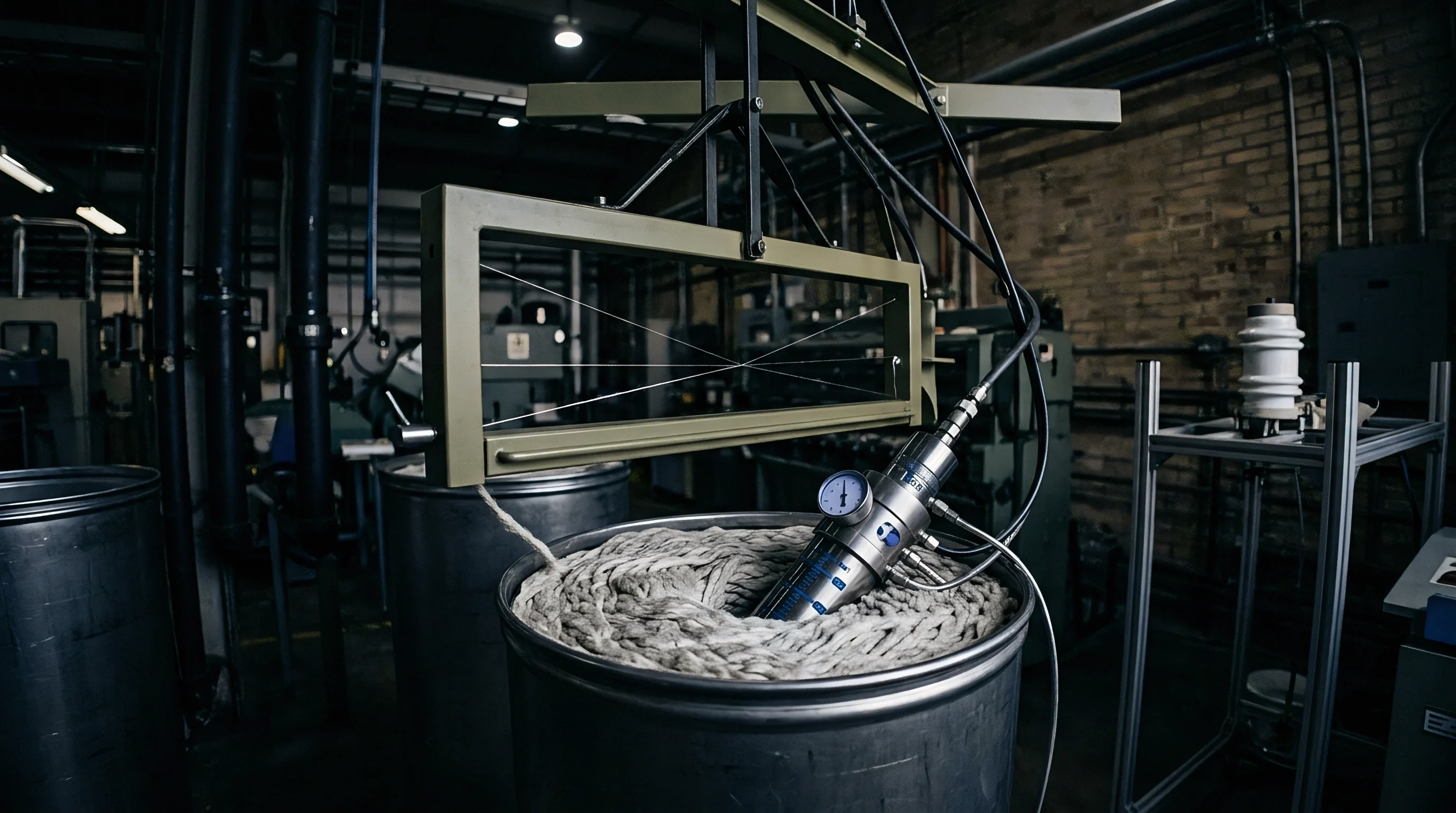
The Advanced Fiber Information System (AFIS) uses optical sensors to evaluate individual fibres suspended in an airflow stream. As individual fibres pass through an optical detection zone, LED light sensors capture scattering profiles that define cross-sectional dimension, shape, and light attenuation. AFIS software converts these optical signals into distributions of fibre maturity ratio, degree of cell wall thickening theta, and immature fibre content (IFC) percentage.
Pectins coat outer primary walls. Lumen area decreases during ripening. In mature cotton, secondary cellulose deposition fills the inner lumen, increasing the degree of cell wall thickening theta to values above 0.50.
In immature cotton, secondary cellulose deposition stops early, leaving large lumen areas and theta values below 0.30. AFIS testing highlights small populations of immature fibres that pass undetected through composite double-compression airflow tests. High immature fibre content percentages correlate directly with nep generation during carding and comber lap preparation.
Cross Sectional Microscopy Standard ASTM D1442
Microscopic analysis of swollen cotton fibres remains the reference calibration standard for maturity measurement under ASTM D1442. Fibres are immersed in an 18 percent sodium hydroxide (NaOH) solution, causing secondary cell wall cellulose to swell and reversing natural fibre convolution. Operators view swollen fibres under optical magnification to classify them into mature ribbons with collapsed lumens or immature ribbons with broad lumens and thin translucent walls.
Cross-sectional image analysis under ISO 16565 automates this reference method, measuring precise wall area and perimeter geometry across thousands of sliced fibre cross-sections.
Standard ISO 10306 mandates double-pressure air permeability measurement to separate linear density from wall development before setting comber waste allocation.
Integrating optical maturity testing into combed sliver preparation protocols enables precision raw material sorting. Raw cotton lots exhibiting high immature fibre content percentages can be diverted into carded coarse yarn production where comber waste costs are avoided and dye appearance requirements are less stringent. Standard ISO 10306 specifies double compression testing conditions that alter dispute rights when sliver maturity falls below declared contract thresholds.

Lap
Combed sliver preparation relies on uniform lap formation to feed high-speed combing heads. Carded slivers undergo pre-draw frame drafting before lap formers combine multiple sliver ends into a condensed, smooth lap roll. Drafting forces within pre-draw frames and lap formers depend on inter-fibre friction and fibre crimp recovery.
Fine mature fibres move smoothly past one another during drafting, producing stable web structures. Immature fibres, possessing low structural mass and irregular cross-sectional shapes, create variable inter-fibre friction. Neps survive drawing operations.
When immature coarse fibres enter the lap preparation stage, low flexural rigidity causes web sagging and lap licking. Lap licking occurs when adjacent layers on a lap roll adhere to one another during unwinding at the comber feed table, causing drafting waves and sliver weight variation. Quantifying the financial impact of processing immature cotton requires evaluating total combed sliver yield, comber noil waste volume, and yarn quality parameters across controlled production lots.
Consider a worked scenario analyzing a 20,000 kilogram raw cotton lot processed through comber preparation under two structural fibre profiles, both presenting an identical Micronaire value of 4.00. Lot A consists of fine mature cotton with a linear density of 135 millitex and a maturity ratio of 0.92. Lot B consists of coarse immature cotton with a linear density of 180 millitex and a maturity ratio of 0.68.
Processing assumptions establish a target yarn count of Ne 40 combed hosiery yarn, a baseline comber nipper setting targeting 14.0 percent waste on Lot A, and raw cotton costs of $2.20 per kilogram.
| Operational Metric | Lot A (Fine Mature) | Lot B (Coarse Immature) | Divergence Variance |
|---|---|---|---|
| Raw Material Input Mass (kg) | 20,000 | 20,000 | 0 |
| Comber Noil Waste Percentage (%) | 14.0% | 19.5% | +5.5% |
| Total Combed Sliver Output (kg) | 17,200 | 16,100 | -1,100 |
| AFIS Nep Count in Sliver (neps/g) | 45 | 185 | +140 |
| Rotor/Ring Yarn Tenacity (cN/tex) | 18.5 | 14.2 | -4.3 |
| Finished Fabric White Specks (per m²) | 2 | 38 | +36 |
| Direct Fiber Cost per Sliver kg ($) | $2.56 | $2.73 | +$0.17 |
Processing Lot B increases comber noil extraction by 5.5 percentage points due to high fibre fragmentation under circular comb needles. The mill loses 1,100 kilograms of spinnable combed sliver from the 20,000 kilogram input lot. Direct fiber cost per kilogram of combed sliver increases from $2.56 to $2.73, representing a 6.6 percent cost penalty on raw material alone.
Noil rates escalate rapidly.
Yarn quality metrics show parallel degradation. Combed sliver produced from Lot B exhibits a four-fold increase in AFIS nep count, rising from 45 neps per gram to 185 neps per gram. Yarn tenacity drops from 18.5 cN/tex to 14.2 cN/tex because thin-walled immature fibres contribute less structural strength under tensile stress.
Finished knitted fabric produced from Lot B shows 38 white specks per square meter after reactive dyeing, exceeding acceptable commercial thresholds for apparel production.
Coarse immature cotton resists dye. Preventing these cost penalties requires implementing a rigorous decision checklist during raw material qualification for combed sliver preparation:
- Fineness Verification checks gravimetric fineness against target yarn count spinning limits before blending incoming cotton bales.
- Maturity Threshold Definition mandates a minimum AFIS maturity ratio M of 0.85 for all lots allocated to fine combed yarn counts.
- Comber Waste Adjustment recalibrates nipper distance and top comb depth when double-compression airflow tests indicate reduced maturity ratios.
- Sliver Uniformity Audit measures carded and combed sliver mass variation to detect lap licking and drafting waves early in preparation.
At a maturity ratio below 0.75, double-compression airflow testing indicates a thirty percent increase in short fibre accumulation during nipper transit.
Managing lap preparation parameters without isolating maturity from fineness leaves spinning mills vulnerable to sudden profit losses. Increased comber waste, reduced machine efficiency, and customer claims over fabric dye specks far outweigh the laboratory testing costs required to differentiate linear density from secondary wall thickness. Misclassifying immature coarse lots as fine mature cotton results in severe comber yield loss, elevated neppiness, and permanent shade variation across dyed finished cloth.

Clause
Commercial cotton trading contracts traditionally specify Micronaire ranges using standard international rules, such as those governed by the International Cotton Association (ICA) or the International Textile Manufacturers Federation (ITMF). Standard contract clauses penalize raw cotton deliveries falling outside specified Micronaire bands, typically applying price discounts for values below 3.5 or above 4.9. Standard contract clauses fail to protect spinning mills against immature coarse cotton because composite Micronaire readings hide low maturity ratios behind high linear densities.
Mill technical buyers must write explicit maturity ratio thresholds and gravimetric fineness tolerances directly into raw cotton purchase specifications. Contracts targeting combed sliver production require clauses that specify minimum maturity ratios measured by double-compression airflow under ISO 10306 or optical testing under ASTM D5840. Banning raw cotton lots with maturity ratios below 0.82 prevents high comber noil waste and eliminates dye speck rejections in downstream knitwear.
Defining clear rejection thresholds and commercial arbitration procedures within procurement contracts protects landed cost structures. When an incoming raw cotton lot meets agreed Micronaire specs but fails minimum maturity ratio limits, the buyer retains rights to reject the lot, demand replacement bales, or apply price adjustments based on verified comber yield loss. Laboratory test dossiers containing AFIS maturity distributions, double-compression fineness figures, and cross-sectional image analysis provide authoritative evidence during commercial dispute resolution.
Bale-room classers must audit raw cotton arrivals systematically, drawing sample coupons across lot positions to verify maturity consistency. Landed cost calculations must factor in potential comber waste variance when evaluating low-cost raw cotton offers. A cheaper raw cotton lot exhibiting low maturity ratios frequently generates higher final sliver costs per kilogram than a premium lot possessing uniform, fully developed secondary cell walls.
Suppliers frequently claim that standard single compression airflow testing satisfies contract delivery terms whenever secondary cell wall thickness is not explicitly specified.