Standardizing Moisture Regain Adjustments for Regenerated Cellulosic Tariff Classifications
Standardizing cellulosic regain adjustments transforms ambient transit weight to official commercial mass, locking correct Harmonized System tariff classifications.

Swell
Regenerated cellulosic fibres absorb atmospheric moisture through available hydroxyl sites within their amorphous polymer structure. Unlike fully synthetic filaments with near-zero moisture regain, viscose rayon, modal, lyocell, and cupro have substantial sorption capacities. Because physical mass in a bale, yarn package, or fabric roll fluctuates with relative humidity and temperature, trading these materials by raw weight creates unstable commercial figures.
Standardized moisture regain adjustments establish a reliable baseline for net transactional mass regardless of transport or storage conditions.

Thermodynamic Sorption in Cellulosic Polymers
Rayon filament and staple yarns exchange water vapor with ambient air until reaching equilibrium. Compared to natural cotton, regenerated cellulose has a lower degree of polymerization and a larger volume of amorphous regions. This molecular arrangement exposes more free hydroxyl groups for hydrogen bonding.
Absorption takes place in two phases: primary bound water attached directly to hydroxyl sites, and secondary liquid water condensed inside the fibre’s capillary spaces.
These exposed hydroxyl sites drive continuous water binding at the molecular level.
Moisture absorption alters physical dimensions alongside linear density. As water penetrates the amorphous matrix, the fibre cross-section expands, adding mass while lowering dry tenacity. Lyocell swells less than conventional viscose because of its highly oriented crystalline structure, though its baseline regain remains far higher than that of synthetics.
The table below summarizes standard moisture regain rates across major regenerated cellulosics and common blend partners under international commercial conventions including ISO 6741 and ASTM D1909.
| Fibre Type | Polymer Structure | ISO 6741 Regain Rate (%) | ASTM D1909 Regain Rate (%) | Commercial Allowance (%) |
|---|---|---|---|---|
| Viscose Rayon | Regenerated Cellulose (Xanthate Process) | 13.00 | 11.00 | 13.00 |
| Modal | High Wet Modulus Regenerated Cellulose | 13.00 | 11.00 | 13.00 |
| Lyocell | Solvent-Spun Regenerated Cellulose | 11.50 | 11.50 | 11.50 |
| Cupro | Cuprammonium Regenerated Cellulose | 12.50 | 12.50 | 12.50 |
| Acetate | Cellulose Acetate Ester | 9.00 | 6.50 | 9.00 |
| Triacetate | Cellulose Triacetate Ester | 7.00 | 3.50 | 7.00 |
| Cotton (Scoured) | Natural Native Cellulose | 8.50 | 8.50 | 8.50 |
| Polyester (PET) | Synthetic Synthetic Ester | 1.50 | 1.50 | 1.50 |

Standard Moisture Regain Allowances across Fibres
International standards set fixed percentage additions to oven-dry mass to determine official net weight. Commercial mass is calculated by multiplying oven-dry mass by one plus the official regain rate (expressed as a decimal). For pure viscose, standardizing bodies apply a 13.00 percent allowance to scoured dry mass.
By comparison, polyester carries an official allowance of just 1.50 percent, and combed cotton sits at 8.50 percent.
Commercial regain rates are agreed contract baselines rather than exact snapshots of instantaneous moisture. On a mill floor, ambient moisture content can swing between 6.00 percent and 16.00 percent depending on climate control. Converting physical weight into a standardized dry-plus-allowance mass eliminates this volatility, providing certainty during invoicing and transit billing.
Viscose staple fibre retains a standardized commercial moisture regain allowance of 13.00 percent under ISO 6741-1 reference conditioning.
In practice, a higher amorphous fraction leads to a wider adjustment spread during customs laboratory testing.

Heading
Customs classification under the Harmonized System relies on composition thresholds where slight weight shifts change tax liabilities. Chapter 54 covers continuous man-made filaments, and Chapter 55 covers synthetic and artificial staple fibres. Under standard customs interpretation, the chief weight rule assigns classification to whichever textile material predominates by weight over any other single component in the blend.
Regain adjustments directly shift these calculated mass fractions, deciding whether a fabric falls under an artificial cellulosic heading or a natural fibre heading.

Where Does Commercial Regain Shift Landed Duty?
Tariff schedules in Chapters 54 and 55 set strict weight boundaries for regenerated filament and staple fabrics. Heading 5516 covers woven fabrics of artificial staple fibres, requiring 85.00 percent or more artificial staple by weight, or chief weight status in a blend. If an unadjusted ambient test registers viscose content at 49.50 percent and cotton at 50.50 percent, the shipment defaults to Chapter 52 cotton headings.
Applying official regain corrections recalculates the mass ratio, pushing the viscose weight past the 50.00 percent threshold.
Determining chief weight ultimately dictates which duty line applies.
Customs authorities verify these weight fractions during border inspections.
Duty rates differ sharply between natural and man-made fibre classifications. A woven fabric dominated by cotton might enter under a 5.00 percent ad valorem rate, whereas the exact same cloth classified as an artificial staple fabric under Heading 5516 could face a 12.00 percent rate plus specific anti-dumping duties. Relying on raw ambient mass during entry leaves importers vulnerable to reclassification assessments, duty reclaims, and penalties.
Quantitative Tariff Thresholds in Blend Fabrics
A nominal 50/50 blend of viscose and polyester creates classification ambiguity during border inspections. Unconditioned ambient weighing reflects ambient humidity rather than true polymer mass ratios. Because viscose absorbs over eight times more water than polyester, high humidity artificially inflates the apparent weight percentage of the viscose component.
The table below demonstrates how adjusting dry mass with standard moisture regain allowances alters the declared weight percentage and final HS tariff classification for a nominal 50/50 Viscose/Polyester woven blend.
| Calculation Basis | Measured Viscose Mass (g) | Measured Polyester Mass (g) | Viscose Mass Fraction (%) | Polyester Mass Fraction (%) | Governing HS Heading |
|---|---|---|---|---|---|
| Ambient Weight (85% RH High Moisture) | 56.50 | 50.75 | 52.68 | 47.32 | 5516 (Artificial Staple) |
| Ambient Weight (35% RH Dry Climate) | 52.50 | 50.25 | 51.09 | 48.91 | 5516 (Artificial Staple) |
| Oven-Dry Mass (0.00% Moisture) | 50.00 | 50.00 | 50.00 | 50.00 | Borderline / Dispute Threshold |
| Commercial Mass (ISO 6741 Regain applied) | 56.50 (50g x 1.13) | 50.75 (50g x 1.015) | 52.68 | 47.32 | 5516 (Artificial Staple) |
| Customs Standard Regain (Cotton/Viscose 50/50 Dry) | 50.00 dry (+13% = 56.50) | 50.00 dry Cotton (+8.5% = 54.25) | 51.02 (Viscose) | 48.98 (Cotton) | 5516 (Viscose Chief Weight) |
Apparent blend ratios shift dynamically with environmental exposure.
The following failure modes illustrate common customs classification breakdowns occurring when parties omit formal regain standardization during import entries:
- Unadjusted Scale Entry submitting raw bill of lading scale weights directly to customs entry software without conducting oven-dry moisture corrections, triggering automatic reclassification upon border audit sampling.
- Asymmetric Regain Application applying standard moisture regain allowances to the regenerated cellulosic portion while omitting regain corrections on the synthetic or natural blend partner, distorting the chief weight fraction.
- Unscoured Dry Weighing calculating dry mass prior to removing non-cellulosic spin finishes, knitting oils, and sizing waxes, which adds unrepresentative mass to one specific fibre component.
- Standard Mismatch Selection utilizing ASTM D1909 regain allowances (11.00 percent for viscose) for customs entry declarations in jurisdictions that legally enforce ISO 6741-1 allowances (13.00 percent), producing a 2.00 percent mass variance.
Laboratory test results ultimately control tariff outcomes.
Customs authorities enforce duty assessments on commercial mass rather than ambient receiving scale weights.
Filing customs entries without standardizing moisture regain adjustments risks immediate cargo detention, retroactive reclassification, and statutory penalties for misdeclared weight ratios.
Desiccation
Laboratory mass determination begins by extracting all free water under controlled thermal drying. ISO 6741-1 and ASTM D2495 specify procedures for establishing the oven-dry mass of textile samples. Drying specimens to constant mass in ventilated ovens removes environmental moisture variables, while scouring protocols beforehand remove non-cellulosic additives that would skew true fibre readings.

Standardized Oven Drying Operating Sequence
Accredited laboratories condition bulk yarn and fabric samples through precise steps. Ventilated drying ovens operate at 105 degrees Celsius plus or minus 2 degrees Celsius. Airflow continuously replaces moisture-laden air with dry fresh air, driving off capillary and bound water without damaging the cellulosic backbone.
Proper oven drying drives out all uncombined water molecules.
The standardized sequence for determining oven-dry commercial mass follows established testing laboratory operations:
- Draw representative bulk test specimens from multiple locations within the shipment lot, ensuring sampling avoids outer packaging layers exposed to ambient moisture extremes.
- Seal drawn samples immediately inside air-tight glass or metal weighing containers to preserve instantaneous receiving mass prior to initial laboratory weighing.
- Perform quantitative solvent extraction using dichloromethane or petroleum ether to remove spin finishes, lubricants, and sizing additives.
- Scour extracted specimens in mild aqueous non-ionic detergent solutions to remove residual water-soluble processing aids, followed by thorough distilled water rinsing.
- Place scoured specimens inside ventilated drying ovens maintained at 105 degrees Celsius plus or minus 2 degrees Celsius until achieving constant mass, defined as less than 0.05 percent mass change between consecutive weighings spaced twenty minutes apart.
- Transfer dried specimens directly to desiccators containing active silica gel or weigh specimens inside the oven chamber using integrated electronic balances with automatic buoyancy corrections.
- Calculate oven-dry scoured mass and apply standardized commercial moisture regain percentage allowances according to the specified governing standard.
Scouring and Non-Cellulosic Mass Correction
Unextracted spin finishes, knitting oils, and residual sizing artificially inflate dry weight. Regenerated cellulosic staple fibres carry up to 1.00 percent by weight of lubricating spin finishes applied during extrusion and crimping, while woven fabrics can contain up to 8.00 percent size paste made of starches, polyvinyl alcohol, and waxes.
Thorough scouring strips away non-cellulosic waxes and oils.
Chemical scouring isolates pure polymer mass. Without solvent extraction and hot water scouring, non-cellulosic additives register as dry fibre weight. In quantitative blend separations under ISO 1833, unextracted sizing alters solvent dissolution rates, resulting in inaccurate dry mass ratios.
Clean scoured dry mass is the only legally defensible basis for applying commercial moisture regain percentages.
ISO 6741-1 fixes commercial mass by applying official moisture regain rates directly to scoured oven-dry weight.
Shipping weight discrepancies frequently arise when ambient factory weights are treated as matching contract values despite unconditioned transport and storage.
Disparity
Discrepancies between shipping invoices and import declarations frequently stem from conflicting moisture correction protocols. When an exporter invoices cloth based on ambient weight in a humid manufacturing region and an importer files entry based on dry mass testing in an arid port, friction is inevitable. That friction worsens when customs laboratories return blend ratios that contradict origin certificates because of differing analytical methods.
Moisture Hysteresis and Transit Conditioning Shifts
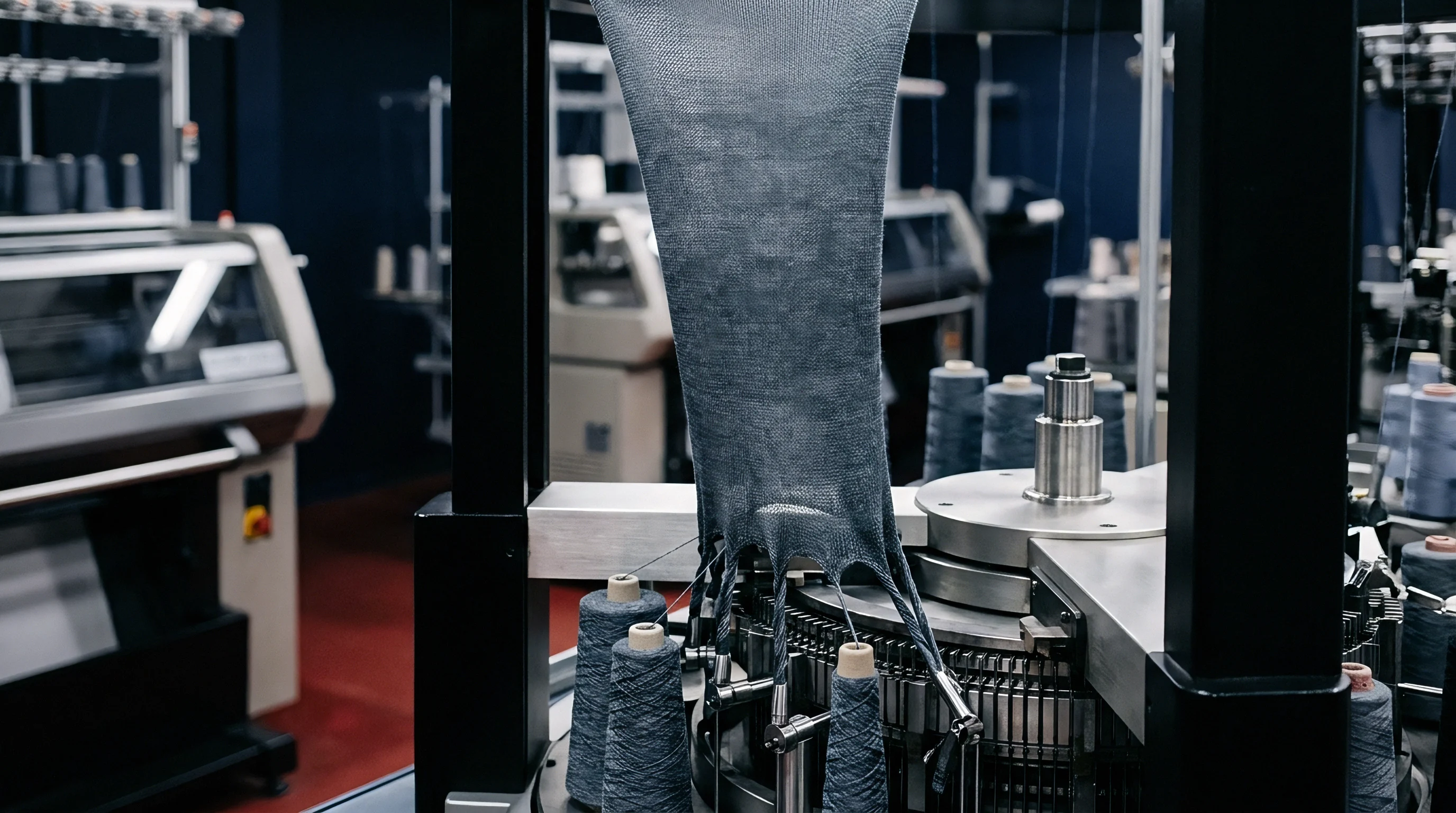
Textiles absorb and desorb water along different equilibrium paths during transit. Their moisture regain curve exhibits structural hysteresis: a yarn sample conditioning down from a wet state retains higher moisture content at 65 percent relative humidity than an identical sample conditioning up from an oven-dried state. Ocean containers experience humidity spikes up to 95 percent relative humidity, causing regenerated cellulosic rolls to absorb substantial water through porous packaging.
This sorption hysteresis introduces persistent gaps between shipping and receiving weights.
Lyocell absorbs less water than viscose under identical humidity conditions.
Weight changes in transit do not alter the cargo’s dry polymer content. A 20-tonne shipment of viscose yarn loaded at 8.00 percent moisture can gain up to 1.00 tonne of water weight during a humid voyage. If customs assesses duties on gross arrival weight without applying moisture regain adjustments, the importer pays duty on seawater vapor.
Conversely, dry transit causes weight loss, raising suspicions of short shipments when receiving scales read below invoice figures.

Chemical Separation Tolerances in Customs Audits
Quantitative analysis under ISO 1833 uses selective solvent dissolution to isolate regenerated cellulosics. In a viscose-wool blend, cold concentrated sodium hydroxide dissolves viscose while leaving wool intact. In a viscose-polyester blend, 75.00 percent mass fraction sulfuric acid dissolves the viscose, leaving an insoluble polyester residue.
Every analytical method carries an inherent tolerance limit. ISO 1833 specifies a confidence band of plus or minus 1.00 percent to 2.00 percent for quantitative separation of binary blends. When customs tests entry samples, results falling within these published limits cannot legally justify misclassification claims.
Documenting compliance requires clear audit verification across the procurement chain.
Clear contractual terms prevent disputes when audit results are analyzed.
The following audit verification checklist outlines critical operational checkpoints for resolving weight and composition discrepancies between suppliers, importers, and customs authorities:
- Dual Laboratory Verification executing parallel ISO 1833 chemical dissolution tests on split samples drawn from the identical lot location to establish inter-laboratory precision.
- Commercial Regain Standard Alignment verifying that contract documentation, shipping invoices, and customs filings explicitly specify identical regain standards such as ISO 6741-1.
- Scoured Mass Baseline Validation confirming that oven-dry calculations reflect clean scoured dry weight rather than raw unscoured dry weight.
- Hysteresis Adjustment Protocol documenting whether test samples underwent preliminary pre-drying prior to standard lab atmosphere equilibration to eliminate hysteresis mass variance.
Hydrophilic blend partners absorb ambient water faster than synthetics during ocean shipping, skewing unadjusted receiving weights.
What margin of laboratory mass tolerance remains acceptable when border institutions apply dry mass chemical separation to regenerated cellulosic blend fabrics?


Ledger
Commercial contracts and import dossiers require explicit alignment between moisture regain conventions and financial terms. Buying bulk regenerated cellulosic yarn or fabric without defining moisture correction rules exposes buyers to implicit price inflation. Standardizing regain adjustments on invoices secures precise landed costs per linear metre and prevents border disputes.

Worked Financial Sensitivity of Regain Corrections
Consider a twenty-tonne shipment of woven cloth declared as a nominal 50/50 staple blend of Modal and combed cotton, contracted at 4.50 USD per kilogram based on official commercial mass. Due to marine humidity, the shipment arrives with an ambient weight of 20,000 kilograms and unconditioned moisture contents of 14.00 percent for Modal and 9.50 percent for cotton.
Duty rate differences between these tariff lines can alter total landed cost significantly.
Laboratory chemical separation isolates 9,700 kilograms of clean dry Modal polymer and 9,700 kilograms of clean dry cotton polymer ~ a true 50/50 dry mass ratio. Applying official commercial regain allowances (13.00 percent for Modal, 8.50 percent for cotton) recalculates the statutory commercial mass. Modal commercial mass equals 9,700 kilograms multiplied by 1.130, yielding 10,961 kilograms.
Cotton commercial mass equals 9,700 kilograms multiplied by 1.085, yielding 10,524.5 kilograms. Total billable commercial mass comes to 21,485.5 kilograms.
Under this standardized calculation, Modal represents 51.01 percent of the commercial weight (10,961 / 21,485.5) and cotton 48.99 percent. Modal takes chief weight status, placing the shipment under HS Heading 5516 at a 12.00 percent ad valorem duty rate. If customs ignores regain standards and assesses duty on dry mass alone (a 50/50 ratio), the importer might initially see a lower 5.00 percent rate under Chapter 52, but faces under-declaration penalties during post-clearance audits.
The table below provides a detailed financial breakdown comparing three moisture assessment methodologies for a 20,000 kg nominal Modal/Cotton shipment.
| Assessment Basis | Modal Mass (kg) | Cotton Mass (kg) | Chief Weight Status | HS Heading | Customs Duty Rate (%) | Landed Duty Cost (USD) |
|---|---|---|---|---|---|---|
| Ambient Arrival Mass (High Moisture) | 10,280 | 9,720 | Modal (51.40%) | 5516 (Artificial Staple) | 12.00 | 10,800.00 |
| Oven-Dry Scoured Mass (0.00% Regain) | 9,700 | 9,700 | Equal (50.00%) | 5211 (Cotton Blend) | 5.00 | 4,365.00 |
| Standard Commercial Mass (ISO 6741) | 10,961 | 10,524.50 | Modal (51.01%) | 5516 (Artificial Staple) | 12.00 | 11,602.17 |
Contractual Moisture Standard Clauses
Purchase specifications should establish precise adjustment parameters before yarn extrusion or loom setup. Standard commercial contracts require clear clauses governing weight settlement, moisture testing methods, and customs declaration adjustments.
ASTM D1909 commercial regain standards govern dry mass adjustments to prevent tariff reclassifications at import borders.
Commercial contracts specify: “All invoice charges, net shipping mass determinations, and customs entry weight declarations shall be calculated based on Commercial Mass in accordance with ISO 6741-1, applying official moisture regain allowances of 13.00 percent for viscose/modal and 8.50 percent for combed cotton to clean oven-dry scoured weight, overriding unconditioned ambient receiving weights.”