ISO 14184 Water Extraction Specimen Preparation and Analysis
ISO 14184-1 quantifies water-extractable formaldehyde via 40 °C leaching and 412 nm colorimetry, requiring dimedone validation to prevent false positives.

Flask
Thermal extraction of uncrosslinked aldehydes into aqueous solution forms the foundation of standard chemical compliance testing for finished cloth. Under ISO 14184-1, the process isolates water-extractable formaldehyde, which includes both free monomeric formaldehyde dissolved in the fiber moisture and formaldehyde released through the partial hydrolysis of weak ether bonds in N-methylol crosslinking agents. Mills applying dimethyloldihydroxyethyleneurea or urea-formaldehyde resins to cellulosic weaves frequently leave unreacted finish residues on the yarn surface.
Submerging a prepared fabric sample in high-purity water at a controlled temperature of forty degrees Celsius dissolves these loose residues without inducing the aggressive chemical breakdown of fully cured polymer structures that occurs during steam distillation or strong acid digestion.
Mechanism of Water-Soluble Formaldehyde Liberation
The extraction kinetics depend on maintaining a strict liquor ratio of one gram of textile material to one hundred milliliters of grade three or grade one deionized water. The extraction vessel, typically a two-hundred-and-fifty milliliter volumetric flask equipped with a ground-glass stopper, sits in a thermostatically controlled water bath for exactly sixty minutes. Gentle, continuous mechanical shaking at a frequency of thirty oscillations per minute prevents static boundary layers from forming around the textile swatches, accelerating the transfer of solute from the interior pore structure of the yarn into the bulk liquid phase.
Lower water temperatures yield incomplete dissolution of unreacted monomer, artificially suppressing the calculated chemical content. Temperatures above forty-two degrees Celsius trigger accelerated hydrolysis of the finished resin matrix, releasing formaldehyde that would not migrate under normal wear or storage conditions.
Incubation at 40 degrees Celsius liberates free formaldehyde alongside weak acid-labile methylol adducts without degrading fully cured durable press resins.
Nash Reagent Chemistry and Chromophore Formation
Quantification of the extracted aldehyde relies on Hantzsch reaction chemistry using acetylacetone reagent, historically termed Nash reagent. The reagent mixture consists of one hundred and fifty grams of ammonium acetate, three milliliters of glacial acetic acid, and two milliliters of freshly distilled acetylacetone dissolved in one liter of deionized water. Combining five milliliters of the filtered aqueous fabric extract with five milliliters of acetylacetone reagent creates a liquid system buffered to a pH between 5.5 and 6.5.
Heating this mixture in a closed tube at forty degrees Celsius for thirty minutes drives the condensative reaction between two molecules of acetylacetone, one molecule of dissolved formaldehyde, and ammonium ions derived from ammonium acetate. This reaction forms 3,5-diacetyl-1,4-dihydrolutidine, a stable luteole-yellow chromophore displaying a sharp light absorption peak centered at four hundred and twelve nanometers.
Reaction kinetics demand precise thermal governance during chromophore development. Cooling the reaction tubes in a cold-water bath protected from direct sunlight for thirty minutes stabilizes the optical intensity. Light exposure degrades the diacetyldihydrolutidine molecule, causing absorbance drift during high-throughput laboratory runs.
Dyehouse technicians frequently maintain that elevated readings originate entirely from ambient warehouse absorption rather than residual resin reactants in the fabric matrix.
Specimen
Accurate mass measurement requires immediate isolation of cut textile swatches to prevent volatile loss into ambient laboratory air. Formaldehyde possesses a high vapor pressure at room temperature. Exposed fabric samples rapidly off-gas unreacted formaldehyde into the surrounding atmosphere, causing severe negative measurement bias.
Technicians must draw specimens from the middle third of a fabric roll, discarding the outer two meters of the roll head and avoiding areas within ten centimeters of the selvedge. The laboratory environment must maintain controlled relative humidity and temperature, but specimens designated for volatile aldehyde analysis must never undergo open-air conditioning prior to extraction.
Sampling Protocols and Moisture Content Adjustment
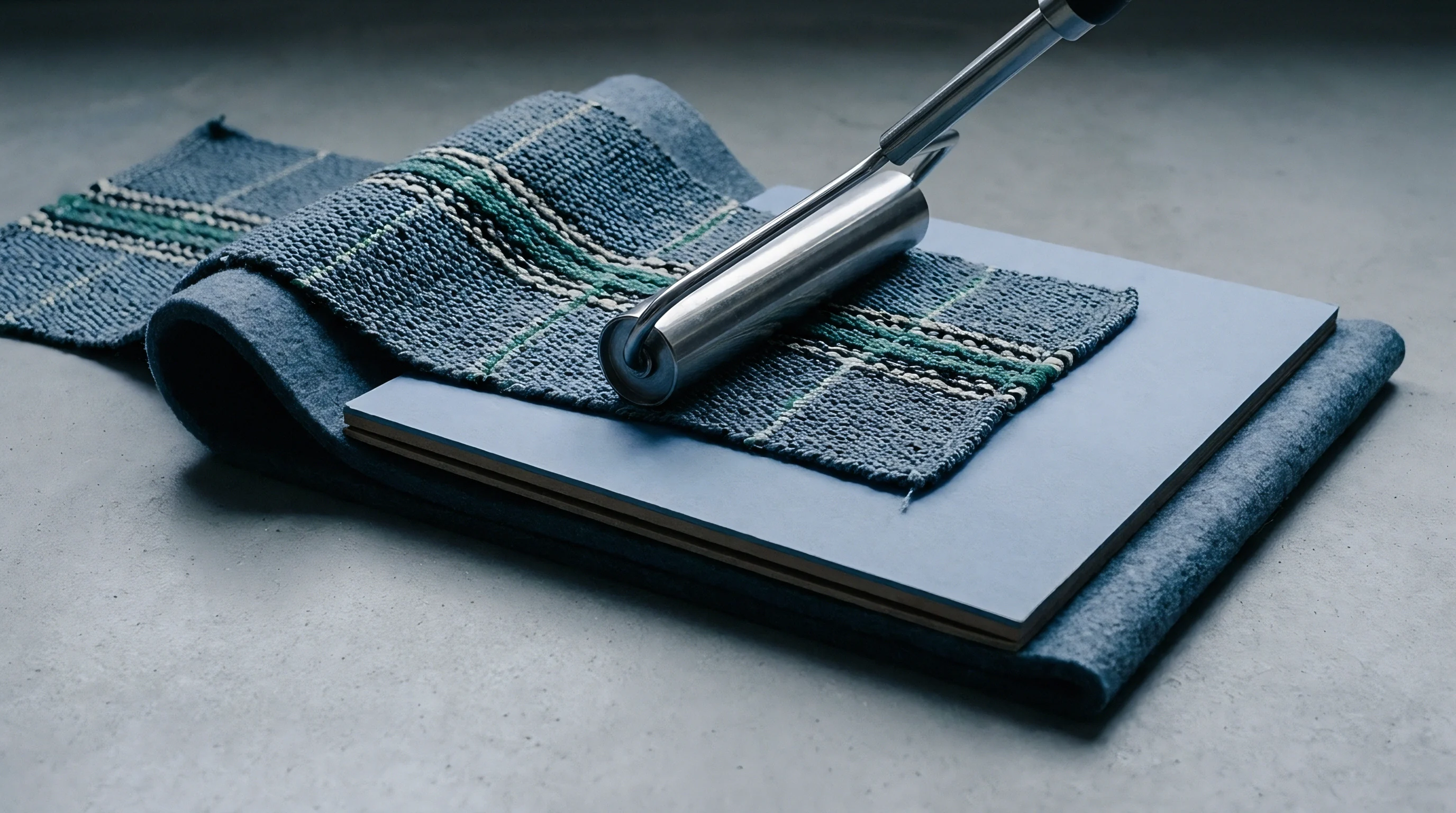
Operators cut representative swatches into small squares measuring approximately five millimeters by five millimeters using clean stainless steel shears. Cutting the fabric into uniform fragments maximizes the surface area exposed to the extraction liquor while preventing dense yarn bundles from shielding internal fiber channels. A test specimen mass of exactly one gram, weighed on an analytical balance to an accuracy of one milligram, provides the standard analytical baseline.
Because chemical limits are expressed on a dry fabric mass basis, a secondary swatch weighed simultaneously undergoes moisture determination according to ISO 6330 or ISO 139 drying protocols to calculate the moisture adjustment factor.
| Fiber Type | Cutting Dimensions | Target Sample Mass | Moisture Balance Protocol | Extraction Vessel Type |
|---|---|---|---|---|
| Cotton Woven | 5 mm x 5 mm | 1.00 g ± 0.01 g | Oven dry at 105 °C | 250 mL stoppered flask |
| Viscose Knit | 5 mm x 5 mm | 1.00 g ± 0.01 g | Desiccator dry over silica gel | 250 mL stoppered flask |
| Polyester/Cotton Blend | 5 mm x 5 mm | 1.00 g ± 0.01 g | Oven dry at 105 °C | 250 mL stoppered flask |
| Wool Outerwear | 10 mm x 10 mm | 2.00 g ± 0.01 g | Standard conditioning 20 °C / 65% RH | 500 mL stoppered flask |
Handling Volatile Losses Prior to Extraction
Errors in specimen handling ruin chemical compliance compliance files long before the test solution touches a spectrophotometer cuvette. Fabric swatches harvested at the finishing mill must be sealed immediately in airtight polyethylene bags or aluminum-foil-laminated barrier pouches. Storing samples in loose paper envelopes allows volatile gas transfer, turning a non-compliant fabric lot into a false-pass lab result within forty-eight hours.
A specimen left uncovered on a laboratory bench for thirty minutes loses up to forty percent of its unreacted formaldehyde content through surface evaporation.
Deviations in handling compromise compliance audits. Laboratory procedures must enforce tight containment timing to defend testing integrity.
- Vapor Evaporation Drift occurs when swatches rest exposed on cutting tables, driving unreacted formaldehyde off-gas levels down before initial flask immersion.
- Moisture Oversaturation Bias distorts dry-weight calculations when humid swatches undergo mass determination without parallel moisture balance corrections.
- Cross-Contamination Flux occurs when low-formaldehyde knit swatches sit adjacent to resin-treated woven rolls inside unsealed storage bins.
- Edge Effect Distortion happens when operators harvest swatches directly from exposed roll selvedges where atmospheric exchange alters local chemical concentrations.
Conditioning swatches in open air before sealing guarantees false low readings on volatile finishing agents.

Spectrometry
Colorimetric quantification relies on measuring light attenuation through the lutidine derivative at a narrow spectral wavelength. Spectrophotometers must feature a spectral bandwidth of two nanometers or narrower, equipped with matched glass or quartz cuvettes having a path length of ten millimeters or fifty millimeters. Path length choice depends on expected chemical concentration; low-concentration samples below twenty milligrams per kilogram demand fifty-millimeter cuvettes to amplify optical density readings above background instrument noise.
Calibration Construction and Iodometric Standardization
Building an accurate spectrophotometric calibration curve requires standardized stock solutions. Concentrated stock formaldehyde solution, prepared from thirty-seven percent commercial formalin, undergoes precise concentration verification via iodometric titration. In this assay, an aliquot of stock solution reacts with an excess of standard iodine solution in an alkaline medium, forming sodium hypoiodite which oxidizes formaldehyde to formic acid.
Acidifying the system liberates unreacted iodine, which technicians titrate against standard sodium thiosulfate using a starch indicator solution.
Diluting the standardized stock yields working standard solutions ranging from zero point two to four point zero micrograms of formaldehyde per milliliter. Reacting five milliliters of each working standard with five milliliters of acetylacetone reagent under identical thermal conditions generates a linear calibration curve. The slope of the line, plotted as absorbance on the vertical axis against formaldehyde mass in micrograms on the horizontal axis, yields the response factor used in calculation.
Worked Analysis of Absorbance and Extraction Arithmetic
Consider a 100% cotton woven shirting fabric submitted for verification under OEKO-TEX Standard 100 Class I requirement (
Assume the following parameters and empirical values:
Sample dry mass (m): 1.025 grams. Extraction liquor volume (V): 100 milliliters. Filtrate volume taken for reaction: 5.0 milliliters.
Acetylacetone reagent volume added: 5.0 milliliters. Cuvette optical path length: 10 millimeters. Wavelength: 412 nanometers.
Measured optical absorbance of sample extract reaction mixture (A_sample): 0.142. Measured optical absorbance of reagent blank (A_blank): 0.018. Measured optical absorbance of fabric background blank (A_fabric): 0.005.
Linear calibration slope (S): 0.125 absorbance units per microgram of formaldehyde in the 10 mL total reaction volume.
The net corrected absorbance (A_net) isolates true chemical signal from reagent and background fabric dye interference:
A_net = A_sample – A_blank – A_fabric A_net = 0.142 – 0.018 – 0.005 = 0.119
Using the calibration slope (S), calculate the mass of formaldehyde (w) in micrograms present within the five-milliliter filtrate aliquot:
w = A_net / S w = 0.119 / 0.125 = 0.952 micrograms
Multiply by the extraction scaling factor (V / 5.0) to determine total formaldehyde content in the one-hundred-milliliter extract flask:
Total formaldehyde in extract = 0.952 micrograms (100 / 5.0) = 19.04 micrograms
Express the final concentration (F) in milligrams of formaldehyde per kilogram of dry fabric (mg/kg):
F = Total formaldehyde mass (micrograms) / Sample dry mass (grams) F = 19.04 / 1.025 = 18.575 mg/kg
Rounding to the standard reporting convention gives eighteen point six milligrams per kilogram. This value exceeds the sixteen milligram per kilogram threshold for infant wear, triggering an automatic compliance failure for product allocation to Class I.
ISO 14184-1 Clause 8.2 dictates that absorbance values exceeding the linear calibration ceiling force a immediate ten-fold dilution of the aqueous extract.

Dimedone
Distinguishing targeted aldehydes from background dye extraction or competing organic compounds demands a secondary chemical confirmation step. High optical absorbance at four hundred and twelve nanometers does not instantly prove formaldehyde presence. Yellow dyes, optical brighteners, and unreacted finishing auxiliaries leached into the water bath can absorb light at identical wavelengths, creating false positive compliance breaches.
ISO 14184-1 Annex A introduces the dimedone reagent verification step to confirm aldehyde specificity.

Chemical Precipitation Mechanics under Annex A
Dimedone, known chemically as 5,5-dimethyl-1,3-cyclohexanedione, reacts specifically with formaldehyde in neutral or slightly acidic aqueous media to form an insoluble condensation product, formaldehydedimedone. Adding one milliliter of an ethanol solution containing ten grams per liter of dimedone to five milliliters of the filtered fabric extract precipitates formaldehyde from the solution. Heating the mixture at forty degrees Celsius for ten minutes, followed by cooling, completes the precipitation.
Centrifuging or filtering the treated mixture removes the solid dimedone complex. The remaining liquid phase undergoes standard acetylacetone color development. If the yellow chromophore fails to develop after dimedone treatment, the original optical absorbance stemmed entirely from free formaldehyde.
If yellow coloration persists, background dye interference or non-formaldehyde aldehydes, such as glyoxal or acrolein, generated the initial spectrophotometric signal.
Can Optical Brighteners Void Free Formaldehyde Spectrophotometry?
Fluorescent whitening agents and water-soluble direct dyes present persistent challenges to colorimetric accuracy. Direct blue and direct yellow dyestuffs bleed under forty-degree water bath conditions, shifting baseline liquid absorbance. Spectrophotometric testing without dimedone confirmation frequently flags brightly dyed rayon fabrics as non-compliant despite zero chemical resin content.
Verification protocols eliminate false failures through methodical chemical validation checks.
- Absorbance Peak Verification confirms that peak absorption occurs precisely at four hundred and twelve nanometers rather than across broad blue-spectrum shoulders.
- Reagent Blank Control ensures that ammonium acetate stocks maintain zero contamination from atmospheric laboratory formaldehyde.
- Dimedone Precipitation Screening isolates true formaldehyde from competing non-volatile organic dyes in the water extract.
- Dilution Uniformity Validation checks if optical density decreases linearly when diluting colored fabric extraction solutions.
Reagent blank absorbance exceeding zero point zero two units invalidates the entire analytical sequence and demands fresh ammonium acetate solution.
Whether alternative chromatographic detection methods will fully replace colorimetric confirmation across international customs laboratories remains a point of active technical debate.

Thresholds
Commercial acceptance hinges on meeting strict concentration ceilings established across distinct regulatory jurisdictions and product categories. Formaldehyde limits reflect exposure risks based on direct skin contact, age group vulnerabilities, and potential vapor inhalation. International chemical compliance frameworks impose legal limits that dictate market entry clearance at customs ports worldwide.

Global Limits and Product Classification Matrices
Regulators distinguish sharply between products designed for infants, garments worn in direct contact with skin, and heavy industrial home furnishings. Infant textiles face the strictest constraints due to delicate skin barriers and hand-to-mouth contact risks. Industrial upholstery and decorative drapery carry higher allowances because direct cutaneous transfer remains low.
| Regulatory Body / Standard | Product Category | Maximum Concentration Limit | Reporting LOQ | Test Method Standard |
|---|---|---|---|---|
| Japanese Law 112 | Infant Textiles ( | Not Detectable ( | 16 mg/kg | JIS L 1041 / ISO 14184-1 |
| OEKO-TEX Standard 100 Class I | Baby Outerwear & Sleepwear | 16 mg/kg | ISO 14184-1 | |
| OEKO-TEX Standard 100 Class II | Direct Skin Contact (Shirts/Underwear) | 75 mg/kg | 16 mg/kg | ISO 14184-1 |
| REACH Regulation Annex XVII Entry 72 | Apparel and Footwear | 75 mg/kg | 16 mg/kg | EN ISO 14184-1 |
| OEKO-TEX Standard 100 Class III/IV | No Skin Contact / Decoration | 300 mg/kg | 16 mg/kg | ISO 14184-1 |

Reporting Ceilings and Limit of Quantification Protocols
The standard analytical Limit of Quantification for the water extraction spectrophotometric method stands at sixteen milligrams per kilogram. Analytical results registering below sixteen milligrams per kilogram cannot be quantified with acceptable statistical confidence due to background signal variability. Laboratories report values under this baseline as Not Detectable or below limit of quantification.
Japanese Law 112 enforces an absorbance delta ceiling of zero point zero five units between the sample reaction tube and the control blank, which mathematically corresponds to the sixteen milligram per kilogram reporting cutoff.
REACH Annex XVII Entry 72 mandates a strict seventy-five milligram per kilogram concentration limit for all apparel placed on the European market.
Submitting a shipment containing eighty milligrams per kilogram of extractable formaldehyde results in immediate customs detention and mandatory destruction of the imported merchandise at the buyer’s expense.
Discrepancy
Analytical variance between testing facilities regularly triggers commercial disputes over lot conformity. A fabric roll certified at sixteen milligrams per kilogram in an Asian origin laboratory can test at thirty-five milligrams per kilogram upon arrival at a European distribution hub. Understanding the root causes of laboratory variance protects sourcing practices from unwarranted shipment rejections and financial penalties.
Inter-Laboratory Variance and Retest Protocols
Divergence between test reports usually stems from procedural shortcuts or environmental differences during testing. Discrepancies emerge when laboratories alter extraction shaking speeds, use uncalibrated spectrophotometers, or bypass moisture content calculations. Water purity plays a decisive role; using municipal tap water or degraded deionized water containing trace metal ions disrupts acetylacetone complex formation, corrupting optical absorbance numbers.
Resolving commercial disputes requires systematic re-testing protocols that eliminate procedural variables.
- Cut duplicate swatches from sealed archive samples stored in airtight aluminum barrier foil bags at four degrees Celsius.
- Ship reserve samples under temperature-controlled transit to a neutral ISO 17025 accredited referee laboratory.
- Verify that the referee facility verifies water conductivity below zero point one millisiemens per meter prior to extraction.
- Require simultaneous execution of dimedone confirmation tests under Annex A to rule out background dye absorption.
- Perform moisture content determination on parallel swatches to calculate exact dry-weight normalization factors.
Transit Decay and Storage Stability Factors
Formaldehyde levels in finished fabric rolls are dynamic rather than fixed. Residual N-methylol resins continue to crosslink or hydrolyze during ocean transit depending on container microclimates. High humidity and elevated temperatures inside shipping containers accelerate resin hydrolysis, releasing extra free formaldehyde into the packaging environment.
Conversely, extended storage in ventilated warehouses promotes volatile off-gassing, lowering extractable formaldehyde levels over time.
Establishing clear purchase order clauses that govern sample retention, referee laboratory selection, and humidity control during transit eliminates ambiguity when certificate values diverge.