Harmonizing Quantitative Fiber Analysis with Customs Classification De Minimis Limits
Aligning oven-dry chemical fiber test results with official moisture regains prevents tariff misclassification under customs de minimis thresholds.


Specimen
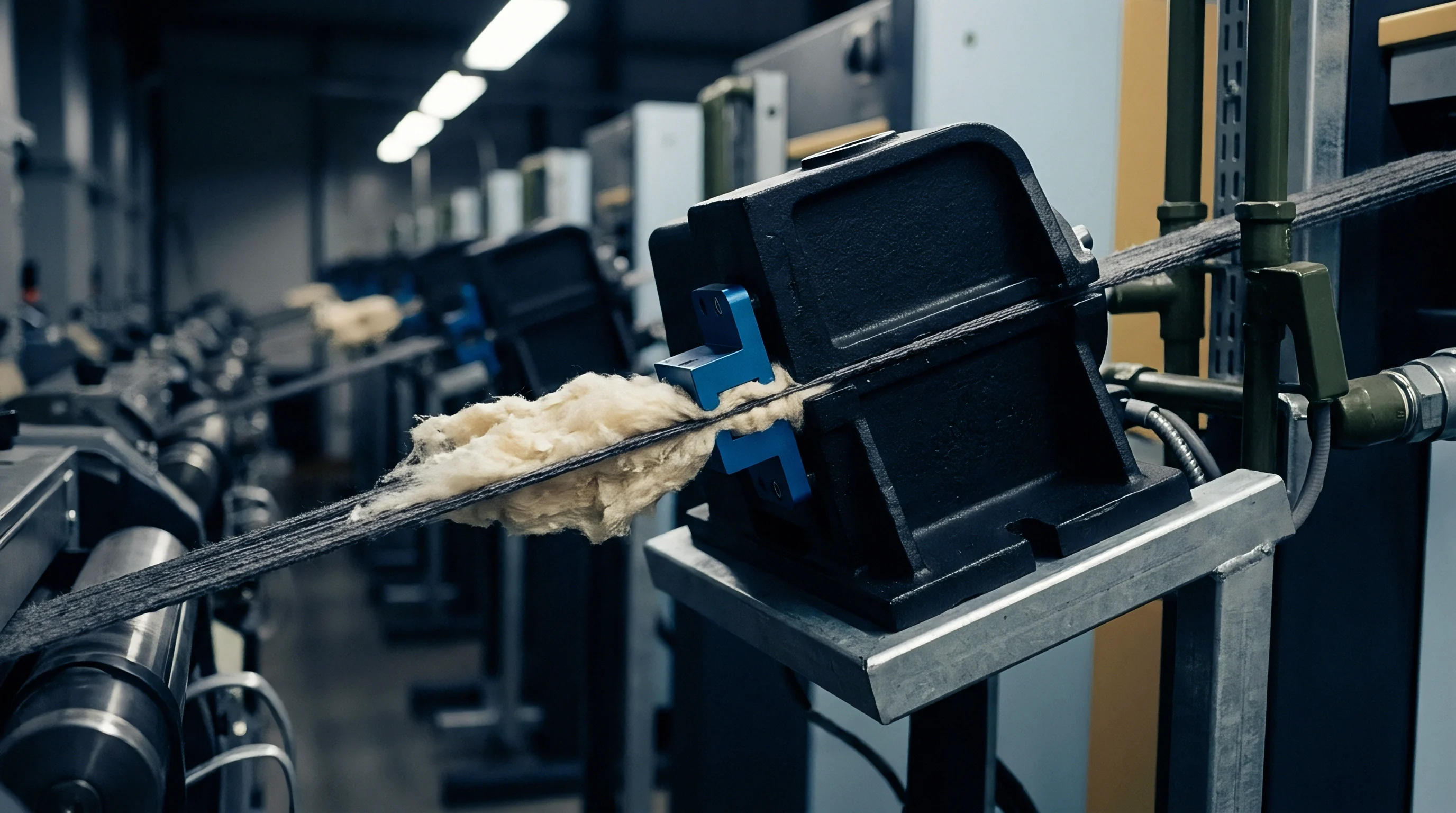
Laboratory evaluation of fiber composition begins with extracting representative material from production lots. A specimen drawn from a finished fabric roll or raw fiber bale needs to reflect the average composition of the entire shipment rather than isolated yarn anomalies. Physical preparation requires cutting multi-point swatches across the full width of woven structures while discarding selvage edges that carry structural reinforcement yarns.
Sampling plans following standard international test methods require drawing at least five distinct specimens per fabric roll to eliminate localized yarn density variations.
Sampling Matrices and Physical Mass Preparation
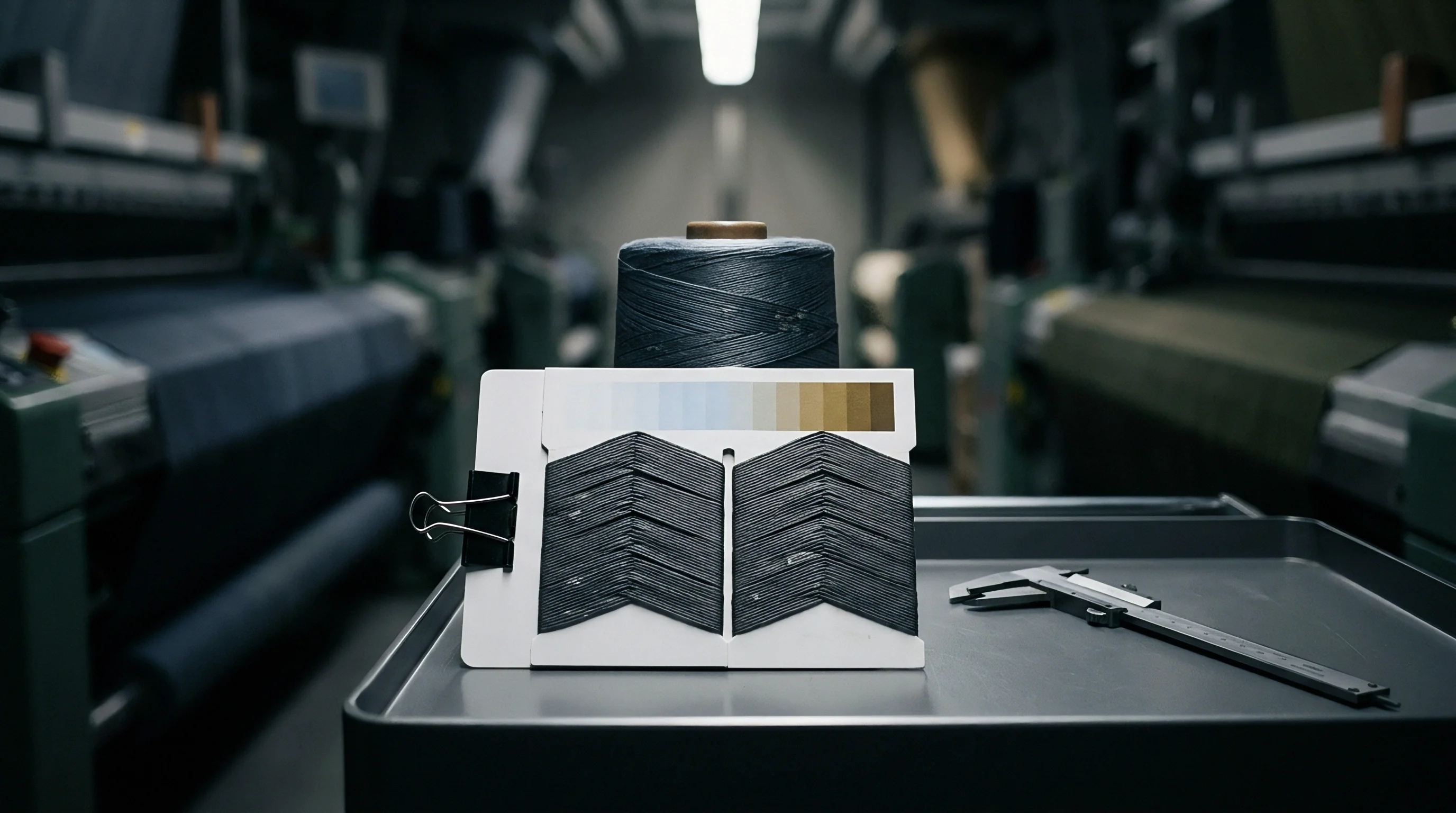
Drawing swatches across the full width of woven rolls or taking fiber tufts from multiple bales prevents localized blend variability from skewing analytical balances. Each test specimen is cut into square pieces measuring approximately two millimeters to maximize the surface area exposed to chemical reagents during subsequent extraction steps. The mass of each prepared specimen is recorded on analytical balances accurate to 0.1 milligrams after attaining thermal equilibrium in a desiccator environment.
Raw fiber lots contain variable moisture levels and external contaminants that distort dry weight calculations if left untreated. Standard testing protocols require conditioning the mass in standard atmospheric conditions of 20 degrees Celsius and 65 percent relative humidity for 24 hours prior to initial weighings. Physical mass preparation isolates the clean dry matrix from external weight additions that corrupt quantitative chemical separation results.
ISO 1833-1 mandates non-fibrous extraction prior to solvent dissolution, as residual sizing starches distort dry mass balances by two percentage points.
Non-Fibrous Matter Extraction Mechanics
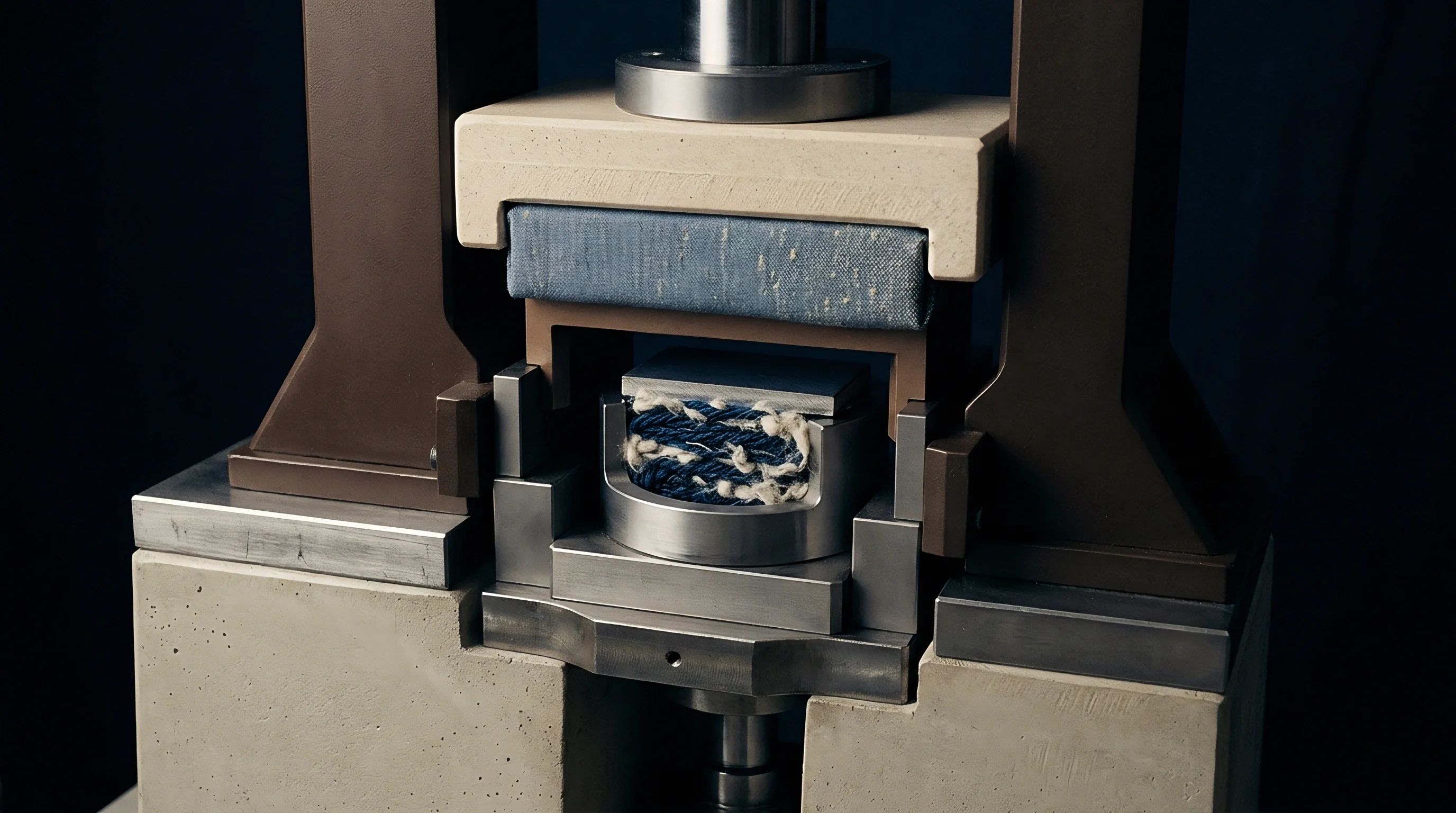
Raw gray goods and finished textiles carry processing lubricants, sizing starches, synthetic wax coatings, and functional resins. Solvent extraction in a Soxhlet apparatus using petroleum ether for two hours removes fats, oils, and waxes without degrading the underlying polymer chains. A secondary wash in warm distilled water removes water-soluble starches and spinning sizes.
Removing non-fibrous matter prevents weighing errors during selective chemical dissolution. Standard methods specify drying the extracted specimen in a ventilated oven at 105 degrees Celsius until reaching constant mass, defined as less than 0.1 percent weight change between successive weighings spaced 15 minutes apart. The resulting clean dry specimen mass establishes the baseline for subsequent chemical separation ratios.
Failure to perform thorough pre-treatment causes residual sizing agents to be calculated as part of the insoluble fiber fraction. In a cotton and polyester blend, unextracted starch size remains with the polyester residue after cotton dissolution, artificially inflating the synthetic component percentage. Technical buyers require laboratory reports to explicitly state the mass loss percentage attributable to non-fibrous matter removal prior to quantitative analysis.
Solvent
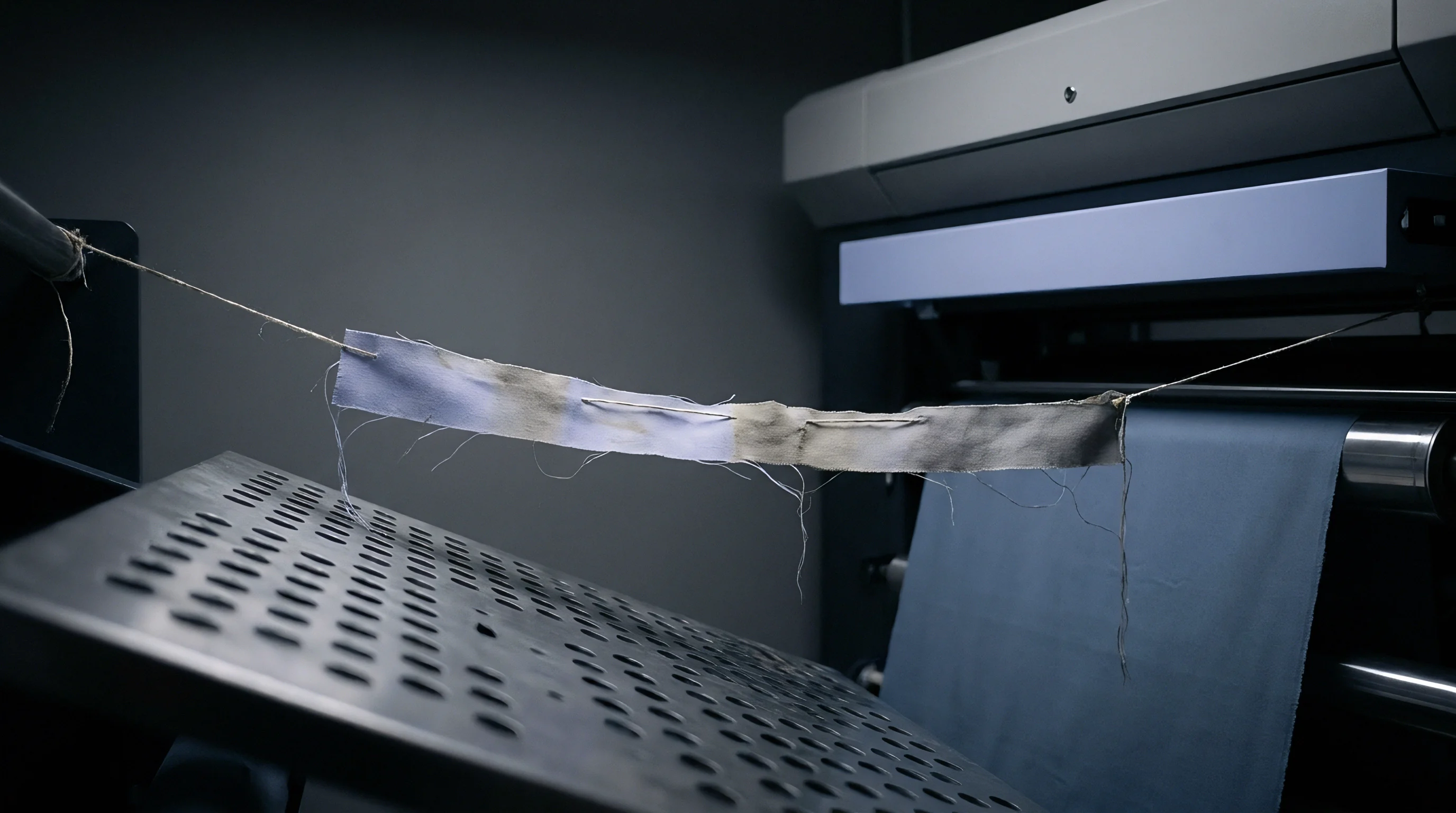
Chemical separation relies on targeting specific polymer structures with reagents that dissolve one component while leaving secondary constituents intact. The accuracy of quantitative fiber analysis depends on solvent selectivity and strict adherence to exposure times and bath temperatures. Quantitative separation protocols mandate precise solvent-to-specimen ratios, typically 100 milliliters of reagent per gram of fiber, to maintain uniform dissolution rates across the specimen container.

Selective Dissolution Kinetics and Analytical Tolerances
Standard laboratory protocols specify precise chemical concentrations, bath temperatures, and reaction times to isolate fiber types. Dissolving cellulosic fibers from polyester mixtures utilizes 75 percent sulfuric acid at room temperature for 30 minutes, leaving insoluble polyester filaments completely intact. Separating regenerated cellulose such as viscose from cotton relies on formic acid and zinc chloride solutions, where controlled temperature control prevents partial attack on the cotton cell walls.
Analytical tolerances for chemical separation methods accommodate inherent measurement variability across accredited laboratories. Standard test procedures allow an absolute tolerance band of plus or minus 1.0 percent for binary fiber blends tested under identical conditions. When test reports display fiber proportions near regulatory classification limits, analytical variance determines whether a shipment complies with declared tariff declarations.
A bench variance of 1.2 percent in chemical separation shifts a declared 50 percent cotton blend past the majority tariff threshold.
| Target Fiber to Dissolve | Reagent Standard Method | Insoluble Residue | Mass Correction Factor (d-value) | Bench Tolerance (+/- %) |
|---|---|---|---|---|
| Acetate | Acetone (ISO 1833-3) | Polyester / Cotton / Wool | 1.00 | 0.8 |
| Natural Cotton | 75% Sulfuric Acid (ISO 1833-11) | Polyester | 1.01 | 1.0 |
| Viscose / Rayon | Formic Acid / Zinc Chloride (ISO 1833-7) | Cotton | 1.02 | 1.5 |
| Polyamide (Nylon 6/66) | 80% Formic Acid (ISO 1833-7) | Polyester / Acrylic | 1.00 | 1.0 |
| Wool / Animal Hair | Sodium Hypochlorite (ISO 1833-4) | Polyester / Cellulosic | 1.01 | 1.2 |

Does Chemical Degradation Bias Residual Fiber Mass?
Acid and alkaline reagents applied during quantitative testing can partially strip mass from the insoluble component. Chemical correction factors, designated as d-values in standard testing codes, adjust the final measured mass of the insoluble residue to compensate for slight solvent degradation. A d-value of 1.01 indicates that the insoluble fiber lost one percent of its mass during chemical immersion, requiring a corresponding multiplication factor during final dry weight calculation.
Laboratory technicians determine empirical d-values by treating pure control specimens of the insoluble fiber with the selective reagent under identical time and temperature parameters. Neglecting to apply correct d-values produces systematic errors that misrepresent true component proportions. In high-volume tariff classifications, an uncorrected one percent mass loss shifts chief weight determinations across administrative boundaries.
Residual sizing agents account for the three percent disparity between declared cotton content and laboratory residue mass.


Regain
Standard ambient humidity affects natural and regenerated fibers differently than hydrophobic synthetics. Quantitative fiber analysis yields oven-dry mass figures that do not correspond directly to commercial transaction weights or customs declaration values. Converting clean dry analytical masses into official commercial masses requires applying standardized moisture regain percentages established by international standards bodies.

Moisture Regain Calculations in Commercial Mass Determination
Oven-dry mass measured immediately after desiccation excludes atmospheric water absorbed by hygroscopic polymers. Standard moisture regain values assign fixed percentage water weight additions to dry fiber masses to simulate equilibrium in standard commercial environments. Cotton carries an official moisture regain allowance of 8.5 percent, wool holds 17.0 percent, viscose receives 13.0 percent, while polyester accepts only 0.4 percent under ISO 6741 standards.
Applying differential moisture regain allowances alters the relative percentage proportions of fibers in a binary or ternary blend compared to clean dry laboratory ratios. A blend that measures exactly 50 percent cotton and 50 percent polyester by clean dry mass transforms into a cotton-dominated mixture once standard moisture allowances enter the commercial calculation.
High natural fiber regains increase calculated commercial mass relative to dry synthetic fibers during customs calculations.
| Fiber Component Blend | Clean Dry Mass Ratio (%) | Standard Regain Applied (%) | Commercial Mass Ratio (%) | Net Commercial Percentage Shift (%) |
|---|---|---|---|---|
| Cotton / Polyester | 50.00 / 50.00 | 8.50 / 0.40 | 51.94 / 48.06 | + 1.94 Cotton |
| Viscose / Polyester | 50.00 / 50.00 | 13.00 / 0.40 | 52.96 / 47.04 | + 2.96 Viscose |
| Wool / Polyester | 50.00 / 50.00 | 17.00 / 0.40 | 53.81 / 46.19 | + 3.81 Wool |
| Cotton / Nylon 66 | 60.00 / 40.00 | 8.50 / 4.50 | 60.88 / 39.12 | + 0.88 Cotton |
| Wool / Cotton | 50.00 / 50.00 | 17.00 / 8.50 | 51.96 / 48.04 | + 1.96 Wool |

Worked Derivation of Moisture-Adjusted Composition Percentages
A 100-kilogram lot of dry binary blend yields specific mass shifts once official regain values enter the calculation. Calculating the commercial weight ratio follows a structured mathematical process to adjust oven-dry laboratory yields to legal trade percentages.
- Determine the clean oven-dry mass of each fiber component following solvent extraction and standard drying procedures.
- Multiply the oven-dry mass of the first fiber component by one plus its standard moisture regain rate divided by 100.
- Multiply the oven-dry mass of the second fiber component by one plus its standard moisture regain rate divided by 100.
- Sum the resulting commercial masses of both components to calculate the total commercial mass of the textile lot.
- Divide each component commercial mass by the total commercial mass and multiply by 100 to derive final composition percentages.
Assume a laboratory test resolves an oven-dry specimen into 50.00 grams of cotton and 50.00 grams of polyester. Applying the 8.5 percent regain to cotton yields 54.25 grams of commercial cotton mass. Applying the 0.4 percent regain to polyester yields 50.20 grams of commercial polyester mass.
The combined commercial mass equals 104.45 grams. Dividing 54.25 by 104.45 establishes a commercial cotton percentage of 51.94 percent, while polyester drops to 48.06 percent. The application of standard regain rules changes the legal classification of the fabric from equal blend to chief weight cotton.
The exact point where commercial regain calculations yield to local atmospheric equilibrium during customs sampling remains open to administrative interpretation.


Allowance
Border control authorities evaluate fiber declarations against statutory limits governing inadvertent impurities and minor blend shifts. Customs agencies enforce legal classification rules based on Harmonized System principles, where minor percentage shifts determine tariff subheadings, applicability of trade preferences, or quota restrictions. De minimis regulations provide statutory thresholds that excuse minor discrepancies between declared composition figures and laboratory verification analysis.

Customs De Minimis Tolerances under International Harmonized Systems
International tariff codes apply specific rules for minor fiber components introduced during spinning or weaving. Harmonized System Section XI Note 2 defines classification by chief weight, stipulating that textiles containing two or more textile materials are classified as if consisting wholly of that one textile material which answers to the species dominating by weight. Customs regulations in major importing jurisdictions provide specific de minimis thresholds for unmentioned or stray fibers.
Under United States customs regulations and European Union Regulation 1007/2011, a tolerance of up to 2 percent by weight is allowed for extraneous fibers that are inadvertent, technically unavoidable, and not added intentionally. Decorative yarns that are visually distinct and present in minor proportions receive exemptions up to 7 percent under specialized provisions.
Under EU Regulation 1007/2011, inadvertent fiber inclusions remain exempt from declaration provided their combined dry mass stays below two percent.

Discrepancies between Commercial Tolerances and Tariff Thresholds
Purchasing agreements often grant suppliers flexibility to vary fiber proportions within set ranges. Commercial contracts frequently include a plus or minus 3 percent tolerance on declared blend ratios to absorb spinning variations across production batches. A contract specifying 52 percent cotton and 48 percent polyester allows the mill to deliver a 49 percent cotton and 51 percent polyester fabric without breaching commercial delivery terms.
Customs authorities do not recognize commercial tolerance clauses when composition variations cross statutory tariff thresholds. Crossing the 50 percent chief weight line alters the tariff classification code regardless of whether the shift fell within commercial contract allowances.
- Tariff Reclassification Risk occurs when production variance moves a fiber component across the 50 percent chief weight boundary, altering duty liability.
- De Minimis Rejection happens when unexpected stray fibers exceeding 2 percent dry mass lack explicit declaration on entry documentation.
- Origin Criterion Failure arises when non-originating fiber proportions exceed regional trade agreement de minimis thresholds, invalidating preferential duty claims.
- Penalty Assessment Exposure develops when customs audits identify systemic composition deviations between commercial invoices and bench laboratory reports.
Misclassifying a chief-weight synthetic blend as a natural-dominated fabric shifts duty obligations into higher rate brackets while opening the entry to formal penalty action.

Reconciliation
Combining bench chemical testing with customs tariff rules demands aligned specifications across purchasing, testing, and legal entries. Harmonizing these areas requires technical specifications to account for analytical test variability, commercial regain adjustments, and statutory classification boundaries simultaneously. Technical managers construct compliance dossiers that document every step from raw swatch testing to final entry classification.

Contractual Harmonization Protocols for Sourcing Dossiers
Commercial purchase contracts state exact analytical procedures, standard moisture regain figures, and accepted testing variance windows. Sourcing dossiers specify whether target blend ratios represent dry mass proportions or commercial mass calculations under standard regain rules.
To guard against lab test variations pushing shipments across tariff threshold boundaries, buyers establish target production ratios that build in safety margins. Targeting a 55 percent cotton and 45 percent polyester production blend ensures that normal bench test variations of plus or minus 1.5 percent will not cause the fabric to drop below the 50.1 percent chief weight cotton threshold during customs verification tests.
| Declared Composition Ratio | Tested Laboratory Composition | Harmonized Tariff Code | Applicable Duty Rate (%) | Landed Duty Exposure Shift ($) |
|---|---|---|---|---|
| 52% Cotton / 48% Polyester | 52% Cotton / 48% Polyester | 5208.32.00 | 8.4 | Base Duty Level |
| 52% Cotton / 48% Polyester | 49% Cotton / 51% Polyester | 5514.22.00 | 14.9 | +$16,250 Duty Increase |
| 60% Viscose / 40% Polyester | 60% Viscose / 40% Polyester | 5516.12.00 | 11.5 | Base Duty Level |
| 60% Viscose / 40% Polyester | 48% Viscose / 52% Polyester | 5515.11.00 | 12.0 | +$1,250 Duty Increase |
Landed Cost Exposure under Threshold Shift Analysis
Duty calculations depend directly on whether a fiber component crosses statutory percentage boundaries. When a miscalculated fiber ratio moves a shipment into a higher-duty tariff line, the landed cost per meter increases immediately upon entry clearance. Importers must manage analytical protocols to ensure commercial invoices match laboratory findings verified under official regain rules.
- Analytical Protocol Specification details the exact ISO or AATCC solvent separation standards governing sample qualification.
- Regain Alignment Verification confirms that oven-dry test yields undergo standard moisture regain conversion prior to final composition filing.
- Threshold Buffer Margin establishes minimum production target percentages to prevent testing variance from crossing tariff chief-weight boundaries.
- Dossier Retain Management archives raw laboratory balances, extraction mass logs, and d-value calculations for customs audit defense.
A commercial purchase clause stipulating that declared composition percentages reflect commercial mass calculated per ISO 6741 using dry chemical dissolution under ISO 1833 binds both parties to identical compliance metrics before customs entry filing.