Moisture Retention Dynamics in Hydrophilic Membrane Outerwear Assemblies
Hydrophilic membrane moisture retention stems from polyether bound-water storage, requiring dynamic desorption bounds in specifications to avoid wet-out chill.
Film
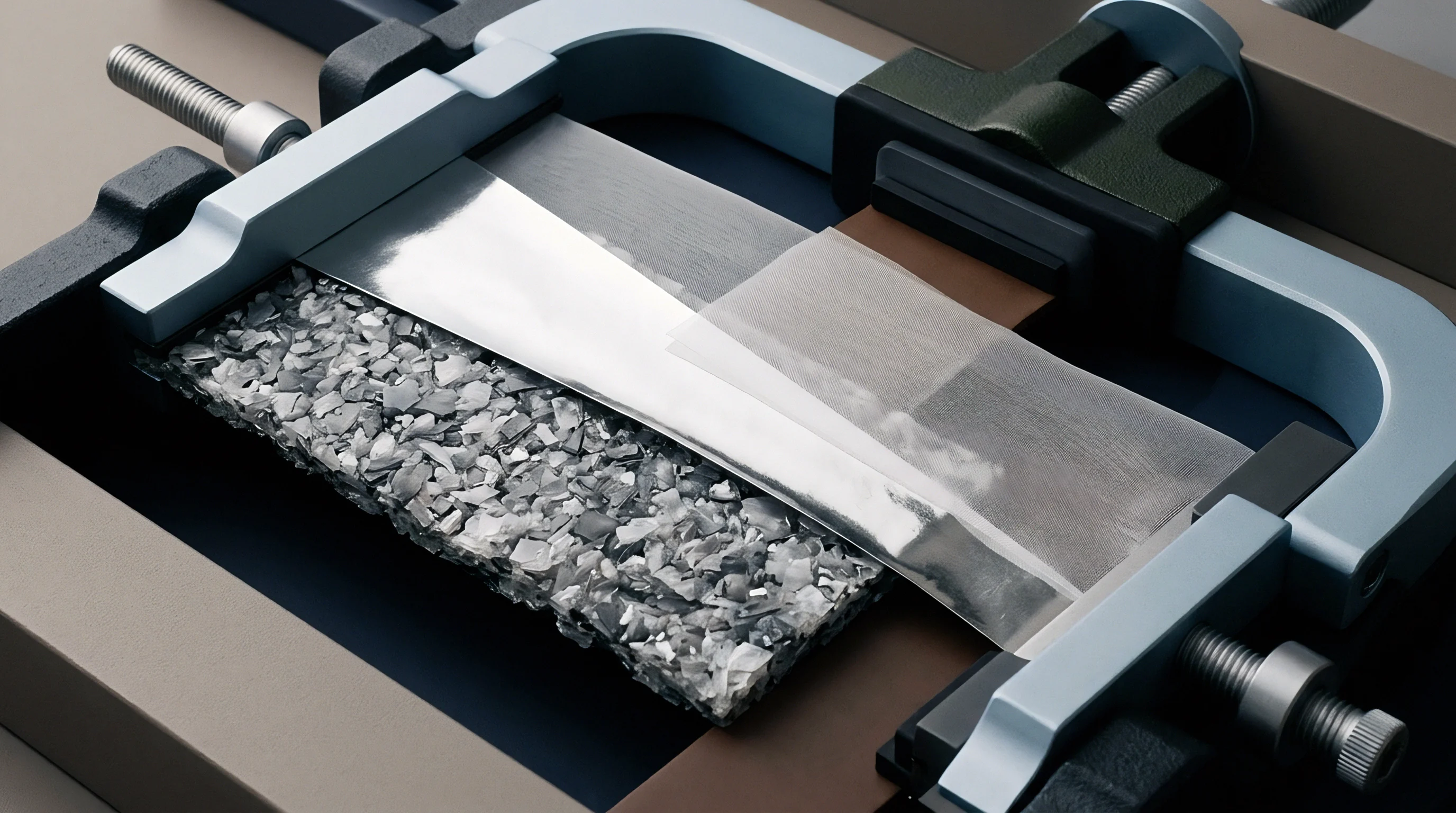
Solid monolithic membranes work through solution-diffusion: hydrophilic polyether segments absorb water vapor directly into the solid polymer matrix. Where microporous expanded polytetrafluoroethylene relies on physical air channels measuring tens of nanometers across, non-porous hydrophilic barriers contain no continuous void space. Moisture moves via hydrogen bonding between water molecules and polar functional groups inside the polymer’s soft blocks.
As humidity rises on the inner skin side, vapor pressure drives water into the solid film. Absorbed water swells the network, creating transient free volume that lets molecules hop from one active hydrophilic site to the next along the chemical potential gradient.
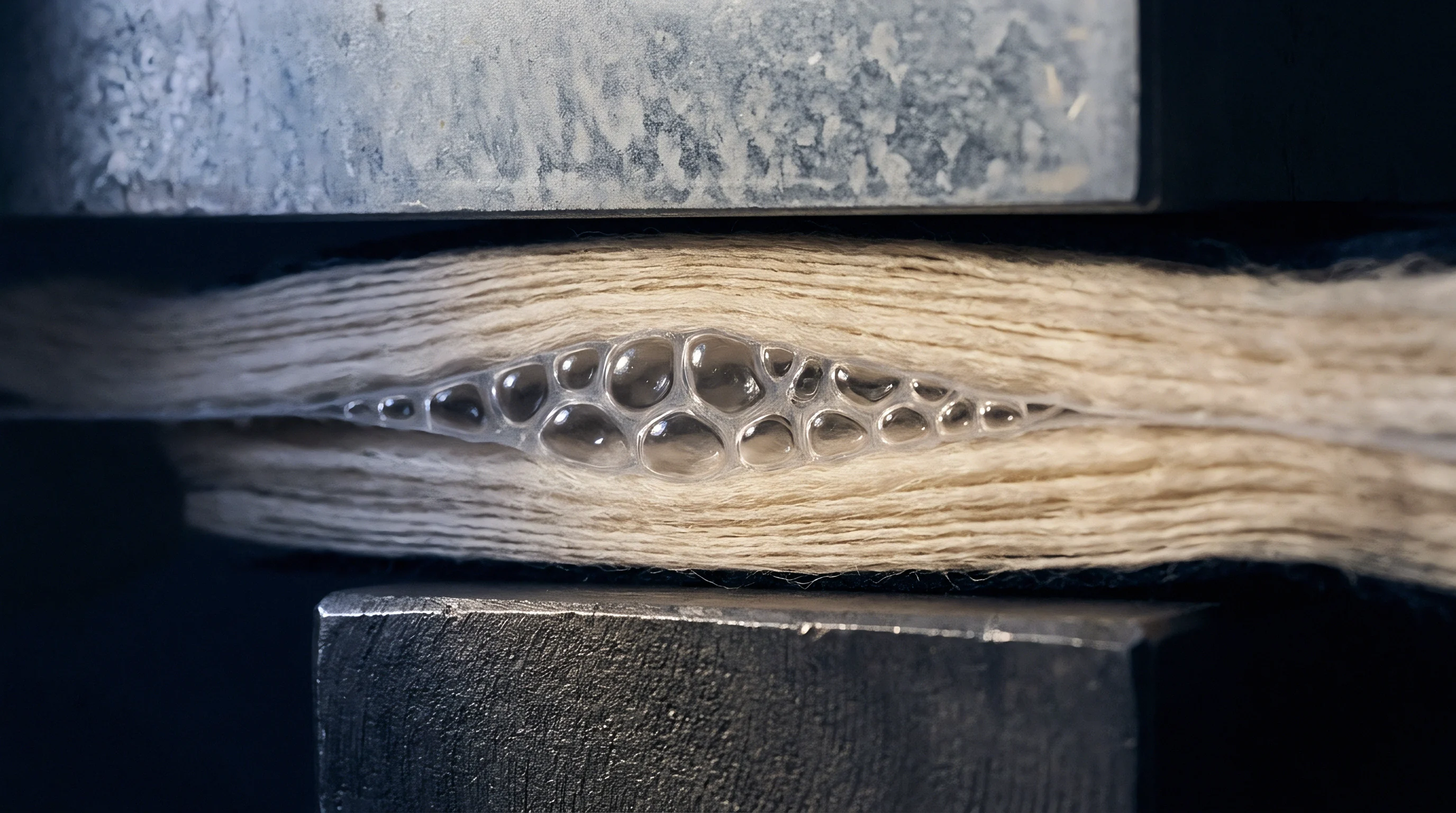
In a typical three-layer assembly ~ a fifteen-micrometer polyether-ester membrane weighing twenty grams per square meter bonded to a fifty-denier nylon face fabric and a tricot backer ~ baseline membrane mass is twenty grams per square meter under dry lab conditions (twenty degrees Celsius and sixty-five percent relative humidity). When exertion drives relative humidity at the inner face to ninety-five percent, the hydrophilic soft blocks absorb vapor until reaching steady-state hydration. At thirty-five percent water absorption by weight, the matrix holds seven grams of liquid per square meter within its hydrated structure.
Swelling expands membrane thickness by up to twenty-two percent, opening transport channels and raising water vapor permeability while sweating continues.

Chemical Composition of Hydrophilic Monoliths
Polyether-ester block copolymers combine flexible, polar-attracting soft segments with rigid polyester blocks that maintain physical structure. Polyethylene oxide units act as the main hydrophilic sites, binding water vapor through dipole interactions, while polybutylene terephthalate blocks form crystalline domains that provide tensile strength, heat resistance, and solvent stability. Polyurethane variants place soft polyether chains between hard aromatic or aliphatic isocyanate segments instead.
In both cases, the ratio of hydrophilic polyether to hydrophobic hard blocks dictates total sorption capacity, vapor transmission rates, and swelling limits under liquid saturation.
High polyethylene oxide content increases steady-state water vapor permeability, though it makes the polymer matrix prone to heavy swelling and mechanical softening in prolonged rain. A lower soft-segment concentration limits liquid pickup and avoids structural weakening, but increases mass transfer resistance across the film.
Solution Diffusion Mechanism and Polymer Swelling
Vapor transport through dense continuous membranes relies on hydrogen bonding along the molecular chain network under a partial pressure gradient. Water enters the interior surface of the dry film through sorption, migrates through the polymer mass by stepwise chemical diffusion, and desorbs off the outer boundary into the atmosphere. Initial diffusion in dry membranes is low, but incoming vapor plasticizes the solid matrix, boosting local segment mobility and lowering the activation energy needed for further molecular movement.
Polyether-ester monolithic membranes absorb between 6 percent and 35 percent of their dry polymer mass in bound water when subjected to saturated vapor conditions at 30 degrees Celsius.
Plasticization produces a concentration-dependent diffusion coefficient, causing permeability to rise non-linearly as moisture builds inside the layer. Excess moisture turns bound molecular water into liquid clusters within the soft polymer domains. This retained fluid stays trapped in the monolithic core until internal thermal energy and external vapor pressure gradients drive desorptive evaporation.

Latency
The delay between vapor absorption into the solid core and its evaporation from the outer surface creates temporary liquid storage within the garment. Dry polymer chains take up water quickly when first exposed to high humidity, but releasing that moisture during activity transitions takes far longer. Hydrophilic polyether domains hydrogen-bond with absorbed water, retaining it in the solid matrix until sufficient thermal energy breaks those bonds.
During heavy exercise, sweat enters the laminate faster than it can desorb from the outer face, driving up total moisture mass in the garment.
This storage capacity depends heavily on ambient temperature, membrane thickness, and humidity gradients across the laminate. Temperature directly controls desorption speed: colder air reduces the thermal energy needed to break hydrogen bonds in the polyether blocks, lengthening desorptive lag. The retained water adds garment weight, lowers breathability, and acts as a thermal sink that drains body heat during rest.
Bound Water Accumulation during Exercise Bursts
Heavy exertion can produce sweat rates above eight hundred grams per square meter per hour, creating sharp vapor pressure spikes against the inner lining. Because monolithic hydrophilic membranes cannot move bulk liquid water, relying strictly on molecular migration across active polymer sites, surplus sweat condenses into liquid against the backer fabric whenever incoming vapor exceeds the core’s maximum solution-diffusion capacity.
Liquid condensing on the interior face hydrates the soft blocks from the inside out, swelling the core toward full saturation. Once saturated, the polymer framework retains liquid water inside its structure, leaving a moisture reservoir that remains long after sweating ceases.
Desorptive Lag and Moisture Retention Isotherms
Releasing stored fluid from a swollen polyether chain takes more thermal energy and time than initial absorption into dry sites. Sorption isotherms show pronounced hysteresis, with desorption curves remaining higher than absorption curves at identical relative humidity levels.
- Primary hydration state occurs when water molecules bind directly to active ether oxygen atoms in soft polyether blocks, forming structured mono-molecular layers with tight chemical binding energy.
- Secondary swelling state develops as additional water molecules fill interstitial space around initial binding sites, forming multi-layer liquid clusters with reduced binding enthalpy.
- Bulk retention phase occurs when localized saturation fills transient void spaces within the expanded polymer network, storing unbound liquid within the solid matrix.
This hysteresis loop means hydrated membranes stay wet inside even when ambient relative humidity drops substantially. Clearing the retained liquid requires sustained body heat or exposure to dry air to overcome the desorptive activation energy barrier.
| Membrane Polymer Type | Membrane Structure | Dry Mass (g/m²) | Sorption Capacity (wt %) | Desorptive Lag Time (min) | Swelling Thickness Increase (%) |
|---|---|---|---|---|---|
| Polyether-Ester Block Copolymer | Solid Monolithic | 18.5 | 28.4 | 42.0 | 18.2 |
| Hydrophilic Polyurethane (Aromatic) | Solid Monolithic | 22.0 | 34.1 | 58.5 | 24.5 |
| Hydrophilic Polyurethane (Aliphatic) | Solid Monolithic | 16.0 | 22.8 | 31.0 | 14.0 |
| Bicomponent ePTFE with Hydrophilic PU Topcoat | Microporous with Thin Monolith | 28.0 | 8.2 | 12.5 | 4.1 |
| Pure ePTFE (Hydrophobic) | Expanded Microporous | 17.0 | 0.6 | 1.5 | 0.2 |
It remains unclear whether modifying polyether chain length can reduce stored liquid volume without sacrificing continuous vapor transport rates.

Chamber
Standardized laboratory tests evaluate vapor transport under isothermal conditions that bypass transient liquid storage effects. Standard ISO 11092 uses a sweating guarded hotplate operating at steady-state equilibrium to measure water vapor resistance (Ret values), while ASTM E96 Inverted Cup methods calculate transport from gravimetric mass loss over set timeframes. Because static testing assumes constant moisture concentration across the sample, it masks the delays caused by absorption, swelling, and desorptive lag in solid hydrophilic films.
In actual use, exertion levels shift constantly, generating humidity spikes that force hydrophilic monoliths into continuous non-equilibrium states. Materials with excellent Ret scores on steady-state hotplates frequently store substantial liquid during variable exercise, leading to damp inner fabrics and post-activity chill.
Does Membrane Swelling Reduce Vapor Permeability under Rain Conditions?
Saturated air and liquid water on the face fabric collapse the vapor pressure gradient driving desorption from the monolithic core. External liquid swells the outer soft blocks, but without a gradient pulling moisture into the environment, transport drops sharply. Retained fluid fills internal free volume, choking off transport pathways and lowering net vapor flux through the laminate.
Wetting out the face fabric disrupts the desorptive boundary layer. Moisture accumulated in the swollen polymer remains trapped until rain stops and airflow restores the evaporative driving force at the garment surface.
Isothermal Test Discrepancies across Standard Methods
Static cup measurements produce high permeability figures that do not match performance in the field. ASTM E96 Method B upright cup testing places low ambient relative humidity above dry samples, yielding artificially high flux values. ASTM E96 Method BW inverted cup puts liquid water directly against the inner membrane face, forcing extreme hydration that inflates transmission rates well beyond real-world behavior.
ISO 11092 measuring water vapor resistance under steady-state isothermal equilibrium fails to capture the desorptive delay caused by polymer chain hydration during transient exercise bursts.
- Dynamic humidity sweep testing evaluates membrane flux under rapidly changing relative humidity profiles, quantifying real-time sorption rates and matrix saturation points.
- Transient gravimetric desorption tracking measures the time required for a fully hydrated laminate to release stored liquid water under controlled airflow.
- Cyclic sweating thermal plate testing simulates intermittent exercise intervals, capturing internal condensation volumes and delayed evaporative heat losses.
| Test Standard Code | Methodology Mechanics | Boundary Environment | Measured Metric | Sensitivity to Water Retention |
|---|---|---|---|---|
| ISO 11092 / EN 31092 | Sweating Guarded Hotplate | Isothermal (35°C), Steady State | Ret (m² Pa/W) | Low (Ignores dynamic retention lag) |
| ASTM E96 / E96M Method B | Upright Water Cup | 23°C, 50% RH Air Gradient | MVTR (g/m²/24h) | Very Low (Measures dry film equilibrium) |
| ASTM E96 / E96M Method BW | Inverted Water Cup | 23°C, Direct Liquid Contact | MVTR (g/m²/24h) | Moderate (Captures max wet swell only) |
| JIS L 1099 Method B1 | Potassium Acetate Desiccant Cup | 30°C, Salt Solution Gradient | MVTR (g/m²/24h) | Low (Overestimates absolute water flux) |
| Dynamic Transient Desorption | Cyclic Sweating Plate with Load Cell | Transient RH and Temp Sweeps | Retention Mass & Lag (g/m², min) | High (Directly quantifies dynamic storage) |
Applying ISO 11092 Clause 7.3 with mandatory dynamic pre-wetting alters reported water vapor resistance by up to forty percent, often shifting a product’s rating from high breathability down to moderate resistance.
Interface
Laminated construction introduces thermal boundary resistances and adhesive barriers that alter vapor movement through the entire stack. A standard three-layer shell joins a woven outer face, a solid hydrophilic core, and a knit tricot backer using polyurethane adhesive dots. Every layer and bond line adds resistance to moisture flux: vapor must penetrate the backer, cross internal air spaces, enter the membrane matrix, pass through the exterior adhesive pattern, and diffuse through the face fabric yarns into the atmosphere.
Adhesive patterns block between fifteen percent and thirty-five percent of active membrane area, depending on dot size, height, and roller density. Funneling moisture through open, non-adhered channels concentrates local flux, accelerating local membrane hydration and forming swollen pockets across the interface.
Face Fabric Wet out and Boundary Resistance
When durable water repellent treatments fail, liquid spreads across the outer fibers to form a continuous fluid film over the laminate. This liquid layer acts as a physical barrier to outbound vapor transport, while evaporative cooling drops sharply as the face fabric saturates with rain or melting snow.
Once the face fabric wets out, vapor desorbing from the outer membrane surface cannot evaporate into ambient air. Moisture gathers inside the face yarns and at the bond line, collapsing the vapor pressure differential and causing the core to retain maximum water, swelling the soft polyether segments and stalling moisture clearing.
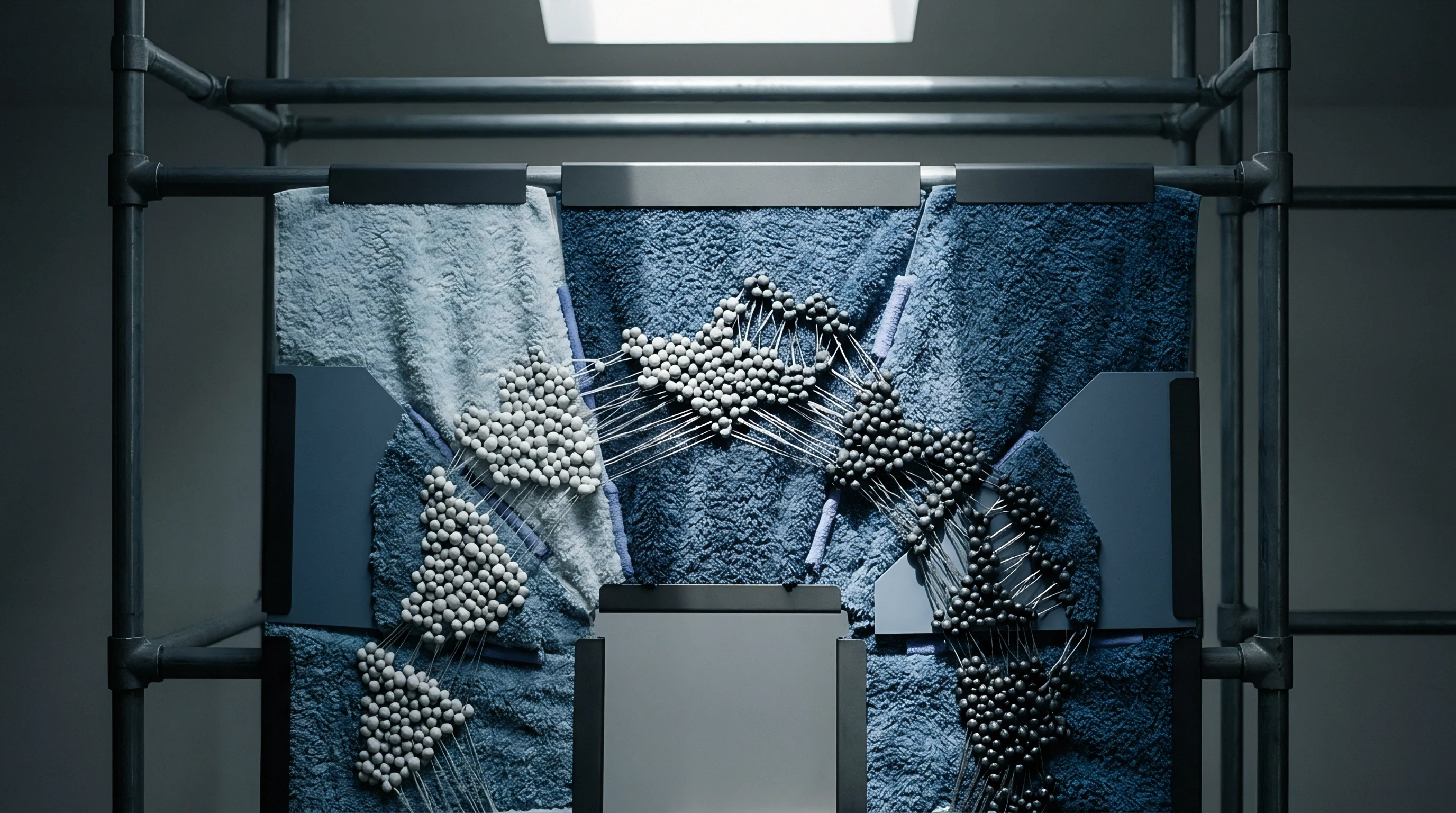
Adhesive Layer Disruption and Localized Saturated Zones
Polyurethane dot matrices block up to thirty percent of permeable surface area, forcing vapor through narrow untreated channels. As the hydrophilic film expands in thickness and area during water uptake, the rigid adhesive resists expansion, generating mechanical shear stresses along the bond line during heavy wet-out.
Hydrophilic membrane swelling reduces effective inter-laminar bond shear strength whenever liquid water saturates the adjacent textile face fabric.
Repeated expansion and contraction degrade bond strength over extended use. To qualify interface performance before full production lamination, testing laboratories run multi-step verification protocols on sample rolls:
- Mount the three-layer laminate sample inside a dual-chamber test fixture maintaining thirty-five degrees Celsius and ninety percent relative humidity on the inner face.
- Apply continuous fluid load to the inner tricot backer for two hours to simulate heavy sweat saturation during high physical exertion.
- Measure total assembly mass gain at fifteen-minute intervals using high-precision gravimetric balances to track moisture accumulation rates.
- Evaluate exterior face fabric water repellency using ISO 4920 spray rating apparatus before and after dynamic moisture exposure.
- Perform ISO 2411 delamination strength testing on wet swatches to verify structural bond durability under full polymer hydration.
Maintaining durable water repellency on the face fabric prevents outer boundary condensation and preserves the vapor pressure gradient across the solid laminate.
Heat
Trapped moisture inside outerwear layers adds garment weight while altering heat loss from the skin. Because water conducts heat twenty-three times faster than still air, liquid filling backer voids and hydrated polymer chains causes microclimate insulation to drop rapidly. Saturated assemblies accelerate heat loss in cold weather, creating severe discomfort when activity slows.
Thermal conductivity across a three-layer laminate rises proportionally with volumetric water content. Dry garments preserve insulation using air trapped between yarns and backer fibers; when moisture replaces that air, it turns the insulating layer into a conductive bridge that channels heat away from the body.

Latent Thermal Mass and Evaporative Cooling Drops
Water has a high specific heat capacity ~ four point one eight Joules per gram Kelvin ~ which destabilizes microclimate thermal insulation as liquid builds up in the film. Body heat from exertion gets absorbed by stored water in the hydrated core rather than driving vapor pressure differentials across the laminate. When exercise stops, body heat output drops, but the wet garment retains that high latent heat mass.
Evaporative cooling drops abruptly when stored water in the monolithic core reaches thermal equilibrium with the external boundary layer.
Stored liquid in the swollen core continues drawing latent heat of vaporization from the skin as long as drying continues. This sustained evaporative heat sink drops microclimate skin temperature well below comfort levels during rest after intense exertion.
Post Exercise Chill Dynamics and Moisture Recovery Time
When exertion stops, rapid conductive heat loss occurs through the saturated inner layers before stored liquid can desorb into the environment. The time an assembly needs to clear retained moisture mass and regain its dry thermal resistance defines its moisture recovery efficiency.
Laminates with high desorptive lag retain up to twenty grams of water per square meter after sixty minutes of rest in moderate humidity. Wind chill across wet face fabrics accelerates heat extraction, pulling down skin temperatures and triggering shivering. Ignoring latent water storage in cold-weather gear introduces real hypothermia risks and undermines theoretical warmth ratings.
Tolerance
Commercial specifications for hydrophilic monolithic laminates require clear criteria defining acceptable retention mass and swelling stability across production lots. Quality protocols evaluate dry weight uniformity, polyether soft block ratio integrity, and dynamic moisture holding limits. Shifts in chemical feedstocks or extrusion temperatures alter polyether chain alignment, changing batch water retention and causing performance variations in the field.
Receiving inspections must check both steady-state breathability and dynamic water retention. Contracts that mandate minimum ASTM E96 MVTR values without setting maximum transient retention limits leave products vulnerable to severe wet-out issues. Setting incoming quality criteria that include dynamic desorption metrics ensures production rolls match performance claims before laminates are cut and sewn.
Batch Qualification Procedures for Hydrophilic Laminates
Technical specifications set upper limits on fluid retention during dynamic lab testing to prevent field failures. Quality testing takes swatches from the head, middle, and tail of production rolls to verify lot consistency, putting samples through absorption and desorption cycles to confirm compliance with target chemical parameters.
A maximum moisture retention threshold of fifteen grams per square meter after thirty minutes of saturated vapor exposure serves as a practical screening benchmark for technical outerwear laminates. Roll swatches exceeding absorption limits or showing desorptive lag times over forty minutes are flagged for chemical re-evaluation before reaching the cutting room.
Contractual Assurance and Retest Protocols
Purchase orders outline specific sampling rates and retest clauses to resolve discrepancies between mill certificates and incoming lot checks. Specs typically call for accredited independent testing using specified ISO or ASTM methods on lot samples. If receiving tests show dynamic water retention figures outside contract tolerances, standard retest protocols require testing three secondary samples from separate rolls within the same dye lot.
Failure on secondary retest swatches authorizes lot rejection, returning liability for compromised fabric to the lamination mill. Contracts should also define maximum allowable swelling thickness changes to protect seam tape adhesion during wet field use. Building precise retention limits and desorptive time ceilings into raw material contracts converts subjective breathability claims into enforceable quality standards.