Standardized Headspace Extraction Protocol for Quantifying Dimethylformamide in Synthetic Coatings
Static headspace extraction quantifies residual dimethylformamide in synthetic coatings through controlled heating and matrix-matched GC-MS.

Coating
Polyurethane and polyvinyl chloride synthetic layers rely heavily on organic carrier media during industrial deposition. N,N-Dimethylformamide (CAS 68-12-2) serves as the primary processing solvent for dissolving high-molecular-weight polyurethane resins, enabling uniform application across woven, knitted, or non-woven textile backings. During coagulating baths and thermal drying ovens, the bulk of this volatile compound evaporates, leaving behind the solid micro-porous elastomeric film.
Residual solvent remains trapped within the polymer matrix due to strong hydrogen bonding between the polar carbonyl group of dimethylformamide and the urethane linkage nitrogen atoms. Complete elimination demands excessive oven residence times that degrade physical strength and increase energy costs, leading mills to operate at the edge of residual tolerance limits.
Synthetic Layer Mechanics and Residual Solvent Retention
Industrial production of flexible polymeric skins involves dissolving solid resins in polar organic compounds to achieve precise viscosity control. As the liquid mass undergoes phase inversion in water baths or solvent-evaporation channels, micro-voids form within the matrix structure. These pores retain trace amounts of carrier media within the interior bulk rather than on the exposed surface.
Methanol liquid extraction techniques historically specified in older testing schemes often dissolve or excessively swell the polymer network. Solvent extraction releases bound volatile species along with unreacted oligomers, plasticizer additives, and surface finishing agents into the liquid phase. Liquid co-extractives pollute liquid chromatography columns, cause baseline drift, and produce artificial peaks during mass spectrometry analysis.
Static headspace sampling avoids liquid solvent contamination by isolating the gas phase above the heated sample. Heating the enclosed film drives volatile compounds out of the condensed resin and into the vapor space of a sealed glass vial. The efficiency of this release depends on matrix thickness, cross-linking density, and temperature.
Synthetic leather topcoats ranging from 0.15 to 0.50 millimeters thick display non-linear release rates compared to thick foam underlayers. When test protocols treat heterogeneous composite laminates as uniform single-layer materials, analytical results skew significantly. Laboratories analyzing whole-fabric swatches without stripping mechanical backings measure mixed mass ratios, diluting the calculated concentration of volatile target compounds present in the active skin.
REACH Annex XVII Entry 72 limits residual N,N-dimethylformamide in polyurethane apparel layers to 500 milligrams per kilogram, triggering immediate border detention when laboratory testing confirms non-compliance.
Regulatory Thresholds across International Chemical Frameworks
Legal restrictions enforced across major retail regions place strict upper limits on hazardous processing agents due to reproductive toxicity concerns. European Regulation EC 1907/2006 under REACH Annex XVII Entry 72 mandates a maximum threshold of 500 milligrams per kilogram for N,N-dimethylformamide in synthetic leather and coated fabrics used in clothing, accessories, and footwear. The European Chemicals Agency includes dimethylformamide on the Substance of Very High Concern Candidate List, requiring disclosure throughout commercial supply chains when concentrations exceed 0.1 percent by weight.
Standard certification schemes impose even tighter operational limits. OEKO-TEX Standard 100 Class I for baby articles establishes a limit of 50 milligrams per kilogram, while Class II through IV enforce the 500 milligram per kilogram threshold.
| Extraction Method | Standard Reference | Matrix State During Test | Primary Interferences | Typical Recovery Range |
|---|---|---|---|---|
| Methanol Liquid Soxhlet | ISO 16189 Variant A | Dissolved / Heavily Swollen | Oligomers, Plasticizers | 110% to 135% |
| Ultrasound Liquid Extraction | DIN EN 17131 | Swollen Solid | Dye Intermediates, Finishers | 95% to 115% |
| Static Headspace Extraction | DIN EN ISO 16189:2021 | Intact Solid Matrix | Thermal Breakdown Products | 88% to 104% |
| Full Evaporation Headspace | In-House Accredited Scope | Dissolved Solution | High-Boiling Solvents | 94% to 102% |
Submitting coated textiles for compliance verification under mismatched standard methods produces false non-compliance verdicts. ISO 16189:2021 provides specific guidance for footwear materials, whereas DIN EN 17131 governs general textile products. Both methods accept static headspace gas chromatography as a primary quantitative route, but differ in sample mass requirements, vial volume ratios, and heating durations.
Applying footwear extraction parameters to thin interior linings leads to premature sample drying or incomplete solvent liberation. Importers accepting laboratory certificates without checking whether the test method matches the exact product category risk customs rejections, expensive re-testing fees, and complete shipment destruction at regional ports of entry.


Equilibrium
Static gas-phase extraction depends entirely on thermodynamic balance between solid sample matrices and surrounding headspace. Inside a sealed vial, volatile dimethylformamide molecules partition between the condensed polymeric phase and the gaseous volume above it until chemical potential balances across phases. The distribution constant, expressed as the ratio of analyte concentration in the sample phase to its concentration in the gas phase, dictates how much compound enters the vapor space.
High distribution constants favor retention in the solid film, while low distribution constants drive the analyte into the gas phase for column injection. Raising the vial temperature alters the partition coefficient, increasing the vapor-phase concentration and lowering the detection threshold.

Thermodynamic Partitioning in Micro-Porous Resins
Solute distribution between condensed polymeric phases and vapor spaces follows strict Henry’s Law relationships under dilute conditions. Phase ratio, defined as the gas phase volume divided by the sample volume, governs the concentration of dimethylformamide transferred to the chromatographic column. In standard 20-milliliter headspace vials containing 500 milligrams of synthetic fabric, the phase ratio remains large, roughly between 15 and 19 depending on material density.
Minor variations in specimen mass alter this ratio, causing systematic shift in peak area responses if sample sizes fluctuate between calibration standards and unknown specimens. Headspace protocols require sample mass tolerances held within plus or minus two milligrams.
The thermodynamic equilibrium constant changes rapidly as temperature increases. Dimethylformamide has a boiling point of 153 degrees Celsius and a low vapor pressure at room temperature, requiring elevated extraction temperatures to drive sufficient vapor mass into the headspace. Equilibrium curves plotted between 80 degrees Celsius and 150 degrees Celsius demonstrate exponential signal gains up to 130 degrees Celsius, followed by a plateau.
Operating below 120 degrees Celsius yields poor sensitivity and high variability, as small temperature gradients inside the heating oven create wide fluctuations in gas-phase concentration. Operating above 140 degrees Celsius risks thermal degradation of the polyurethane resin, introducing interfering volatile artifacts into the gas stream.
Thermodynamic extraction parameters must account for physical interactions within the resin. Polyurethane formulations contain hard and soft segments that undergo glass transition state changes during heating. As the polymer passes its glass transition temperature, chain mobility increases, allowing trapped dimethylformamide to diffuse outward rapidly.
Diffusion coefficients in elastomeric skins rise by two orders of magnitude when heating transitions the matrix from a glassy to a rubbery state. Maintaining equilibration temperatures above the glass transition point for at least 45 minutes ensures that diffusion out of the matrix reaches a true thermodynamic steady state rather than a kinetically limited intermediate point.

Thermal Degradation Artifacts and Polymer Stability
Subjecting flexible polyurethane membranes to elevated temperatures inside closed analytical vessels induces chemical breakdown. Polyurethane coatings formulated with diphenylmethane diisocyanate or toluene diisocyanate undergo partial thermal depolymerization at temperatures exceeding 140 degrees Celsius. Breakdown products include secondary amines, formamide, and trace alkyl isocyanates.
Free amines present in the hot headspace react with trace moisture or residual esters, altering the background chromatogram and co-eluting with the target solvent peak. Controlling vial equilibration temperatures within a tight window of 130 degrees Celsius plus or minus one degree prevents thermal cleavage while maximizing vapor yield.
- Polymer Depolymerization Thermal degradation of urethane linkages at temperatures above 140 degrees Celsius yields volatile amine fragments that co-elute with target solvent peaks.
- Vapor Phase Condensation Unheated sample transfer lines allow high-boiling dimethylformamide to condense on internal tube walls, causing carryover between analytical runs.
- Partition Coefficient Shift Variations in sample moisture content alter the distribution constant, forcing analyte retention in the condensed phase.
- Septum Sorption Losses Extended equilibration times cause dimethylformamide vapor absorption into silicone septa liners, decreasing quantitative detector response.
Moisture content within synthetic samples alters phase equilibrium dynamics. Water acts as a competitive plasticizer within polyurethane networks, occupying hydrogen bonding sites along the polymer backbone and displacing trapped dimethylformamide molecules. Dry samples display higher partition coefficients and lower gas-phase yields than humidified swatches.
Laboratories that fail to standardize sample conditioning at 20 degrees Celsius and 65 percent relative humidity prior to vial loading introduce batch-to-batch quantification variances exceeding twenty percent. Conditioning specimens in controlled environmental chambers stabilizes water content, ensuring predictable thermodynamic partitioning across consecutive analytical sequences.
Extending vial heating beyond sixty minutes yields diminishing returns while accelerating polymer breakdown and septum degradation. Analytical protocols operating at 130 degrees Celsius reach equilibrium within forty-five minutes for skin layers up to 0.3 millimeters thick. Thicker materials require mechanical shredding into small pieces rather than longer heating cycles to achieve fast equilibrium.
Cutting specimens into uniform two-millimeter squares increases the surface-area-to-volume ratio, shortening the required equilibration time and protecting heat-sensitive polymer backings from thermal decomposition.

Oven
Automated sample heating and injection hardware controls the transfer of volatile analytes into analytical columns. Static headspace autosamplers integrate a heated incubation oven, a motorized sample shaker, a temperature-controlled sample loop, and a heated transfer line. Consistency in valve timing and pneumatic pressure drives quantitative precision.
Minor physical defects in aluminum crimp caps or septum deformation during sealing cause gas leakage during incubation, destroying sample integrity and dropping peak areas below detection thresholds.

Vial Sealing Integrity and Pneumatic Injection Mechanics
Gas-tight seals maintain consistent pressure inside equilibration vessels during extended heating cycles. Standard sample vials employ magnetic aluminum caps fitted with polytetrafluoroethylene-faced silicone septa. The inert fluoropolymer layer faces the interior vial volume, preventing polar dimethylformamide vapor from adsorbing into or reacting with the elastomeric silicone backing.
Over-tightening crimp caps warps the septum surface, creating micro-channels along the glass rim where high-pressure gas escapes. Under-tightening allows internal pressures generated at 130 degrees Celsius to push the septum away from the rim, leaking vapor into the oven compartment.
High-boiling analytes like dimethylformamide (boiling point 153 degrees Celsius) readily condense on cool surface zones within pneumatic transfer tubes. Autosampler transfer lines and injection valves must maintain temperatures between 160 degrees Celsius and 180 degrees Celsius, strictly above the incubation oven setting. Cold spots within the flow path cause sample deposition, resulting in severe tailing chromatograms and ghost peaks in subsequent blank injections.
Purging transfer lines with high-purity helium or nitrogen for two minutes between injections eliminates residual solvent carryover.
- Cut synthetic film samples into uniform three-millimeter squares to maximize surface-area-to-mass ratio.
- Weigh exactly five hundred milligrams of prepared material into twenty-milliliter headspace vials.
- Dispense one milliliter of high-purity dimethylacetamide matrix modifier to dissolve soft-segment phases.
- Seal vials immediately using aluminum crimp caps fitted with PTFE-lined silicone septa.
- Load vials into the automated agitator set to one hundred thirty-five degrees Celsius for forty-five minutes.
Sample loop injection mechanics control the physical volume of vapor delivered to the gas chromatograph. Fixed-volume loops, typically 1.0 or 2.0 milliliters, fill with equilibrated vapor under controlled pressure before venting to atmospheric balance. Pressurizing the vial prior to loop filling prevents sample boiling and maintains gas phase composition.
Transferring the pressurized vapor sample through balanced valve timing ensures highly reproducible mass injection. Variations in carrier gas head pressure directly alter the molar quantity of analyte introduced onto the capillary column, requiring digital pneumatic control modules capable of holding pressures within 0.01 pounds per square inch.
Vial septum crimping performed without calibrated torque wrenches increases standard deviation across replicate injections by up to fifteen percent.
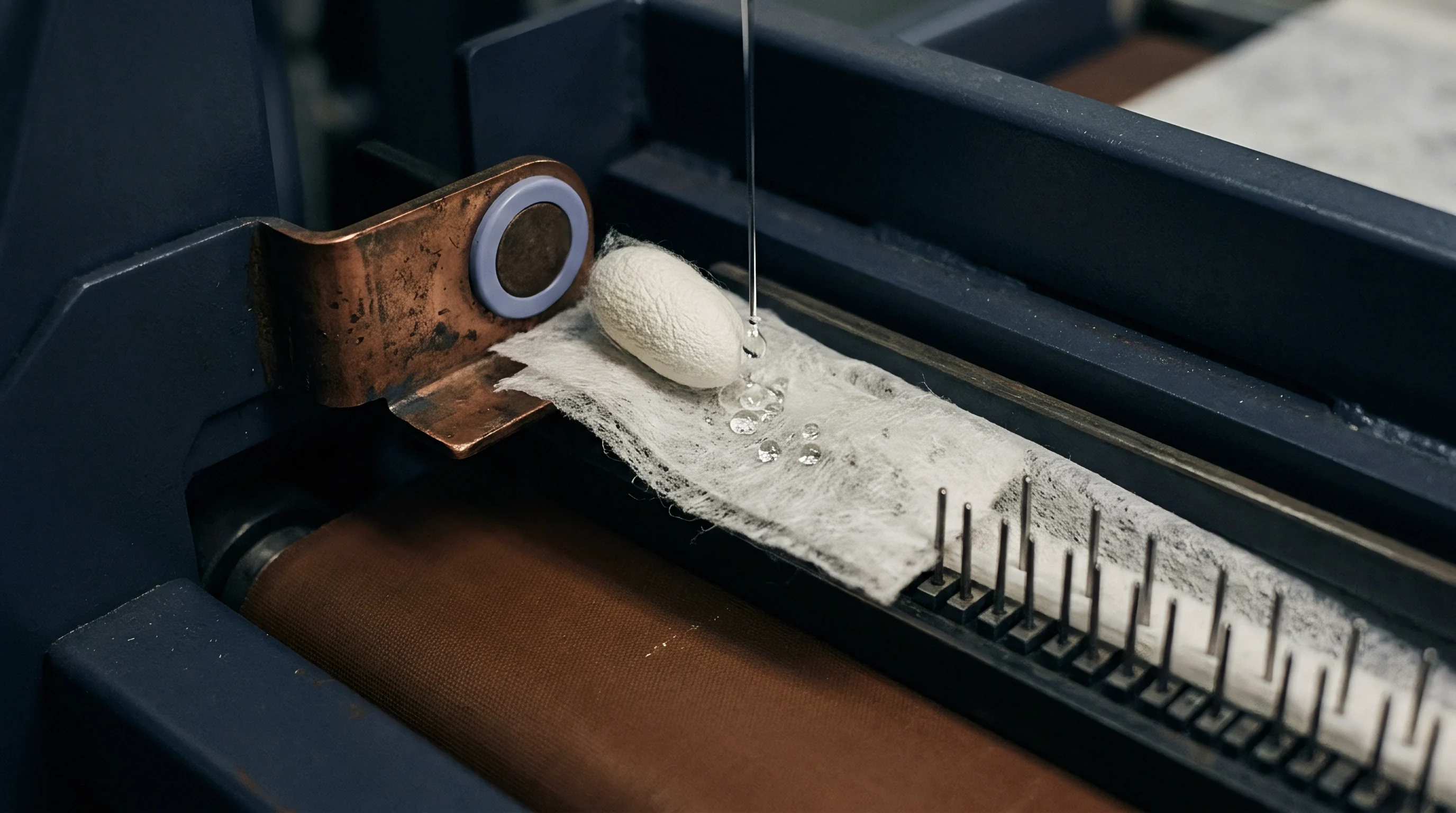
Standardized Sample Preparation and Loading Workflow
Accurate quantification begins at the cutting table where physical dimensions dictate gas release rates. Synthetic coatings laminated to heavy textile backings demand careful separation before weighing. Analyzing the composite material together reports average concentration per total mass, artificially lowering the reported solvent content of the coating layer.
Technicians must peel the synthetic skin away from the textile substrate using mechanical force or selective cold solvent swelling. Weighing only the isolated polyurethane film provides true compliance assessment against regulatory standards that target chemical presence in active surface coatings.
Adding liquid matrix modifiers directly to the vial alters extraction kinetics. Introducing high-boiling, non-interfering organic solvents such as dimethylacetamide or water into the vial partially dissolves or swells the resin matrix, releasing bound dimethylformamide into solution. This approach transforms solid-gas static headspace into liquid-gas headspace extraction.
Matrix dissolution accelerates equilibrium times from forty-five minutes down to fifteen minutes and eliminates physical barrier effects caused by varying skin thicknesses. Matrix modifiers must remain free of trace target solvent impurities that distort baseline measurements.
High-capacity agitation ovens are often rated to achieve complete extraction in fifteen minutes without chemical matrix modifiers, but testing reveals that un-modified dense polyurethane topcoats retain up to forty percent of residual solvent after fifteen minutes of mechanical shaking at 120 degrees Celsius. Achieving full equilibrium without solvent modifiers requires at least forty-five minutes of continuous incubation at 130 degrees Celsius, regardless of orbital agitation speeds.


Selectivity
Gas chromatography paired with mass spectrometry isolates specific target compounds from complex volatile mixtures. Capillary columns coated with mid-polar or polar stationary phases, such as 6 percent cyanopropylphenyl / 94 percent dimethylpolysiloxane (DB-624 target equivalent) or polyethylene glycol (WAX target equivalent), effectively separate dimethylformamide from co-extracted volatiles. Polar stationary phases interact strongly with the amine carbonyl structure, delivering sharp, symmetrical peak shapes with minimal tailing.
Flame ionization detection provides excellent linear response across wide dynamic ranges, but mass spectrometry remains mandatory for definitive structural identification in regulated compliance testing.

Does Matrix Dissolution Alter Gas Phase Equilibria?
Adding organic solvents to solid test specimens transforms static extraction into liquid-phase partitioning. Introducing one milliliter of dimethylacetamide to a vial containing five hundred milligrams of polyurethane skin completely dissolves the polymer mass at 130 degrees Celsius. Dissolution eliminates diffusion limitations inside the solid resin, creating a homogeneous liquid solution.
Dimethylformamide vaporizes out of the liquid mixture according to its activity coefficient in dimethylacetamide rather than its diffusion rate through a solid polymer matrix. This shift lowers the distribution constant, increasing analyte concentration in the vapor phase while mitigating physical sample geometry effects.
Matrix modification alters thermodynamic equilibria by shifting liquid-phase activity coefficients. While dissolution accelerates equilibrium, it alters gas-phase yields compared to dry headspace techniques. Calibration standards must mirror the exact solvent-to-matrix ratio of the test sample to prevent systematic error.
Preparing calibration curves in pure matrix modifier without dissolved polymer overestimates sample concentrations because the absent polymer matrix no longer retains analyte. Incorporating analyte-free polyurethane or applying matrix-matched standard addition protocols compensates for these thermodynamic activity shifts.
| Compound Name | CAS Number | Quantification Ion (m/z) | Confirmation Ions (m/z) | Retention Index (DB-624) |
|---|---|---|---|---|
| N,N-Dimethylformamide | 68-12-2 | 73.0 | 44.0, 58.0 | 885 |
| N,N-Dimethylacetamide | 127-19-5 | 87.0 | 44.0, 72.0 | 995 |
| N-Methylformamide | 123-39-7 | 59.0 | 29.0, 58.0 | 830 |
| Formamide | 75-12-7 | 45.0 | 29.0, 44.0 | 815 |
| Toluene | 108-88-3 | 91.0 | 92.0, 65.0 | 760 |
Mass Spectral Resolution and Potential Fragment Interference
Electron ionization of polar volatile species generates characteristic fragment patterns used for unequivocal identity confirmation. Dimethylformamide produces a dominant base peak at mass-to-charge ratio (m/z) 73, corresponding to the molecular ion formed by removal of an electron. Secondary fragment ions appear at m/z 44 (loss of formyl group) and m/z 58 (loss of methyl radical).
Operating mass spectrometers in Selected Ion Monitoring mode targets these specific ion ratios, drastically reducing signal noise from background matrix compounds and raising signal-to-noise performance. Monitoring three distinct ion fragments ensures unambiguous assignment, preventing misidentification of co-eluting chemical species.
Thermal breakdown of aliphatic amine catalysts or co-extracted surface finishing additives yields low-molecular-weight volatile fragments that match target monitoring ions. Diethylamine and ethyl formate generate fragment ions at m/z 44 and m/z 73, co-eluting near dimethylformamide on non-polar capillary columns. Utilizing high-resolution mid-polar capillary columns measuring 30 meters in length with an internal diameter of 0.25 millimeters and a film thickness of 1.4 micrometers resolves these isomeric species completely, maintaining baseline separation exceeding 1.5 peak resolution units.
Quantification using flame ionization detectors requires strict retention time matching within plus or minus 0.05 minutes against verified analytical standards. Flame ionization lacks structural specificity, responding to all oxidizable carbon atoms in the gas stream. Co-eluting volatile compounds like methyl ethyl ketone or toluene, commonly used as topcoat diluents, overlap target solvent peaks on standard non-polar columns.
When laboratories deploy flame ionization detection for regulatory screening, positive hits exceeding 80 percent of legal limits require mandatory confirmation by mass spectrometry before issuing final compliance reports.
The extent to which volatile amine degradation products interact with active silanol sites on inner capillary walls remains an open question during routine high-throughput testing.


Calibration
Converting raw detector signal into precise concentration values requires robust mathematical modeling. Detector response factors fluctuate over time due to column contamination, source fouling, and pneumatic pressure drift. Linear regression curves constructed from multi-point standard series establish the correlation between peak area and mass concentration.
High solvent concentrations overload static headspace vapor volumes and mass spectrometer detectors, causing non-linear response curves that underreport true chemical content if samples exceed verified upper calibration limits.

Matrix-Matched Standard Addition and Full Evaporation Techniques
Polymeric substrates alter vapor pressure behavior, invalidating simple solvent-based external standards. Spiking known quantities of dimethylformamide directly into blank solvent vials creates standard curves that fail to account for retention forces within dense polyurethane films. Matrix-matched calibration solves this discrepancy by utilizing analyte-free polyurethane resin as the base substrate for standard preparation.
Finding verified solvent-free synthetic leather matrix material proves difficult in commercial practice, prompting laboratories to adopt standard addition methodologies.
Standard addition involves spiking increasing concentrations of target solvent directly onto multiple identical test specimens. Measuring peak areas across unspiked and spiked sample vials yields a linear curve where the negative x-intercept reveals the original analyte concentration within the un-spiked sample. This approach inherently corrects for matrix suppression, altered vapor pressures, and incomplete extraction kinetics.
Standard addition doubles instrument running time and sample consumption, making it commercially expensive for high-volume routine screening but essential for arbitrating contested regulatory failures.
Matrix-matched standard addition protocols yield baseline recoveries between ninety-two and one hundred four percent for micro-porous polyurethane skins heated to one hundred forty degrees Celsius.
Full Evaporation Technique offers an alternative path for quantitative headspace analysis. Small sample masses, typically between 5 and 15 milligrams, undergo heating to high temperatures (150 degrees Celsius) in sealed vials. Under these conditions, the entire mass of volatile solvent evaporates completely into the vapor phase, shifting the partition equilibrium entirely toward the gas phase.
Full evaporation eliminates matrix retention effects because no condensed liquid phase remains to hold the analyte. The approach requires micro-balances capable of measuring sample masses with microgram precision, as small weighing errors translate into massive concentration errors.

Method Validation Parameters and Limits of Quantification
Analytical scope definition demands empirical proof of sensitivity, linearity, and repeatability across expected working ranges. Method limits of quantification must reach at least ten percent of the target regulatory threshold. For REACH Annex XVII Entry 72 compliance testing (500 milligrams per kilogram limit), the analytical protocol demands a limit of quantification of 50 milligrams per kilogram or lower.
For OEKO-TEX Class I testing (50 milligram limit), the limit of quantification must reach 5 milligrams per kilogram. Establishing these parameters requires analyzing seven replicate blank matrix samples spiked at low concentrations, calculating the standard deviation, and multiplying by ten.
- Linear Regression Correlation Calibration curves must demonstrate a coefficient of determination (R-squared) exceeding 0.995 across five non-zero concentration levels.
- Limit of Quantification Verification The lowest calibration point must achieve a signal-to-noise ratio of at least 10 to 1 with precision under fifteen percent standard deviation.
- Standard Addition Slope Matching Slopes derived from standard addition curves must match external calibration slopes within ten percent to confirm matrix equivalence.
- Replicate Precision Limits Relative standard deviation across six consecutive sample injections must remain below seven percent for concentrations above 50 milligrams per kilogram.
Quantification data generated under current ISO 16189 parameters rests on an assumed sample extraction efficiency of 95 percent, established during a 2020 multi-laboratory trial using 500-milligram specimens heated at 130 degrees Celsius for 45 minutes. If a mill alters the coating formulation by introducing micro-encapsulated flame retardants or heavy silicone slip agents, extraction efficiency drops to 70 percent under identical heating parameters. This drop causes the reported solvent concentration to fall artificially, passing a non-compliant sample.
Re-validating extraction efficiency via double-extraction protocol remains necessary whenever coating formulations change.
The precise recovery percentage achievable across highly dense, halogenated flame-retardant polyurethane skins remains uncertain under standard static conditions, leading cautious testing facilities to default to total dissolution headspace methods.
Contractual assurance clauses should explicitly state that solvent compliance measurements strictly adhere to DIN EN ISO 16189:2021 static headspace protocols using matrix-matched standard addition quantification, invalidating third-party reports produced via un-matched liquid extraction.

Conformity
Commercial trade in coated textiles demands verifiable proof that bulk shipments match laboratory test reports. A single compliant test report covering a pre-production sample provides zero guarantee that full production runs remain within chemical limits. Solvent management on factory floors varies dynamically based on drying oven temperature settings, exhaust airflow speeds, line running speeds, and solvent recycling efficiency.
Importers relying on annual type-testing certificates routinely encounter regulatory detentions when production lots retain residual carrier solvents due to poor factory drying controls.

Batch Variability and Representative Sampling Protocols
Chemical concentration varies across roll lengths, production runs, and color formulations. In continuous polyurethane coating operations, solvent content peaks during the initial startup phase before ovens reach thermal stability and at the center of wide fabric webs where air circulation remains lowest. Sampling protocols that cut test swatches exclusively from outer roll edges capture well-ventilated material, missing high-solvent zones located within the interior bulk roll.
Representative verification demands taking swatches from the middle third of fabric rolls selected randomly across early, middle, and late production stages.
European market surveillance authorities employ risk-based sampling at border ports, targeting synthetic leather apparel, footwear, and furniture imports. Seized samples undergo accredited laboratory testing using static headspace gas chromatography mass spectrometry. When testing uncovers N,N-dimethylformamide concentrations exceeding 500 milligrams per kilogram, authorities issue Safety Gate alerts (formerly RAPEX), triggering mandatory national market withdrawals, public brand notifications, and immediate destruction of held containers at importer expense.
Establishing batch conformity requires defining acceptance quality limits for chemical compliance. Attribute sampling plans governed by ISO 2859-1 set inspection levels and acceptance numbers for lot verification. For chemical safety parameters, buyers specify zero-acceptance sample plans (Ac = 0), meaning a single non-compliant test result across taken swatches rejects the entire production lot.
Testing three composite swatches per 10,000-meter production run provides basic statistical confidence, provided swatches are kept isolated in gas-tight aluminum foil laminates immediately after cutting to prevent solvent volatilization during transit.
Scope certificates issued on base fabric constructions fail to protect importers when topcoat formulation changes occur mid-season.

Commercial Risk Allocation and Test Report Scope Mapping
Purchase orders linking payment terms to technical specifications protect importers from regulatory seizure. Standard commercial contracts incorporate indemnity clauses holding manufacturing mills financially liable for landed costs, testing fees, customs penalties, and destruction expenses arising from chemical non-compliance. These clauses prove worthless if the underlying test report scope fails to match the precise article shipped.
Reports must detail product style numbers, color codes, polyurethane surface mass weights, and specific batch roll identification numbers.
Testing lab reports carry clear validity limitations that buyers frequently overlook. A test report reflects only the chemical state of the specific physical swatch received by the laboratory on the date of testing. Unlike scope certificates issued under quality management frameworks like OEKO-TEX or GOTS, test reports do not certify ongoing production systems.
Certificates quietly expire after twelve months, and scope documents covering 100 percent polyurethane coatings do not extend to polyurethane-polyvinyl chloride blends or materials utilizing alternative topcoat formulations. Importers must cross-reference invoice line items against test report scope descriptions to ensure legal coverage.
Managing supply chain compliance requires setting internal action limits well below statutory legal thresholds. Operating an internal manufacturing cap of 300 milligrams per kilogram for N,N-dimethylformamide provides a safety buffer against analytical measurement uncertainty, sampling variance, and inter-laboratory testing discrepancies. Laboratories executing ISO 16189 static headspace protocols report expanded measurement uncertainties up to fifteen percent at the 500 milligram per kilogram limit.
Establishing conservative internal action thresholds ensures that minor analytical variance never pushes commercial shipments past legal limits during enforcement checks.
Logistics practices require sealing cut verification samples inside heavy aluminum foil laminated bags fitted with airtight press seals immediately after swatches exit the production line. Storing cut swatches in standard polyethylene bags allows volatile organic solvents to diffuse through the plastic film during air transit, reducing measured concentrations prior to laboratory testing and generating falsely compliant test certificates that fail to reflect the true solvent load contained within sealed shipping containers arriving at destination ports.