Measuring Ethylene Oxide Polyether Extraction Bias during Standard Solvent Wash
Polyether extraction bias requires gravimetric mass correction to prevent polyether matrix dissolution from corrupting quantitative blend ratios and duty lines.
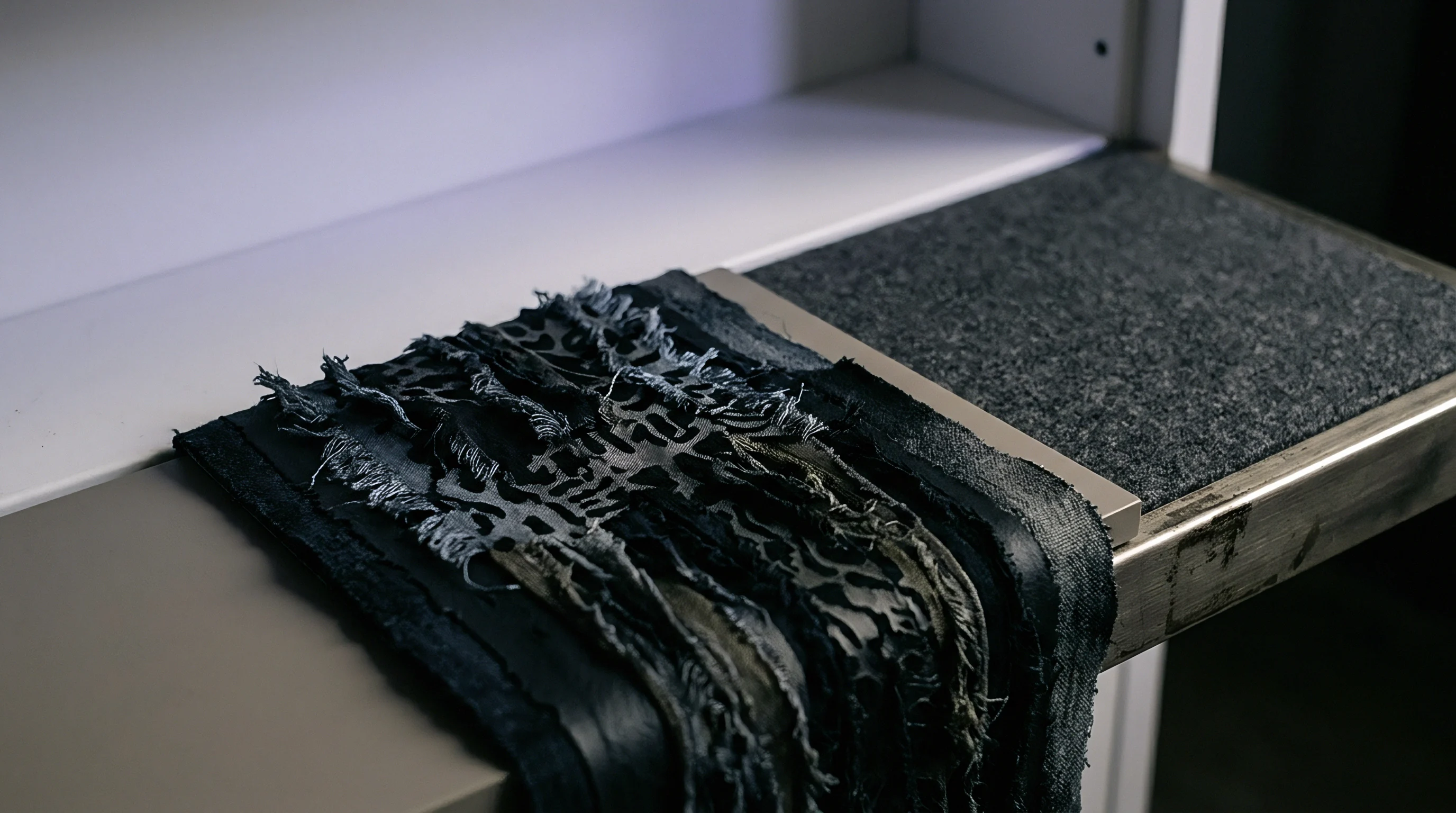

Solubility
Organic solvents used to wash synthetic filaments in laboratory settings frequently remove structural polyether chains alongside applied processing oils. In a 5.000 gram yarn specimen, petroleum ether or dichloromethane extraction yields a mass loss representing both the surface lubricant layer and low-molar-mass ethoxylated fragments stripped from the polymer backbone. Repeating ether linkages in ethylene oxide polyethers show distinct thermodynamic affinities for common extraction reagents.
Standard analytical methods assume solvents remove surface finishes while leaving the structural fiber matrix intact ~ an assumption that fails on polyether-polyurethane elastomers, ethoxylated nylon modifiers, and block polyether-ester filaments.
Molar mass distribution dictates how ethoxylated compounds partition between the solid fiber phase and the liquid solvent bath. Polyethylene glycol chains with low degrees of polymerization dissolve readily in polar organic media, while short ethylene oxide oligomers desorb rapidly. Higher molar mass polyether segments remain tangled within amorphous zones during short room-temperature rinses.
Hot Soxhlet extractions disrupt these inter-chain hydrogen bonds, allowing warm solvents to leach structural polyether fractions into the boiling flask.
Solvent polarity controls the rate and selectivity of polyether stripping. Non-polar aliphatic hydrocarbons such as light petroleum ether target hydrophobic fatty acid esters in spin finishes, leaving hydrophilic ethylene oxide blocks largely unextracted. Chlorinated solvents like dichloromethane carry higher dielectric constants and dipole moments.
Dichloromethane penetrates the amorphous regions of polyether-polyurethane filaments, dissolving low-molecular-weight soft segments. The resulting gravimetric figure overstates applied finish mass, introducing extraction bias into quantitative fiber analysis.
| Solvent Type | Boiling Point (°C) | Dielectric Constant (20°C) | Target Extractable Class | Polyether Matrix Leaching Bias (%) |
|---|---|---|---|---|
| Petroleum Ether (40-60) | 40 to 60 | 1.89 | Aliphatic Spin Oils | 0.08 to 0.15 |
| Dichloromethane | 39.8 | 8.93 | Total Finish & Polyol Fractions | 0.85 to 1.45 |
| Acetone | 56.05 | 20.70 | Polar Lubricants & Oligomers | 0.52 to 0.90 |
| Methanol | 64.7 | 32.70 | Surfactants & Glycol Chains | 1.10 to 1.80 |
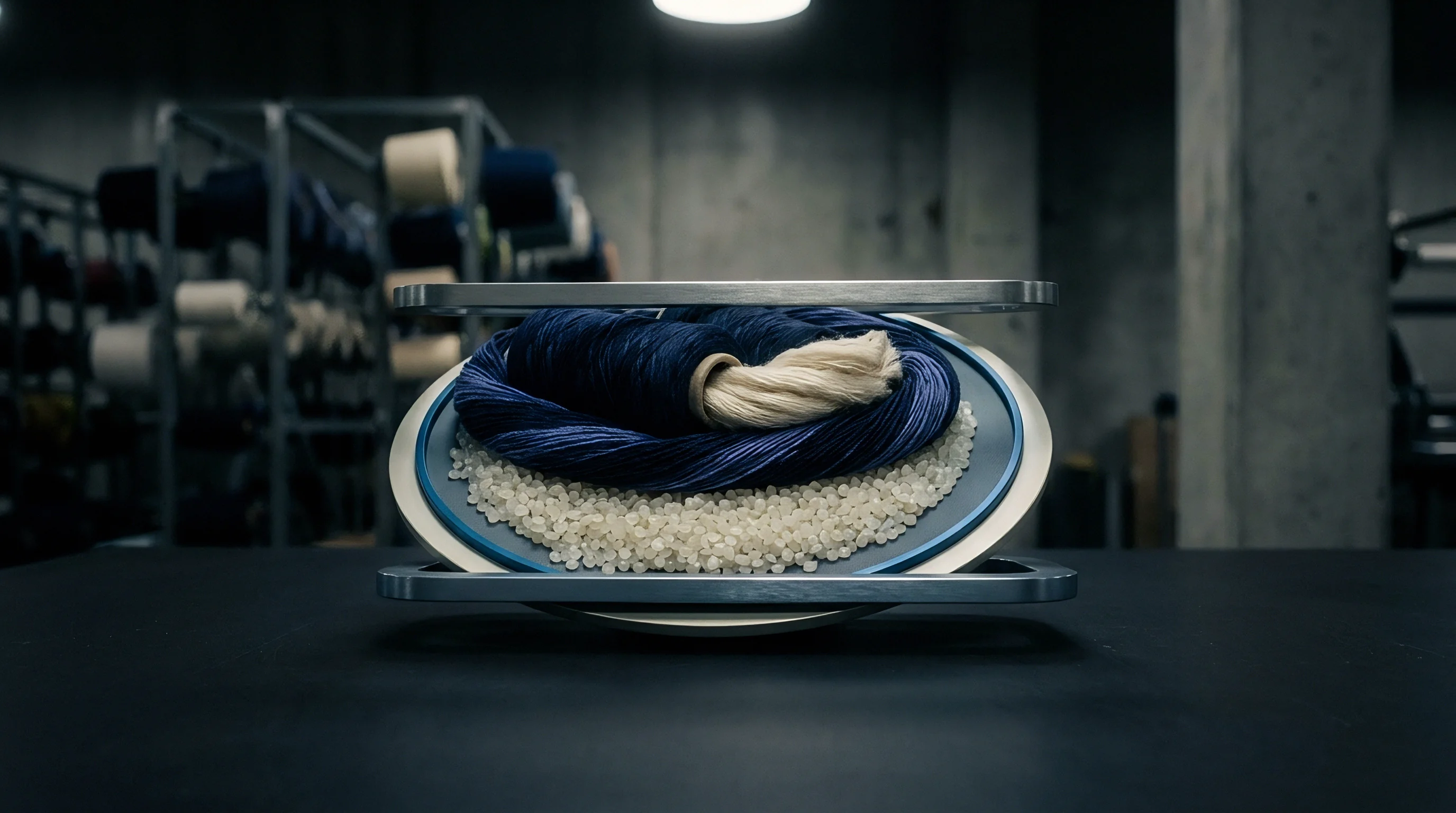
Ethoxylated Oligomer Partitioning Mechanics
Ethoxylated surfactants combine lipophilic hydrocarbon tails with hydrophilic polyoxyethylene chains. In a dual-phase extraction environment, the partition coefficient shifts as the ethylene oxide mole count increases. Short-chain ethoxylates with fewer than five ethylene oxide units dissolve in non-polar solvents, which otherwise leave longer polyethers intact.
Chains with twenty or more ethylene oxide units remain bound within polar fiber substrates unless exposed to aggressive polar solvents or elevated temperatures, meaning single-solvent wash protocols rarely separate these chemical fractions cleanly.
Extraction bias alters the gravimetric baseline used to declare net fiber mass. When testing facilities report total extractables without characterizing the wash residue, the missing mass gets assigned to the fiber component assumed to be insoluble. In polyether-elastane blends, dichloromethane extraction strips up to 1.5 percent of elastane mass alongside the processing finish, causing the test report to undercount elastane percentage in the raw yarn lot.
A petroleum ether wash at 50°C leaves up to 68 percent of high-molar-mass ethoxylated surfactants inside synthetic fiber structures, understating total applied finish mass.

Solvent Polarity and Polyether Chain Length Interactions
The solubility parameter of polyethylene oxide sits near 20.2 megapascals to the half power. Solvents with matching Hildebrand parameters dissolve polyether blocks with minimal thermodynamic resistance. Methanol and ethanol readily solvate high-molar-mass polyethylene glycols, causing fiber swelling in polyether-based synthetic structures.
Petroleum ether exhibits a solubility parameter near 14.9 megapascals to the half power, making it ineffective at dissolving long polyether chains while selectively removing paraffinic lubricants.
Choosing an aggressive solvent to guarantee complete finish removal introduces micro-cavitation within soft polymer segments. As the solvent extracts low-molecular-weight polyether polyols from the interior of the filament, structural density drops, leaving the weakened fiber network susceptible to physical degradation during subsequent chemical separations under standard test standards.
Whether solvent polarity adjustments can fully isolate surface-bound ethoxylated lubricants without inducing micro-cavitation inside soft polyether-polyurethane amorphous zones remains an active area of investigation.
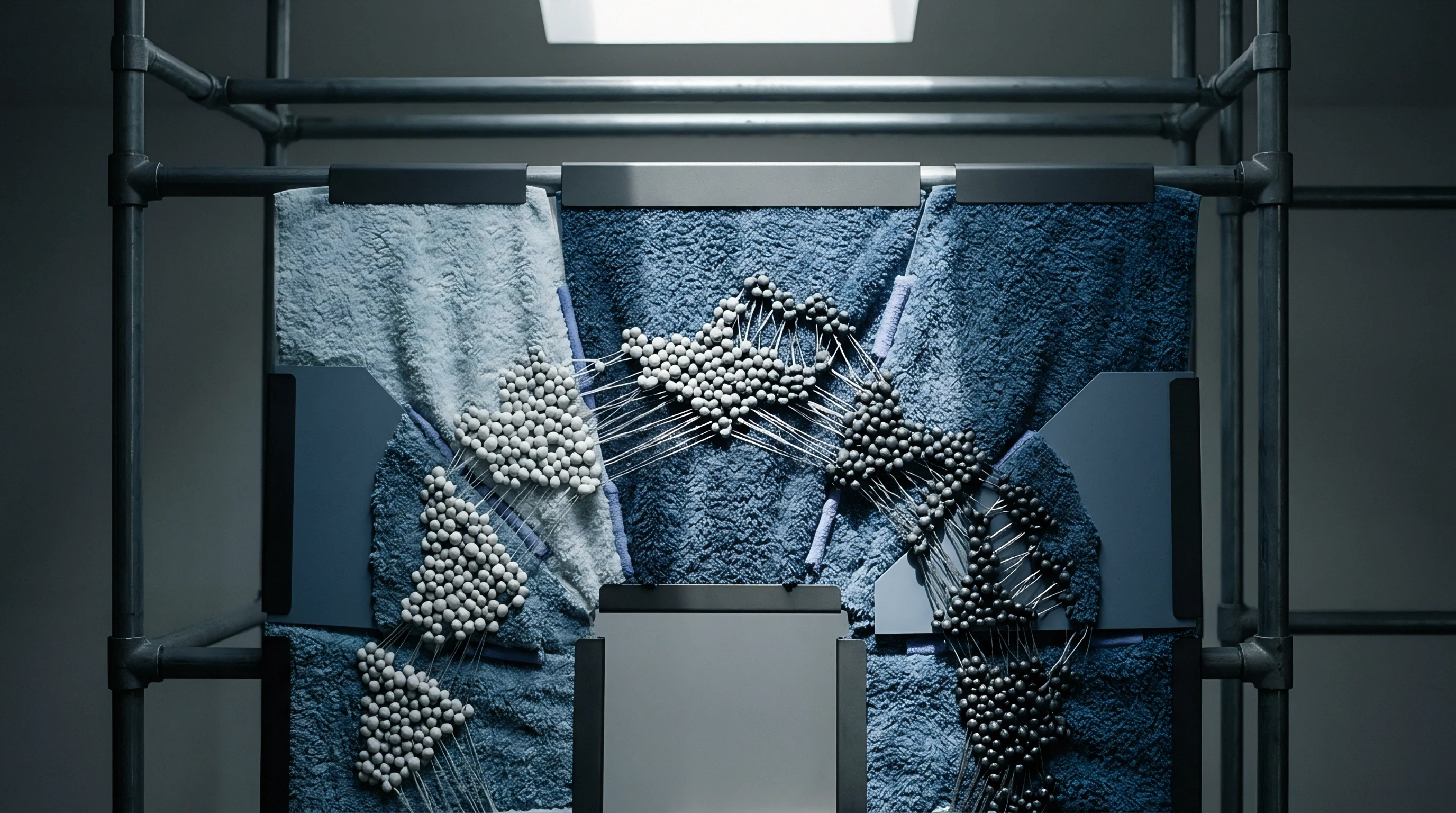
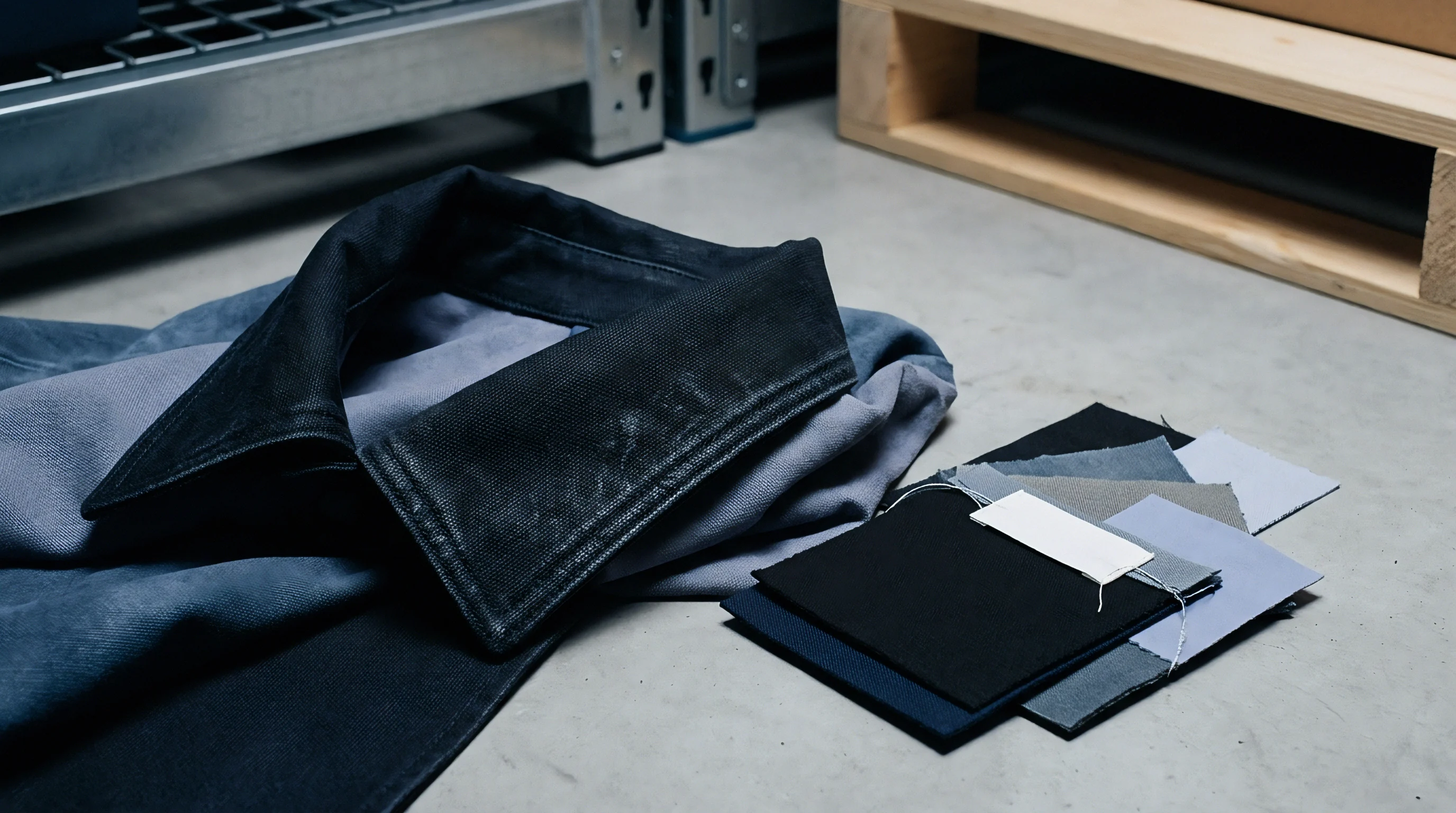
Soak
Immersion duration and reflux cycling rates in Soxhlet extraction apparatus determine the total mass of polyether leached from a yarn sample. Standard testing protocols specify cycle counts ranging from 16 to 24 cycles over a three-to-four-hour period. As warm solvent fills the extraction thimble, thermal agitation weakens secondary bonding between ethoxylated spin finish molecules and the synthetic fiber matrix, while thermal expansion of amorphous regions allows solvent molecules to migrate deeper into the polymer interior during prolonged extraction runs.
Soxhlet extraction operates at elevated temperatures, where siphon kinetics alter the equilibrium between solid specimen and liquid phase. Rapid cycling maintains a steep concentration gradient between the fiber matrix and fresh solvent entering the thimble chamber. High siphon frequencies keep wash liquor from reaching chemical equilibrium, driving continuous leaching of structural polyether fractions throughout the test duration.
- Weigh 5.000 grams of conditioned yarn into a pre-dried cellulose thimble after 24 hours at 20°C and 65 percent relative humidity.
- Charge the Soxhlet flask with 150 millilitres of redistilled solvent, adjusting mantle heating to achieve 10 siphon cycles per hour.
- Drain the solvent siphon after cycle 16 and transfer the liquid fraction to a tared evaporative dish.
- Dry the residual fiber mass in a ventilated oven at 105°C until successive weighings differ by less than 0.001 grams.
- Calculate the preliminary gravimetric mass loss before applying polyether correction adjustments.

Soxhlet Reflux Cycles and Thermal Matrix Expansion
Temperature control inside the thimble chamber determines whether polyether extraction remains limited to surface deposits. Standard glass Soxhlet extractors operate near the boiling point of the chosen solvent; dichloromethane refluxes at roughly 40°C inside the thimble, providing sufficient thermal energy to increase free volume within polyether-polyurethane soft segments. As solvent absorption rises with temperature, polyether chains gain kinetic mobility, diffusing outward into the solvent stream at rates proportional to the square root of extraction time.
Continuous solvent distillation delivers clean, condensed reagent to the fiber sample during every siphon loop. This steady flow prevents solvent saturation, ensuring that low-molecular-weight polyethers leach out continuously until thermal exposure stops. Lowering bath temperature slows diffusion rates, but extended soak times produce identical total polyether loss through cumulative leaching.
Increasing Soxhlet siphon frequency past twelve cycles per hour extracts structural polyether blocks rather than surface spin finish.

Desorption Kinetics of Ethoxylated Finish Layers
Desorption of ethoxylated finishes follows a two-stage kinetic profile. The primary stage involves rapid dissolution of free surface lubricants within the first three extraction cycles, followed by a secondary stage of slow, diffusion-controlled release of matrix-bound polyether fragments extending over dozens of siphon cycles. Analytical procedures that fail to terminate extraction after the primary stage capture structural polymer mass right alongside surface finishes.
Rinsing fiber samples in cold solvent baths reduces structural leaching by slowing matrix penetration while still dissolving unbonded surface oils. Commercial testing laboratories often avoid cold wash methods because lower solubility rates require higher solvent volumes and mechanical agitation.
When extraction solvent turns opaque or yields a sticky residue upon cold evaporation, the wash bath has begun dissolving the structural core of the polyether matrix.

Calibration
Quantifying polyether extraction bias requires correcting raw gravimetric figures through secondary verification of wash residue. Gravimetric mass loss alone cannot differentiate between applied spin finish oils and leached polymer fragments. Laboratory analysts apply mass balance equations supported by spectroscopic examination to isolate surface finish mass from structural core losses; inserting raw laboratory extraction values directly into fiber composition formulas generates systemic error in certified blend percentages.
Spectroscopic scans confirm fraction purity. Attenuated total reflectance Fourier-transform infrared spectroscopy provides quantitative verification of polyether content within evaporative residue dishes, keying in on the strong infrared absorption peak near 1100 wavenumbers produced by C-O-C ether stretching. Calibrating the area under this absorption band against standard mixtures allows precise calculation of the polyether mass fraction extracted during solvent washing.

Mass Balance Equations for Swollen Polymer Networks
Consider a 10.0000 gram sample of core-spun yarn containing polyether-polyurethane elastane and polyether-ester filaments subjected to solvent wash. Standard dichloromethane extraction yielding 0.1650 grams of total dry residue represents an apparent extractable content of 1.65 percent. If surface oil analysis indicates that applied spin finish accounts for only 0.45 percent of net yarn mass, the remaining 1.20 percent loss stems from structural polyether dissolution from the elastane core.
Calculations proceed by isolating true insoluble fiber mass through an empirical extraction correction factor. Let m0 represent the initial dry mass of the specimen, mr the residual fiber mass after solvent washing and oven drying, and fs the true surface finish mass fraction determined via selective non-polar cold rinse. The uncorrected finish fraction Au follows the standard expression:
Au = fracm0 – mrm0
Because Au contains structural polyether mass mp, the true surface finish fraction At demands subtraction of the polyether extraction bias factor Kp:
At = Au – Kp
The bias factor Kp derives from infrared absorbance measurements of the evaporative residue dish at 1100 wavenumbers relative to a non-polyether reference baseline:
Kp = fracmresidue × Cpolyetherm0
Where Cpolyether is the mass fraction of polyether detected in the dry residue via spectroscopic calibration. Adjusting final yarn mass with At instead of Au prevents understating net elastane core content by more than one full percentage point across production lots.
| Fiber Matrix Composition | Extraction Solvent | Uncorrected Loss (%) | True Surface Finish (%) | Structural Bias Correction (Kp) |
|---|---|---|---|---|
| 92% Polyester / 8% Polyether-Urethane | Dichloromethane | 1.75 | 0.50 | 0.0125 |
| 100% Ethoxylated Filament Nylon | Methanol | 2.10 | 0.65 | 0.0145 |
| 95% Cotton / 5% Elastane Core | Petroleum Ether | 0.55 | 0.40 | 0.0015 |
| 85% Polyether-Ester / 15% Viscose | Acetone | 1.40 | 0.45 | 0.0095 |

Spectroscopic Identification of Leached Residue Formations
Nuclear magnetic resonance spectroscopy provides an alternative pathway for resolving complex polyether extraction residues. In deuterated chloroform, proton NMR spectra of extracted residues exhibit a sharp singlet peak at 3.64 ppm, characteristic of ethylene oxide methylene protons. Integrating this peak area relative to aliphatic fatty acid proton signals between 0.85 ppm and 1.25 ppm yields an absolute molar ratio of polyether to surface lubricant.
Skipping spectroscopic characterization and assuming all solvent extractables represent surface contamination introduces recurring analytical errors during calibration:
- Thermal Over-Drying drives volatile low-molecular-weight polyethers off the tared dish, undercounting true extracted residue mass.
- Solvent Moisture Retention introduces water solubilization of polyether groups, shifting apparent mass loss during gravimetric weighing.
- Cross-Contamination Residues accumulate when unwashed cellulose thimbles release soluble binder hemicelluloses into polar solvent baths.
- Spectral Peak Overlap occurs when ester carbonyl overtones mask low-intensity polyether ether stretching signals during raw FTIR scans.
Integrating secondary residue analysis to correct gravimetric mass loss in standard laboratory workflows eliminates systematic undercounting of core synthetic fibers. Sourcing practices that implement quantitative spectroscopic screening maintain accurate blend declarations across varying filament supplies.
Gravimetric residues containing high concentrations of ethylene oxide oligomers show a clear infrared absorption peak at 1100 wavenumbers.
Failing to isolate structural polyether dissolution from surface finish extraction distorts true blend ratios, exposing buyers to severe retest claims and rejected deliveries at destination.


Discrepancy
Inter-laboratory testing of identical synthetic yarn lots frequently returns conflicting extractable percentages. Variance between testing houses stems from unstandardized solvent choices, uncontrolled Soxhlet bath temperatures, and differing interpretation of gravimetric residues. Laboratory A using petroleum ether under ASTM D2257 may report an extractable content of 0.40 percent, while Laboratory B using dichloromethane under ISO 1833-1 on the same yarn roll reports 1.85 percent extractables.
Both facilities certify their findings under accredited standards, yet their numbers create commercial disputes over yarn net weight and fiber purity.
When solvent extraction methods strip structural polyether segments, laboratory variance alters declared values and shifts the quantitative fiber blend ratio accordingly. A fabric specified at 90 percent polyester and 10 percent polyether-polyurethane can register as 91.5 percent polyester and 8.5 percent elastane if the testing laboratory uses an aggressive solvent wash without applying matrix correction factors ~ a discrepancy that exceeds allowable commercial tolerance limits in international trade agreements.

Inter-Laboratory Variance in Solvent Wash Protocols
Standard solvent wash procedures specified in legacy testing codes fail to account for modern ethoxylated finish chemistries. ISO 1833-1 mandates solvent washing to remove non-fibrous materials before quantitative chemical separation of fiber mixtures, permitting dichloromethane usage without restricting Soxhlet siphon cycle frequency or thimble chamber temperature. Testing facilities operating with high ambient laboratory temperatures experience accelerated matrix dissolution, generating higher residue figures than facilities operating under climate-controlled conditions.
Post-extraction drying protocols introduce additional variance. Ethylene oxide polyethers are hygroscopic, rapidly absorbing atmospheric moisture during transfer from drying ovens to desiccators; laboratories that delay weighing or use exhausted desiccant report artificially high dry specimen masses, obscuring true extraction losses.
Under ISO 1833 compliance rules, non-target polymer leaching exceeding 0.5 percent by mass invalidates standard quantitative dissolution metrics.

Why Do Testing Houses Report Divergent Polyether Residues?
Divergent residue figures stem from differences in solvent purity, extraction duration, and analytical interpretation of non-surface mass loss. Standard commercial laboratories rarely perform secondary spectroscopic scans on evaporative residues due to tight throughput schedules, reporting gross gravimetric mass change directly as finish content. When testing yarns containing modified polyethers, this operational shortcut converts structural polymer loss directly into reported finish weight.
Resolving extraction discrepancies demands explicit contractual testing protocols between mills and buyers. Harmonizing inter-laboratory polyether wash data requires defining specific baseline parameters:
- Solvent Specification Standardization mandates matching boiling points and purity grades across origin and destination commercial testing facilities.
- Extraction Method Harmonization aligns cycle counts and immersion bath temperatures between seller and buyer compliance testing protocols.
- Residue Spectroscopic Validation requires attenuated total reflectance infrared scans of all mass residues exceeding half a percent.
Excess extracted mass may reflect standard processing lubricant rather than structural degradation of the polyether polymer chain.


Duty
Customs classification for synthetic yarn shipments hinges entirely on declared fiber composition percentages by net weight. Harmonized System tariff codes differentiate sharply between pure synthetic filament yarns, elastomeric yarns, and blended spun structures. Extraction bias that shifts reported polyether-polyurethane content by even one percentage point can alter the tariff classification line, changing applicable import duty rates and customs valuation totals.
Customs enforcement relies on chief weight. Under HS Chapter 54, single filament yarns containing equal to or greater than 8 percent by weight of polyether-polyurethane elastomeric filaments classify under heading 5402.44 as elastomeric yarn, often entering at duty-free or reduced tariff rates. If uncorrected dichloromethane wash bias removes 1.2 percent of elastane mass during customs entry testing, official lab results register elastane content at 7.1 percent.
The customs authority then reclassifies the shipment under heading 5402.49 as other synthetic single yarn, imposing higher baseline duty rates and back-charging unpaid tariff fees.
| Declared Blend Ratio | Uncorrected Lab Wash Ratio | Corrected Lab Wash Ratio | Tariff Heading Shift | Duty Rate Shift (%) | Financial Exposure ($) |
|---|---|---|---|---|---|
| 92/8 PES/Elastane | 93.1 / 6.9 PES/Elastane | 92.0 / 8.0 PES/Elastane | 5402.44 to 5402.49 | 0.0 to 5.4 | 14,580 |
| 88/12 Nylon/Polyether | 89.6 / 10.4 Nylon/Polyether | 88.1 / 11.9 Nylon/Polyether | 5402.31 to 5402.49 | 3.2 to 6.5 | 8,910 |
| 95/5 Cotton/Elastane | 96.2 / 3.8 Cotton/Elastane | 95.1 / 4.9 Cotton/Elastane | 5206.12 to 5206.22 | 4.0 to 8.2 | 11,340 |

Tariff Threshold Shifts and Misclassification Exposure
Misclassification penalties extend well beyond simple duty adjustments. Customs clearance audits evaluate historical import declarations against destination testing laboratory reports; when destination testing relies on uncorrected solvent wash methods, systemic undercounting of polyether components triggers automated compliance audits. Importers face administrative fines, delayed customs release, and potential seizure of bulk goods for misdeclaring chief weight fiber composition.
Under free trade agreements, preferential tariff origin rules require compliance with specific blend thresholds, and an uncorrected extraction test that drops a polyether blend below the regional content threshold invalidates origin certificates ~ exposing the importer to retroactive full-rate tariff assessments across multiple billing cycles.
Commercial Settlement Clauses for Extraction Variance
Commercial purchase contracts must incorporate clear extraction testing protocols to protect buyers and sellers from wash bias liabilities. Standard contract specifications should define the exact solvent grade, wash temperature, cycle limit, and residue verification method used for lot acceptance. Including explicit math correction formulas within the purchasing specification prevents downstream pricing disputes caused by laboratory wash errors.
Supply agreements that mandate ISO 1833 Annex B dry mass corrections bind all parties to wash-corrected values, ensuring customs declarations align with actual polymer ratios.